


Why Some Young Africans Can’t Speak Their Mother Tongues

Paulina Abena was born in Austria and raised in Texas, in a Ghanaian home where her parents spoke Twi constantly. As a young child, she tried to speak it too. “I was constantly made fun of by my extended family for how I spoke, so I just stopped speaking,” she admits. By the time her parents encouraged her to try again in her late teens, “it felt too late.”
Maybe you know a version of this. An older relative speaks to you in a rapid, melodic stream of your family’s language. You catch a few words and understand the context. You know what you want to say, but the words won’t come. So, you reply in a mixture of your mother tongue and English, Swahili or French, or switch to a language you’re more comfortable speaking. You nod, smile and hope it’s enough. It’s an isolating experience, and if you’ve felt it, you’re not alone.
Across the continent and in the diaspora, young people are growing up with a complicated relationship with their ancestral languages. They may understand conversations without being able to participate in them, recognise familiar expressions without knowing how to use them, or feel connected to a culture they struggle to express through language.
But is this happening because young Africans choose global languages over their heritage, or are they navigating circumstances that make learning and speaking their mother tongues more difficult?
To understand this, I spoke to seven young Africans about the family decisions, educational experiences, social pressures and personal circumstances that have shaped their relationships with their languages. Their stories reveal that what looks like a generation abandoning its linguistic heritage is often more complicated than that.
For many young Africans, the distance between them and their mother tongues begins at home. Sometimes, it starts with decisions made out of love, survival or simple pragmatism.

Take Kui Mwai, a Kenyan who was born in New York and grew up between the United States and the United Kingdom before attending high school in Kenya. Her parents raised her to be proud of her Kenyan identity, but English was the primary language spoken at home. “They understood that I’m American and I would likely live my life in America, so they didn’t think I would need to know Kikuyu and Swahili in my adult life,” Kui shares. “I also think that their generation has a very charged relationship with their mother tongues.”
Growing up, Kui didn’t see much practical benefit in learning Kikuyu. Yet hearing her mother speak it on the phone made her curious. She describes it as a secret club she wanted to join. Today, she describes an emotional barrier that makes absorbing the language difficult, compounded by external criticism that sometimes questions her Kenyan identity.
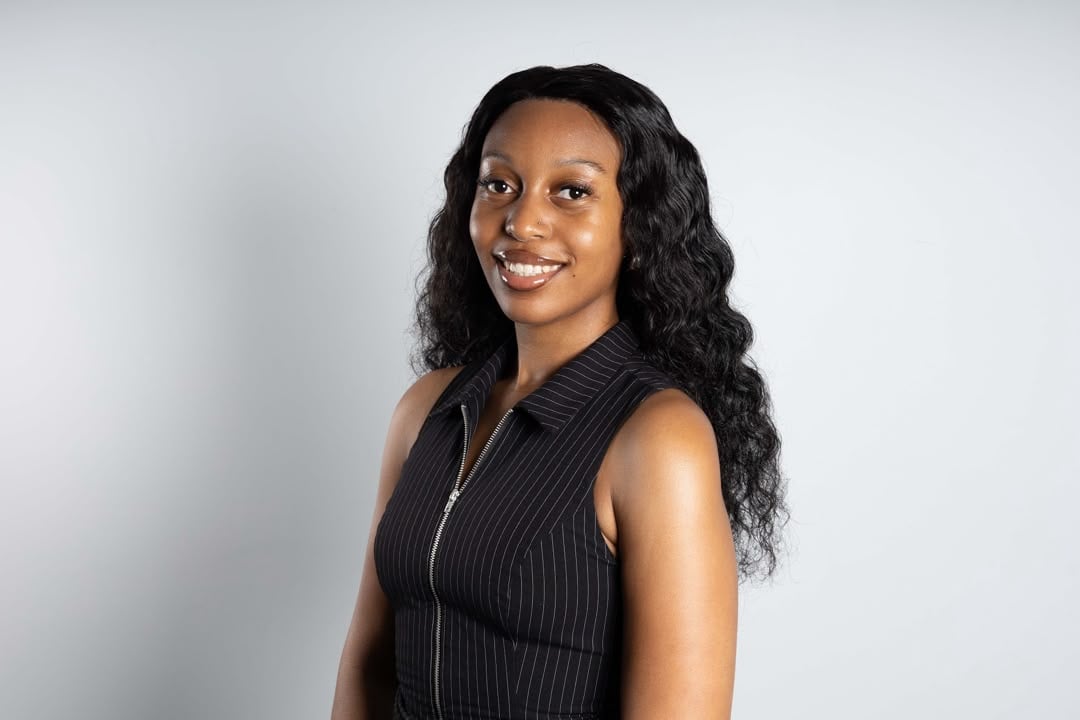
For some families, the decision to prioritise English comes from a different kind of concern. Kgoka Manamela, originally from Johannesburg, has parents who speak Sesotho and Sepedi. When she experienced learning difficulties as a young child, a speech therapist advised her parents to stick to one language, English. “When I was younger, my family did not particularly encourage me to learn or speak my mother tongues because of the advice we had received,” Kgoka explains. At the time, English was viewed as a necessity, while her home languages were treated as an “added benefit.” (Speech and language specialists, including the American Speech-Language-Hearing Association, say that learning more than one language does not cause or worsen speech or language problems.)
Parents may be trying to prepare their children for education, employment or life abroad, believing that a dominant language will give them an advantage. But decisions made for practical reasons can have consequences that only become apparent years later, when those children want to communicate with relatives or reconnect with a language they never had the opportunity to learn properly.
In some contexts, schools have also played a role in shaping which languages children feel comfortable speaking. Across much of Africa, colonial education systems elevated European languages while marginalising many indigenous languages. The details varied across countries and periods, but the wider preference for languages associated with formal education, authority and economic opportunity has influenced how African languages are perceived.
In 2023, UNESCO’s Global Education Monitoring Report noted that at most one in five children in Africa, the continent with the greatest linguistic diversity, are taught in their mother tongue.
Some young people learned these lessons in the classroom. An anonymous source from Nairobi, who understands their native Kamba but struggles to speak it, recalls how school rules discouraged children from practising languages other than those permitted. “Most people have the experience of receiving punishment for speaking Swahili, which is a national language,” they explain. “Now imagine what would happen if you try to learn a thing or two from a fellow classmate with the same native language and you get caught.” Punishment like this can teach children to associate a familiar language with getting into trouble, rather than with belonging or connection.
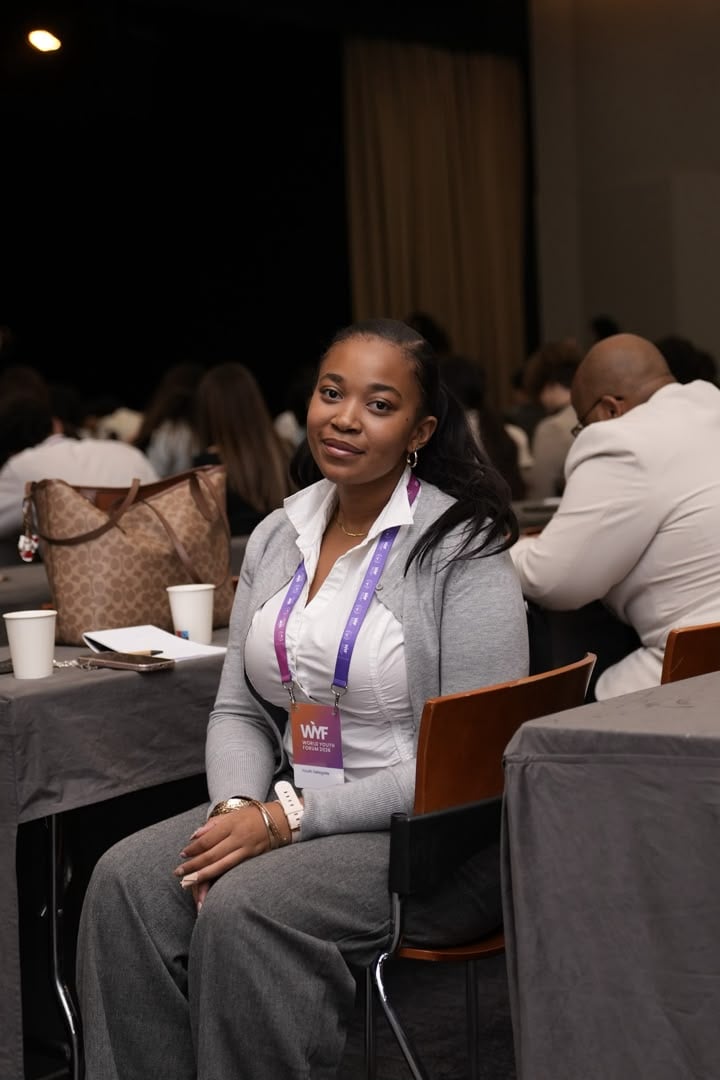
Ayanda, from Pretoria, South Africa, describes a similar experience. Her mother tongue is Tswana, but she hesitates to speak it without leaning on English. “I grew up in a primary school where speaking ‘vernacular’ during school hours was punished,” Ayanda recalls.
“Westernisation has been deemed ideal and preferred for so long that it has become ingrained in society’s minds. English being the world’s lingua franca pushes African languages to the sideline, leading many to see them as useless. It is colonialism’s and apartheid’s legacy.”
For Ayanda, the consequences extend beyond vocabulary. When one language is consistently treated as more valuable than another, children can internalise the idea that the language spoken at home belongs in a different, less prestigious category. That distinction can follow them long after they leave school.
There is also the shame of getting a language wrong. Many young Africans find that the problem isn’t a lack of interest in their heritage, but the fear of being laughed at, corrected or treated as less African because they haven’t mastered a language they’re expected to know.
Paulina’s story is a case in point. Family members may expect younger generations to speak their mother tongues, yet the same family environment can become a place where imperfect attempts are met with ridicule instead of encouragement.
For a young person who is already struggling to find the right words, being mocked can make silence feel safer than trying again. Ayanda also describes the pressure, as a Black person, of not speaking an African language fluently. “I made an effort to learn largely just to avoid the social crucifixion,” she says. “It is an isolating and occasionally humiliating experience to not understand what someone has said or know how to respond.”
When language becomes a test of cultural authenticity, fluency can feel less like a skill someone develops over time and more like a requirement they should have fulfilled from birth.
This expectation overlooks the different circumstances in which people grow up. Some are raised abroad and others grow up in households where English or another dominant language is spoken. Some were discouraged from speaking their ancestral languages, while others never had the opportunity to learn them.
Yet they can all find themselves facing the same question: “Why don’t you speak your own language?” It often comes from curiosity, disappointment or a desire to connect. But for someone who has spent years feeling embarrassed about their inability to respond, it can reopen an old wound.
Which raises a harder question: does language define who we are? Not everyone’s relationship with their ancestral language is shaped by the same desire to learn it. For some, the disconnect comes with the added frustration caused by other people who assume they should speak a language that has never been part of their everyday lives.
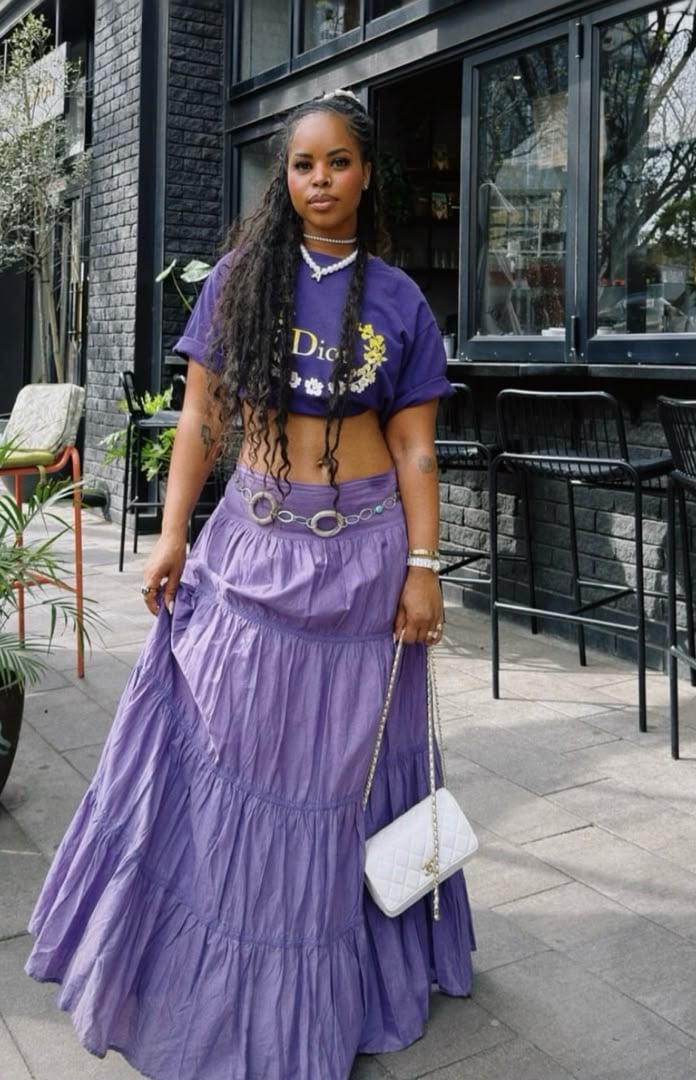
Abi Downs is from Durban, South Africa. Her ancestral language is isiZulu, but because she was adopted into an English-speaking family, English is the language she grew up speaking. She is fluent in it and feels entirely at peace with that fact.
What she isn’t at peace with is the expectation that she should speak isiZulu simply because of her ancestry. “Almost every single day, whether I’m at a petrol station, a shop, or interacting with someone in public, people automatically start speaking to me in isiZulu,” Abi shares.
When she explains that she doesn’t speak the language, the inevitable “Why not?” follows. “Suddenly, I find myself having to explain my entire life story to a complete stranger, which can become pretty exhausting.”
For Abi, English is the language she grew up with, and that reality is not something she feels she needs to apologise for. “I don’t think someone’s ability to speak a particular language should determine how connected they are to their identity or how other people perceive them,” she says.
Her perspective is a useful reminder that language can be an important part of cultural identity without being its only measure. A person’s relationship with their heritage may be shaped by family, upbringing, community, traditions, memories and lived experience. Language can deepen those connections, but the ability to speak it fluently cannot tell us everything about who someone is or how they relate to their background. The challenge, then, is to make room for both realities: the desire to preserve and learn ancestral languages, and the recognition that not everyone has had the same opportunity to speak them.
Bless, from Ghana, points to young people’s increasingly outward-facing lives as another influence on their relationships with language. In a world where opportunities often depend on communicating across borders, dominant languages can become practical necessities.
That doesn’t automatically mean young people have stopped valuing their own languages. It may mean they are navigating competing priorities in environments where some languages offer more immediate advantages than others.
These experiences also raise a difficult question about responsibility. If parents make decisions based on what they believe will give their children the best future, schools reward certain languages over others, and communities sometimes ridicule people who are still learning, at what point does the burden of preserving a language fall on the individual?
There is no single answer. But the stories shared here suggest that encouraging young Africans to reconnect with their mother tongues requires more than telling them they should be proud of their heritage. It also requires creating the conditions in which they can learn, practise and make mistakes without feeling ashamed.
For some of us, our mother tongues are languages we understand but struggle to speak. For others, they’re languages we’ve never had the chance to learn. Either way, the distance can leave us feeling disconnected from people and parts of ourselves we want to understand better.
Reconnecting with a language doesn’t always begin with a dictionary or a formal lesson. Sometimes, it begins with making room for someone to stumble through a sentence without laughing at them. It might mean answering a child’s questions patiently, speaking a language at home without making fluency a test of belonging, or encouraging someone to try again when they get a word wrong.
These small acts cannot resolve every structural barrier to language preservation. But they can make the difference between someone feeling welcome enough to learn and someone deciding it is easier not to try.
So, to the aunties, uncles and fluent speakers reading this, meet us with grace. And to the young Africans nodding and smiling their way through family gatherings, you’re not alone. It isn’t too late to start learning, even if you have to begin with a few words. Your voice still belongs to you.