


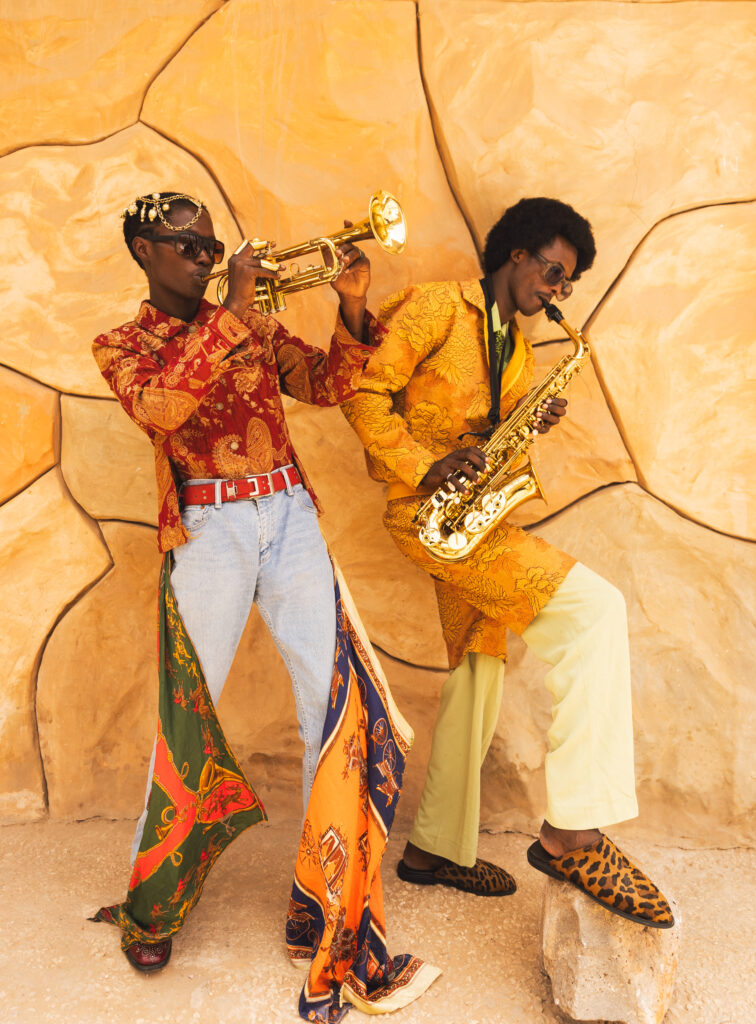
Photographer Khaled Fhemy Mamah and stylist Hélène Redolfi created Dakar Sound Project to document how the city’s music culture shows up in what people wear. Shot at Maison de la Culture Urbaine, Torobee Distribution (a vinyl archive), and across Dakar’s streets, the editorial pairs models with instruments—saxophones, trumpets, synthesizers—and clothes from local designers working in upcycling and vintage. The concept is simple: in Dakar, music and fashion operate as the same language. Both remix what already exists. Both carry memory forward.
Dakar does not tiptoe into your senses, it storms in. With salt-washed air, rust-orange walls, and endless layers of sound and color, the Senegalese capital is a living composition. The streets pulse with rhythm: the metallic clang of car rapide doors, the call to prayer sliding over corrugated rooftops, the vinyl crackle in corner record stores. In Dakar, the body doesn’t just move—it dances. And fashion doesn’t just adorn—it performs.
The Clothes
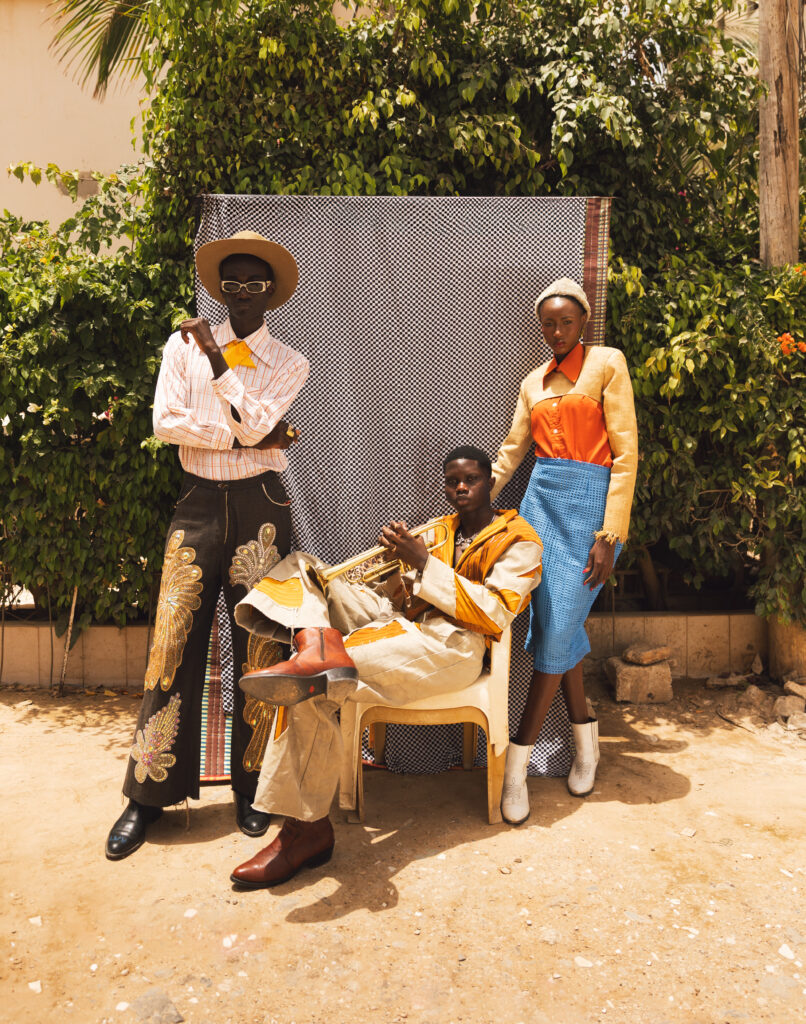
The garments come from a network of Dakar-based designers building practices around reuse. Romzy works in Afro-futurist silhouettes with spiritual and political undertones. Gringo Custom treats tailoring like sampling—textured, personal, unpredictable. Oghewa Design strips things down to clean, architectural lines. Let’s Wear Vintage curates retro tailoring and reissue pieces. Kakinbow, Upcyclers Dakar, and KB Upcycling turn discarded materials into new garments.
The styling is layered: skirts over trousers, deconstructed blazers, silk scarves, chunky jewelry, crochet headpieces, oversized sunglasses. Everything stacks. Baby blue suiting next to washed denim next to burnt orange next to faded pink. Accessories by Accessorydels and Fadel Guingue, sourced from local markets, push the energy further.
This is what Dakar street style actually looks like—loud, improvised, intentional.
The Performance
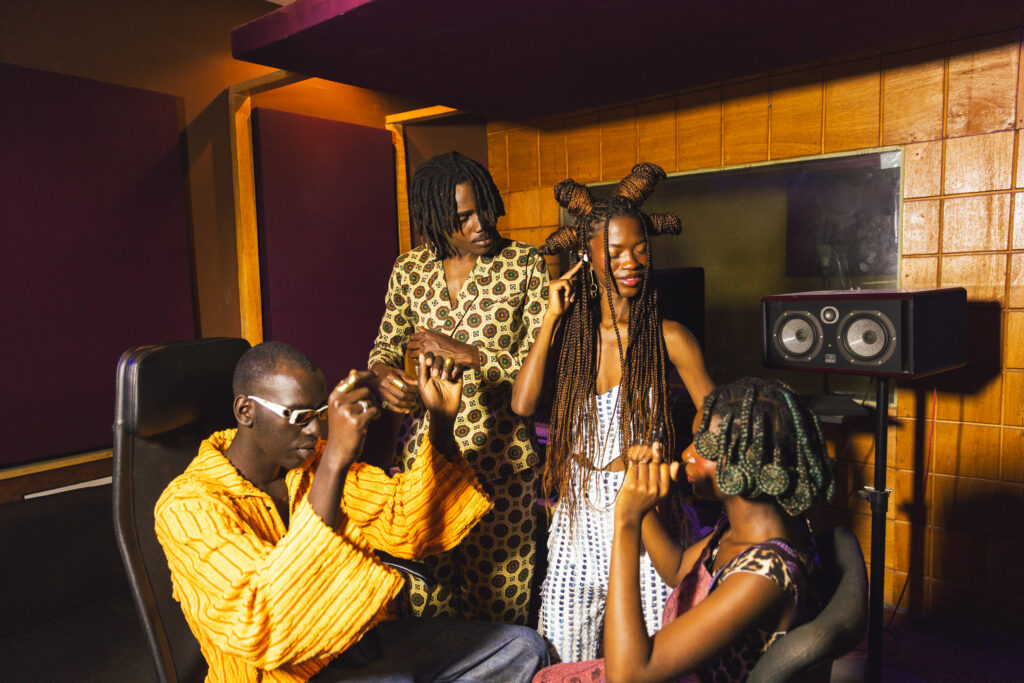
Professional trumpeter and educator Mildah coached the models on how to hold the instruments. The gestures had to read as real, not decorative. The result: images that feel less like posed fashion shots and more like paused performances. Each model becomes part of the composition.
Makeup artist Rafiath Radji used copper, gold, and amber tones pulled from the city’s light. Gloss, metallic dust, warm shimmer. The beauty work treats faces like another surface for reflection.
The Locations
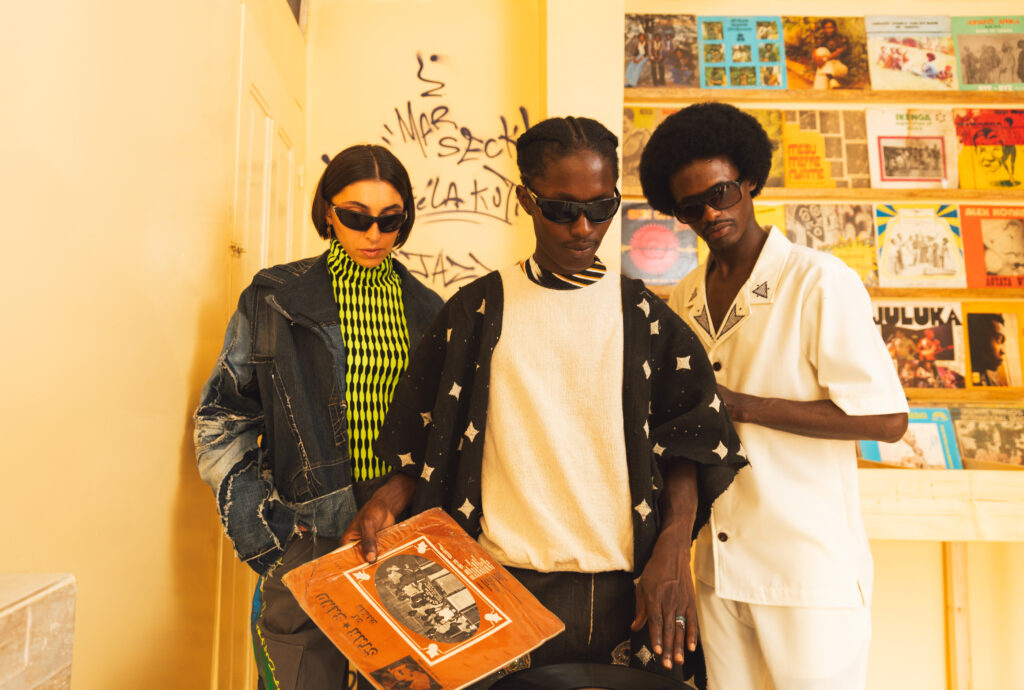
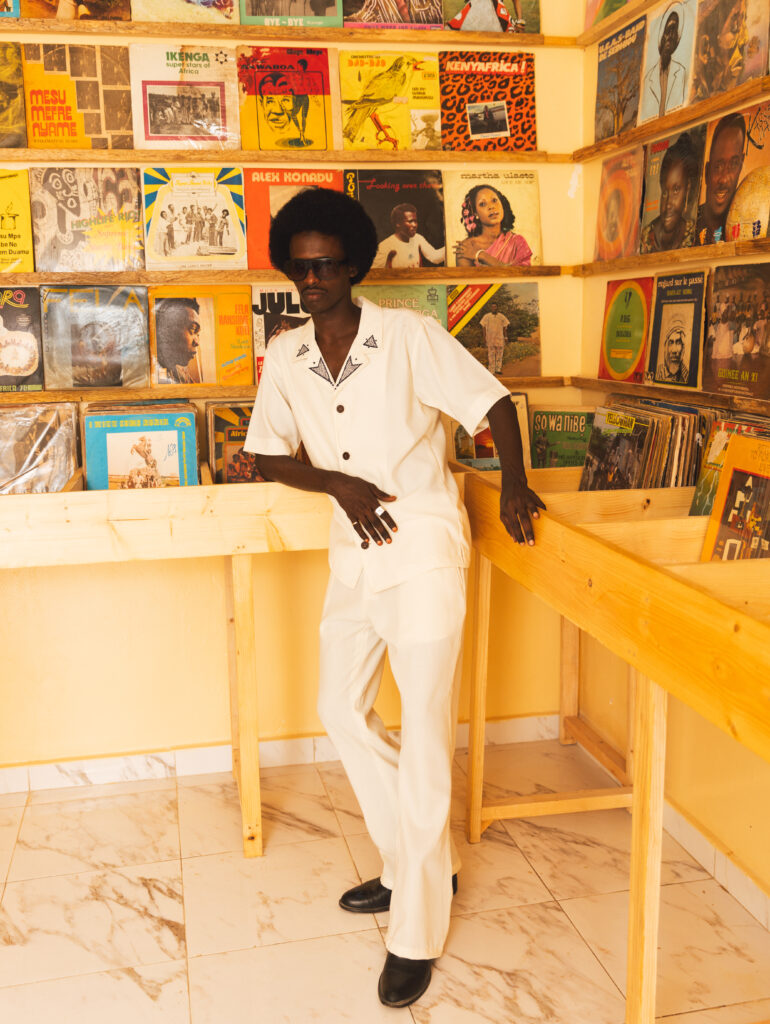
Torobee Distribution is a vinyl archive where the past is catalogued in cassettes, records, and analog relics. The color palette: amber, faded blue, chalk white, deep indigo.
MCU Dakar (Maison de la Culture Urbaine) is where youth gather to rehearse, create, and organize. It’s a site of active cultural production, not passive backdrop.
But the most important location is the street. Dakar’s sidewalks, walls, and corners are where the city’s creative language gets made and circulated. Fashion happens there before it happens anywhere else.
The Models

The cast includes Dakar natives and models from Gabon and Benin—a cross-continental ensemble linked by rhythm rather than geography. Djibril Kamara, Cyrilus le Romain, Fadel Diop, Marina Boucal, Amadou Dia, Daouda Sow, Martha B Cole, Nolwenn Pulzia, and Harry Jardel Allogho Mve each bring different energy to the series.
The Bigger Picture
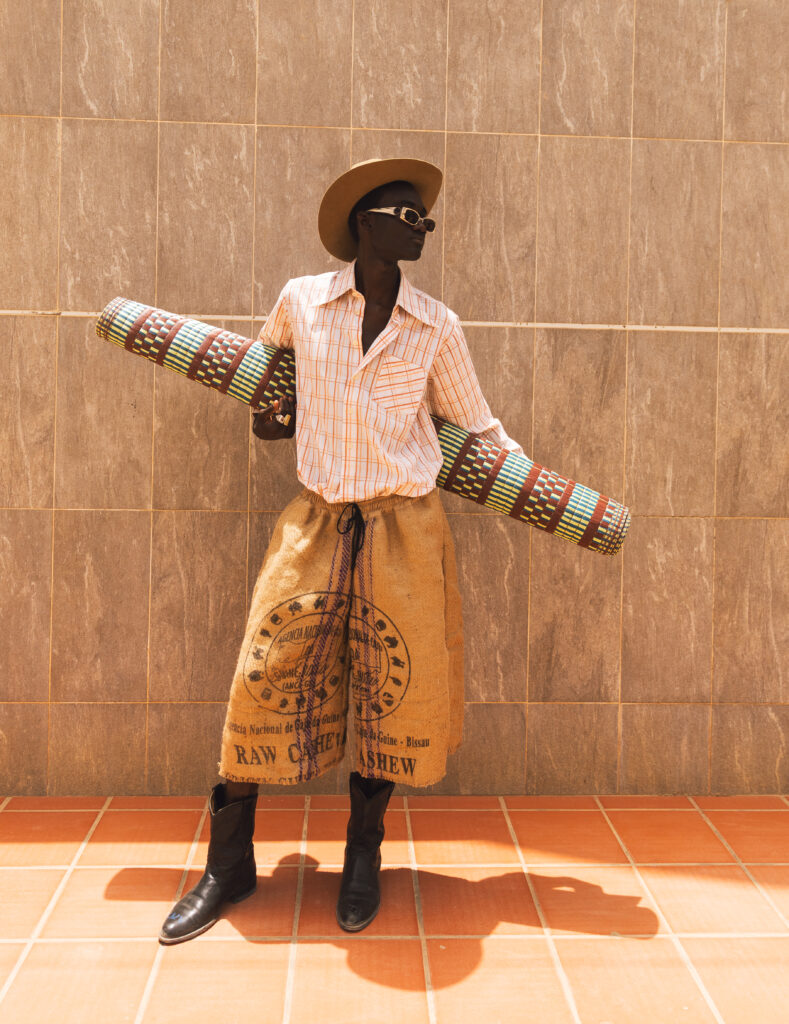
Dakar Sound Project isn’t a one-off. Fhemy and Redolfi see it as the beginning of a moving series—one that will travel across African cities, tracing musical heritage and its relationship to fashion from Dakar to Lagos, Accra, Nairobi, Abidjan, and beyond. Each edition will work with local creatives and stylists, allowing the city’s rhythm to shape the visual language.
The project argues something specific: that in African cities, fashion and music don’t operate in separate spheres. They share the same streets, the same slang, the same heat. They remix the same archives. They’re both about taking what exists and making it new.
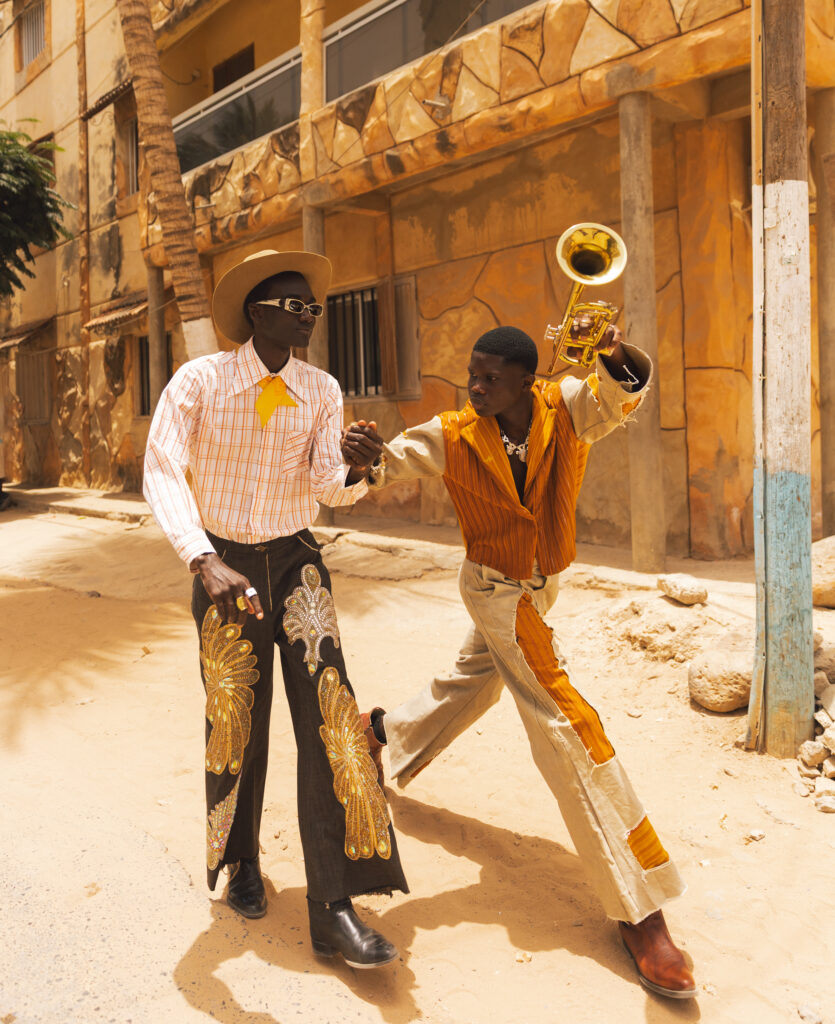
In Dakar, that remix is constant. The city builds with what it has. Sustainability isn’t a marketing angle—it’s infrastructure. It’s how things work. Dakar Sound Project documents that process. And this is just the first verse.
CREDITS
Concept & Creative Direction
Khaled Fhemy Mamah – Photographer @fhemy.raw
Hélène Redolfi – Art Direction & Styling @heleneredolfi
Makeup Artist
Rafiath Radji – Makeup @itsbeautybyrafi
Musical Direction
Mildah – Trumpet Coaching & Instrument Guidance @mildah_miambanzila
Models
Djibril Kamara @djibril_kamara | @agomanagement
Cyrilus le Romain @cyr_dm
Fadel Diop @magnull_le_noir
Marina Boucal @style_modelmgt
Amadou Dia @alke_boy
Daouda Sow @daoudasow_ds | @É1 (double-check this handle, it may be mistyped or missing context)
Martha B Cole @juste_martha
Nolwenn Pulzia @npulzia
Harry Jardel Allogho Mve @bighvrry
Designers & Brands
Romzy @romzystudio
Gringo Custom @gringo_custum
Oghewa Design @oghewa.design
Let’s Wear Vintage @lets.wear.vintage
Kakinbow @kakinbow.shop
KB Upcycling @kb_upcycling
Upcyclers Dakar @upcyclersdakar
Sokolata @sokolata
Accessorydels @accessorydels
Special Thanks
MCU Dakar – Maison de la Culture Urbaine @mcudakar
Torobee Distribution – Vinyl Store & Location @torobee_distribution
El Model Agency @el_model_agency
Amadou Diane @amadouniane
Caroline Renaud @carolinezren
Chloé Gilot @chloegilot
Listen to the soundtrack on Apple Music.
Stay with us.
For more stories on African fashion, culture, and the creatives shaping what’s next — subscribe to Guzangs