


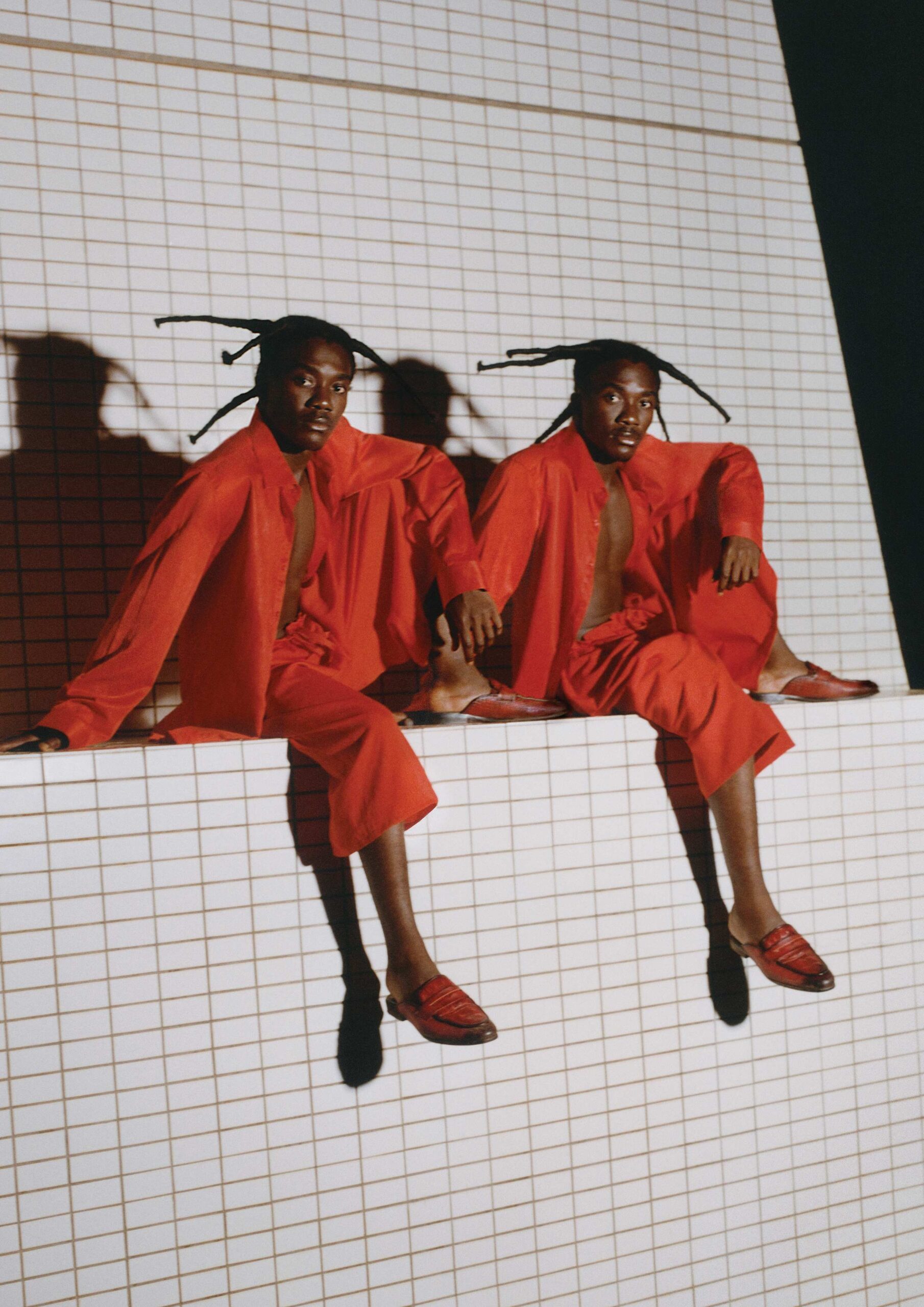
Byredo’s new Bal d’Afrique campaign was shot in Accra, Ghana, and built around a collective of West African dancers, models, choreographers, filmmakers and stylists. It is a production that takes the fragrance’s long relationship with African culture and grounds it in African creative infrastructure.
The campaign centers on choreography by Ladji Koné, born in Burkina Faso, co-founder of Collectif JUMP and founder of Compagnie Ciel K, trained at EDIT in Ouagadougou. His work is structured in three acts. The first draws from traditional dances of Burkina Faso, Mali, Guinea and Senegal. The second moves through contemporary and viral forms: Azonto, Wala Wala, Coupé-Décalé, Soukous, Legwork. The third arrives at an experimental register shaped by techniques from École des Sables, the institution founded by Germaine Acogny in Toubab Dialaw, Senegal. What emerges is not a performance in service of a product. It is a choreographic thesis on how African movement languages evolve: borrowing from tradition, absorbing the street, reaching toward the experimental.
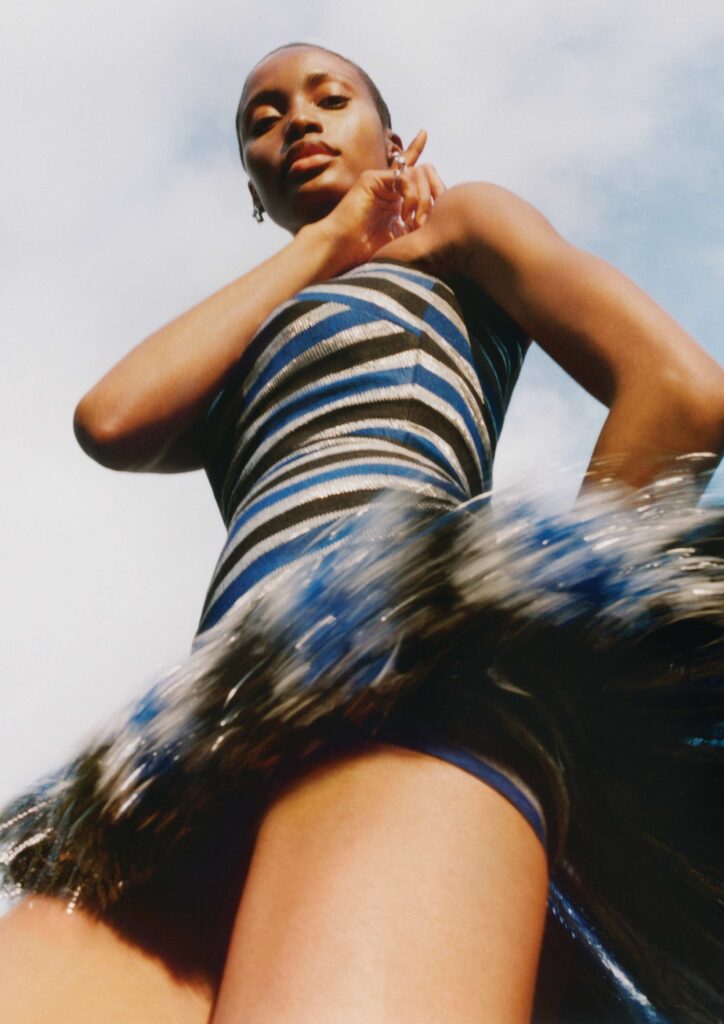
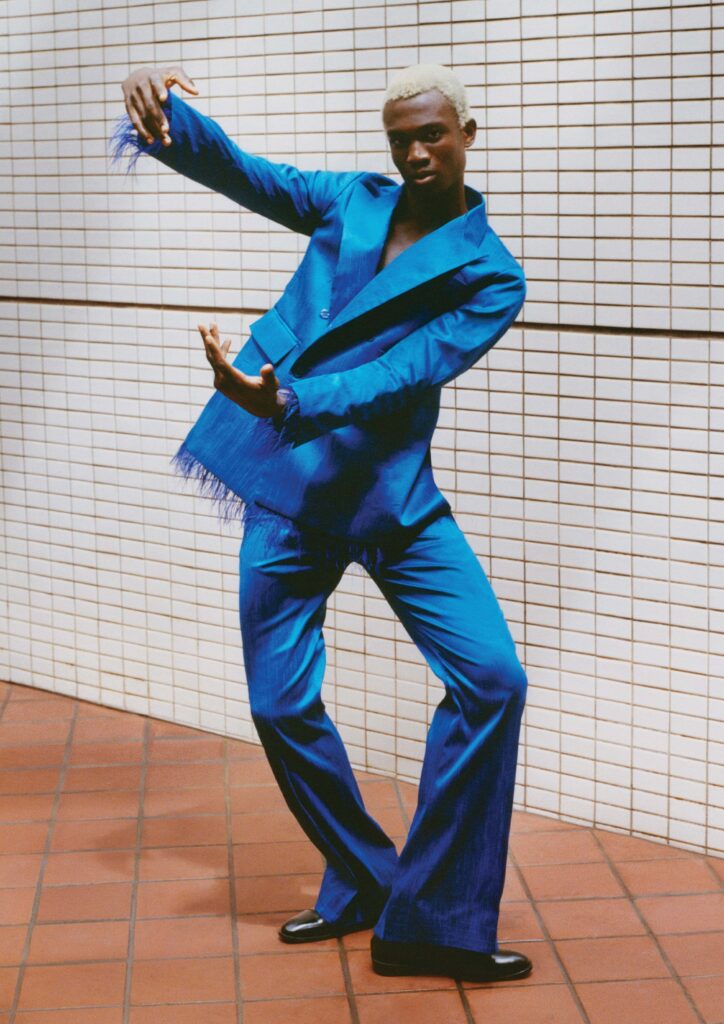
The cast draws from DWP Academy in Accra, École des Sables in Senegal, and performers from Togo, Ivory Coast, Nigeria and Ghana. Photography is by Philip-Daniel Ducasse, Haitian-raised and Brooklyn-based, whose Afrocentric practice has shaped campaigns for Vogue, Burberry and Calvin Klein. The campaign film is directed by Nuotama Bodomo, born in Accra, a Sundance and HBO alumna who founded Mothertongue Studio in Ghana. Styling is by Raphael Hirsch, Nigerian-born, Fashion Editor at Large at AnOther Man, working with Lagos-based label Eleven Sixteen and suiting cut by Accra-based tailors. Each dancer is styled individually, resisting the visual uniformity that typically flattens ensemble casts in luxury campaigns. The garments function as extensions of the choreography rather than as costumes imposed on it.
The creative team spans the continent and its diaspora. A choreographer working between Ouagadougou and Europe. A filmmaker who returned from New York to build a studio in Ghana. A photographer whose Haitian roots inform an Afrocentric visual language. A stylist whose Nigerian heritage shapes editorial work from London. Dancers trained at institutions from Accra to Senegal. The campaign doesn’t collapse Africa into a single geography. It maps the creative networks through which culture actually moves.
What makes this structurally significant has less to do with representation and more to do with production economics. The choreographer is in Ouagadougou. The dancers are trained at African institutions. The garments are cut in Accra. Production budgets flowed through African and diaspora creative professionals across choreography, casting, tailoring, film and styling. In an industry where African inspiration frequently generates European production and global profit, routing that investment through African creative labor is not symbolic. It is structural.
Byredo has engaged with African creative landscapes before. A 2023 Bal d’Afrique chapter featured South African surfer Mikey February filmed in Cape Town. But the Accra campaign operates at a different scale, employing African and diaspora talent across multiple disciplines simultaneously. The depth of the creative infrastructure is what distinguishes this from location-based storytelling.
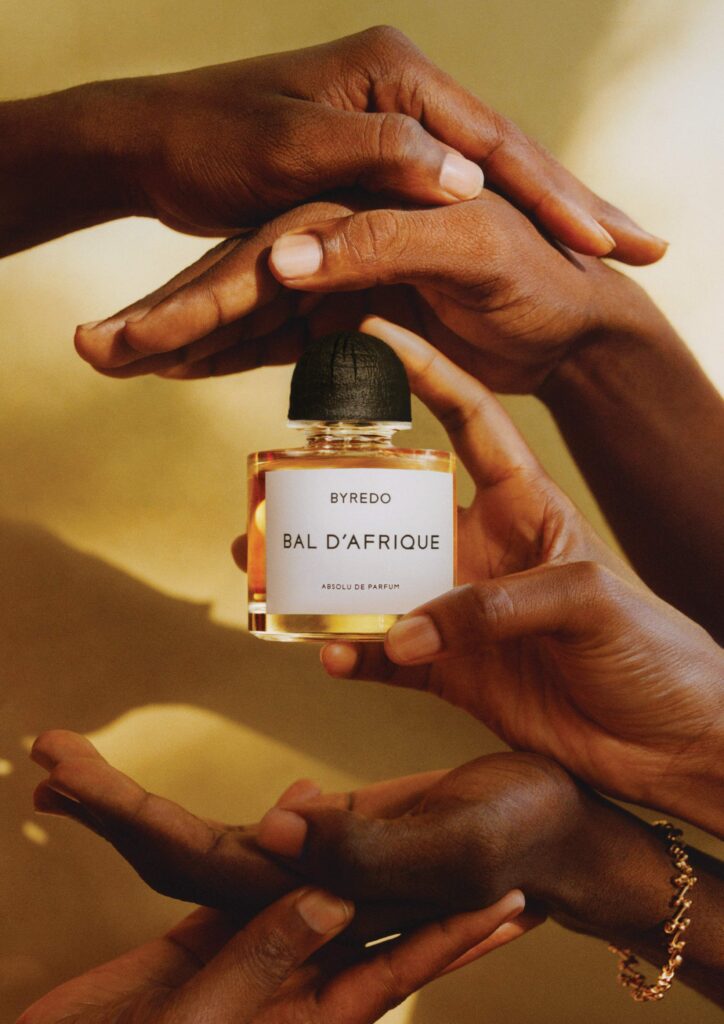
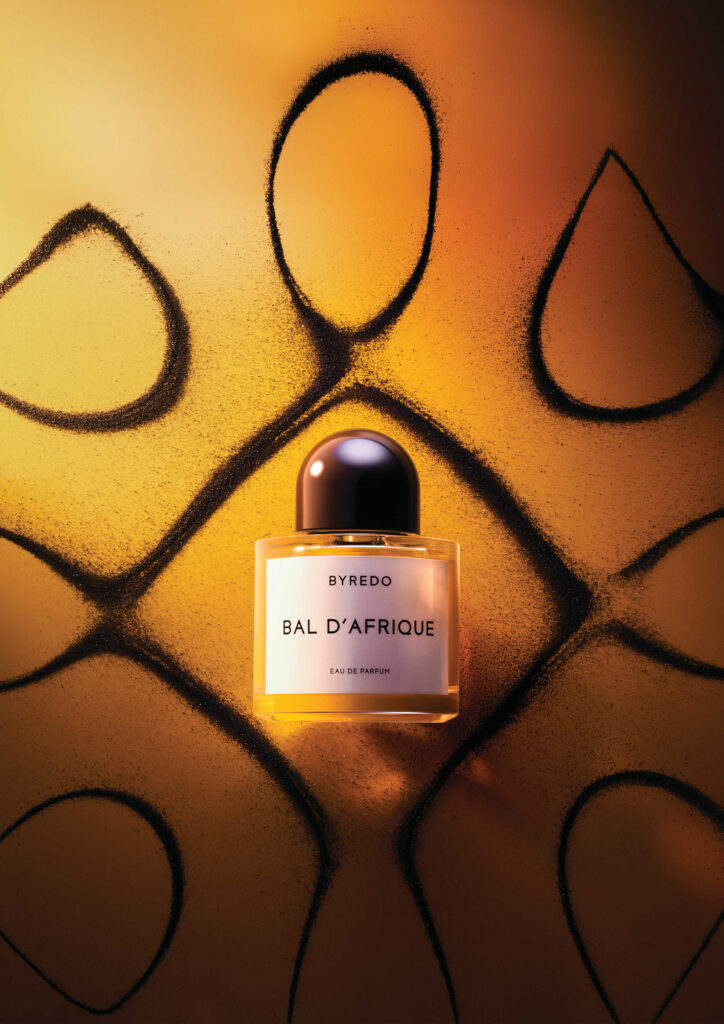
This is also the first major Bal d’Afrique campaign produced under Puig’s stewardship, following founder Ben Gorham’s departure as Chief Creative Officer in June 2025. Alongside the campaign, Byredo introduces Bal d’Afrique Absolu de Parfum, a more concentrated interpretation of the original composition. The redesigned bottle cap draws on the Japanese craft of Yakisugi, the art of charring wood. The decision to invest in a production of this ambition signals that the brand’s relationship with African culture is deepening, not retreating.
The Bal is on African ground. And the creative infrastructure behind it suggests this is a relationship worth building on.
Photography by Philip-Daniel Ducasse and Romain Lenancker. Choreography by Ladji Koné. Film direction by Nuotama Bodomo. Styling by Raphael Hirsch.