


Building Around Broken Systems
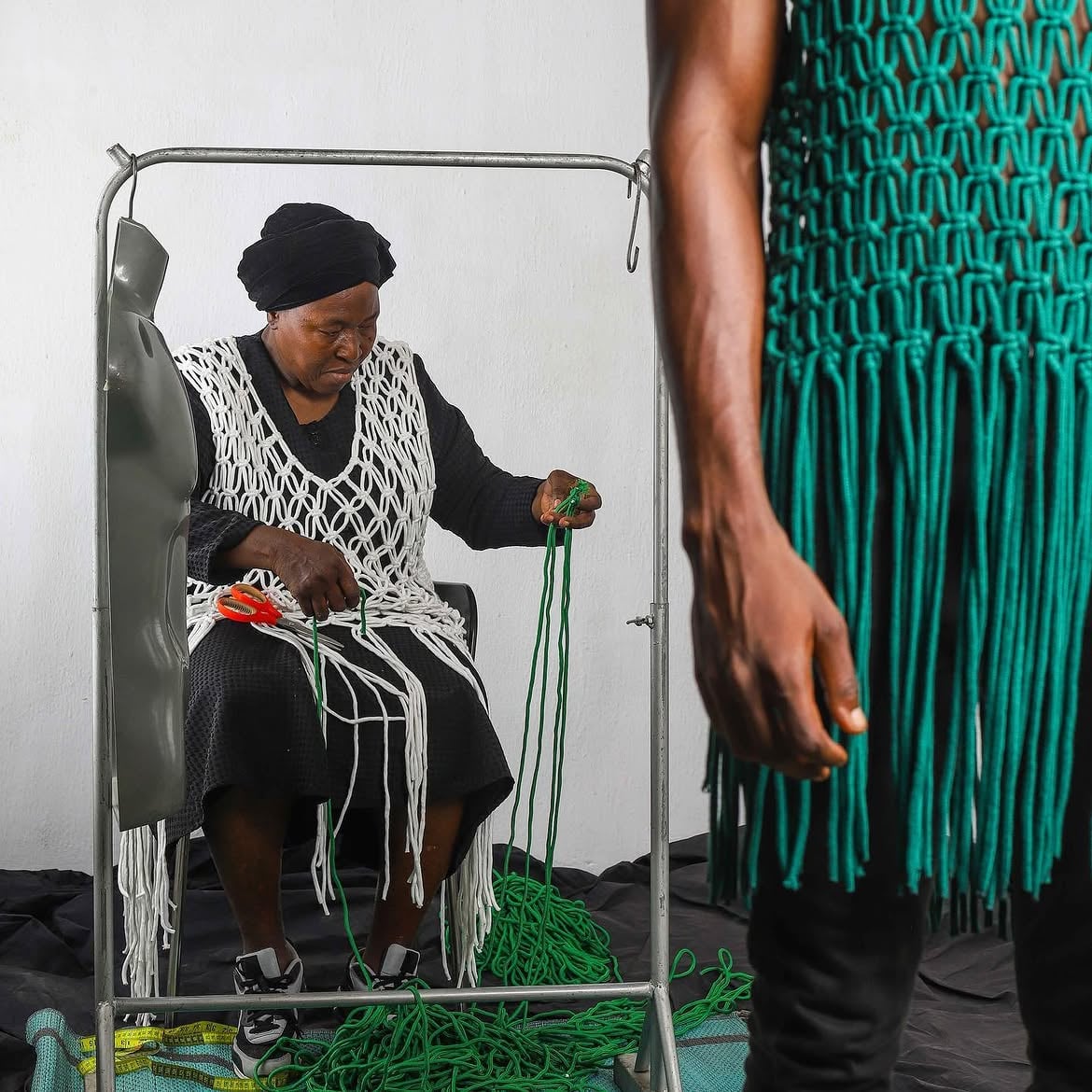
When Godwin Okoruwa, founder and creative director of GDWN, started his gender-fluid label amidst the pandemic in 2020, he had it firmly at the back of his mind that he had to build purely from his instinct. There was no elaborate market analysis or established blueprint for how the brand would grow. His already decade-long experience in fashion, including working production for Lagos Fashion Week and building a modelling agency, had taught him enough to recognise an opportunity, but much of what came next had to be figured out as he went.
Experiences like Godwin’s are not isolated. Across the West African fashion industry, creativity continues to expand faster than the systems designed to support it. While global interest has increased significantly over the last decade, many designers still operate within fragmented structures that make long-term growth difficult to sustain. Global fashion already thrives through interconnected systems such as manufacturing, retail infrastructure, market research, distribution networks, funding and consumer data. These structures are built to help brands understand who their audiences are, how markets behave, and how businesses can scale sustainably. But in this part of the world, such information is difficult to access. A 2023 UNESCO report on the African fashion sector documents the same gaps, citing sparse investment, poor infrastructure, weak intellectual property protection and difficulty accessing new markets and affordable materials. If established fashion businesses still struggle to navigate these limitations, the challenges become even more severe for emerging and newly established brands attempting to enter the industry.
The reality is that these young fashion businesses are entering the industry fully aware of its structural limitations, but instead of waiting for ideal conditions, many are building with intentionality, using whatever resources and networks they can access while hoping for future changes.
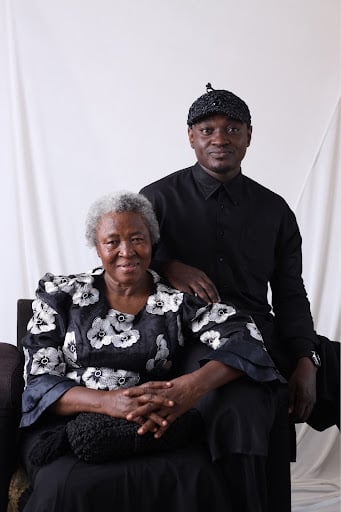
GDWN was not Okoruwa’s first foray into fashion entrepreneurship. His business instinct was shaped by a streetwear label he had begun before his university days. His earliest customers were largely friends and fellow students while he was in school. He watched what people were wearing and experimented with what was trending, including a viral ankara hoodie the Nigerian artist Davido had worn, to which he added his own interpretation. “It wasn’t like there was this specific sit-down,” he says. “It was more like, ‘What’s trending? Let’s see how we can give it our own twist.'”
For Godwin, GDWN required a different kind of thinking. It needed to exist firmly within an ecosystem, and to expand its clientele beyond the country and the continent at large. It was also finding its balance with a different model. GDWN is a sustainability-focused label run by Godwin and his mother, Juliet Okoruwa. He is the creative director; his mother is the production director.
Starting in this industry meant building within his own capacity, and his approach has been deliberately slow: taking little profits and reinvesting whatever money comes into the business. Even the network surrounding the brand has largely been built through personal relationships. He works with a long-standing fabric supplier who was introduced by his mother and sometimes sources materials specifically for him when she does not have what he needs. Photographers and models have been paid when their work requires it, while other projects have been structured as collaborations. His partnerships with other designers, including Orange Culture and Odio Mimonet, have similarly grown through relationships rather than a formal industry pipeline.
“So far, so good, we’ve been fortunate,” Godwin says of the progress. “I’ve also been able to use relationships that I’ve built over the years, relationships from the past three years, and actually from the past ten years.”
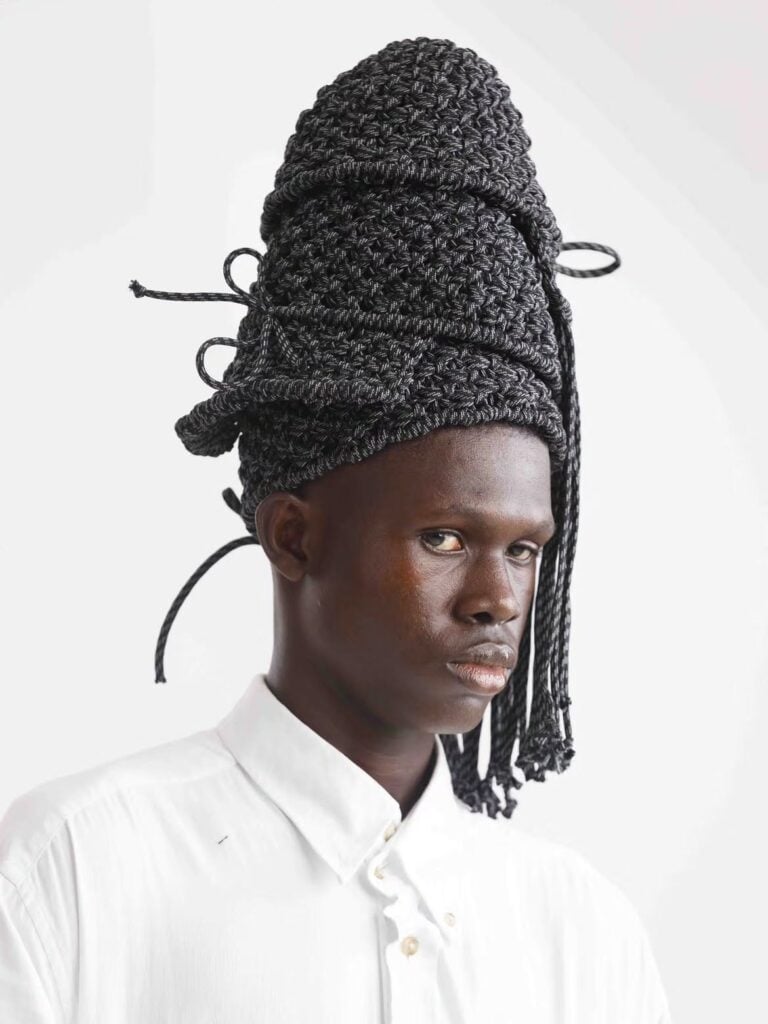
Access to private networks is not always these designers’ greatest advantage. Instead, they have become deeply strategic about building without them. Social media is arguably their most credible leverage. It has become far more than a promotional tool: Instagram, TikTok, Pinterest and even WhatsApp now function as storefronts, research tools, marketing departments and customer-service systems all at once. Young brands study engagement closely, paying attention to what audiences respond to emotionally and visually, and using that knowledge to build networks of their own while also connecting directly with customers, creatives, suppliers and potential collaborators. Digital commerce has widened that opening. UNESCO found the share of Africans shopping online rose to 28 per cent in 2021, from 13 per cent in 2017.
In 2024, Paul Williams, a Nigerian designer based in the United Kingdom, made a post that changed the trajectory of his brand. Created in collaboration with a German videographer, the campaign, he says, reached 1.4 million views on Instagram and introduced his work to a much wider audience, particularly in the United States, which he says makes up the majority of his customers.
For Williams, the moment marked more than virality. It became a turning point in how he understood visibility, storytelling, and the global reach of African fashion brands. Williams entered the industry through survival, first as a retailer in 2018 and then as a bespoke designer in 2020, but his early experiences were shaped by struggle like those of any new designer: few clients, limited funding. From the beginning, his brand was self-funded, supported largely through income earned from different jobs and freelance creative work. At various stages of the journey, he balanced fashion alongside other forms of labour in order to sustain the business and keep it moving.
However, relocating to the UK in 2021 shifted both his perspective and the direction of the brand. “Everything became clearer after I moved,” he says. “I started understanding how West African designers in the UK were able to interpret their heritage while still being globally relevant.”
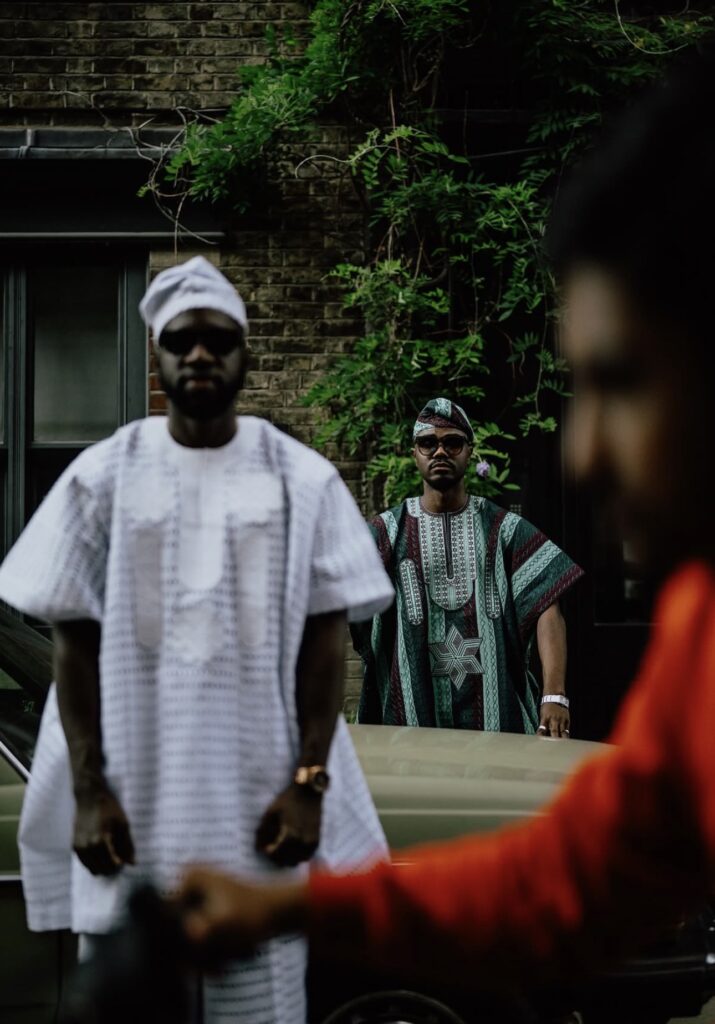
In the UK, Williams immersed himself in fashion talks, exhibitions, and industry events, studying how brands communicated narrative through design. He cites labels like Labrum London and Tolu Coker as part of the ecosystem that influenced his thinking around storytelling and cultural positioning. Instead of simply producing garments, he became interested in creating work that reflected his own experiences navigating migration, instability, and rebuilding life abroad.
While the UK provided access to fashion infrastructure, residencies, and international networks, Williams discovered that his strongest customer base existed elsewhere. “The UK gives me structure,” he says. “But the buying power is in the United States.”
Today, much of his audience consists of Africans in the diaspora, many of whom connect with the emotional and cultural references embedded within the brand. Weddings remain a strong part of his Nigerian business, but Williams is increasingly focused on transitioning fully into ready-to-wear and positioning the label within international fashion spaces.
“Over the last year, I’ve become more intentional about visibility, applying for residencies, connecting with writers and senior designers, and refining how the brand is presented. Some applications have been unsuccessful, but I see the process as part of a longer journey toward establishing myself within a global fashion ecosystem,” he says.
Paul Williams represents a category of brands that begin to find their footing once they operate within systems that offer greater structural support and visibility. While the brand still faces challenges, access to networks, residencies, fashion events, and international markets in the UK has created opportunities that many young designers based solely on the continent often struggle to reach. With growing audience data, international customer engagement, and increasing visibility, the brand is also positioned in a way that could make future funding or institutional support more accessible.
“There are some African grants for fashion designers, but they are very few,” says Godwin Okoruwa. “That’s why applying for international grants can sometimes mean even higher competition. First of all, you’re competing with many more international brands.”
This has forced him to rethink the pace at which he pursues support. At the moment, he is more interested in building the reputation and structure of GDWN than rushing towards every available funding opportunity. He sees grants as something that should come at the right stage of the business, when there is already something tangible to show for the work: a clear brand language, a defined identity and evidence that the business can sustain itself.
Godwin also believes there are more than a few basics to fix before emerging fashion entrepreneurs can find easier structure. Electricity, he says, is one of them. Even for a brand like his that does not rely entirely on industrial sewing machines, the absence of reliable power can interrupt the most basic parts of production. The problem runs well beyond fashion. The World Bank estimates that unreliable power costs Nigeria between 5 and 7 per cent of GDP each year. Then there is logistics. Moving fashion across African borders can be so expensive and complicated that products sometimes have to leave the continent before making their way to another African country. For Godwin, the absence of an efficient intra-African logistics network represents a missed opportunity in a continent whose fashion market is large enough to sustain itself.
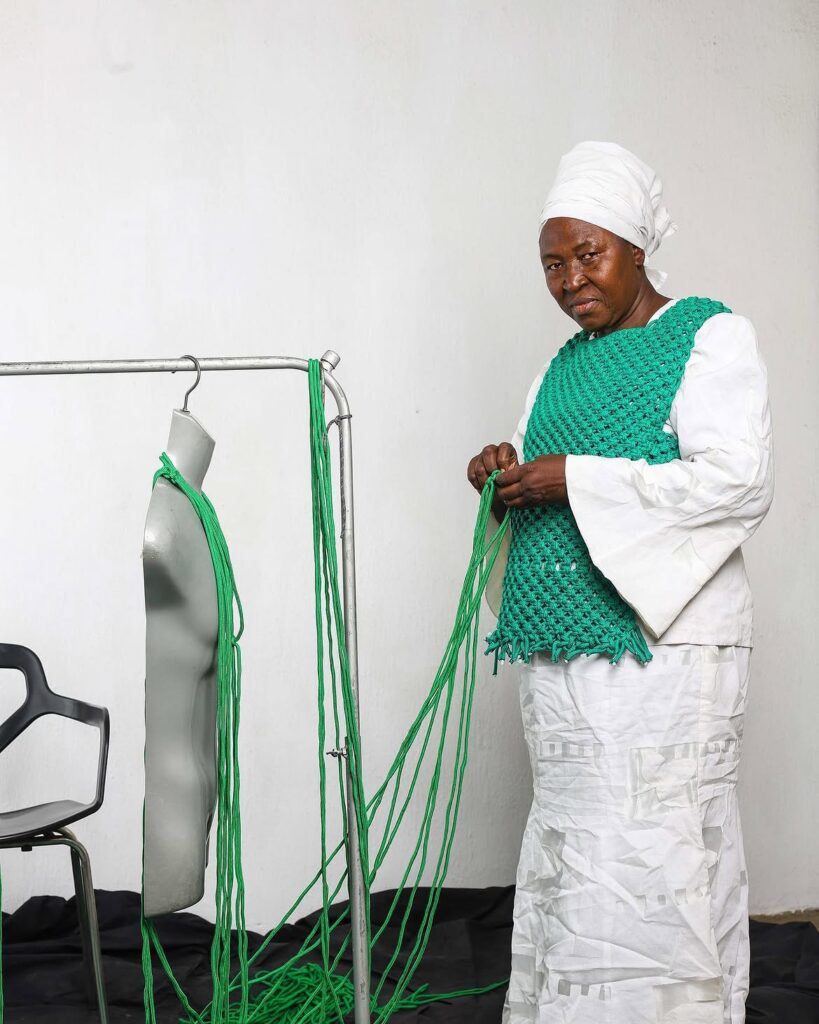
“I believe the industry does not necessarily need to look outside itself to build a viable fashion economy,” he adds. “The continent is large enough, and its people are educated and fashionable enough, for us to thrive within ourselves.” What is missing, he argues, is an infrastructure capable of allowing those pieces to move easily between one another.
Perhaps what hurts the most is the expectation placed on designers to always figure things out, to always find a loophole, no matter how small, and somehow make it work. Many get stuck in that expectation. For designers like Godwin, running at the speed of their capacity is perhaps the best way to avoid these grand failures.
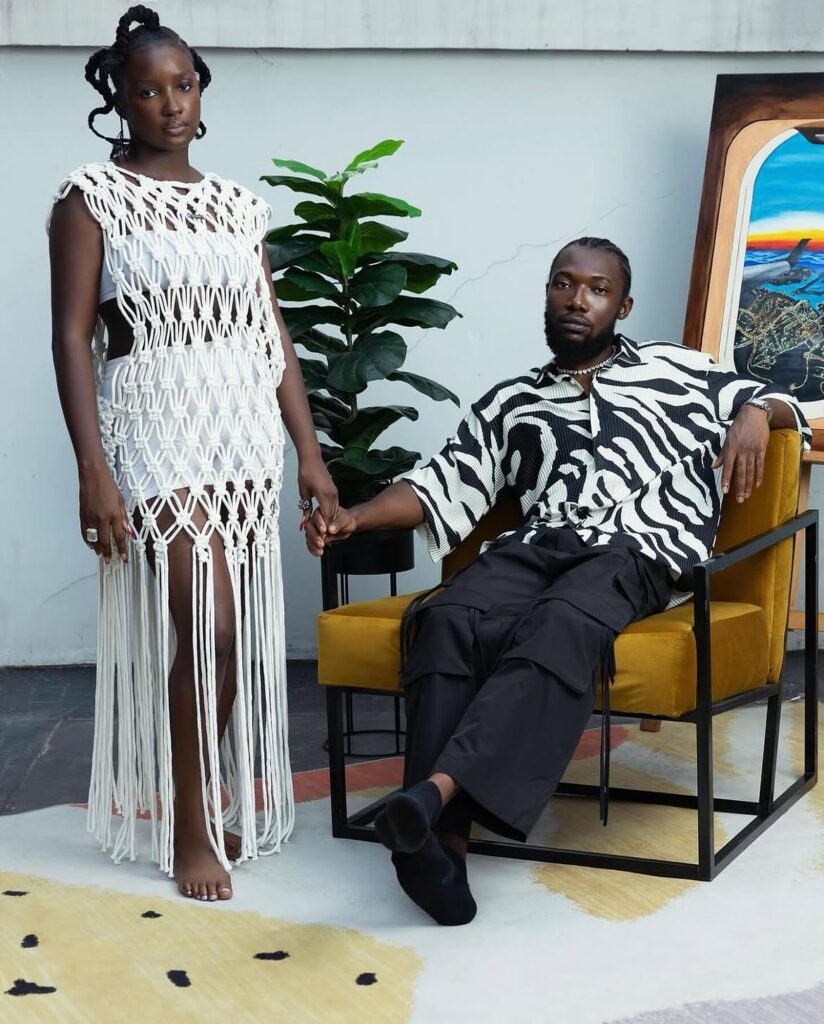
If West African creative industries are to grow into fully sustainable economic ecosystems, then the conversation must move beyond celebrating resilience alone and toward building stronger institutional support. Designers should not have to rely solely on instinct, personal networks, or constant improvisation to build globally competitive businesses.
If there is one thing young designers have proven, it is that innovation can still emerge in the absence of perfect systems. They have built communities where institutions were lacking, created visibility without massive advertising budgets, and transformed cultural specificity into global relevance. But the future of West African fashion should not depend entirely on survival strategies. With stronger investment, designers would not only sustain themselves but scale with far greater stability and reach.