


NAANIYA: The New Language of Modest Fashion
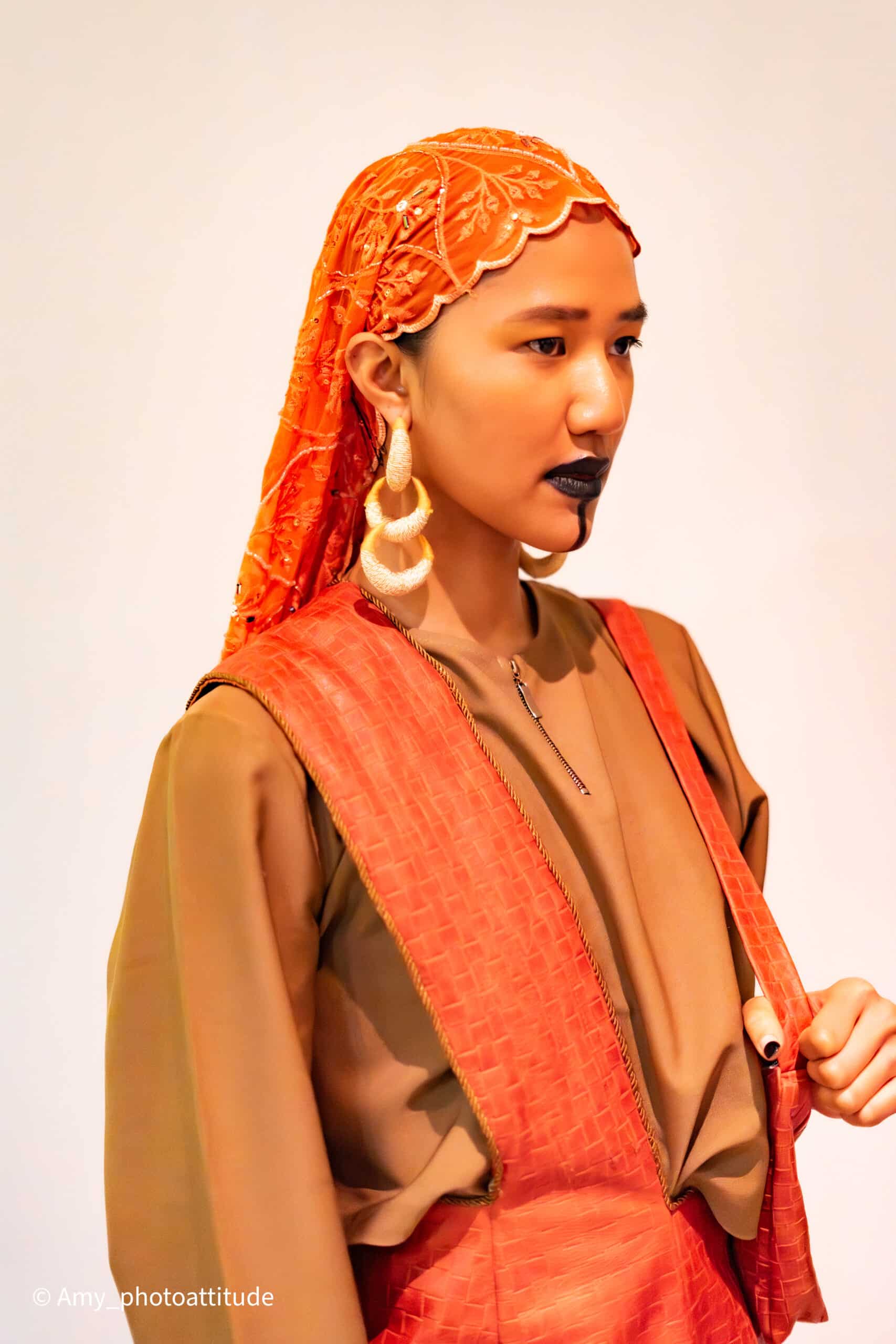
Fashion entered Madina Tangara’s life long before NAANIYA existed. Her father was a sapeur, a man who understood the quiet power of dressing with intention, and her mother carried an effortless elegance and a deep appreciation for style. “I understood early on that clothing could carry meaning beyond appearance,” she says. That conviction became the foundation of NAANIYA, the fashion house she created to explore heritage, identity, and contemporary femininity from a distinctly African perspective.
The philosophy begins with the name. NAANIYA derives from the Bambara word for intention, connected to the Arabic niya, and reflects the belief that every creation begins with purpose. “Actions only have meaning through their intentions,” Madina says. Each collection starts from an intention rooted in memory, identity, and cultural transmission, which turns every garment into an expression of meaning as much as design.
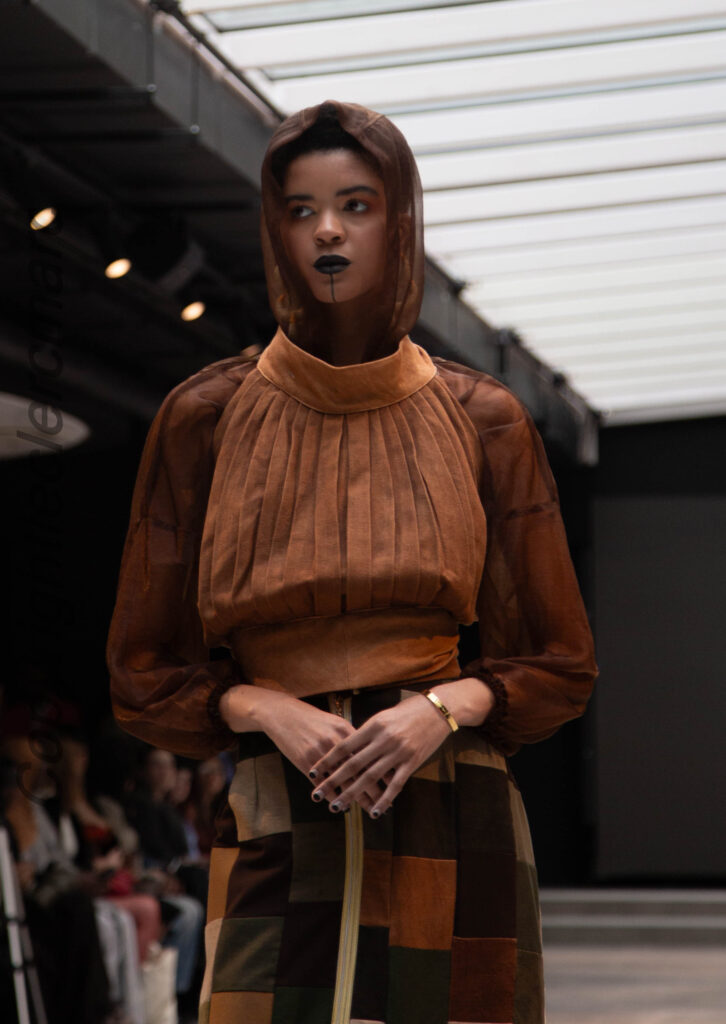
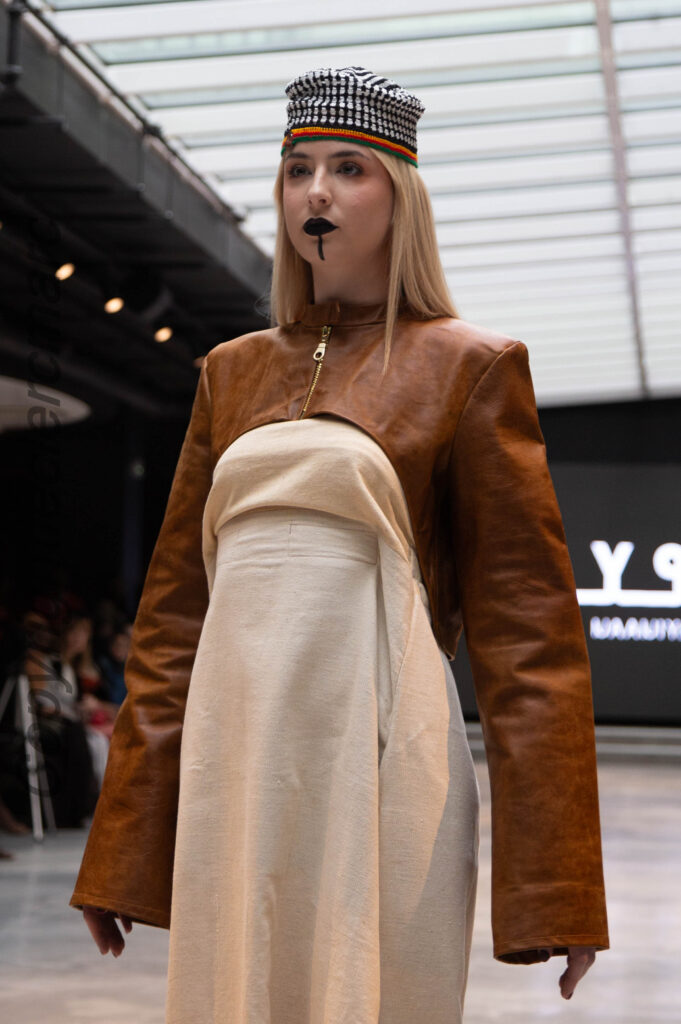
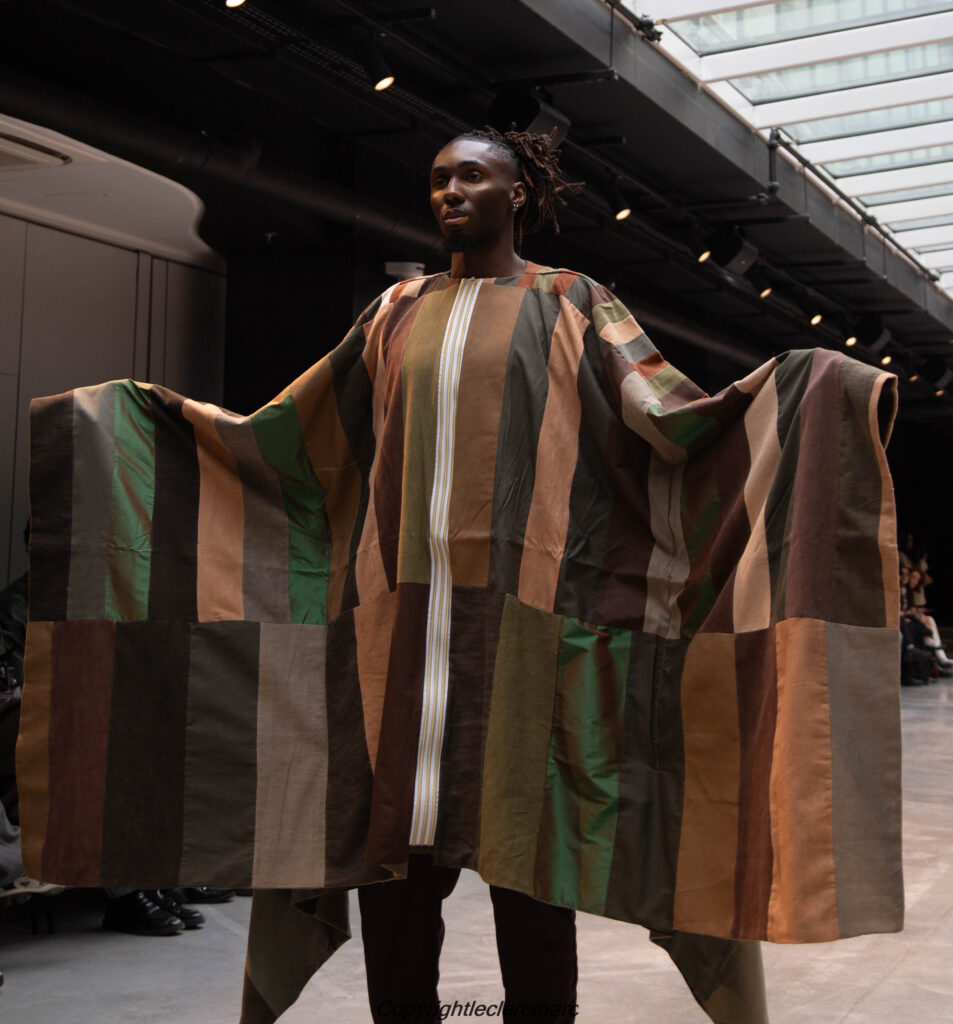
At the heart of the house lies the conviction that modest dressing opens creative possibility. “I see modest fashion as an exploration of the power of silhouette beyond revealing the body,” she says. “Modesty is not a limitation. It is a creative language.” Through oversized tailoring, architectural proportions, fluid layers, and sculptural volumes, NAANIYA proposes a vision of femininity in which elegance is expressed through movement, craftsmanship, and presence rather than exposure. The work draws attention to construction, texture, and proportion instead of centering the body, and in doing so offers an understanding of luxury rooted in thoughtful design.
As a Muslim woman who wears the veil, Madina considers representation inseparable from her creative practice. “I want to show new possibilities of femininity,” she says. Through NAANIYA she contributes to a broader movement reshaping the global conversation around modest fashion, opening space for more varied expressions of womanhood, culture, and identity.
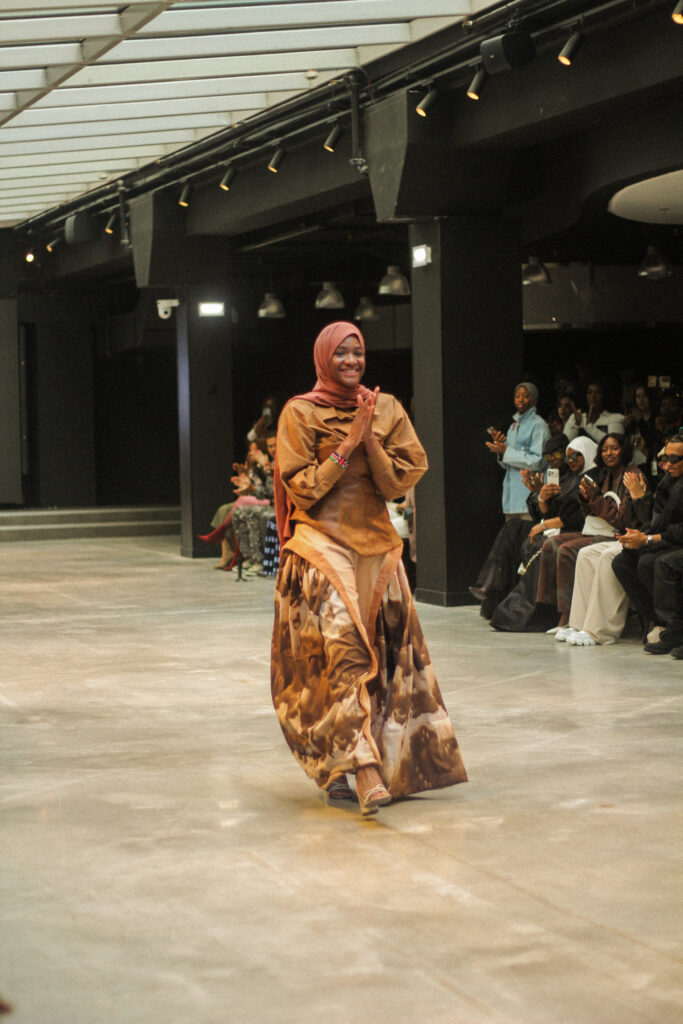
Born and raised in France to Malian parents, Madina grew up navigating multiple identities. In Mali she was sometimes perceived as the French girl; in France she was often defined by her Malian heritage. Living between these realities became central to her creative vision. “My work explores this space in-between: between memory and reinvention, between tradition and contemporaneity,” she says.
Rather than choosing one identity over another, she built a universe where every part of herself could coexist. NAANIYA became a way of reconnecting with histories and traditions that had felt distant while she was growing up in Europe. “NAANIYA is a way to reconnect with my roots and heal the experience of growing up between two worlds,” she says, describing a wider diasporic experience of carrying inherited memories while creating something entirely new. “I want to create a bridge between cultures.” Across her collections, African heritage meets contemporary design, and personal history takes shape through clothing.
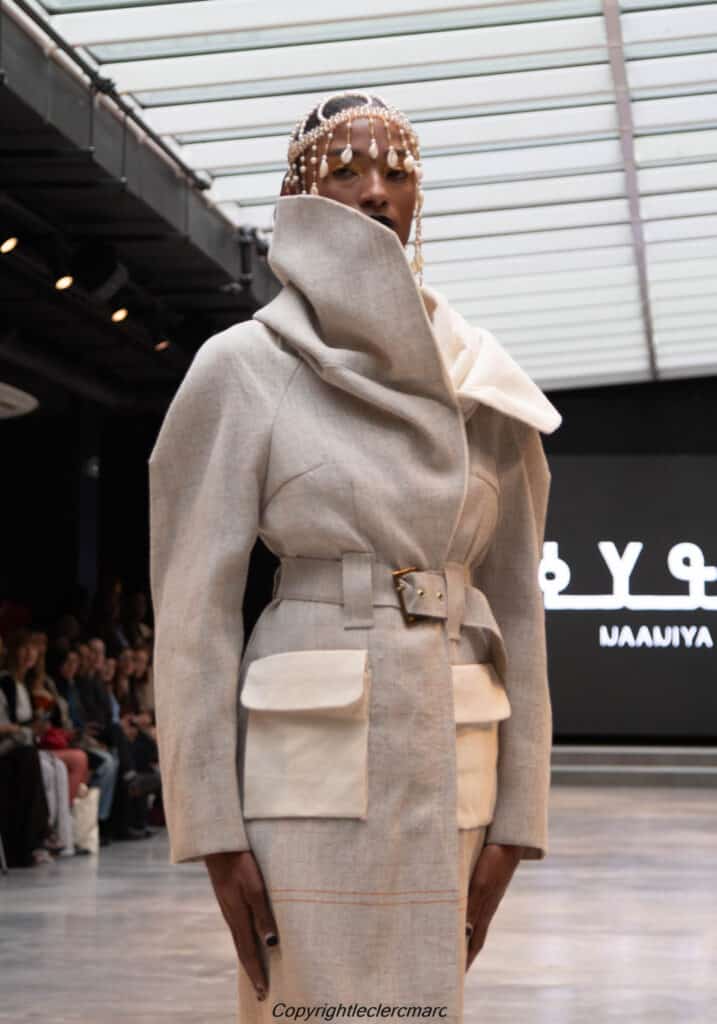
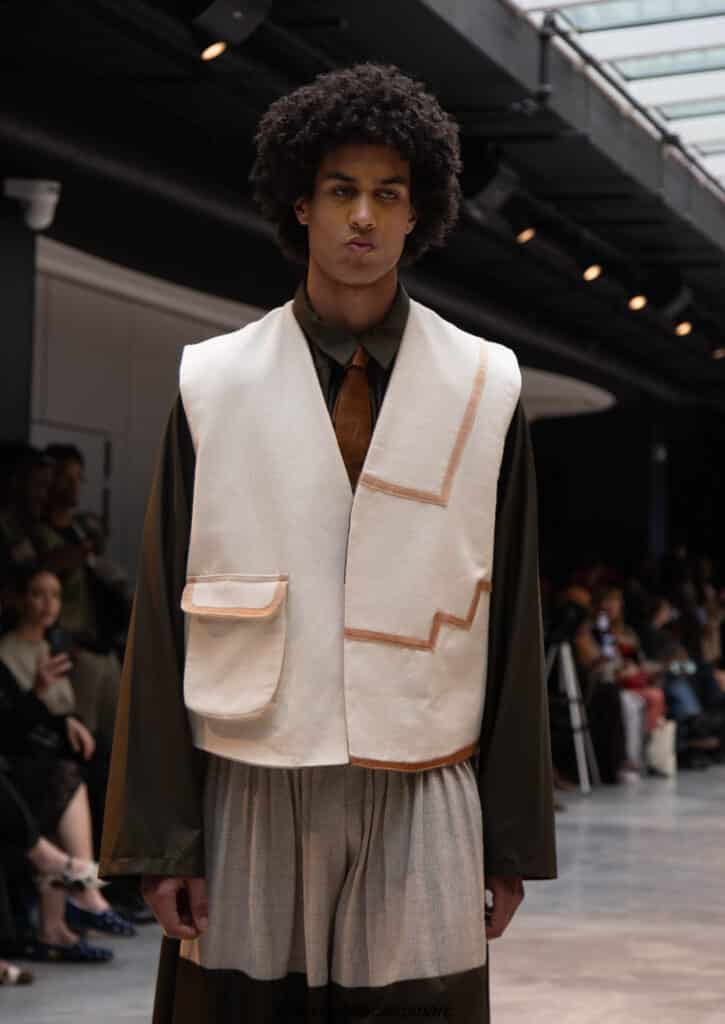
At the centre of NAANIYA’s identity is bogolan, the traditional Malian mud cloth that has become one of the house’s defining signatures. For Madina it is a living material capable of continual reinvention rather than a textile preserved in the past. “My goal is to show that Bogolan can be interpreted in many different ways,” she says.
She pairs it with alpaca, leather, premium cotton, beadwork, and carefully sourced deadstock fabrics, creating unexpected dialogues between ancestral craftsmanship and contemporary construction. Some garments are cut entirely from the cloth, while others use it as one element within a broader composition; in every case the textile enters a new conversation around luxury and modern design. “I love combining materials that people would not naturally put together,” she says. African textiles, she believes, should never be confined by geography. “Africa can dress everyone.”
Fashion as Storytelling
After completing her fashion studies in Dakar, Madina launched NAANIYA with a debut collection inspired by her own return to Africa. Across eight looks she traced the emotional journey of an Afro-descendant woman reconnecting with her ancestral homeland, moving through disorientation, discovery, adaptation, and belonging. “I create garments that tell stories,” she says. Each collection begins with questions of identity, memory, and the invisible inheritances that shape who we become.
The fascination with materials started early. “I grew up surrounded by textiles,” she says. Travelling from a young age with her mother through Mali, the United Arab Emirates, China, India, Austria, and England, she developed a lasting attention to craftsmanship and cultural exchange.
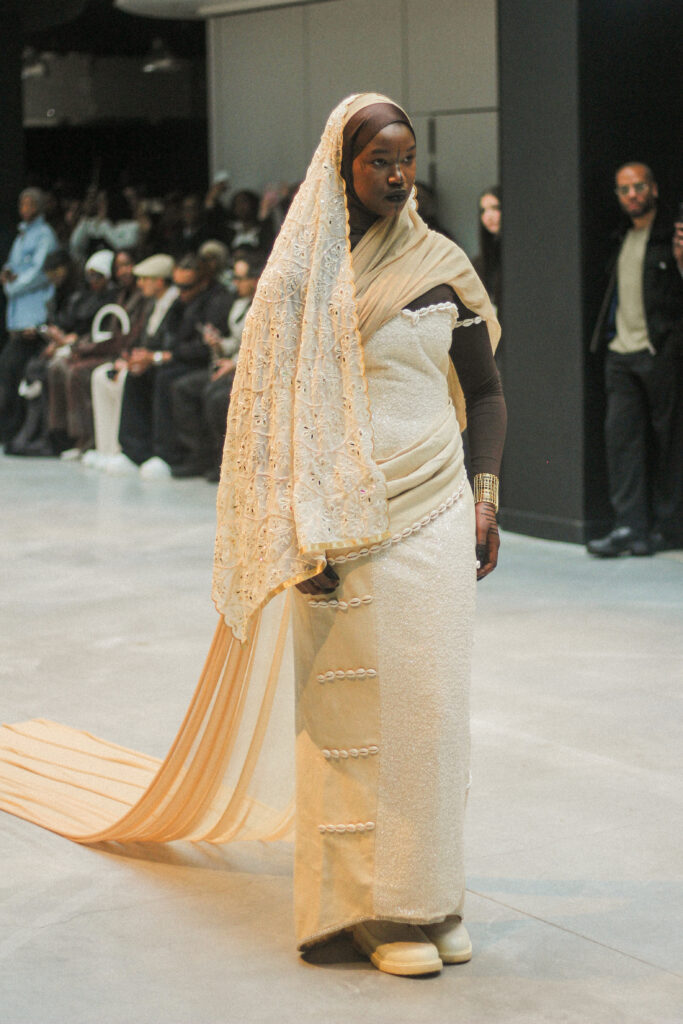
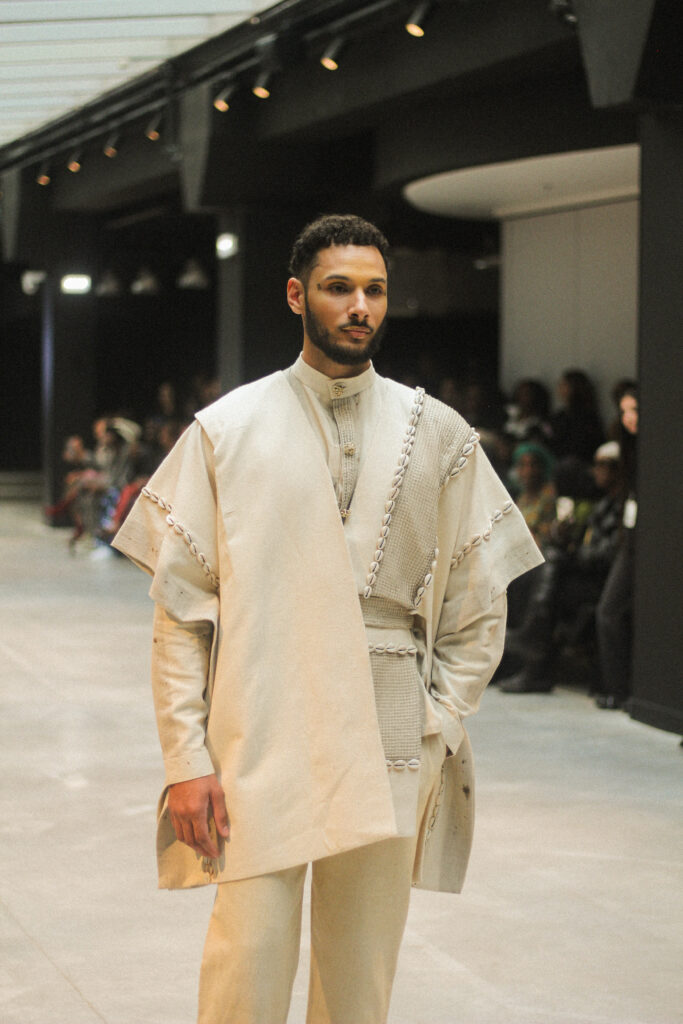
Her collection FAMA reflects on the history of African soldiers, particularly the Tirailleurs Sénégalais, the West African infantrymen who fought for France through both world wars. Drawing on military uniforms, discipline, resilience, and earthy tones, the collection engages with remembrance and with chapters of history that still demand recognition, including the 1944 massacre of returning soldiers at the Thiaroye camp outside Dakar. “We have a duty of memory. We must not forget,” Madina says. In her hands, fashion becomes a medium through which historical narratives are translated into contemporary expressions of identity.
Tombouctou turns to another chapter of African heritage. Between the fourteenth and sixteenth centuries, the city flourished as one of Africa’s great centres of scholarship, trade, and learning, and for Madina it stands for a legacy of knowledge and refinement that deserves renewed visibility. “Tombouctou represents knowledge, spirituality, and cultural influence,” she says. The research behind the collection is ongoing, and movement keeps shaping it. “Travel is a fundamental value at NAANIYA.”
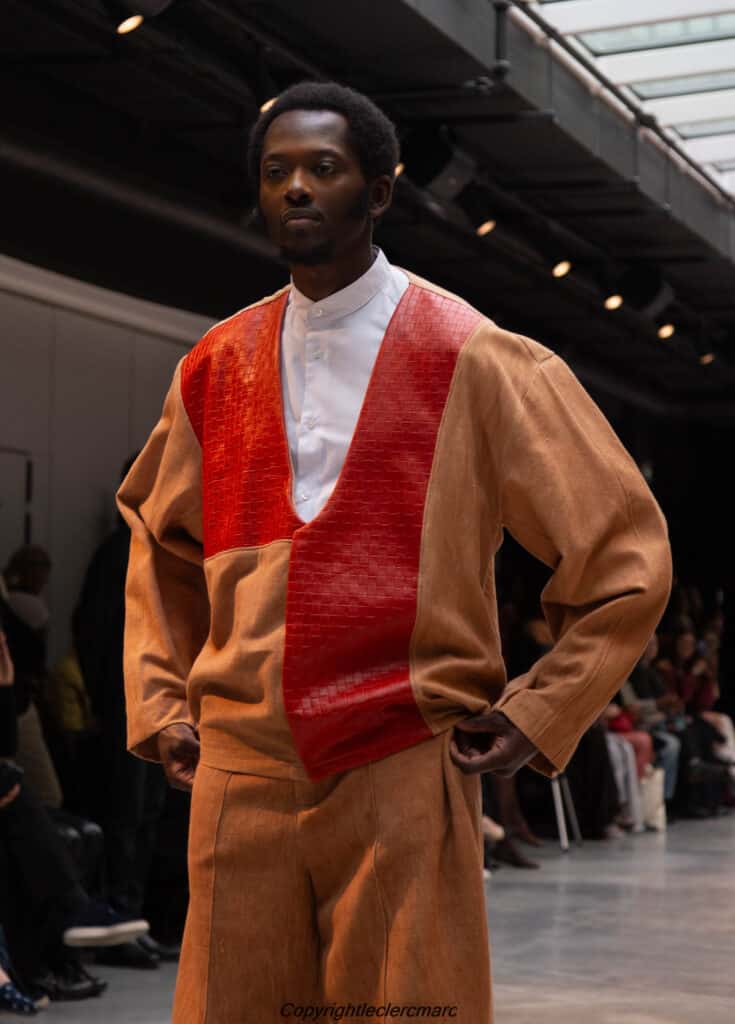
Presenting NAANIYA during Paris Fashion Week marked a milestone that extended well beyond the runway. “It was a powerful statement to affirm my place in fashion as a Black and veiled woman,” Madina says. Her presence challenged conventional ideas of who embodies luxury and what contemporary fashion can look like. For her, modest fashion belongs to a broader evolution in how the industry understands creativity, identity, and representation rather than to a niche within it.
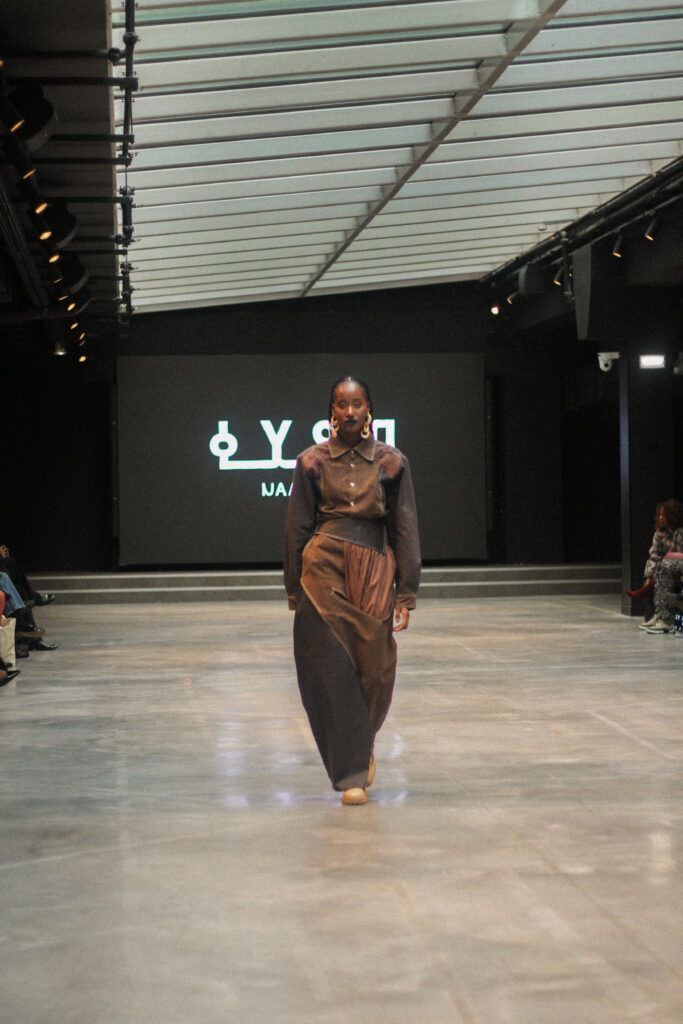
Today Madina is focused on building NAANIYA into an international fashion house rooted in craftsmanship, cultural storytelling, and contemporary African design. “My ambition is to build a sustainable, recognizable, and international universe,” she says. Future projects include continued explorations of African heritage and a long-planned journey to Tombouctou itself, deepening the research that already informs her collections. “I want NAANIYA to create bridges between fashion, culture, and storytelling.”
Rooted in Malian heritage and shaped by the experience of the diaspora, her work proposes a vision of contemporary luxury in which modesty is defined by intention. In her hands, clothing carries memory into visible form and translates heritage into a design language that speaks across cultures, extending what African luxury can mean.
Subscribe to Guzangs for more on the designers writing new languages for African luxury.