


Architecture Learns to Play
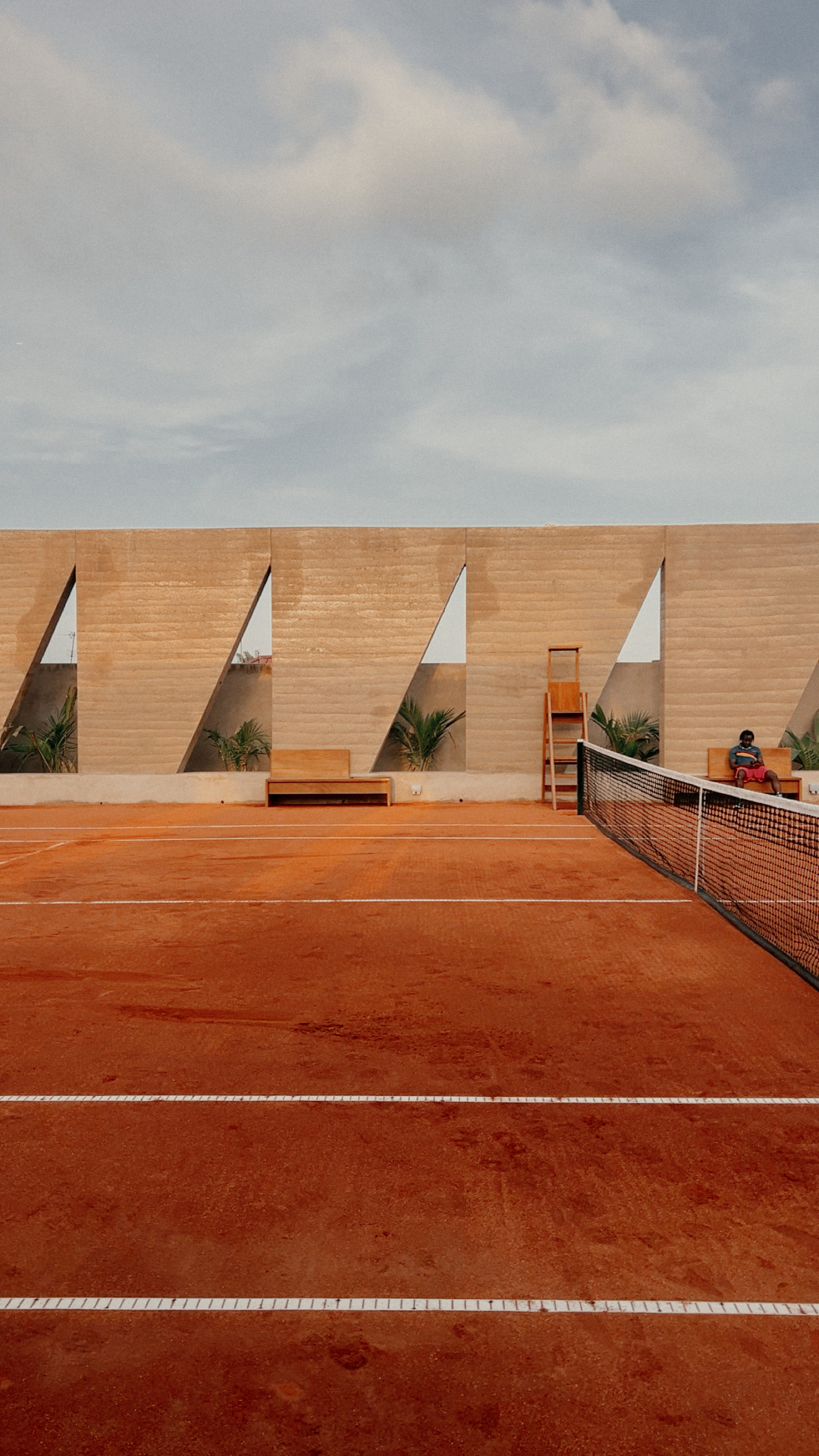
A tennis court is already a diagram, with its rectangle and net and service boxes laid out in white before anyone arrives, and Backyard Community Club, the new tennis facility that DeRoche Projects has just completed in the dense Accra neighbourhood of Osu, takes that familiar diagram and complicates it in ways that turn out to matter for reasons well beyond tennis.
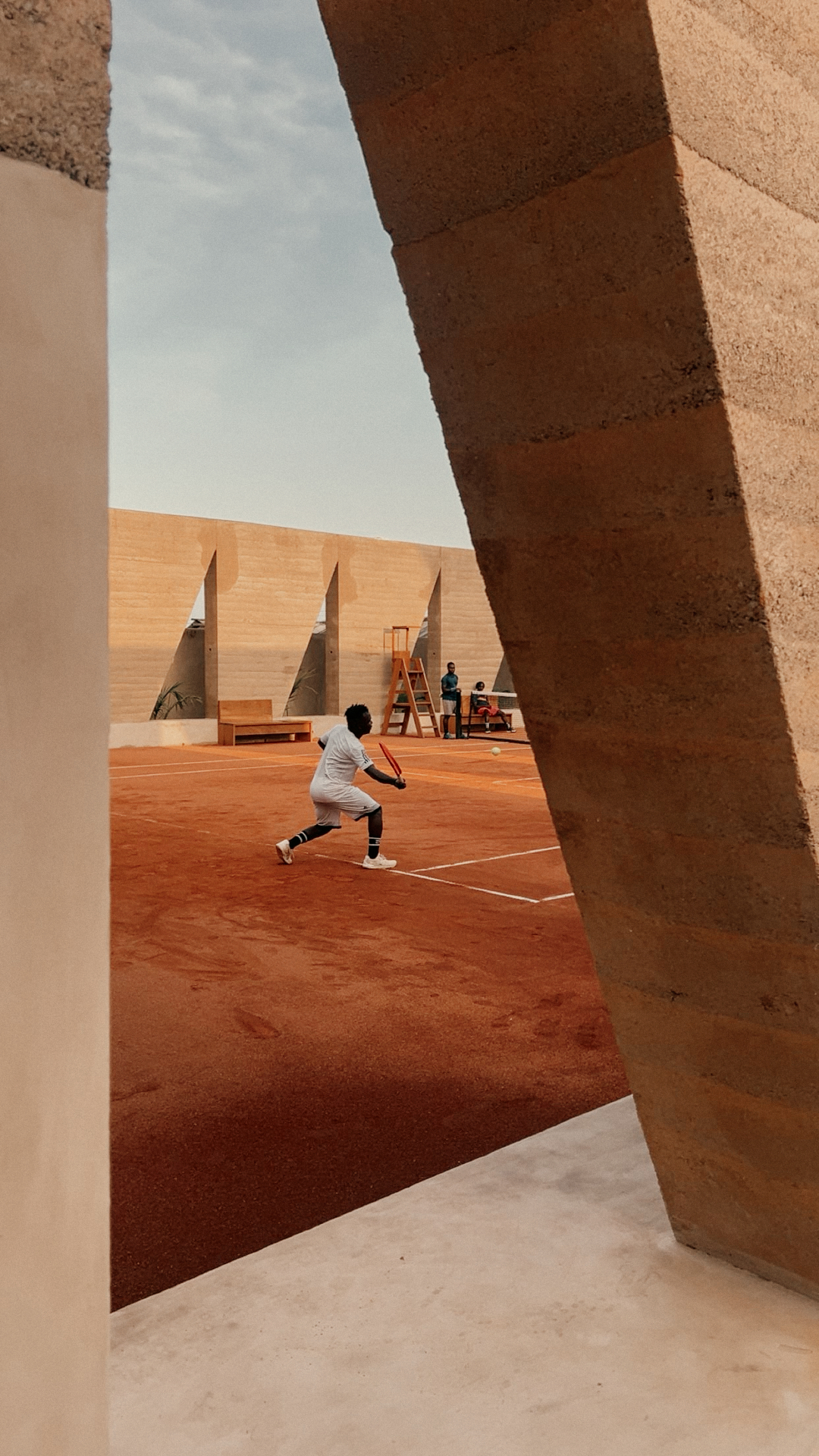
The club, which is Ghana’s first project built using a precast rammed-earth system, places a regulation clay court inside a four-metre-high enclosure of thirty-three wedge-shaped earthen panels, with a 230-square-metre garden of edible and medicinal plants running along one edge. The court is red clay, the walls are red earth, and the garden is the kind of green that produces fruit, herbs, juices, and snacks for the young athletes who train on the court and help tend the planting.
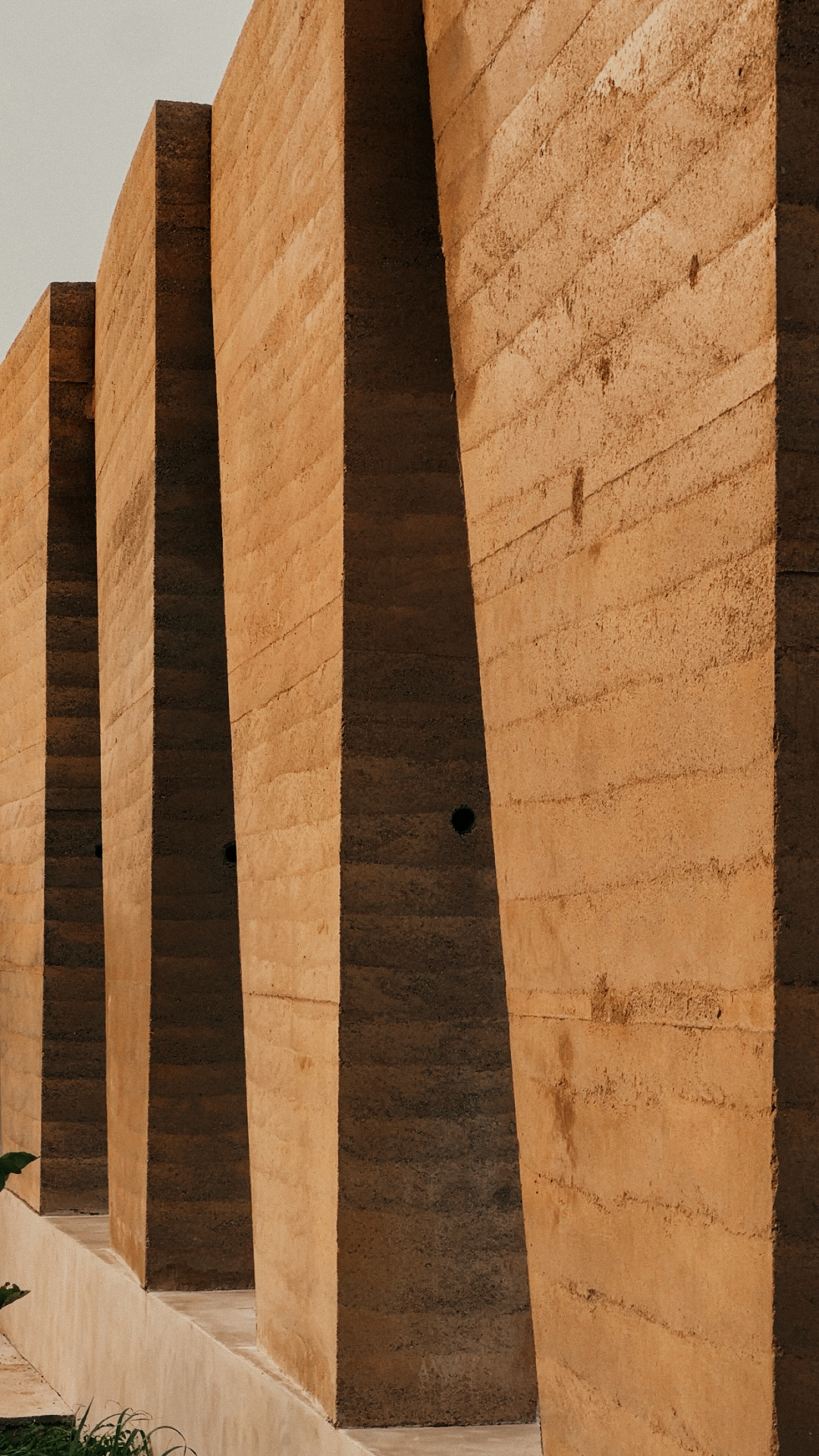
Accra is a city that has spent a great deal of its architectural energy telling people where they cannot go, in the form of compound walls, opaque gates, broken glass set into render, and the razor wire that crowns most residential perimeters in the wealthier neighbourhoods, and Backyard’s enclosure is doing something else entirely. The wall wraps the court without closing it off, with triangular cuts at the base of each panel that admit air and light, drop the crosswind during play, and let the city see in without exposing the court to the street. From inside, the effect is one of being held at a distance from the noise of Osu rather than barricaded against it; from outside, the play is glimpsed in fragments through the cuts. The compacted earth has the thermal mass that the climate has always asked of building walls in this part of West Africa, and the changing rooms and showers run without air conditioning because the architecture is doing the cooling that mechanical systems are usually called in to do.
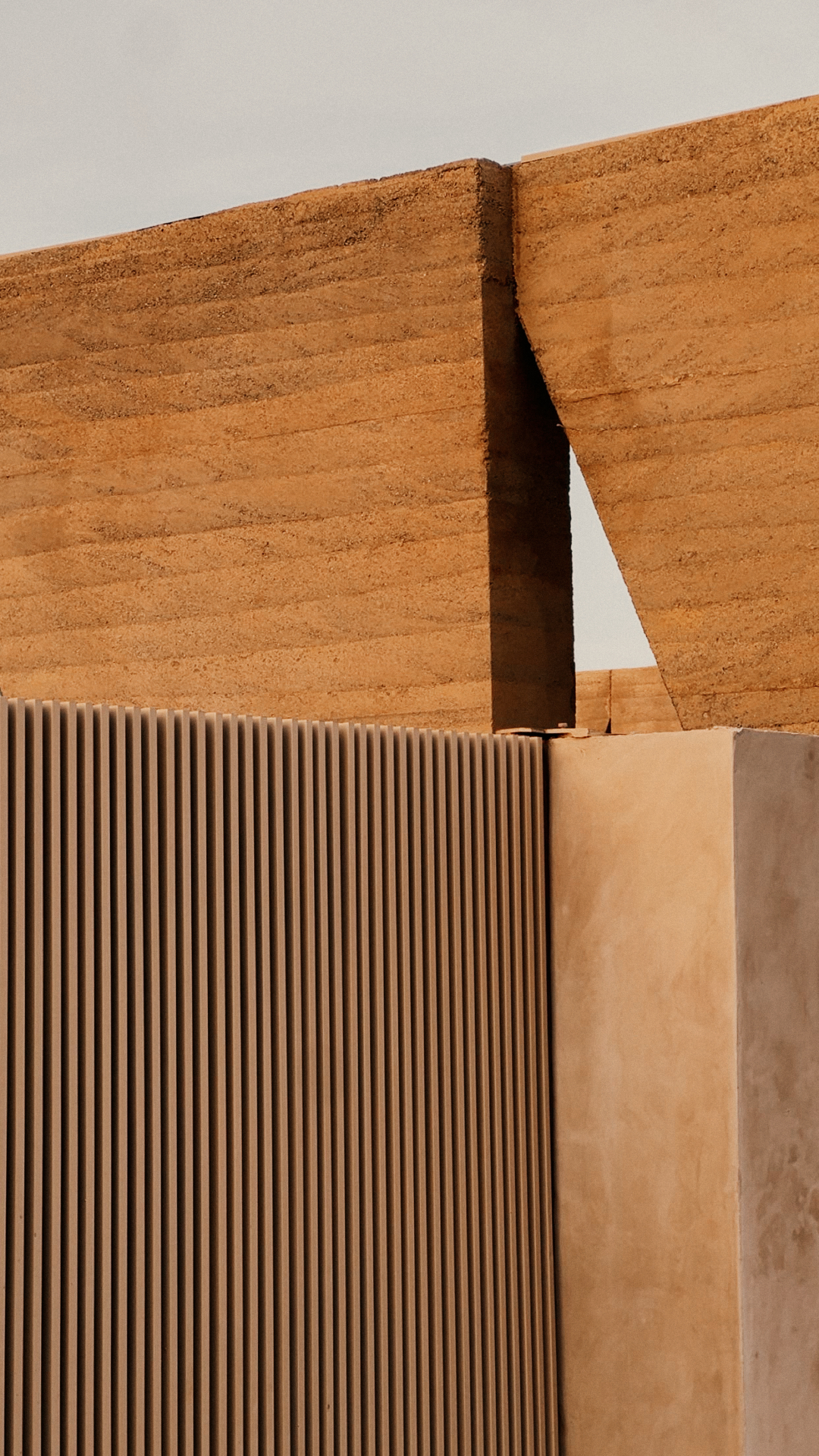
Rammed earth has carried buildings for centuries, in sections of the Great Wall and the Alhambra and across Ghana and the wider region through vernacular methods including wattle and daub and Atakpame, and the constraint on its modern use has never really been performance. Earth works. The constraint has been speed: traditional rammed earth is slow, weather-dependent, and difficult to scale to public buildings on a deadline. What DeRoche Projects has done at Backyard is procedural rather than aesthetic, casting the panels off-site under controlled conditions, transporting them to the plot, and installing the full thirty-three-panel enclosure in roughly twelve days, with the earth stabilised at three per cent cement and finished with an earth slurry in place of conventional render. The wall is not a cladding decision. It is the building’s structural frame, which means the system that produced this enclosure could, in principle, produce a classroom, a clinic, a community kitchen, or a shaded library on a comparable schedule. Earth is not going to replace concrete everywhere, but in hot climates, for certain building types, it has been underestimated for reasons that have more to do with taste than with what the material can actually do.
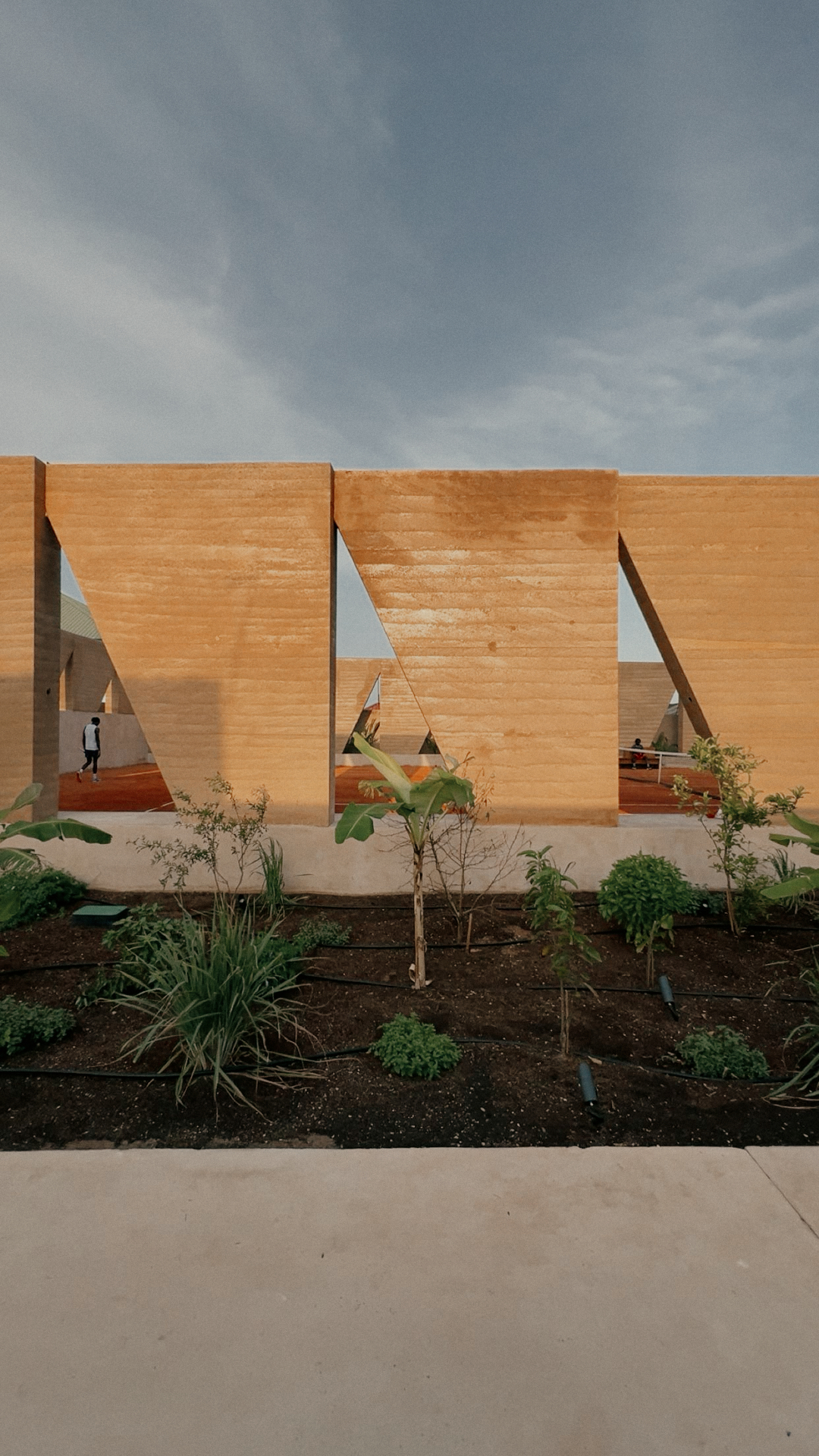
The garden along one side of the court does not behave like landscaping. More than twenty edible and medicinal species are planted on site, including guava, banana, lemongrass, peppermint, soursop, coconut, and blue pea flower, and the young athletes who train at the club help tend and harvest the planting that becomes their post-practice juice and food. Tennis clubs tend toward a kind of programmatic sterility, with their pristine surrounds and their bracketing of play from everything else, and Backyard’s appetite is different: the court is red, the walls are red, the garden is loudly green, and on some evenings the space holds screenings and gatherings, with a serve giving way to a film and smoke from a meal cooking somewhere just out of frame. It is, finally, a building that smells like things — earth, brick dust, basil, cooking, sweat — and most of that, by definition, will not show up in photographs.
DeRoche Projects was founded in Accra in 2022 by Glenn DeRoche, who spent more than a decade at Adjaye Associates as project director in the London office, where he oversaw the firm’s work across Africa, and whose earlier joint practice with Juergen Strohmayer produced both the Surf Ghana Collective in Busua, which won the 2023 Holcim Awards Gold for Middle East and Africa, and dot.ateliers Ogbojo, the writers’ and curators’ residency commissioned by the Ghanaian painter Amoako Boafo. Boafo is also the founder of Backyard, which sits a short distance from the streets where he was born, raised, and played tennis as a young man before becoming one of Ghana’s most prominent contemporary painters, and while the biographical detail matters to the project’s origin story, it is not the project’s argument. The argument is in the wall. DeRoche’s work refuses the imported finish in favour of buildings whose materials, methods, and climate logic belong to the place where they stand, and Backyard is the most articulate version of that position the studio has built so far.
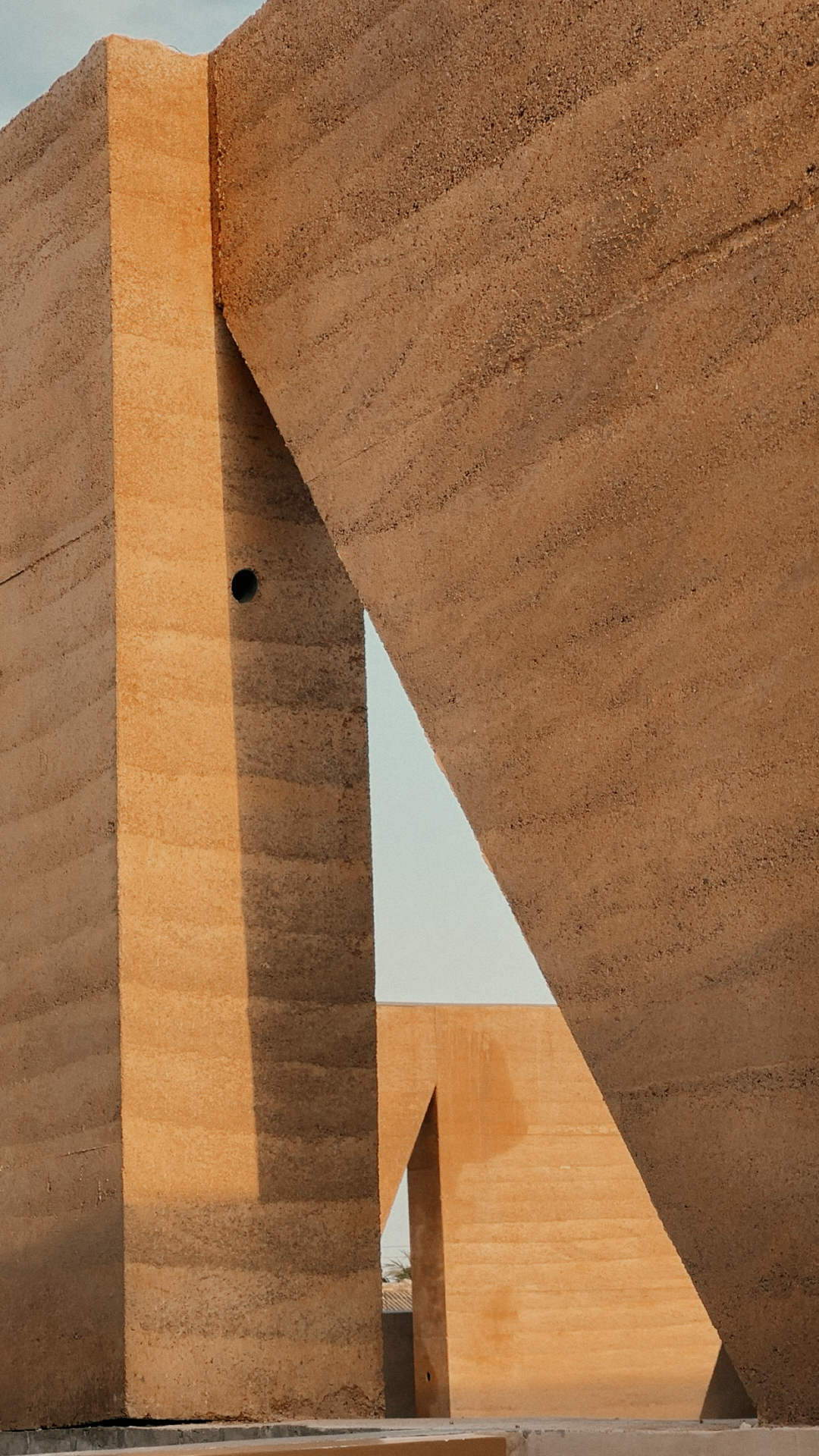
The gate opens, the serves begin, and somewhere along the baseline a child learns that a backhand is something that can be practised, while the wall throws the kind of shade that the climate has been asking of West African buildings for as long as people have been building in this part of the world.
Subscribe to Guzangs for more on the architects, designers, and cultural builders shaping the African present.