

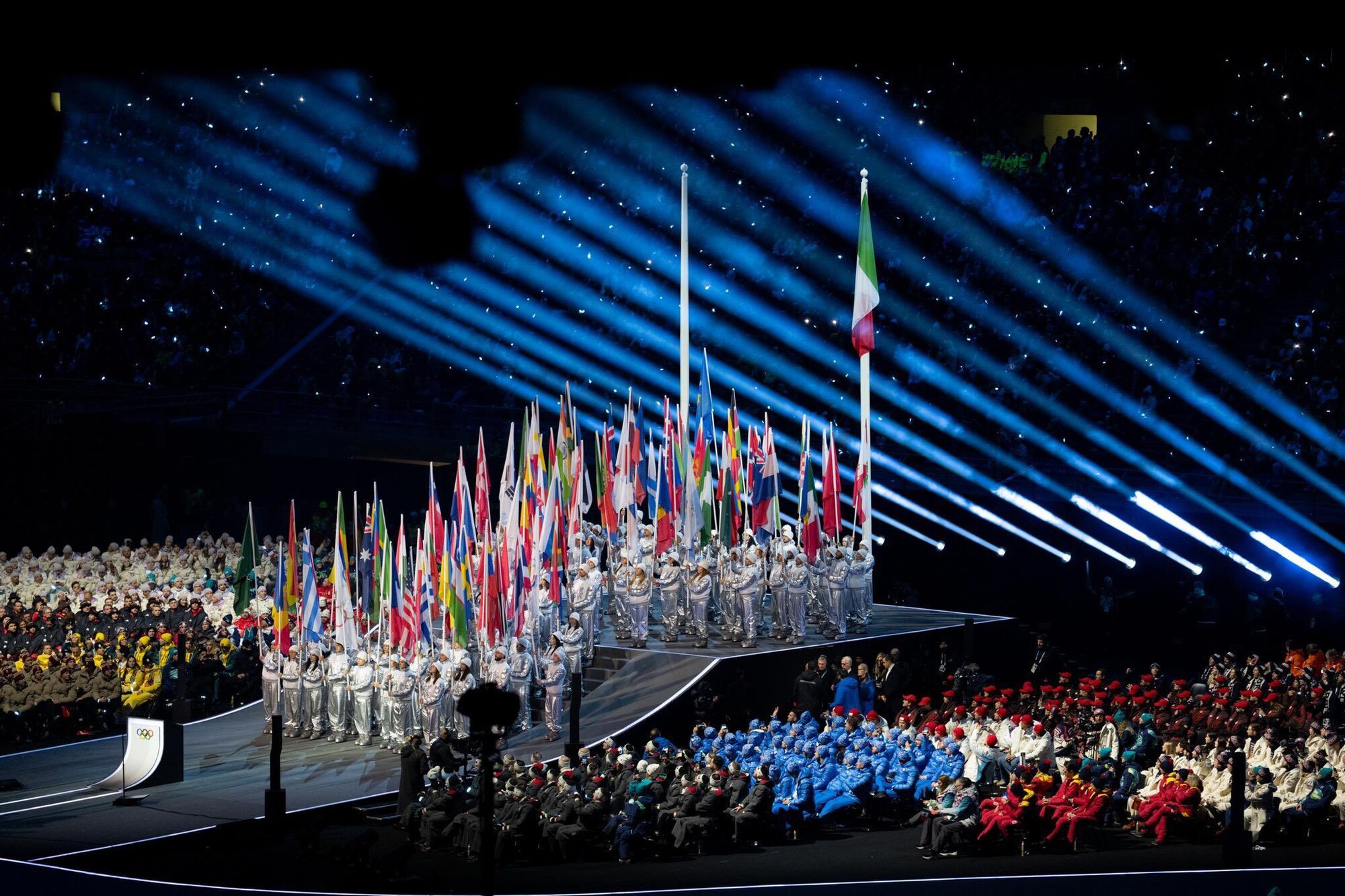
From February 6-22, 2026, the world turns its attention to northern Italy for the Winter Olympics, staged across Milan, Cortina d’Ampezzo, and a network of historic Alpine venues. Fifteen African athletes will compete. The largest African delegation since PyeongChang 2018. Eight nations are represented: South Africa, Nigeria, Kenya, Morocco, Madagascar, Eritrea, and two first-time participants, Benin and Guinea-Bissau.
Shannon-Ogbnai Abeda will compete in his third Winter Olympics for Eritrea. He was born in Fort McMurray, Alberta, learned to ski in the Canadian Rockies, and has never trained in Eritrea. Adam Lamhamedi will represent Morocco in alpine skiing. He trains in Europe. Mialitiana Clerc is about to become Madagascar’s first woman at three Winter Olympics. She trains in Europe. The pattern holds across the delegation.
Oukaïmeden in Morocco’s High Atlas Mountains has operated as a ski resort since the 1940s, sitting at 3,200 meters. Afriski in Lesotho runs chairlifts from June through August. Algeria has Chréa. These resorts make recreational skiing possible, but none operate the year-round training systems, Olympic-standard coaching pipelines, or FIS-sanctioned competition circuits required to produce Olympic-level competitors. The infrastructure exists on the continent. The Olympic pipeline bypasses it.
Salt Lake City, 2002
Isaac Menyoli became Cameroon’s first Winter Olympian at Salt Lake City 2002. He was studying architecture in Wisconsin when he decided to compete in cross-country skiing. His stated goal was using Olympic visibility to raise AIDS awareness in Cameroon rather than competing for medals. He finished last in his events.
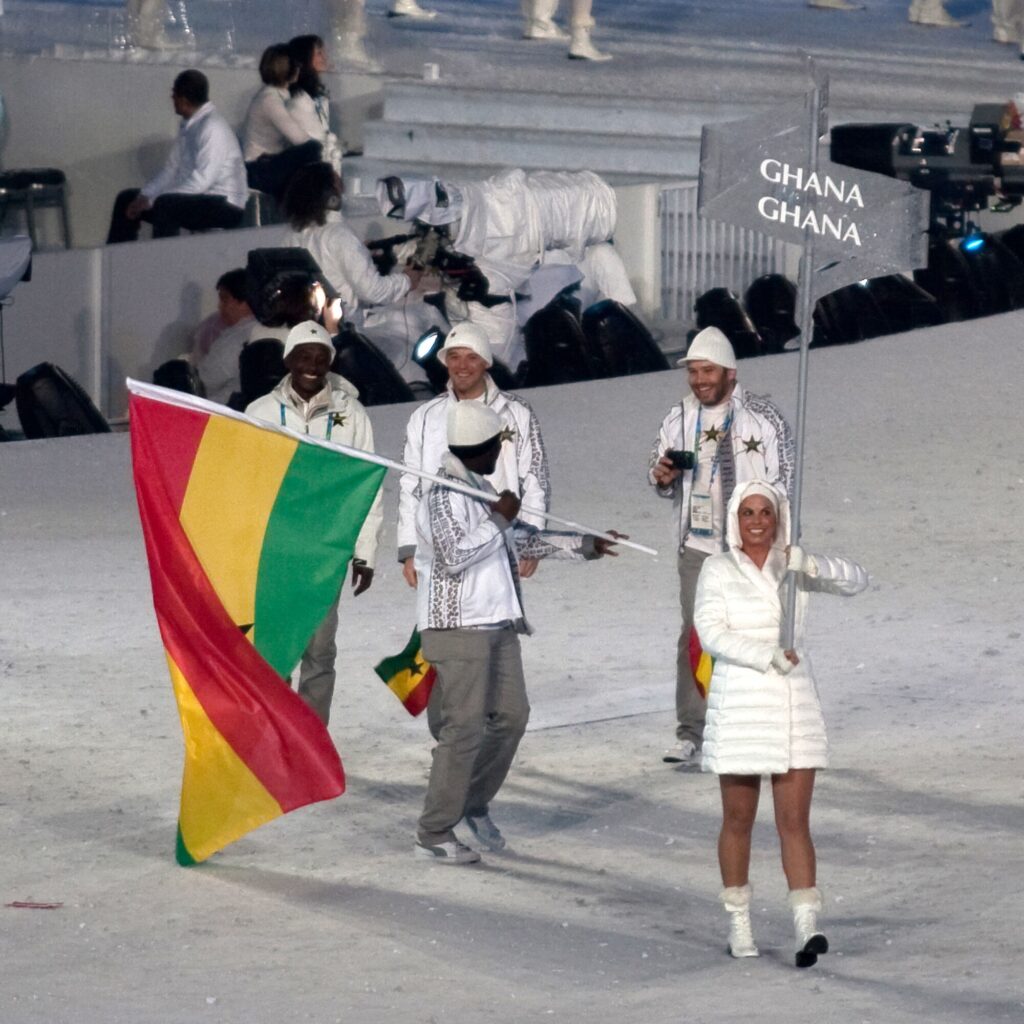
Vancouver, 2010
Ghana’s Kwame Nkrumah-Acheampong competed at Vancouver 2010, earning the nickname “The Snow Leopard.” Born in Scotland and raised in Ghana, he learned to ski while working as a receptionist at an indoor slope in Milton Keynes, England. “I know I’m a novelty, that I’m odd,” he told Time magazine before the Games. “But every time I’m on the slope, it’s about proving, Look, I actually can ski.” He finished 53rd out of 102 competitors in slalom.
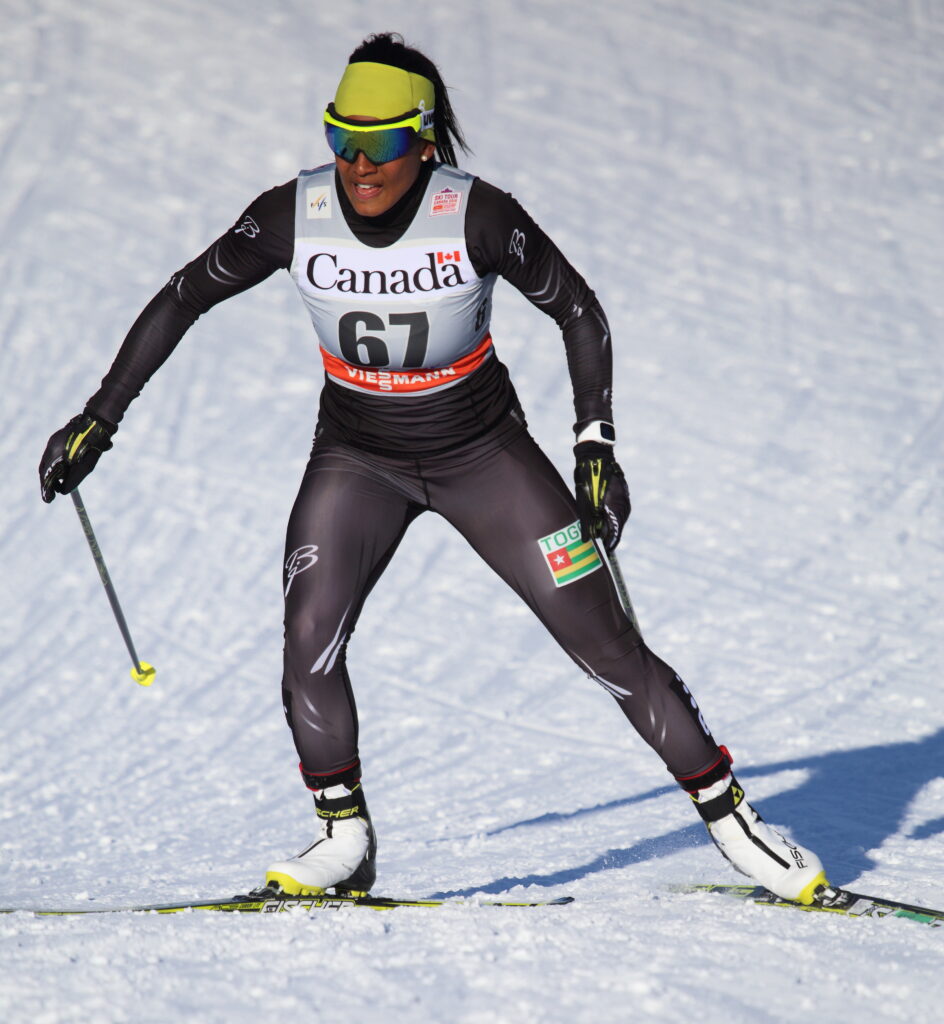
Togo made its Winter Olympics debut at Sochi 2014 through cross-country skier Mathilde-Amivi Petitjean. Zimbabwe sent Luke Steyn in alpine skiing. The trend continued: smaller delegations, athletes with dual residence or training abroad, strong human-interest coverage in international press.
PyeongChang, 2018
Nigeria qualified a women’s bobsled team for PyeongChang 2018, becoming the first African nation to compete in bobsleigh at the Winter Olympics. Seun Adigun, who had competed for Nigeria in the 100-meter hurdles at London 2012, served as driver. She recruited two friends and former sprinters, Ngozi Onwumere and Akuoma Omeoga. None had bobsledding experience prior to 2016.
Adigun built a wooden training sled in her Texas garage, naming it the Maeflower after her late stepsister. The team trained by pushing it on turf and track surfaces. They raised $75,000 through GoFundMe, including a $50,000 donation from a single anonymous donor, to cover equipment and competition costs. They borrowed a sled from Utah Olympic Park for their qualifying races.
They qualified after completing five required races across Utah, Whistler, and Calgary. In PyeongChang, they finished last in the two-woman bobsleigh competition. The placement mattered less than what their participation represented. Onwumere carried Nigeria’s flag at the opening ceremony.
Simidele Adeagbo competed in skeleton the same year, becoming the first African woman in the sport. She had started training five months before the Games. Ghana’s Akwasi Frimpong also competed in skeleton, becoming the second Ghanaian Winter Olympian after Nkrumah-Acheampong.
Eight African nations competed at PyeongChang 2018: Eritrea, Ghana, Kenya, Madagascar, Morocco, Nigeria, South Africa, and Togo. A record that still stands.
Milano Cortina, 2026
South Africa is sending five athletes: Thomas Weir and Lara Markthaler in alpine skiing, Matthew Smith in cross-country skiing, Malica Malherbe in freestyle skiing, and Nicole Burger in skeleton. It’s the country’s largest Winter Olympics team.
Nigeria returns with Samuel Ikpefan in cross-country skiing, having competed at both PyeongChang 2018 and Beijing 2022. Kenya fields two alpine skiers: Issa Laborde Dit Pere, 18, born in France, and Sabrina Simader, who became Kenya’s first Winter Olympian at PyeongChang 2018.
Madagascar’s Mialitiana Clerc, 24, becomes the first African woman to reach three Winter Games. She’s been competing on European circuits since she was 16 and is one of the most experienced African skiers heading to Italy.
Benin makes its Winter Olympics debut through Nathan Tchibozo, 21, competing in alpine skiing. He was born in France. Guinea-Bissau also debuts with Winston Tang, 19, in alpine skiing. Tang was born in Park City, Utah, and Guinea-Bissau is the third nation he has represented as a ski racer. Morocco sends Adam Lamhamedi, who competed at Beijing 2022. Eritrea sends Shannon-Ogbnai Abeda for his third Games.
Abeda’s pathway
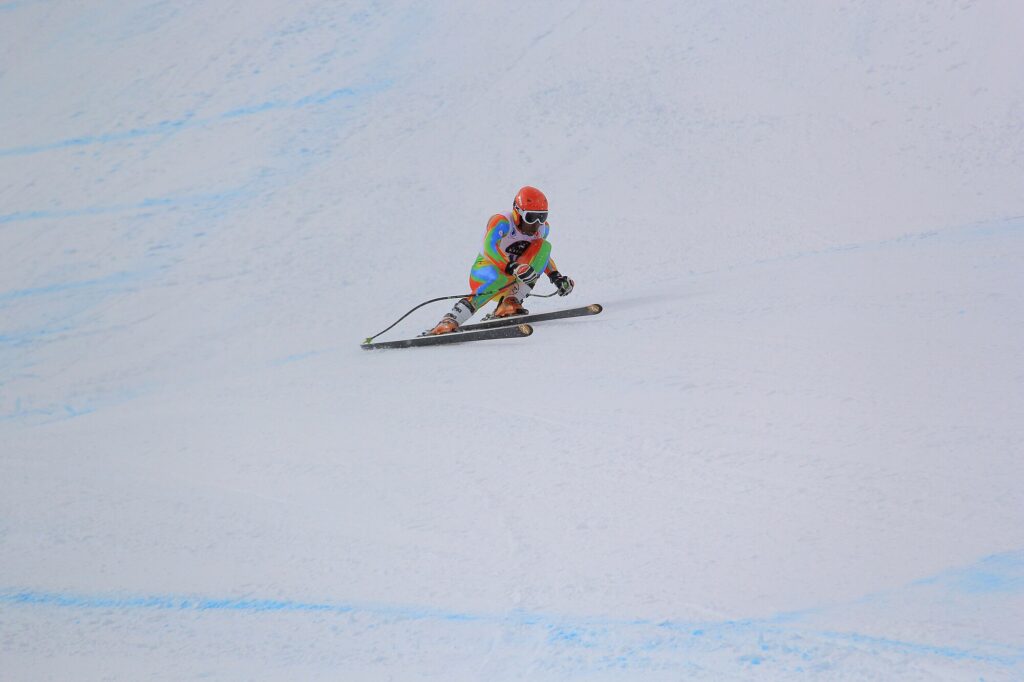
Abeda’s parents fled Eritrea’s civil war in the 1980s and resettled in Canada. He started skiing at age three. At ten, he set his sights on the Olympics. In 2011, he declared Eritrean citizenship to compete for his parents’ homeland.
He qualified for the 2012 Youth Olympic Games, then the 2018 Winter Olympics, where he carried Eritrea’s flag at the opening ceremony. A series of injuries followed. Ten surgeries on his knee, jaw, leg, and groin. He qualified for Beijing 2022 despite the setbacks. After losing a close friend, he decided to attempt a third Olympics. “His life was cut short, and that made me think, am I truly living my dream?” he said.
He qualified for Milano Cortina in January 2025. At 29, this will likely be his final Olympics. His entire competitive career: training in Canada, competing for Eritrea.
African participation at the Winter Olympics follows a consistent pattern across the 21st century: diaspora athletes, dual citizenship, training systems located in Europe or North America, and significant individual resourcefulness. National winter sports programs remain largely absent.
Nigeria’s bobsled team illustrates this clearly. There was no Nigerian bobsled federation when Adigun decided to form a team. She had to create one. Three track athletes in Texas built it themselves through crowdfunding and a homemade wooden sled. When they competed in PyeongChang, they represented Nigeria while having trained entirely in North America, borrowing equipment, learning the sport from scratch.
Athletes pursuing Olympic-level winter sports competition train where the established infrastructure exists: facilities, coaching staff, and competitive circuits in Europe and North America. The continental ski resorts (Oukaïmeden, Afriski, Chréa) operate on limited budgets with aging equipment and short seasons.
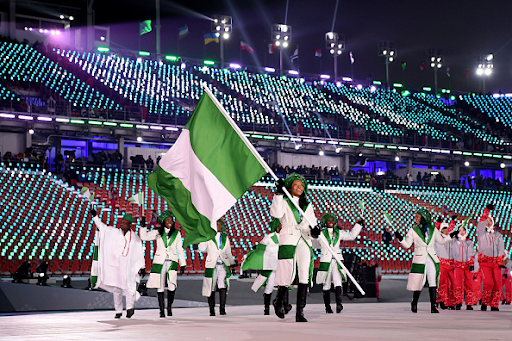
When Nigerian colors appeared on a bobsled at PyeongChang 2018, when Eritrea’s flag was carried at opening ceremonies by a skier who’d never trained in Eritrea, the visibility created reference points. The Olympics became less distant for audiences in Lagos, Nairobi, Asmara. Winter sports became less exclusively foreign.
Whether this visibility translates into institutional development on the continent remains uncertain. Year-round training facilities. Competitive circuits. Federations that can support athletes financially rather than requiring them to crowdfund. The current system functions through individual athletes finding pathways via dual citizenship, foreign residency, personal fundraising, and training systems located thousands of miles from the countries whose flags they carry.
Shannon-Ogbnai Abeda will stand at the start gate in red, green, and gold. He’ll ski down an Italian mountain after a career spent in Canadian training facilities. The geography of African winter sport runs through Alberta and European Alps, not through Oukaïmeden or Afriski or Chréa.
PyeongChang 2018 settled the question of whether African athletes belong at the Winter Olympics. What remains unsettled is whether the next generation will still need to build wooden sleds in Texas garages to get there.