


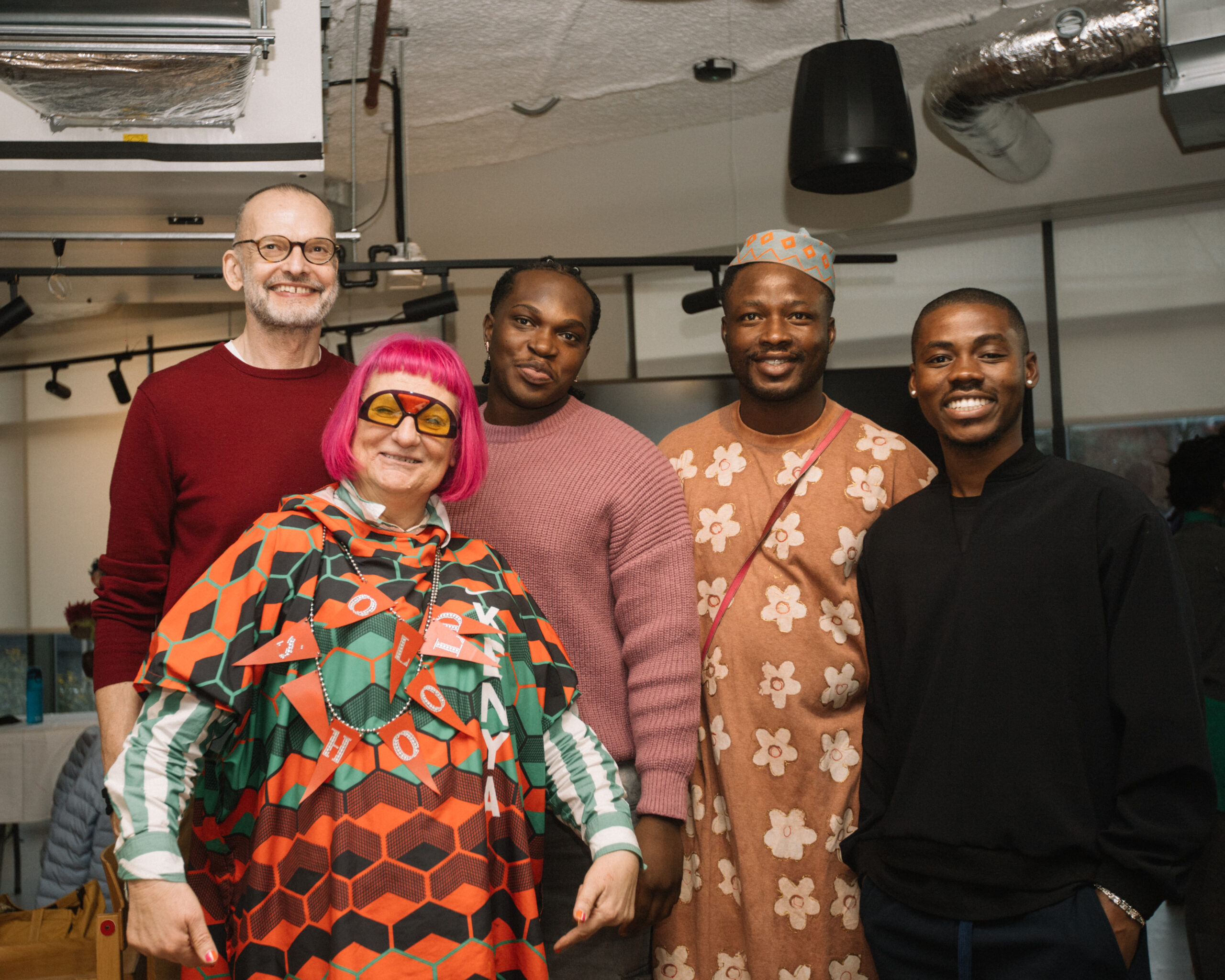
For two weeks, the conservatory room of Mason & Fifth became an experimental studio of collective making. Partnered and hosted at the boutique hotel, Makers Camp: The West African Project gathered Central Saint Martins MA students, artisans, tutors and visiting designers for an intensive programme centred on craft, exchange and the tactile knowledge that comes from working directly with discarded materials.
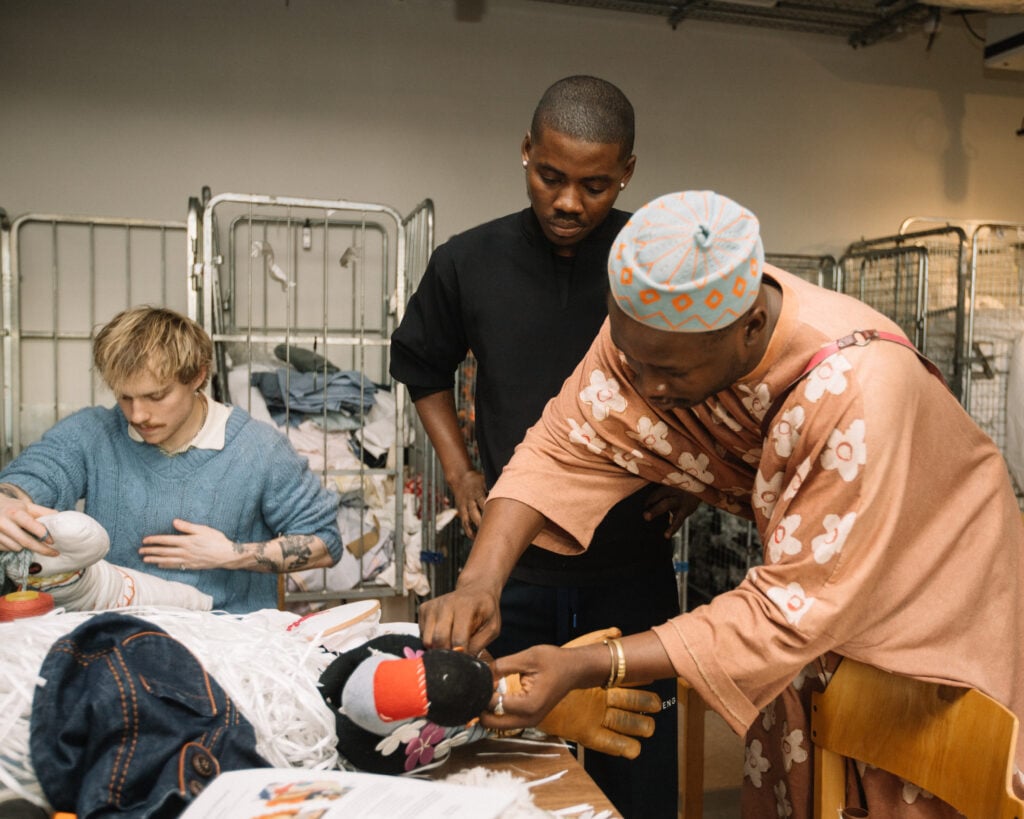
The camp brought together makers across disciplines: embroidery specialists, leather artisans, chefs, crochet practitioners and experimental textile makers. Rather than conventional lectures, sessions explored how different creative practices approach material thinking. How a chef might think about flavour the way a designer considers texture, or how leather craft approaches structure similarly to tailoring. Across workshops spanning embroidery, leather craft, coiling, macramé, crocheting, spinning and weaving, students were pushed to slow down and rethink their relationship with making.
At the centre of this year’s edition was a pointed dialogue with West Africa. Nigerian designer Peter Acha, founder of Pettre Taylor, whose work merges tailoring with sculptural forms and emotional storytelling, joined the programme alongside Ghanaian designer Travis Obeng-Casper of Ajabeng, known for collaborating with artisans and reinterpreting traditional Ghanaian techniques through a contemporary lens.
Their presence reframed the camp as something more than a workshop. It became a site of cultural exchange, and it surfaced a question that ran through the entire programme: sustainability has long existed within African craft traditions, where textiles are shaped through century-old, artisan-led processes. The challenge is whether contemporary designers can translate these methods into modern fashion without diluting what makes them durable in the first place.
Week One: Immersion in Practice
The first week was devoted to unpacking individual practices. Mornings opened with lectures from invited makers on the philosophies behind their work and the processes that shape them. Lunchtime presentations introduced industry figures who spoke about sustainability, ethics in production and the realities of creative labour. One afternoon, I spoke about my practice as a writer covering African fashion and what I’ve observed about the continent’s fashion ecosystem as it professionalises and scales.
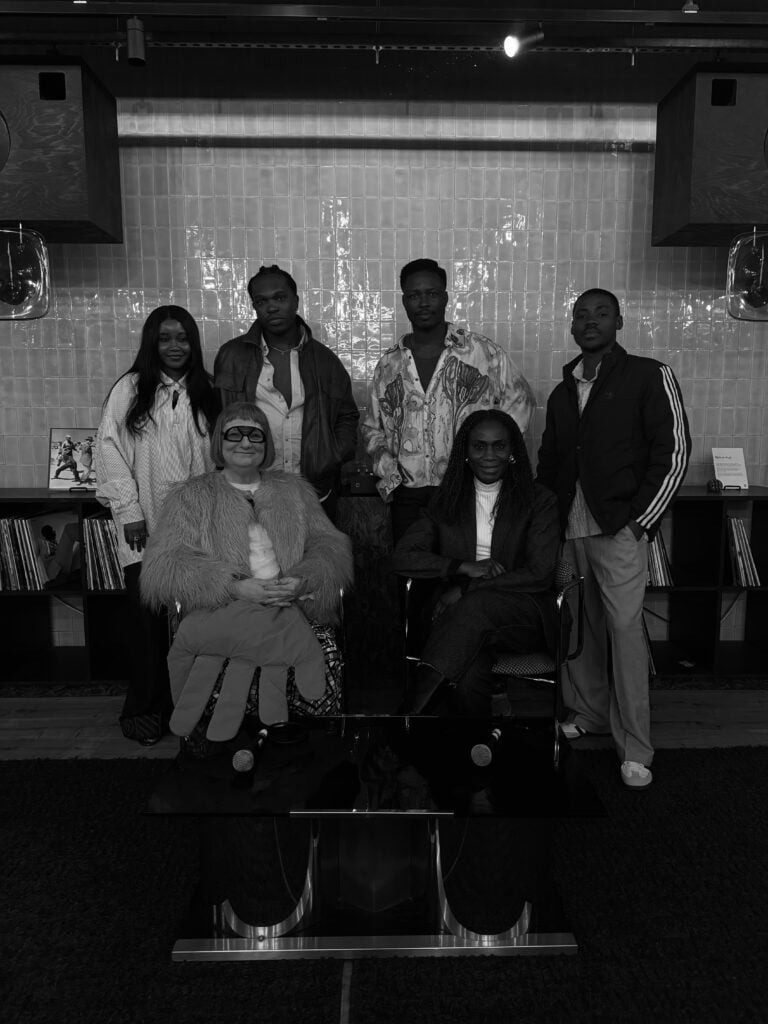
Evenings shifted the programme into the listening room at Mason & Fifth, where informal conversations took place with creative practitioners including costume designer PC Williams. Those sessions were designed to open a different perspective for students: fashion design is not the only route to a creative career. Students pressed speakers on creative longevity, material experimentation and what interdisciplinary practice actually looks like in the day-to-day.
A Trans-Continental Fusion
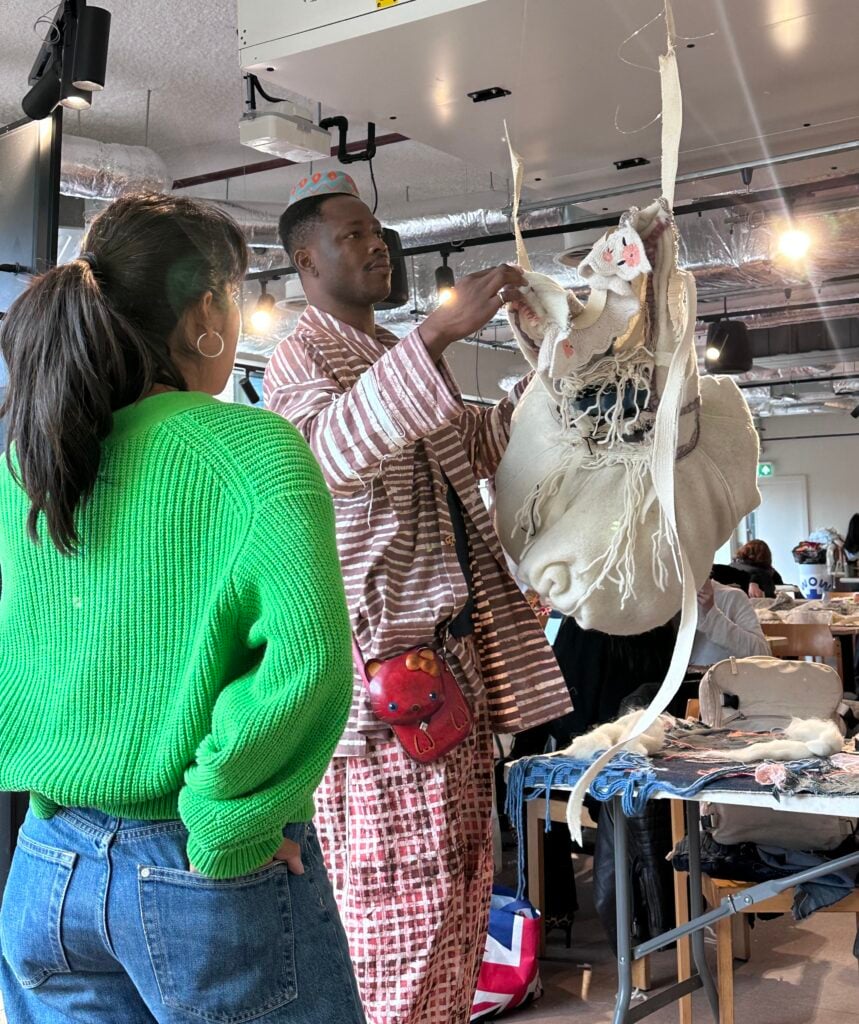
The second week turned toward production. Students were asked to reinterpret what they had absorbed into tangible outcomes. For the West African designers, this meant working outside fully functional garments and instead framing concepts through installation.
Travis Obeng-Casper stitched a collection of richly patterned jacquard fabric and transformed it into a dual-functional installation. Titled Nka Mbom, an Akan phrase that loosely translates to “togetherness” or “unity,” the piece explored connection, adaptability and shared function. It operated simultaneously as object and environment, refusing to sit in one category.
Peter Acha presented two installations developed through a cross-cultural collaboration with India’s Yahvi Duggal and the Dominican Republic’s Histria Soler. The works combined embroidery, appliqué and felting techniques across influences from Nigeria, India and the Dominican Republic, creating layered, tactile surfaces that moved between garment and sculpture. Both pieces interrogated value directly: what is considered useful, what is discarded, and who gets to decide. Using reworked materials and hand-driven processes, the installations challenged conventional ideas of function, arguing that objects can exist beyond a single purpose.
“One of my major highlights was connecting with the students, their experiences and even their struggles studying at Central Saint Martins. It’s something I could relate to, coming from Nigeria,” says Peter Acha. “At the same time, I got the chance to learn new techniques like coiling and weaving. It’s not something I would have easily made time for in Lagos because of work, so having that space to slow down and learn was really important.”
Woven Threads: From London to Lagos
The conversations at Makers Camp are already extending beyond London. Woven Threads, an upcoming April initiative in Lagos linked to Lagos Fashion Week, explores sustainable craft practices across the continent. Elements of the Makers Camp are expected to travel to Lagos as part of this exchange, creating a bridge between students and craft communities across both cities. The initiative aims to facilitate knowledge-sharing between emerging designers and established artisans, encouraging collaborative approaches to material production and sustainable design.
Beyond the Camp
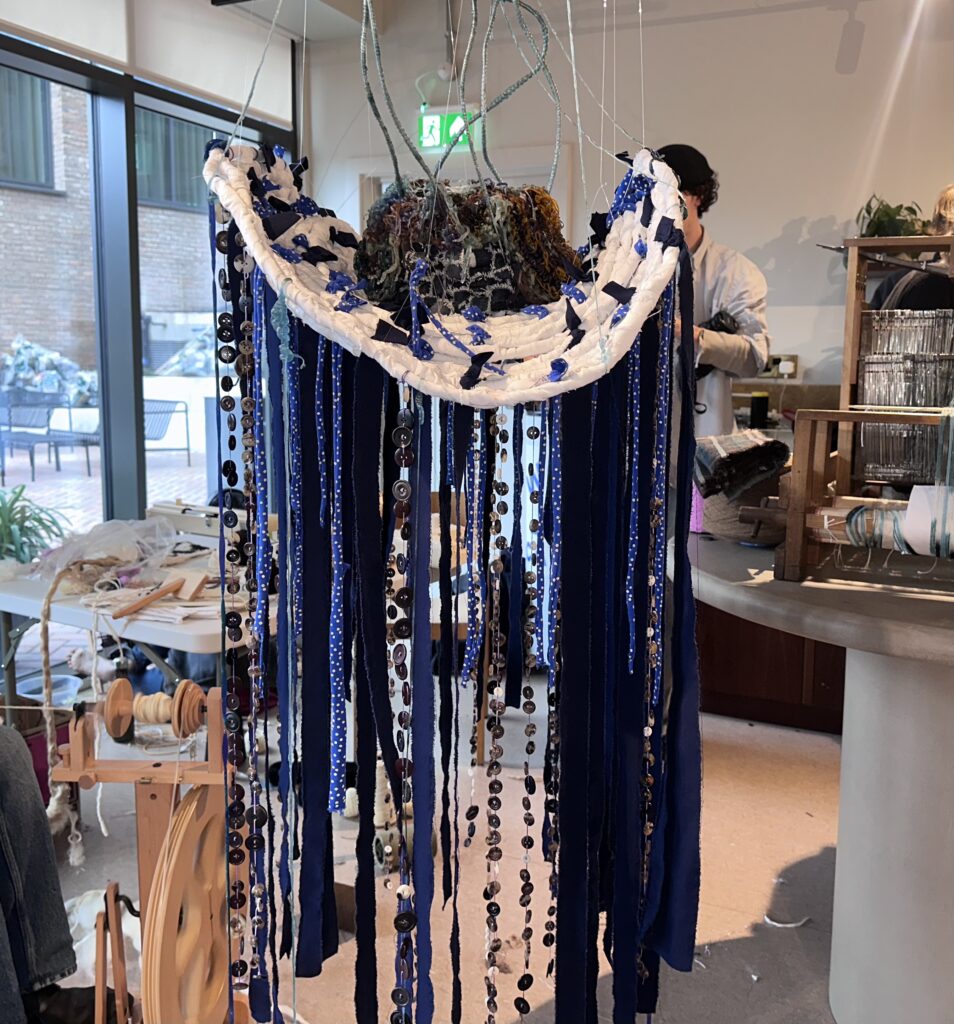
The Makers Camp leaves behind more than a two-week programme. It opens an ongoing conversation about how knowledge moves, and who benefits from it. While rooted within Central Saint Martins, its impact extends beyond MA students. The camp offers a model that could support African creatives working within their own local systems.
Its relevance to the African creative economy lies in exactly this exchange. Designers are not only learning; they are returning with knowledge. During a panel conversation with Adaeze Oguzie, Peter Acha noted that he intends to share what he has learned with the artisans he works with, reinforcing a cycle where knowledge flows back into communities rather than remaining within institutions.
The test will be whether these conversations can reach places like Kantamanto Market, where the realities of textile waste and resale shape everyday life, and whether dialogue around sustainability can begin to influence those systems from within. The Makers Camp suggests it is possible. African fashion is not emerging. It is evolving, and the infrastructure is starting to match the ambition.