


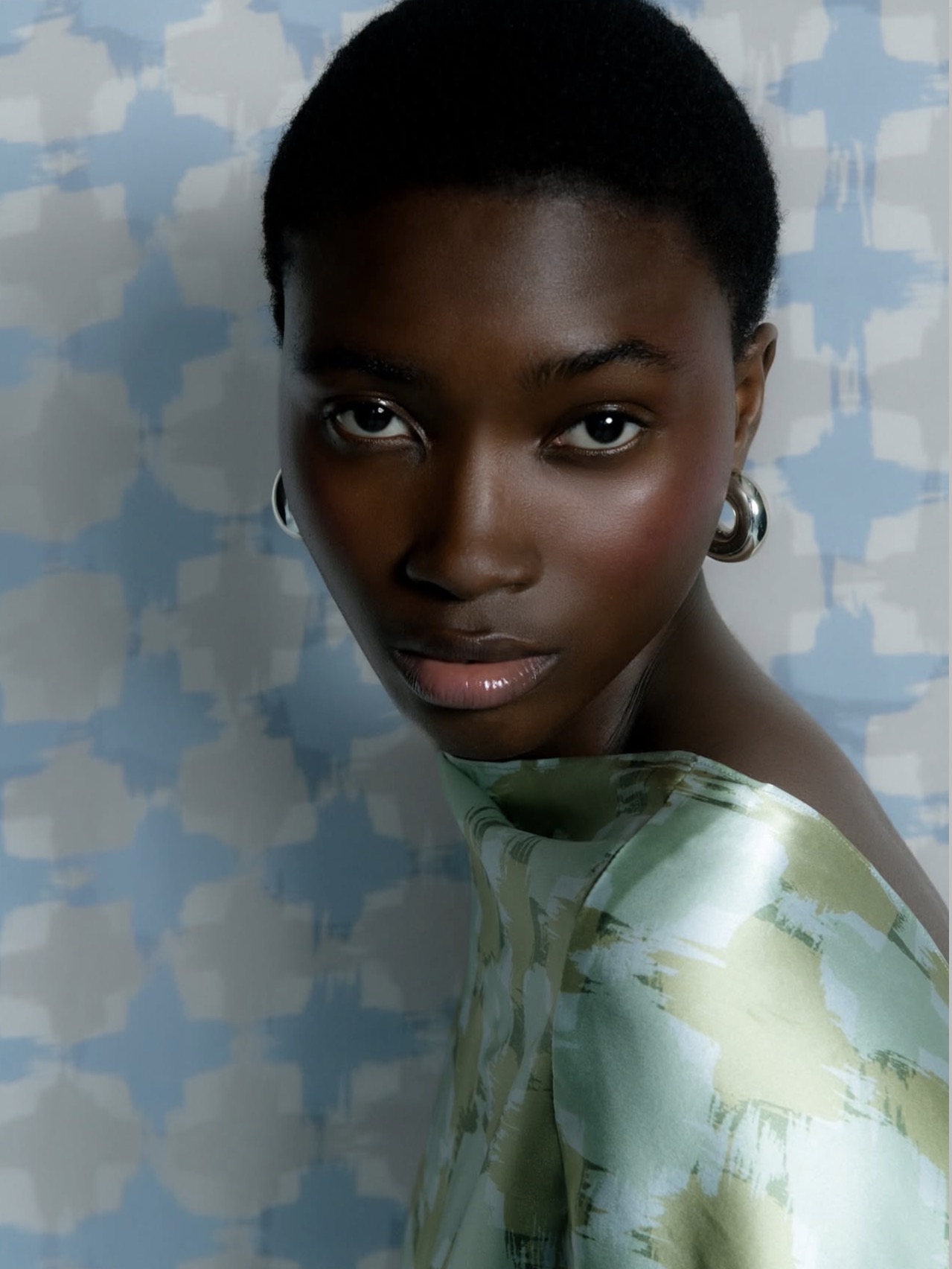
Joanna Masiyiwa grew up in South Africa as part of the only Black family in her school, and her mother’s response to that fact was deliberate: they would always be impeccably dressed. In a post-apartheid context, clothing was something closer to an argument, about dignity, about the right to occupy space without having to justify it, and the Nigerian mega church they attended held the same expectation. The standard was not optional, and Masiyiwa absorbed it without having to be told why it mattered.
Fashion became how she moved through spaces where she was already visibly different, though as she got older she largely convinced herself it wasn’t a serious path. “I thought I’d become a lawyer,” she says. “Just the one who wore pink suits to courtrooms.” She graduated from Yale in 2020 with plans to work at Participant Media in Los Angeles, and when COVID arrived and collapsed that trajectory, she found herself back at her parents’ house in Surrey with no clear next step. She started designing again, not with the intention of building a label, but because she needed to return to something that was hers. By 2022, she decided to take it seriously, and that became Amayi.
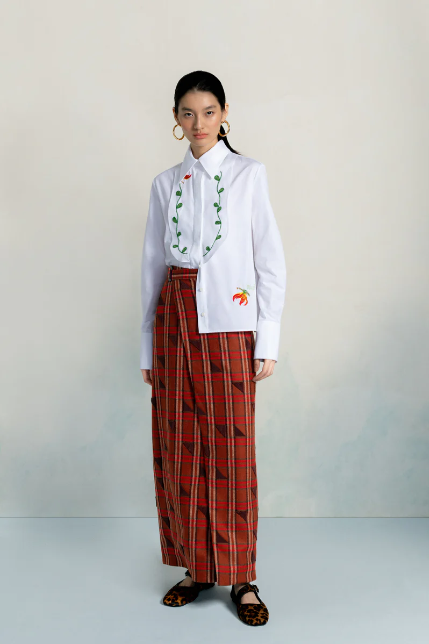
She is candid about how underprepared she was when she started. “I announced Amayi quite early, probably before I fully understood what I was getting into,” she says. “There was so much I didn’t know — finding the right suppliers, learning how to clearly communicate what I wanted to make, navigating the industry as an outsider.” The gaps became concrete almost immediately. Her first real project was making bridesmaid dresses for her sister’s wedding, and it went badly in almost every direction. “The dresses almost never arrived, they were extremely expensive to produce, and everything was overly embellished,” she says. “But the experience taught me an important lesson: what I was making wasn’t commercially viable. I had to rethink everything — how to translate complex textile ideas into something wearable, scalable, and still true to my vision.”
She went through eight production managers, worked with seamstresses across London, and began going deep into museum objects, artworks, and archival material from the African continent, not to replicate any of it but to find a way back in through a different door. “My process became very research-driven,” she says. “I’m not interested in direct replication. I want to extract something and translate it into a new context.” A woven reference might be recreated, scanned digitally, and then printed onto fabric, the original object functioning as a source rather than a template.
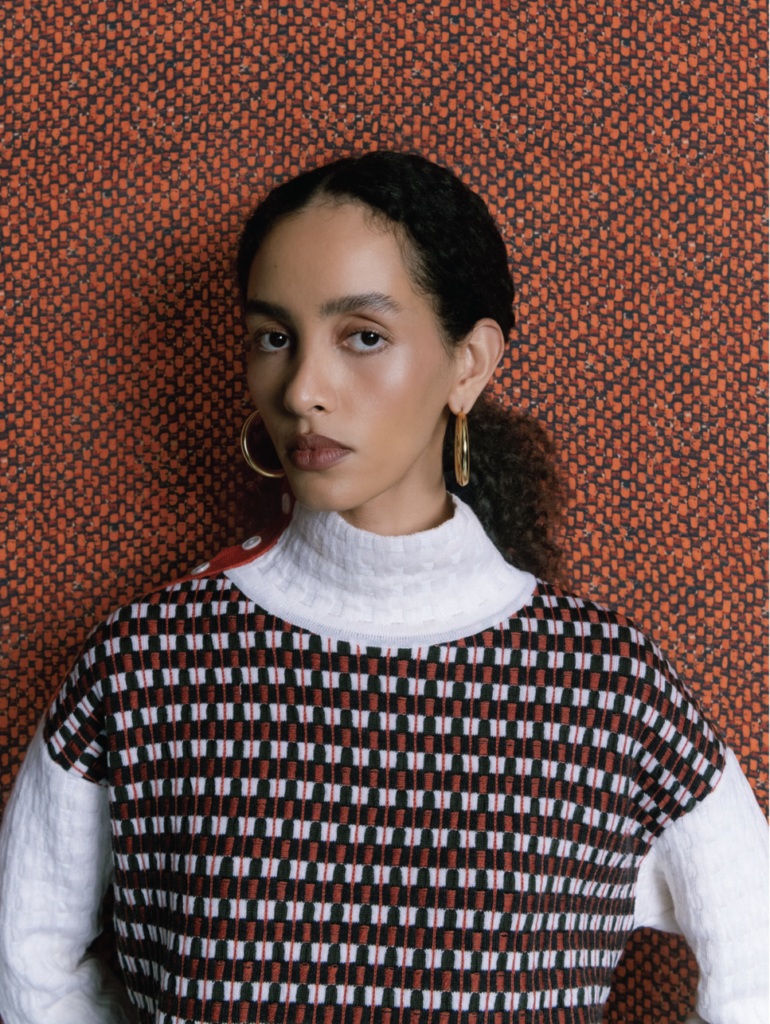
While she was sorting out production, she was also working out what kind of company Amayi would be. Watching major retailers struggle, she questioned wholesale entirely and landed on what she calls a transparent scarcity model: each piece is produced in limited quantities, sometimes as few as 30, and once it sells out it goes into the archive and is never reproduced. “Fashion has always been about individuality for me,” she says. “Even now, if I feel like someone else might be wearing the exact same thing, I change. I want to create pieces that feel rare, personal, and lasting — things you keep, and eventually pass down.”
That instinct is the organising logic of the whole enterprise. Masiyiwa doesn’t call what she makes collections. She calls them archives, a choice that lets her build her own narrative framework outside the industry calendar, and the central idea running through all of it is the future heirloom: a garment that holds memory, that can move between generations without losing its meaning.
The thinking comes from a specific absence. “In many African cultures, we don’t have a strong tradition of passing down objects,” she says. “More often, we pass down stories. And that’s often because history, colonisation, and conflict disrupted material continuity. I don’t have physical objects from my grandmother, only photographs. And that absence means something to me.” When she describes the Amayi woman, she describes her mother, one of five sisters from a deeply matriarchal family, a structure that mirrors her own, moving through different stages of her life. “At 25, she might not have much, but she sees one beautiful shirt and decides to invest in it,” Masiyiwa says. “Then, decades later, she becomes a fully realised version of herself: confident, expansive, and able to access everything she desires.” The clothes are built to track that arc.
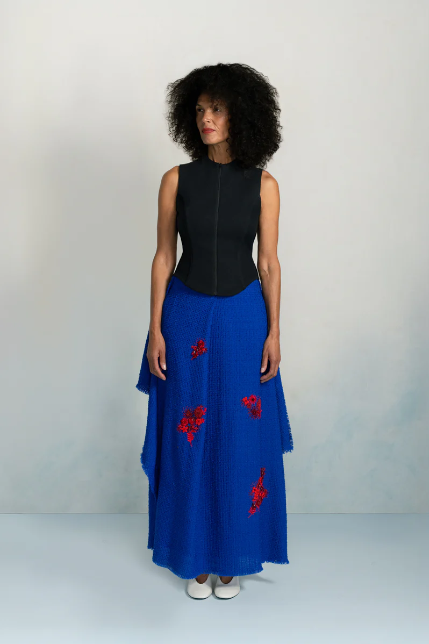
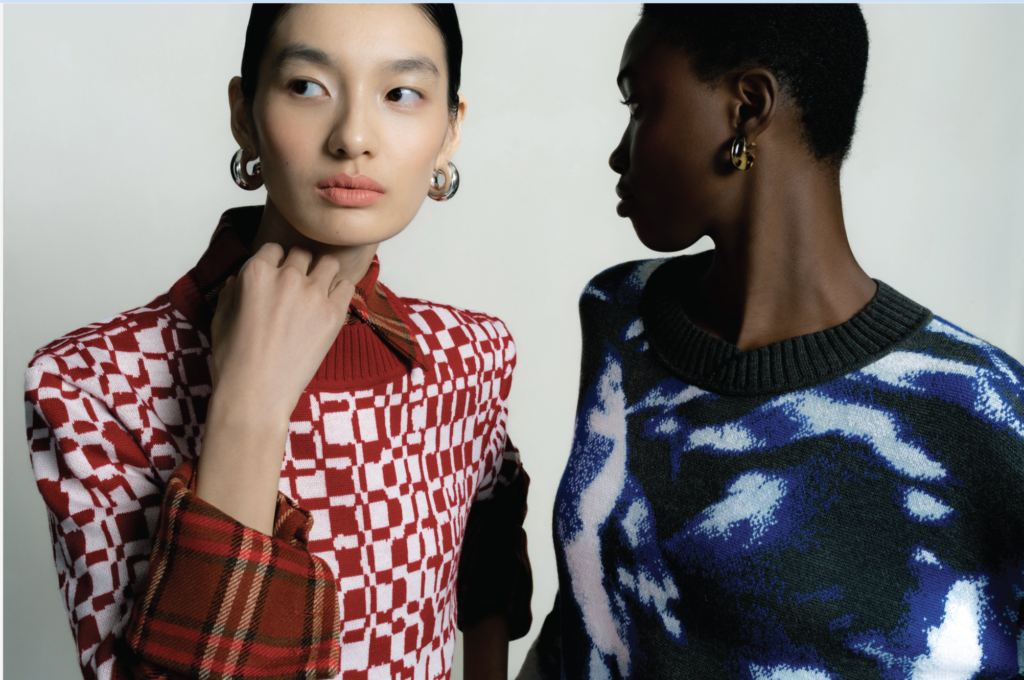
Archive One draws from Ndebele geometric patterns, beading traditions, and the textile heritage of Southern Africa, particularly the visual and material language of blankets. Prints were hand-painted, then digitised and reworked across different fabrics and finishes. Silhouettes came from an unexpected source: archival images of Olympic uniforms, which gave the collection its strong, structured shapes. Colonial dress codes, corsetry and uniformity, appear throughout as well, revisited not as references to borrow from but as histories to interrogate and reclaim. One key collaborator was Ebuka Omaliko, creative director of Maliko in Lagos, who helped Masiyiwa weave vintage denim into new forms and taught her how to push back when something gets called impossible. The collection holds the tension between past and present, inheritance and invention, without trying to settle it, which is more or less the point.
At the end of April, Masiyiwa opens a showroom in Marylebone, London, which she designed herself: the interiors, the wallpaper, every object in the room, woven artworks, personal items, family photographs. “I want anyone who steps in to feel like they’re entering Amayi,” she says. “Almost like walking into an heirloom.”