

In Lagos & Accra, an Underground Queer Ballroom Scene Thrives Again
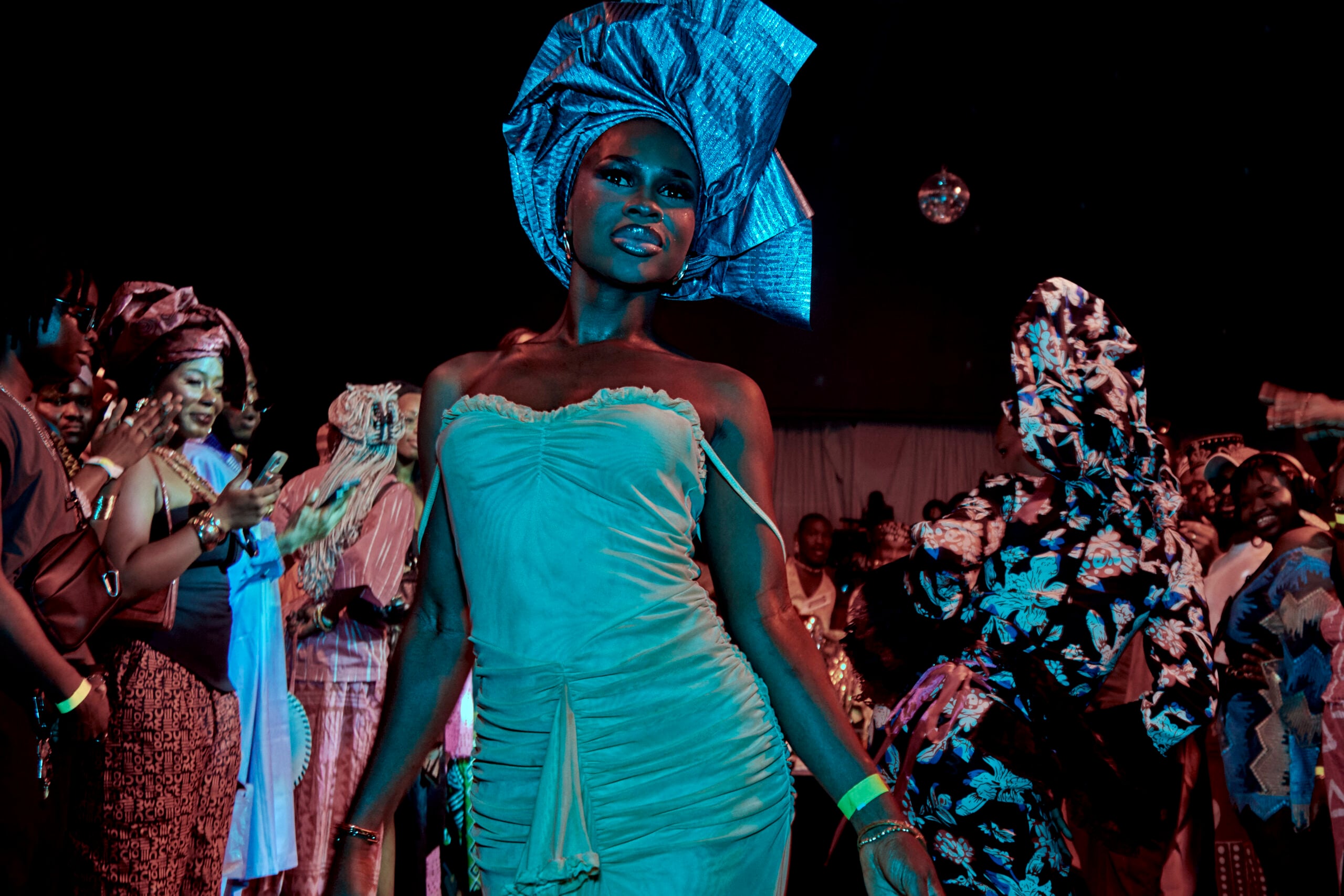
When Timileyin Olaide Kayode started Pride in Lagos in 2021, he didn’t anticipate how big it would become. He only knew there was a need for queer Nigerians to have a visible, collective space to exist and celebrate themselves. Five years later, it has grown into a major Owambe ball and the very reason a well-dressed, ready-to-celebrate crowd has gathered in an intimate space somewhere in Lekki, a residential neighbourhood in Lagos, Nigeria.
Like any ballroom event, there are kaleidoscopic lights, a ready MC and thumping music, only this time, the attendees are dressed in outlandish gele, well-tailored boubous and agbadas. The judges are seated facing the runway, while on each side, attendees are bunched up opposite one another, ready to cheer on the contenders who step onto the runway.
Ballrooms are not a new concept in Nigeria. In the early 2000s, an underground ballroom scene was already taking shape among queer communities, particularly in Lagos. The scene was close-knit, operating only through word of mouth and close friend circles. But after Nigeria’s Same-Sex Marriage (Prohibition) Act was signed into law in January 2014, queer gatherings became increasingly difficult to organise, pushing the scene further underground.
What Pride in Lagos has done since its inception in 2021 is to make the scene more accessible. “The space wasn’t always accessible to everyone. What I did with the PIL collective was to break down the wall and make the scene accessible to everyone in Lagos,” says Timileyin Olaide Kayode, the sole founder of Pride in Lagos.
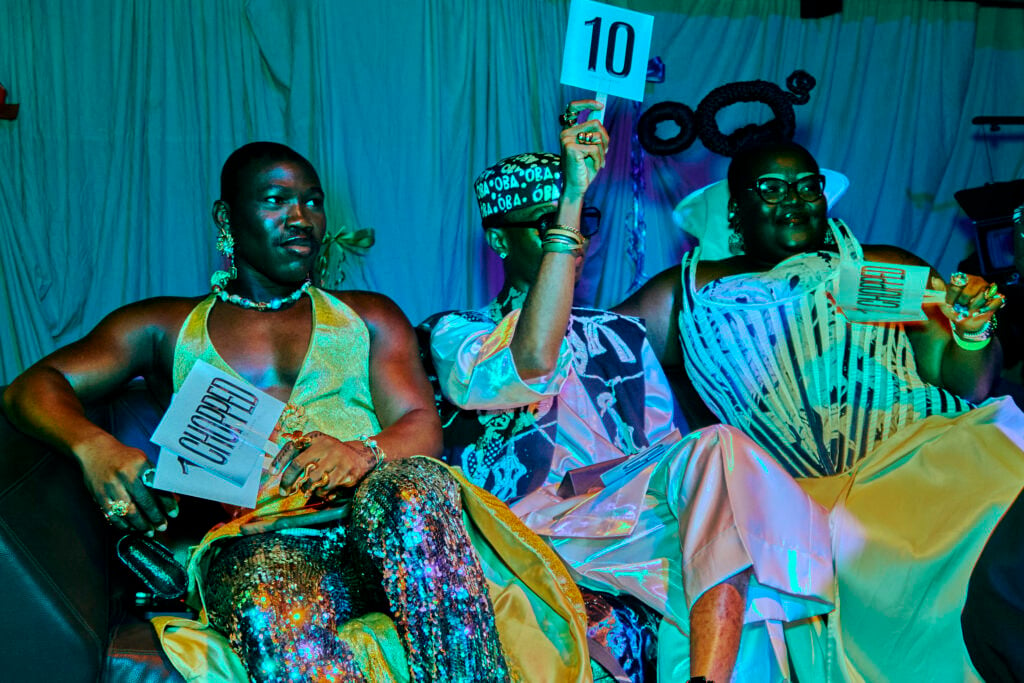
The ballroom subculture emerged in the early 1970s in Harlem, New York, led by Black and Latino queer communities, and became a space where marginalised people could gather, compete, perform and vogue (an improvisational dance form that draws from the poses of models in Vogue magazine).
Ballroom categories draw from fashion runways, facial beauty, often referred to as “face,” and the celebration of the human form, hair and sensuality, with categories such as “body,” “hair” and “sex siren,” among others. At its core, the ballroom is a space for celebrating individuality, creativity and self-expression.
In Africa, queerness is often treated as a Western import, and presently, more than 30 countries on the continent criminalise consensual same-sex relations. Ghana already criminalises same-sex sexual acts, which carry a maximum sentence of three years. In May 2026, its Parliament passed the Human Sexual Rights and Family Values Bill, which would add further penalties around the promotion, funding and advocacy of LGBTQ+ rights, but the bill has not become law: its passage was challenged on procedural grounds and sent back for reconsideration, and it remained unsigned as of publication.
It is against this backdrop that ballroom culture has always existed and that Pride in Lagos and Ballroom Ghana have built a safe space for queer people to find celebratory solace in, even if it’s just for a while.
In Accra, Ghana, the Free Forever Collective (FFC) is a creative queer collective with one of its biggest projects being Ballroom Ghana, born out of the need to create a structure and system around ballroom culture in Ghana. Founded by four Ghanaian Diasporians, namely Nii Nai, Zelda Lavin, Kwame Aman, and David Dave, in 2019, the formation of the space was driven by one goal: community.
“The system we created with Ballroom Ghana allowed the culture to blossom. For someone who is part of the first generation of the European ballroom scene, it was important to bring my knowledge of the culture and ground it in Ghanaian culture,” says Zelda, one of Ballroom Ghana’s co-founders.
Most of what the present generation knows about ballroom comes from Western media, YouTube clips, and American shows like Pose, and documentaries like Paris Is Burning offer a snapshot of the subculture, but the scene has thrived secretly in Nigeria and Ghana; its lack of visibility, due to homophobia and crackdowns, makes it, in fact, nuanced, and reveals what transcends when a space continues to face repression.
To decolonise the idea of queerness as a Western import, the collectives are making sure that the balls themselves are grounded in African culture.
The first edition of the Owambe Ball by Pride in Lagos was in 2025; by then, the PIL collective, known for its one-month celebration of Pride in Nigeria, was already in its fourth year, and it became imperative for it to be as culturally relevant as possible, thus the repetition of the same theme this year.
Owambe itself is a Yoruba term that translates to “it’s happening there” and refers to any form of communal gathering, and can be traced back to pre-colonial Yoruba society. It has since evolved into a cultural phenomenon, especially in Lagos, thanks to the city’s party culture.
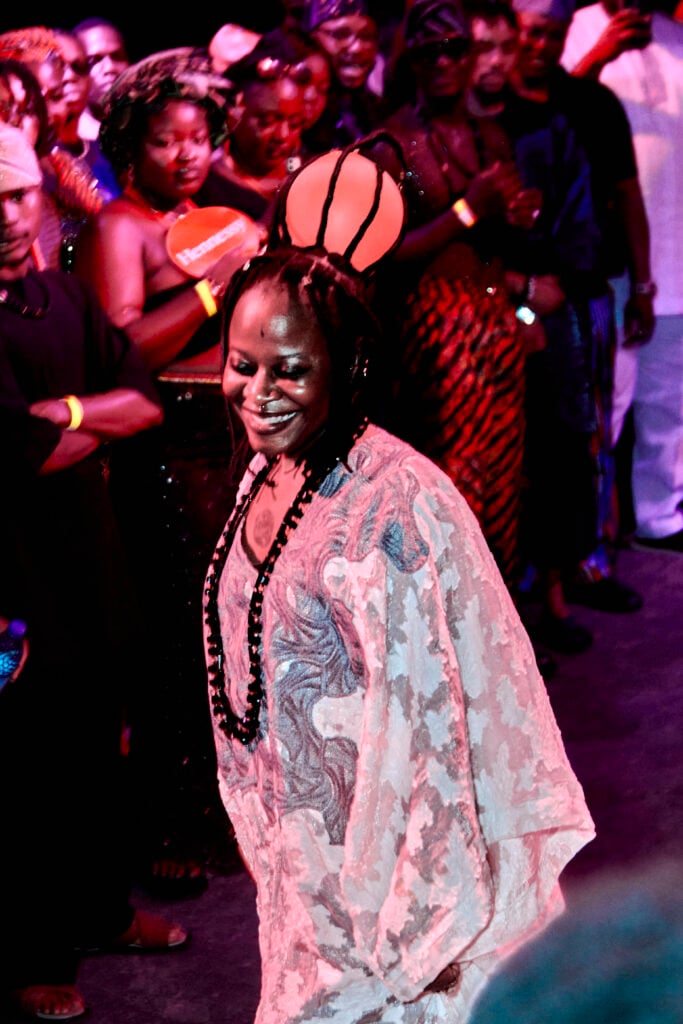
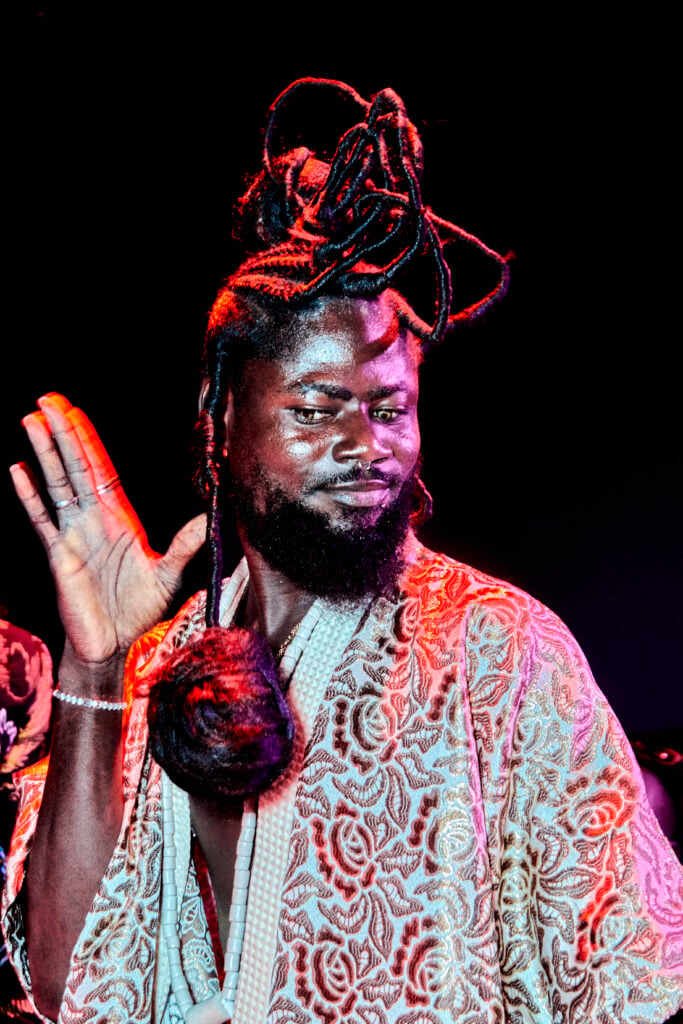 Face category at Pride in Lagos Ball. Photography by Abolade Oluyede.
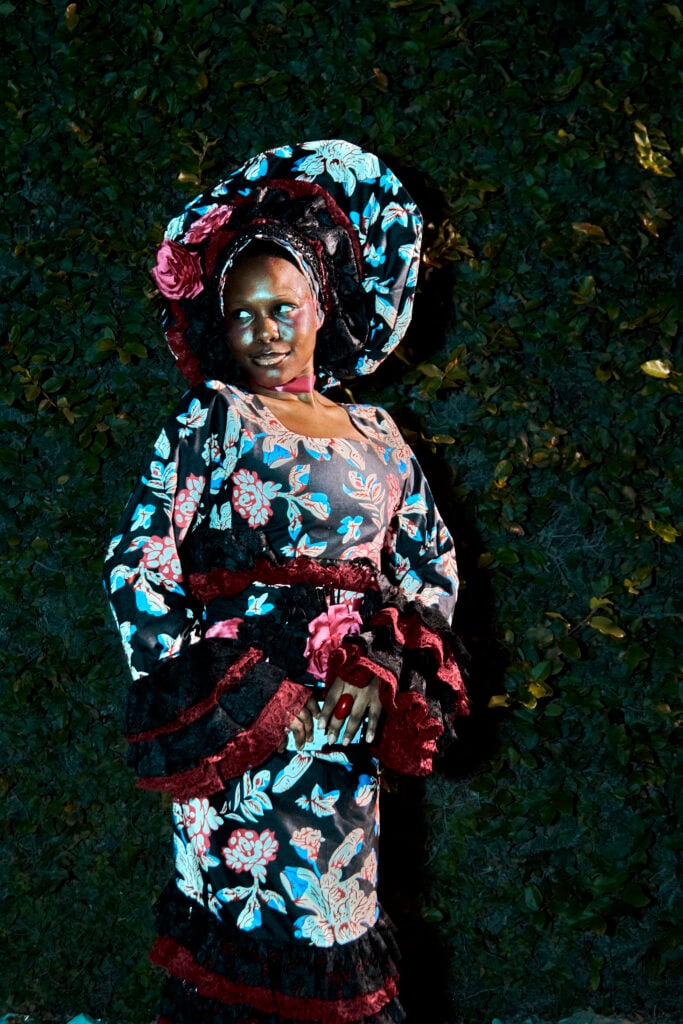 Guest at Pride in Lagos Ball. Photography by Abolade Oluyede.
“What I hope people see from the ballroom is the authenticity of our queerness, where a lot of queer Africans are not seeing their queerness outside of their Africanness, but seeing their queerness existing alongside their Africanness,” Olaide Kayode explains.
He further explains that people often dress for the ball as though they are attending an Owambe party, drawing on the communal nature of Owambe itself, which he describes as deeply rooted in African culture.
The co-founders of Free Forever Collective have always been intentional about grounding the scene in Ghanaian heritage. Nii Nai, one of its youngest co-founders and a ballroom prodigy, has been instrumental in shaping its visual and cultural language as far back as its inception in 2022. Indigenous motifs on its moodboard, local languages, traditional references, and Ghanaian storytelling are not there for aesthetics alone but serve as a reminder that ballroom wasn’t imported.
Categories like the face category (Ahoufe) once challenged performers to use a Ghanaian beauty product as a prop. “One thing I really wanted to drive home with the themes and categories of the ball is that culture isn’t some antiquated idea that belongs to your parents or grandparents, it’s an inheritance, we’ve inherited it, it belongs to us now to shape it,” Nii Nai explains.
Beyond how the space operates, one of the subculture’s founding principles revolves around “Houses”. Historically, the need for a house in a ballroom was born out of the racial discrimination faced by Black queer people; it became a way of forging kinship. A house consists of a father or mother alongside children; in parallel, it also functions as an alternative family structure that brings together people who have faced rejection by their biological families.
Currently in Ghana, houses are springing up as a way of nurturing and growing the scene.
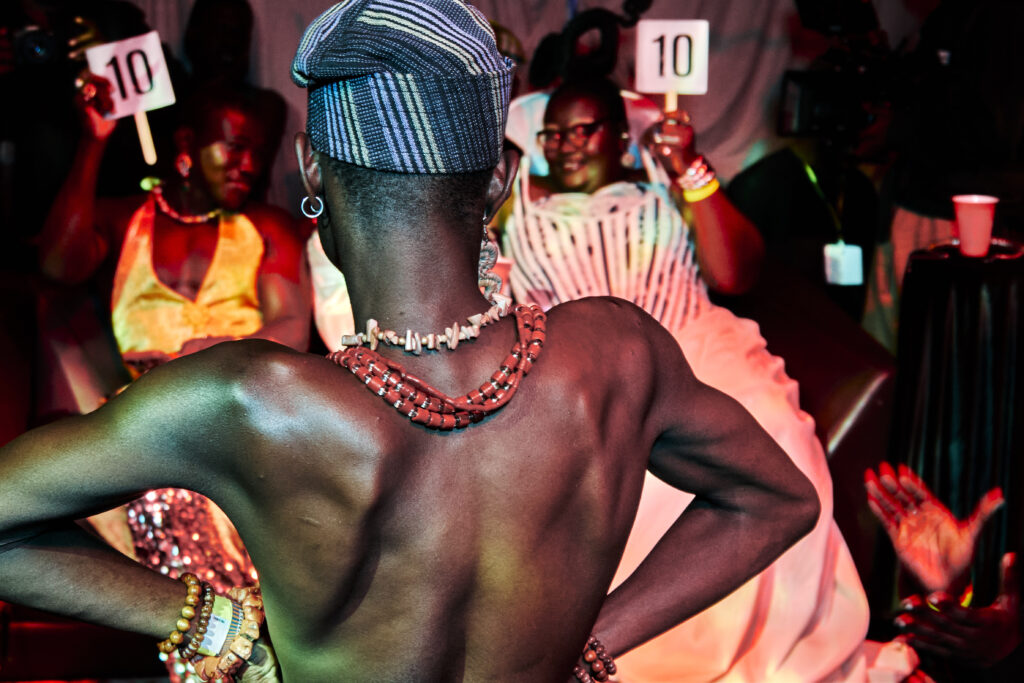
Spaces like the ballroom scene have stood the test of time in Africa; the scene is pluralistic in nature and often runs on fostering community, which can be difficult to sustain.
Timileyin Olaide Kayode has been running the Pride in Lagos collective solo for five years, and when asked how he is doing, his response is as plain as that of any African creative building on the continent.
“Pride in Lagos is underfunded,” he expresses. “I’m stressed, but amidst that, I think one of my biggest takeaways from the five years of organizing would be the community, not necessarily community in a large term, but the intentional part of it.”
As Ghanaian Diasporians, the four co-founders of the FFC are navigating different lives, in entirely different stages. Just as in Lagos, building from the ground up is a different ball game.
“It’s a lot more work than people see,” says David Dave, one of the co-founders. “There are months of planning, fundraising, and we’re constantly thinking of security. Community work is expensive, and there’s also emotional burnout behind all of this.”
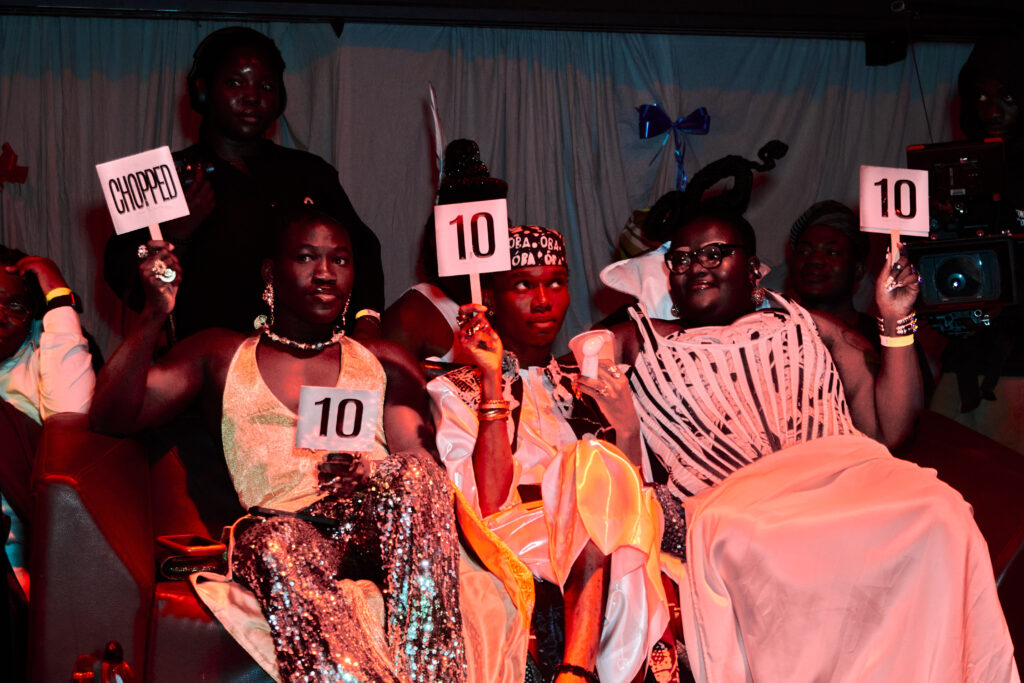
But there are still so many young queer people who have never had the chance to experience pride in themselves or the warmth of a community. I spoke to Desiree, one of the attendees present, about what they would say to a young person who has never experienced ballroom but might need exactly what it offers.
For them, the ballroom serves as a reminder that queer people have existed before and can, therefore, survive and endure whatever comes their way. “Space isn’t about becoming someone else, it’s about discovering who you’ve always been, and if there isn’t an active scene where you’re yet, maybe you’re exactly the person who will help build it. That’s how every scene begins,” they say.