


After the Applause: Heritage Textiles and the Economics of the Runway Moment
Florentina Agu went back to the wood carving workshops she had visited as a child, and many of the artisans her family had once worked with were dead. The ones still alive were in difficult circumstances. Agu’s father had run a wood carving studio in Nigeria that produced parquet flooring and carved objects for sale at home and abroad, and she had grown up around the work. Returning as a designer, she could see what had become of an industry that had supported her childhood. “We even had a potter on our currency at some point,” she told Guzangs, describing how valued the craft once was. The implication of the sentence was its second half, which she did not need to say out loud.
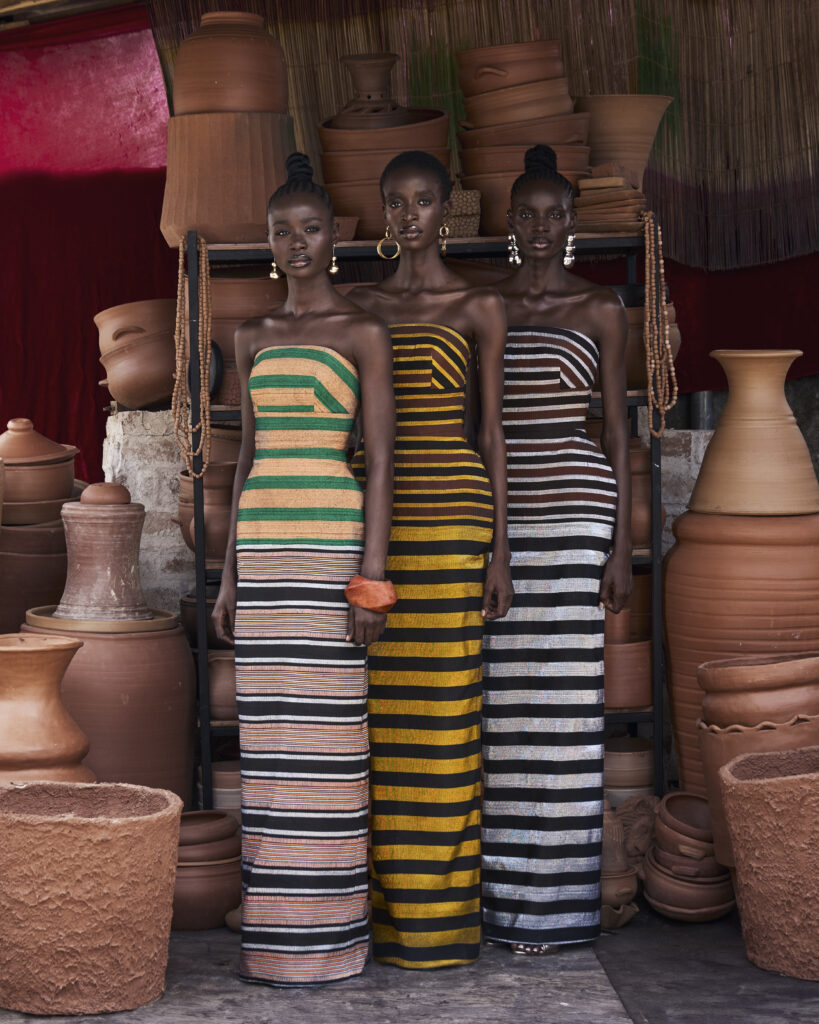
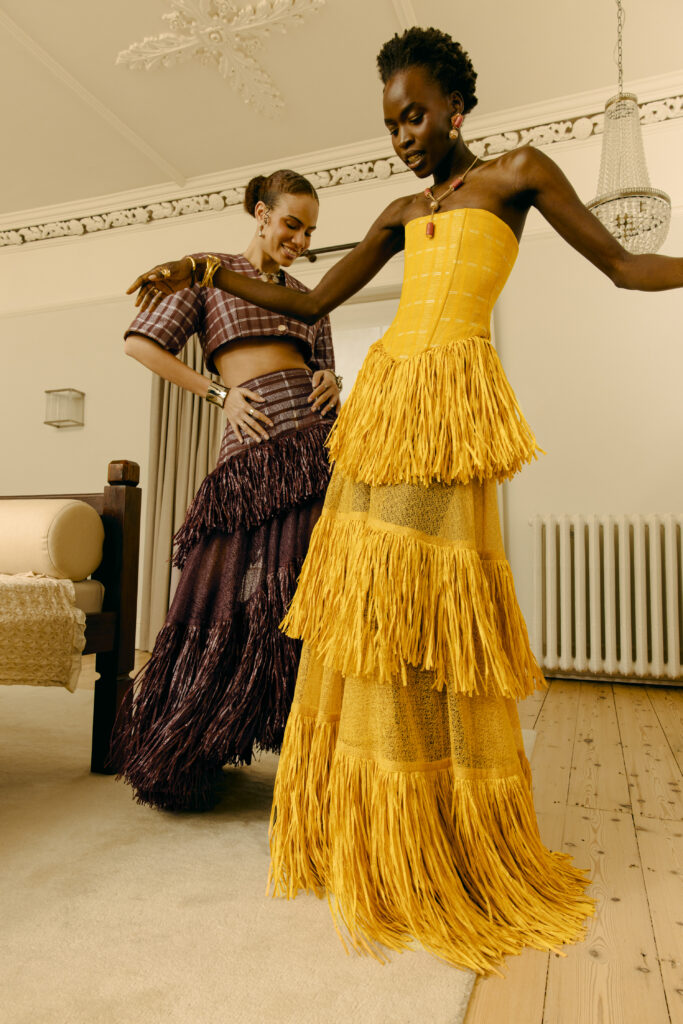
What Agu did with that observation matters more than the observation itself. For her label Hertunba’s recent collection, Akaoru, which is Igbo for handwork, she commissioned the surviving carvers from her father’s network to produce a run of handcrafted bags from aged and reclaimed mahogany and ebony. She paid them above what they would have earned on a typical furniture commission. Guzangs covered the collection in detail in April. The bags appeared in the campaign alongside hand-woven garments and clay beads made by potters working in the Lagos studio where Hertunba also shot the campaign. None of this was inspiration. The wooden bags were not inspired by carving; they were carved, by carvers, who were paid to carve them. The clay beads were not referencing pottery. They were pottery.
Akaoru is one model of what a luxury fashion brand can do when it draws on heritage practice, and it stands out because most of the industry’s encounters with heritage textiles do not work this way.
What the Attention Does and Does Not Create
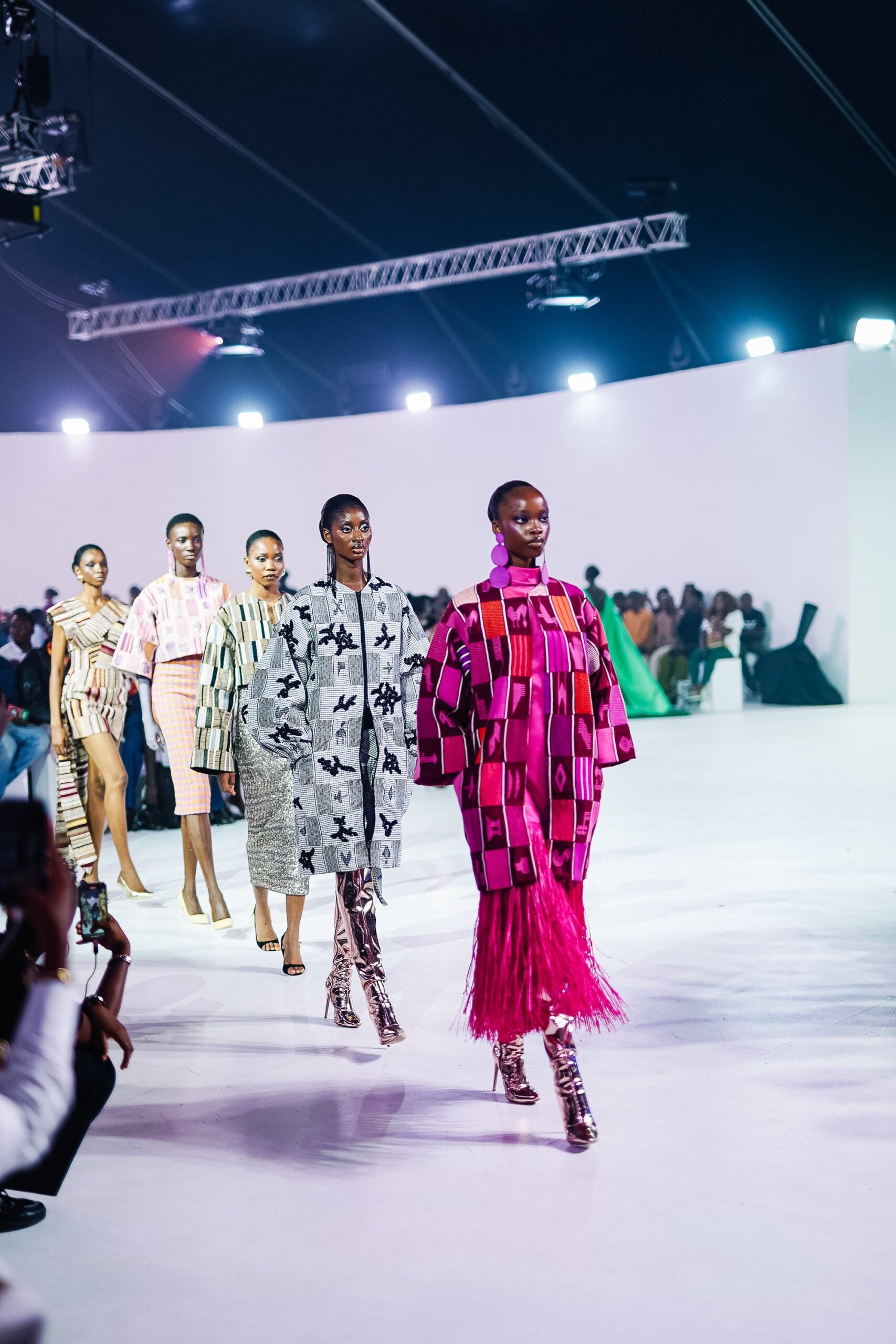
The more familiar pattern is the runway moment. A heritage textile appears in a luxury collection, the press notices, the editorial features follow, the carousels circulate for a week, sometimes two, and then the next season arrives and the conversation moves on.
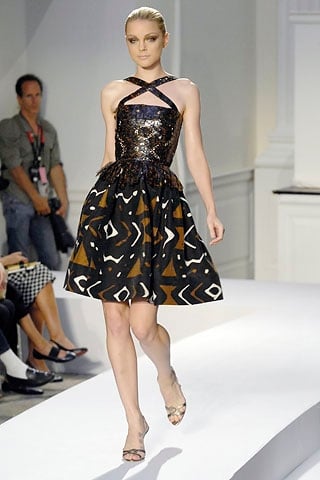
In 2008, Oscar de la Renta presented a Spring ready-to-wear collection that drew on bogolanfini, the hand-dyed cotton textile made by Bamana women in Mali. Look 37 carried the reference most visibly, and the press framed the collection as a sign of global openness, evidence that visual languages once peripheral to luxury were now welcome on its runways. Aso-oke, kente, adire, raffia, mud cloth, and Akwete have all moved through luxury collections in the years since under similar terms. The textiles arrive in the press cycle, they leave it, and the communities that produced the knowledge behind them are not usually any closer to the centre of the industry afterwards than they were before.
The Harder Question Is What Arrives Next
Direct economic benefit to the communities that hold the tradition is the exception rather than the rule, because the supply chain that produces a runway version of a heritage textile is almost never the community that developed it. A house may commission a small workshop, a single artisan, or, more commonly, a mill that reproduces the visual code without any relationship to the original makers. The textile travels and so does the knowledge. The royalties do not.
Part of this reflects a structural gap. In many textile-producing communities, craft knowledge moves through inheritance — parent to child, master to apprentice — and the technical skill is extraordinary. The infrastructure around it, licensing systems and intellectual property protection, is often thin or absent, so communities inherit the practice without inheriting the legal apparatus required to defend it. Intermediaries step in, designers cite “inspiration,” and value moves through the system without ever returning to the place it came from.
What the runway moment does create, reliably, is reference. Once a textile enters a major collection, it enters the visual library every designer who follows draws from. This is a form of legitimacy. A textile once described as craft or regional becomes part of the language of contemporary fashion. The upside is real. The cost is that meaning often flattens in transit. A cloth tied to ceremony or status becomes shorthand for “African” or “heritage,” and recognition without context is its own kind of distortion.
Credit moves through the same uneven channels. The designer is named in the press coverage and the tradition is referenced in broad terms, but the specific community whose knowledge sits inside the garment is rarely identified. A weaving cooperative in Osogbo whose work shapes a season of aso-oke pieces will usually receive the production fee for that season, and nothing that outlasts it. No royalty, no continuing credit line, no equity in the visual reference the textile becomes once it enters the wider design language.
What a Better Model Looks Like
The harder version of this conversation is not whether heritage textiles deserve visibility. They have proved that. The question is whether the industry can build relationships where the value created by these textiles returns, in some structural way, to the people who made them legible.
The mechanisms are not mysterious: licensing agreements that recognize cultural authorship, long-term supplier relationships rather than seasonal sourcing, revenue sharing with named artisan partners, provenance systems that travel with the garment, multi-season commitments that fund training and equipment in the communities producing the textile. None of this is new to luxury. It is how the industry already protects French savoir-faire and Italian leather. The question is whether the same systems can be extended to traditions that have, until now, been treated as inspiration rather than infrastructure.
Akaoru works through that question in practice and Agu has been candid with Guzangs about what it costs. “You produce materials, realise they are not right, and start again,” she said of the sampling process. “That is something people do not always see.” She has been just as direct about why the practice is undervalued to begin with. “In Nigeria, handmade work is often undervalued, almost treated as ordinary. Yet elsewhere, that same label increases worth.” The Akaoru model is not scalable the way industrial fashion is scalable. It is a different proposition. A brand can grow by deepening its dependence on the artisan ecosystem behind it rather than by abstracting away from it.
A similar logic runs through Kilentar, founded in 2019 by Michelle Adepoju, which has built its design language on long relationships with weavers and dyers across Nigeria, Burkina Faso, Côte d’Ivoire, and Senegal. The brand sources handwoven aso-oke and indigo-dyed adire from artisan communities Adepoju has worked with for years. The collections are documented through that process. As Kilentar has scaled, including a debut at New York Fashion Week in 2024, its dependence on the ecosystem behind the brand has grown rather than thinned.

The same logic operates at the Paris haute couture level in the work of Imane Ayissi, whose collections have been built on raffia, faso dan fani, and other heritage textiles sourced through artisan networks across the continent. Ayissi shows during the Paris haute couture calendar and was the first sub-Saharan African designer invited onto the official schedule, which makes the model significant for the question this piece is asking. A West African textile tradition can sit inside the most rarefied tier of European luxury without losing its supply chain to a mill.
Hertunba, Kilentar, and Imane Ayissi show that the work of building responsible heritage-textile relationships is already understood, and the mechanisms exist. The question for the houses now turning to African textiles is whether they will adopt them, or continue to treat the textile as the reference and the community as the footnote.
You just read the kind of piece we publish every week. Get it in your inbox.
Continue reading