


Can a Piece of Clothing Bring You Home?
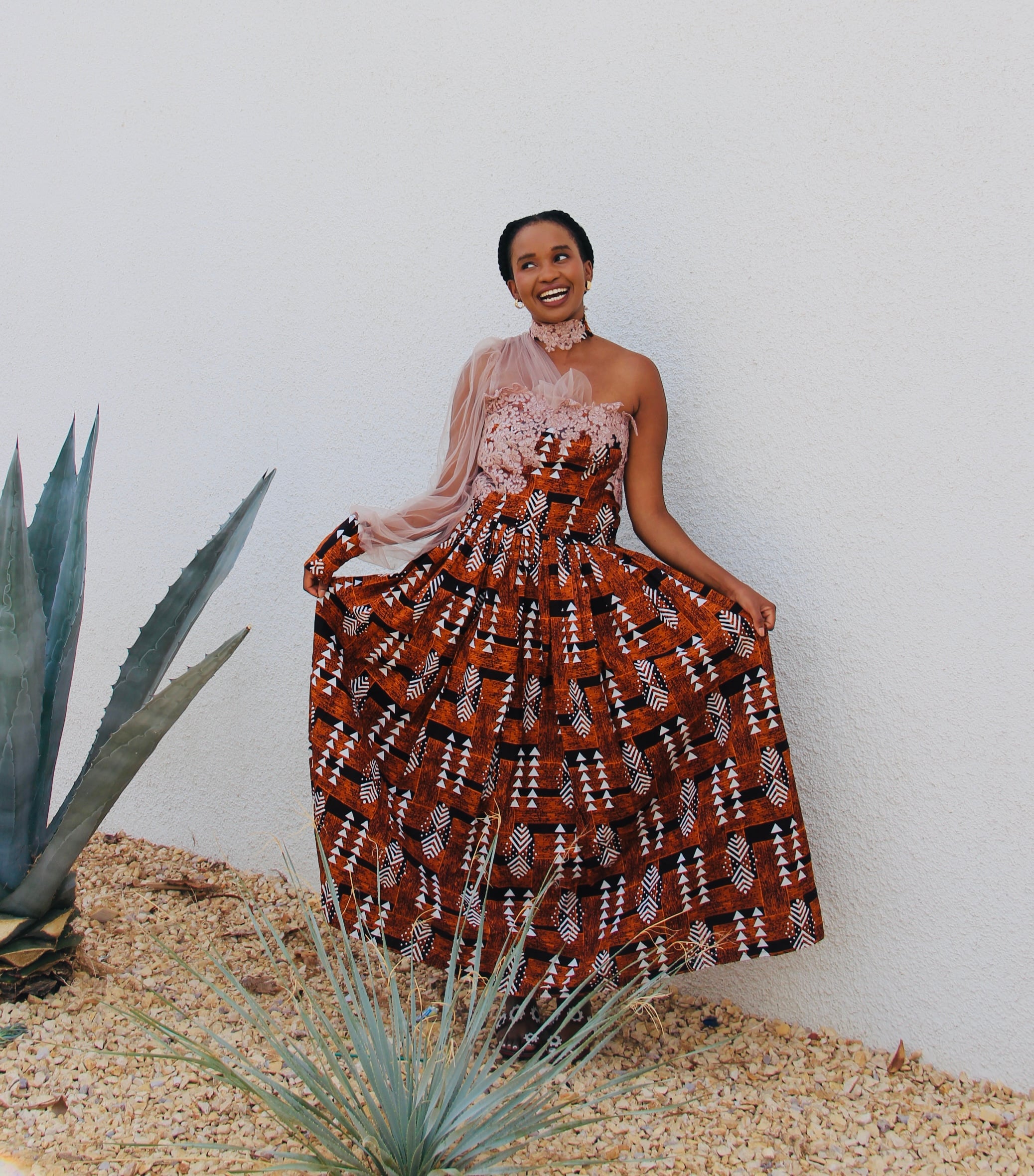
For Kimanzi, a Kenyan living in Riverside, California, home fits inside a scarf. When she left Kenya for the United States at 17, she had only two suitcases and a carry-on. Every item she packed meant another had to be left behind.
Among the things she refused to leave was a kitenge scarf that had belonged to her mother. “It was one of the scarves she always had and I always wanted,” she recalls. “When she asked if I wanted it, I didn’t even have to think twice.”
But it wasn’t really about the scarf. She believed that gifts are an extension of someone’s love, and she adored the sentiment of carrying something of her mother’s to a different country. Today, the scarf fits easily into her everyday wardrobe. Sometimes she wears it as a head covering and sometimes as a top. It reminds her not only of Kenya but of the people she left behind.
Another treasured possession is an African dress her mother had made after Kimanzi moved abroad. Curious about American school dances, she had shown her mother examples of what students wore. The next time a family friend travelled to the United States, her mother sent the dress. “It always reminds me of home and love and being seen,” she says.
The dress is too formal for everyday life, but it remains one of her most cherished possessions. “It makes me feel like a princess,” she says. “It is so different, which is how you always feel when you move to a new country, but it is so beautiful, which is how you should always feel.”
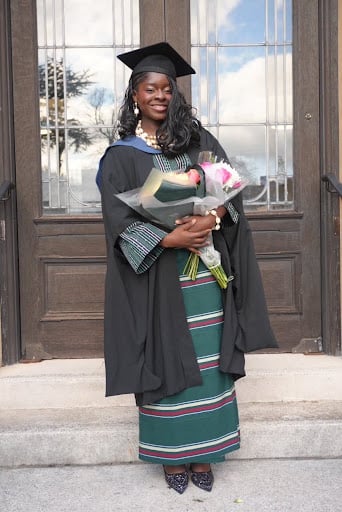
When Tola graduated with her master’s degree in the UK, she chose not to wear just any dress. Instead, she commissioned an Aṣọ òkè outfit from Nigeria, a fabric deeply rooted in Yoruba celebrations. She wanted the moment to be wrapped in something that reflected where she came from. “It wasn’t just so people could say, ‘That looks beautiful,'” she says. “This is a cloth made for celebration and achievement.”
For many people, graduation outfits are tucked away after the photographs have been taken. Tola hopes hers will become something more. She imagines wearing it again for life’s milestones before one day passing it on to another member of her family.
Growing up in Southeast London, Tola saw African clothing as simply part of life. The aunties who stunned at weddings in their draping lace gowns, the Ankara prints everyone wore to church on Sundays. There was always something interesting about every style.
But adolescence complicated that relationship. “When you’re really young, your parents choose your clothes,” she says. “When you now get that choice, I don’t think African fabric would have been the first thing you reach for because you’re trying to be like everyone else.”
Like many children of immigrants, fitting in often meant blending in. African prints which were once normal suddenly felt conspicuous. And as she got older, her relationship with them changed. Seeing designers and founders from similar backgrounds embrace African aesthetics made traditional fabrics feel contemporary rather than old-fashioned. Today, she pairs Ankara trousers with hoodies and T-shirts and deliberately chooses vibrant colours over muted palettes. “I don’t believe beige and neutral colours are the only colours that work on skin,” she says with a laugh.
For Chisom, a Nigerian beauty and lifestyle creator now living in Toronto, distance changed the meaning of clothes she once barely noticed.
Growing up in Lagos, Ankara was everywhere. “You wore it to church, weddings, birthdays, family celebrations,” she says. “I never stopped to think about what it meant because it was everywhere.”
Canada changed that. Distance, she says, has a funny way of making her appreciate things she once took for granted.
Her memories are inseparable from her mother. She remembers sitting beside her as she sorted through stacks of Ankara fabrics with their neighbourhood tailor. They would debate over colours and styles before eagerly waiting for the finished outfits. “Looking back,” Chisom says, “I realise it was never just about the clothes. It was about the time we spent together.” Now, every trip to buy African fabric brings back those memories.
Migration has also changed the way she shops. Ironically, she buys more African clothing now than she did while living in Nigeria. She looks for timeless pieces that combine traditional fabrics with contemporary silhouettes. “I live in Canada,” she says, “but Nigeria will always be part of who I am.”
Unlike some who hope to preserve particular garments, Chisom hopes to preserve something less tangible. “I’d love for my children to experience choosing fabrics, visiting the tailor, and understanding the stories behind what they’re wearing,” she says. “Those memories are what I’d really want to pass on.”
Ngozi, a Nigerian content creator living in Canada, shares that feeling. “In Nigeria, it felt like something that was always around me,” she says. “Now every time I wear it, it feels more meaningful. It makes me feel closer to home.”
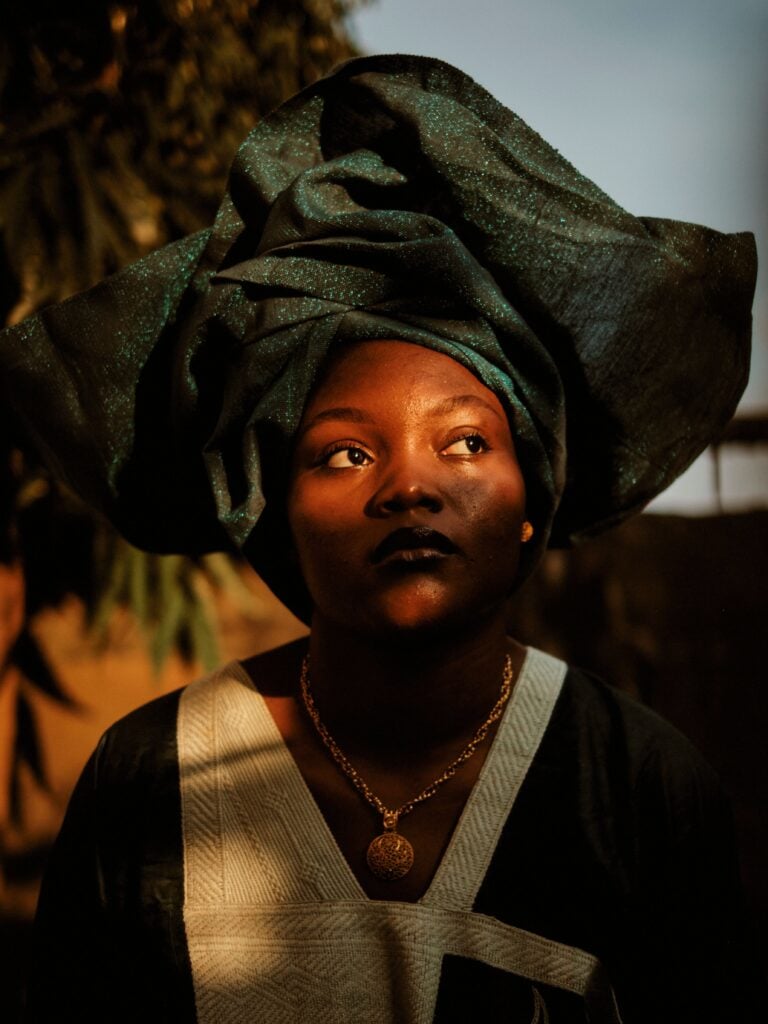
When she thinks of home, she thinks first of Ankara and gele. Growing up, she watched her mother and other women tie elaborate headwraps before weddings, church services and celebrations, fascinated by how a simple piece of fabric could transform into something beautiful. Those memories have followed her to Canada. On some Sundays, she wears a gele to church simply because she wants to feel closer to home. “It’s comforting,” she says. “It reminds me that no matter where I am, I am African.”
She has also become more intentional about supporting fashion back home, often asking friends or relatives travelling from Nigeria to bring outfits because shipping can be so expensive. She especially admires Nigerian designers for their craftsmanship and willingness to experiment with fabrics, patterns and silhouettes.
The piece she treasures most is a George wrapper her mother gave her during her traditional marriage. “It represents my mother’s love, our culture as an Igbo woman, and the memories of my traditional marriage,” she says.
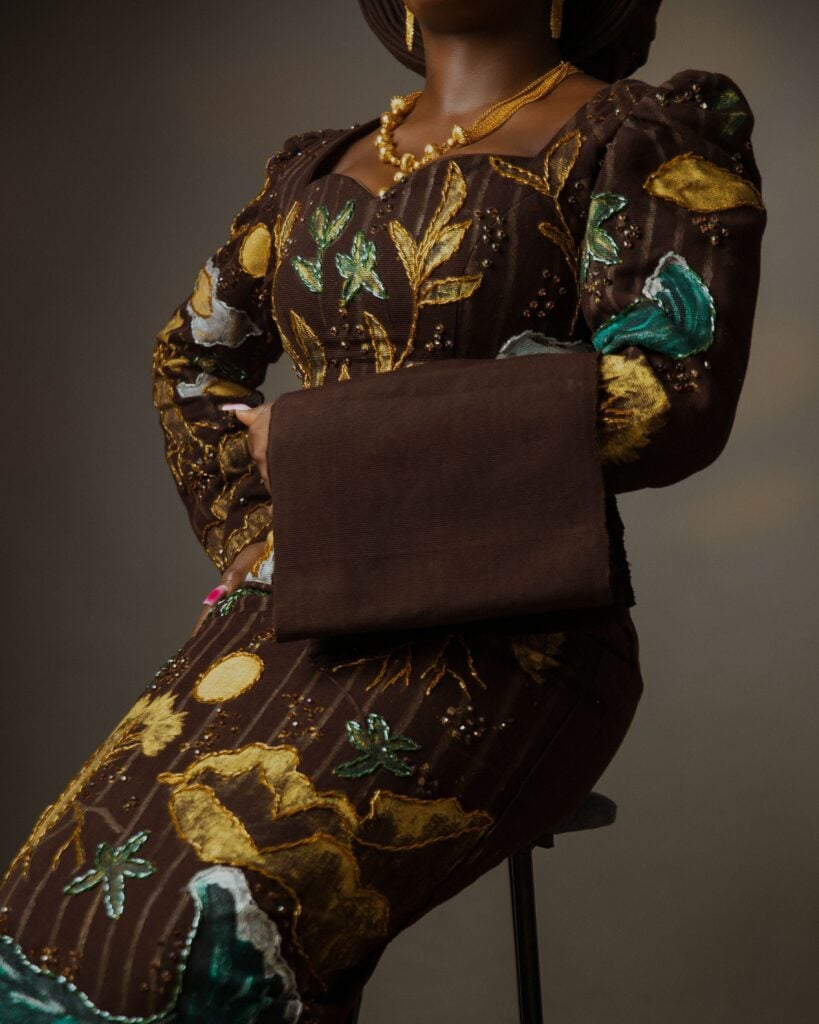
One day, she hopes to pass it on to her daughter.
Harriet, who moved from Nairobi to New York two years ago, thinks about home differently.
When asked what clothing reminds her of Kenya, she doesn’t mention a single dress. She thinks first of the Maasai shuka, a garment associated with Maasai communities in Kenya and Tanzania, and of a beaded Kenyan bracelet.
“It reminds me of where I came from,” she says. Whenever homesickness creeps in, she reaches for kitenge. “I want to show up and show out so that people can know that I am African.”
That sense of identity shapes the rest of her wardrobe too. Bright yellows, oranges and blues dominate her shopping choices. “When someone looks at my shopping cart,” she says with a chuckle, “it’s like, ‘What’s going on?'”
She also hopes to preserve garments connected to her Kikuyu heritage. “They carry a lot of history about our tribe and where we came from,” she says.
A piece of clothing cannot replace home. It cannot shorten the distance between Lagos and Toronto, or Nairobi and New York. But it can carry something from those places.
One of the defining experiences for many young Africans today is saying goodbye. Every year, people leave the continent to study, work, build careers, or create new lives elsewhere. Much has been written about the opportunities that come with migration. Less attention is paid to the ordinary ways people keep home close once they’ve left.
And for the Africans I spoke to, home was something that they could find in clothes.
Subjects are identified by first name.
Subscribe to Guzangs for reporting on African and diaspora fashion, art, design and culture.