

North African Women Wore the Future First
When Jacqueline West, the costume designer behind the Dune series, began creating Lady Jessica Atreides’s wardrobe, she drew from a striking mix of historical and cultural references. Her designs combined medieval European religious imagery with Middle Eastern and North African dress, making Jessica appear at once regal, mysterious and otherworldly.
This borrowing is not unique to Dune. From the galactic fashion of Star Wars to the futuristic worlds of Stargate, some of science fiction’s most iconic visual languages are rooted in the dress systems, craftsmanship, and cultural traditions of North Africa. Yet, while these aesthetics have become shorthand for futuristic worldbuilding, the women and creatives who have preserved, interpreted, and transformed these traditions remain largely absent from the stories they help shape.
These design languages did not begin in Hollywood. They were developed over generations by Amazigh, Arab, and Saharan communities, where clothing has long balanced beauty with identity and environment. At the centre of this knowledge are women. Through family and artisan networks sustained largely by women, techniques of weaving, braiding, adornment and dress have passed between generations and across the diaspora. Their practices endure not because they remain unchanged, but because they continue to evolve.
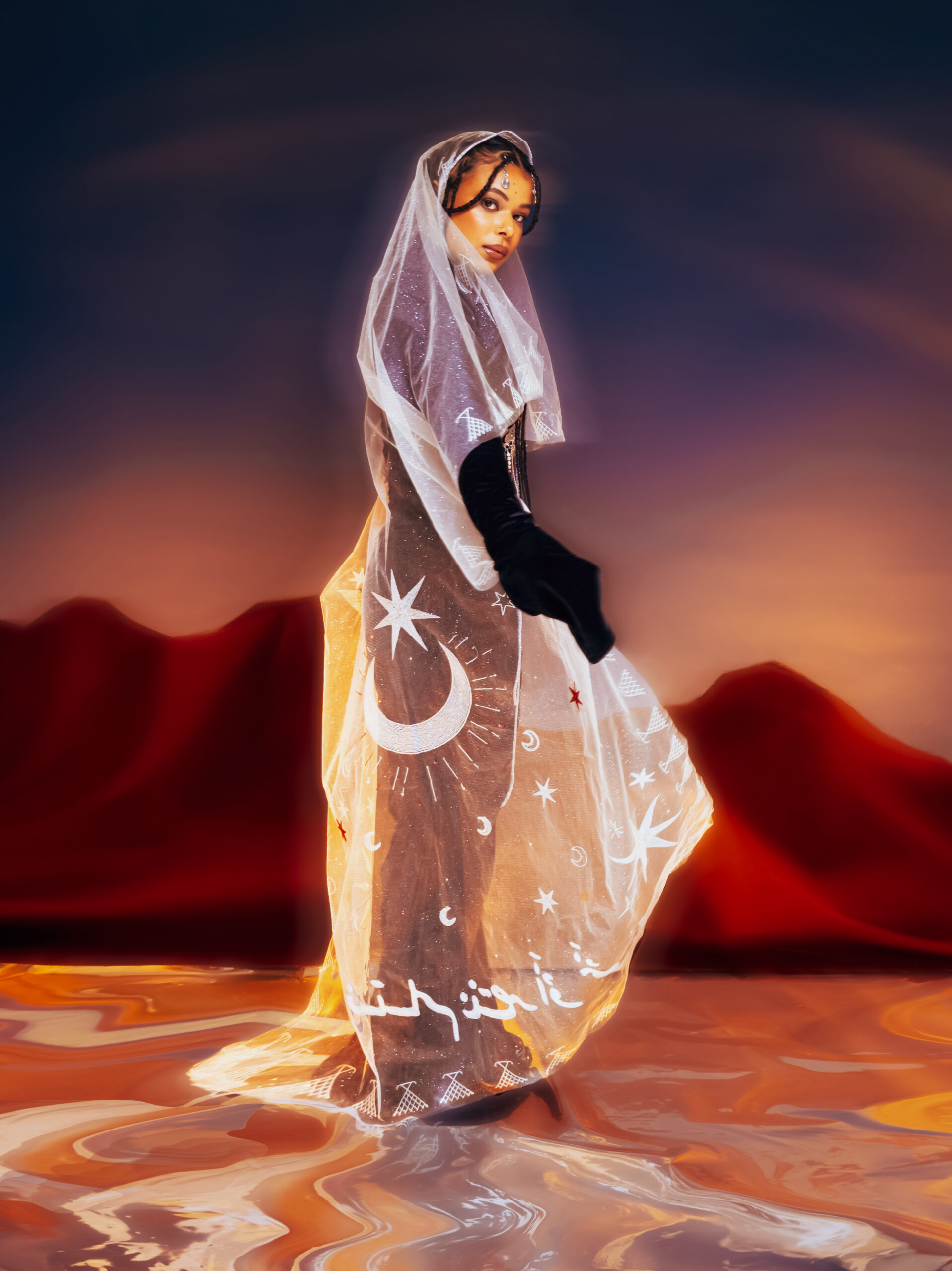
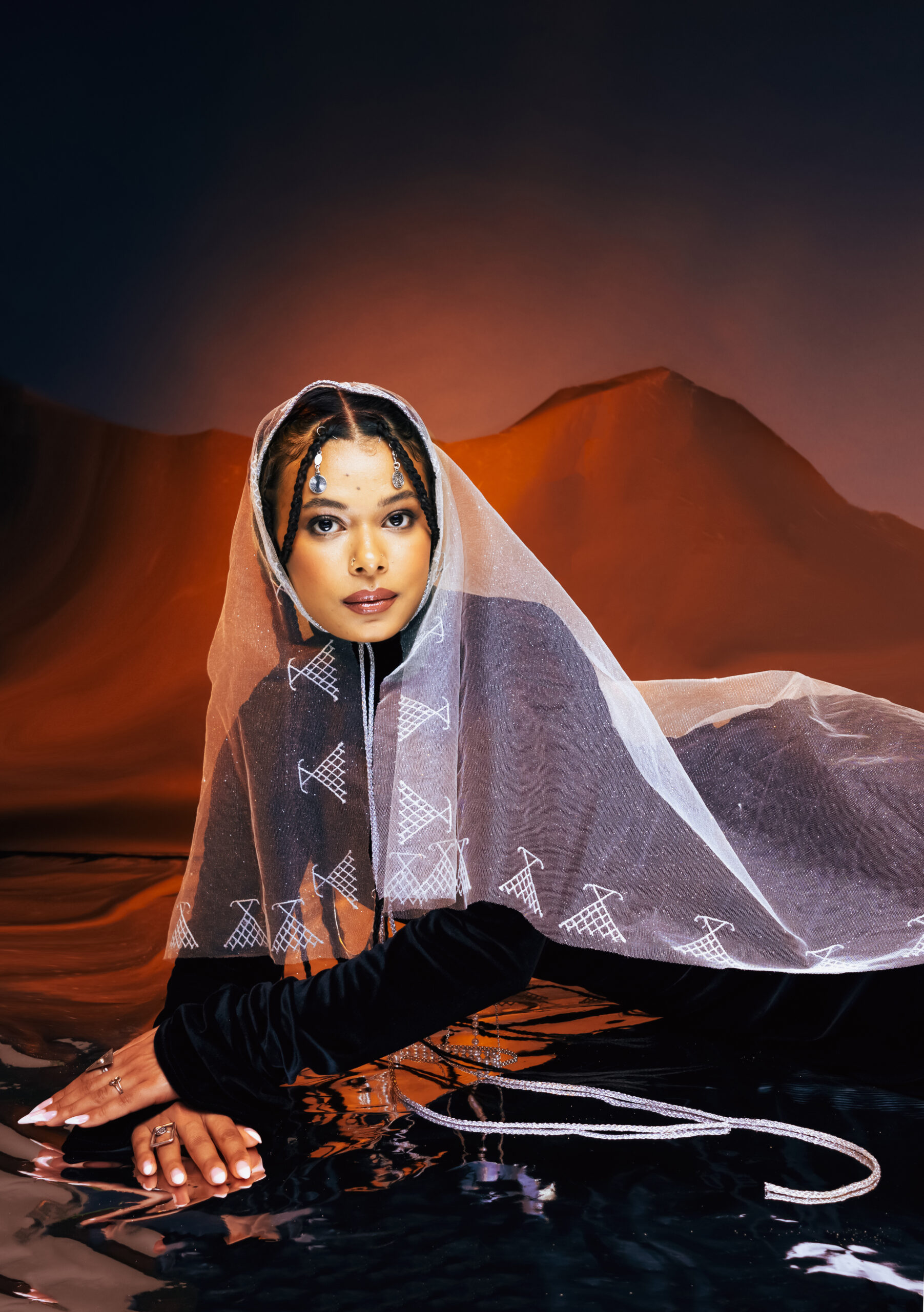
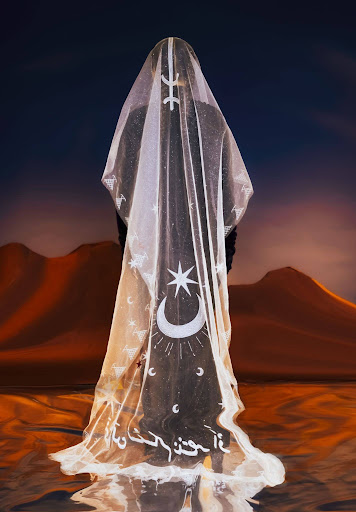
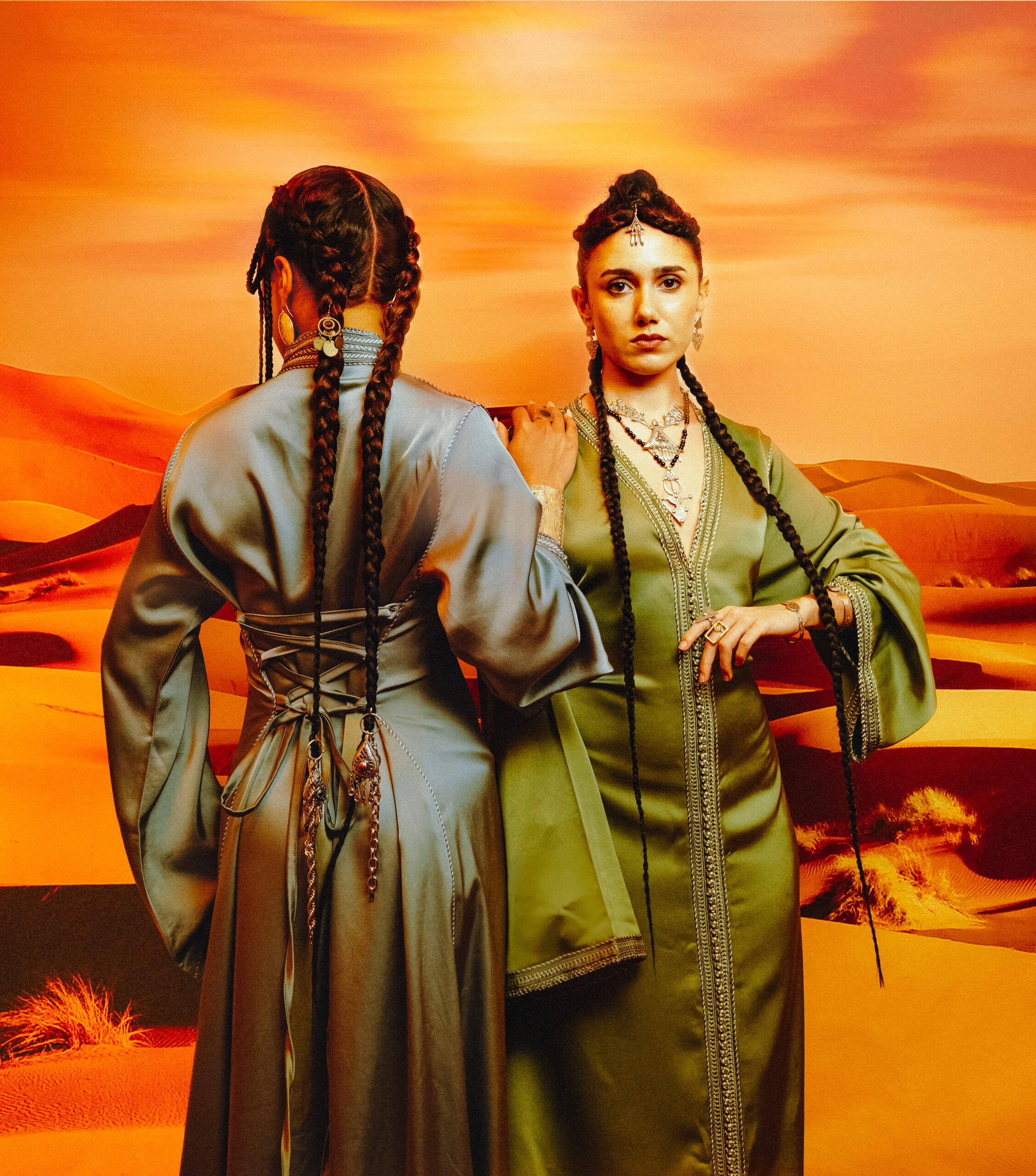
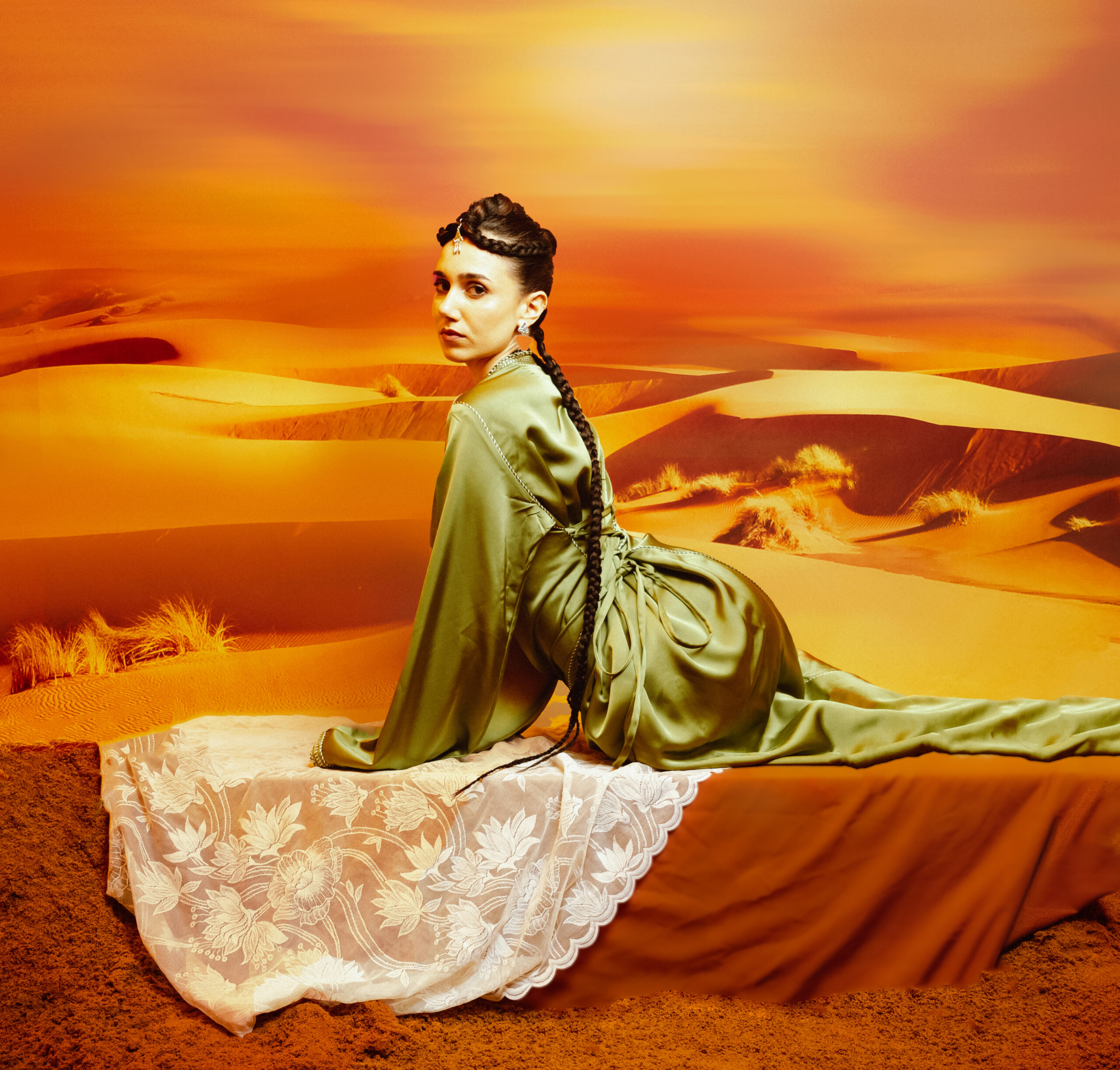
Model Aliyah Le Fouler wearing Ruaa Elmansuri and styled in Tausa World jewellery
In Star Wars, Tatooine took its name from Tataouine, a town in Southern Tunisia, borrowing not only its landscapes but the logic of its clothing. Hooded silhouettes reminiscent of the Maghrebi barnous and Moroccan djellaba, wrapped desert coverings, and muted earth tones create a world that feels believable because it is built on real systems of design.
For Dune, West studied the clothing of desert peoples, drawing in particular on the Tuareg; she has spoken about the way they layer linen and gauze in pale colours to repel the sun. As Lady Jessica embeds with the Fremen, her wardrobe shifts from sheer, beaded finery to rougher linen, long gowns and wrapped veils that West has called “djellaba-esque,” becoming more practical and desert-friendly while keeping the medieval feeling she carried through the films. She also sourced jewellery from the Middle East and North Africa, including Morocco, which she disassembled and reconstructed into adornments that felt at once ancient and futuristic.
Read alongside traditional Amazigh facial tattoos, the geometry and placement of the Bene Gesserit’s markings suggest a further visual echo, even if the film’s own references for the order lie in medieval and religious dress.
This is why North African dress sits so naturally within speculative fiction. It has never been purely decorative. Wrapped veils, woven textiles, and silver jewellery carry memory, lineage, and belonging while responding to climate and movement. Within these systems, clothing operates as a language through which identity is continually expressed.
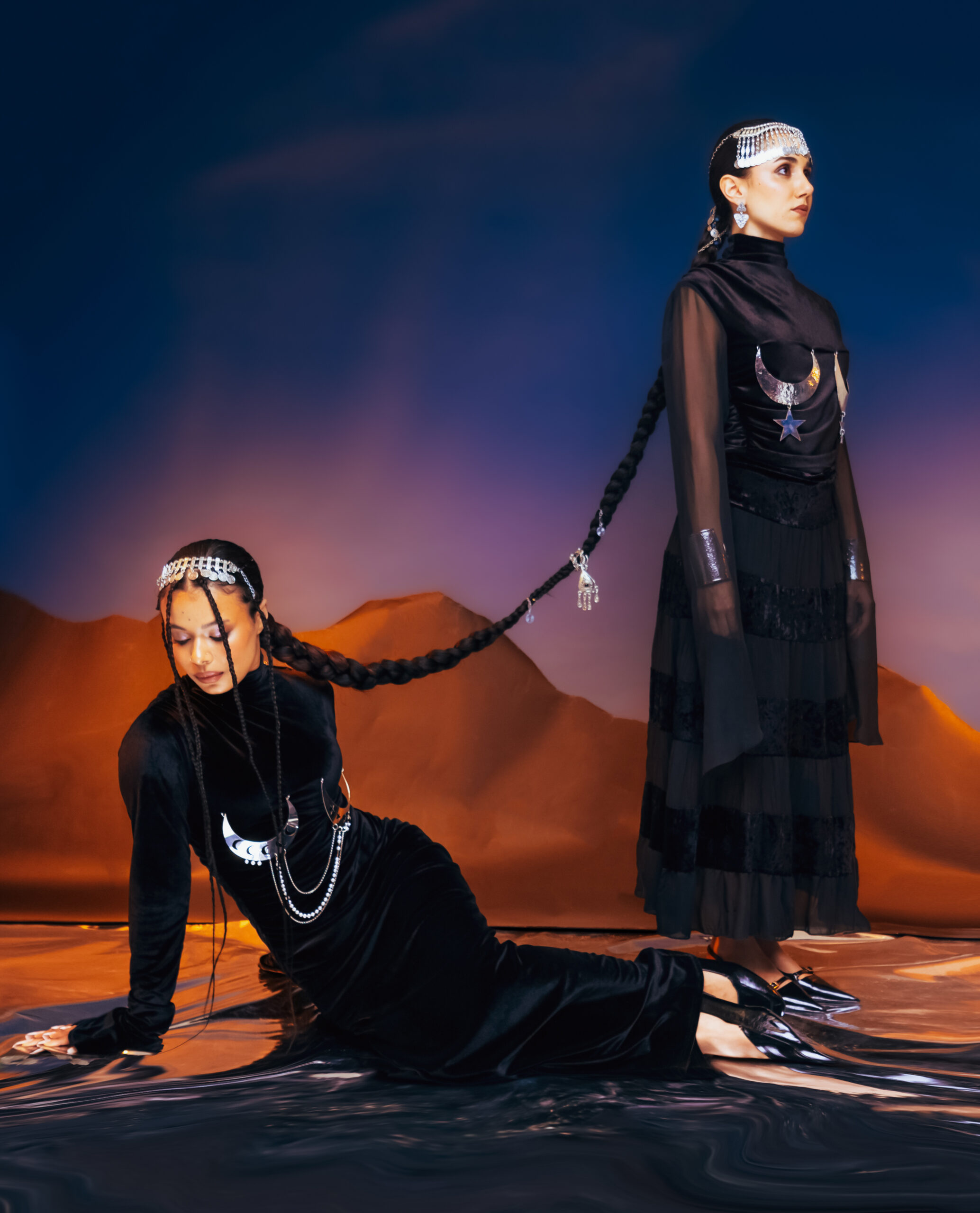
Models Mollie De Meza and Aliyah Le Fouler styled in YSR Maison velvet dress and Tausa World jewellery.
Across the diaspora, these traditions continue to be reshaped. Hairstyles are reinterpreted, heirloom jewellery is worn in contemporary ways, and traditional silhouettes are transformed through new materials and aesthetics. Every braid worn differently, every inherited ornament restyled, and every garment reimagined demonstrates that cultural continuity is created through making as much as remembering.
This is not a rejection of influence. Fashion has always moved through exchange. The question is not whether North African aesthetics are referenced, but who is recognised when they are. Too often, they are celebrated as inspiration while North African women remain underrepresented in the film and fashion industries that depend on these visual languages.
The region is frequently framed as ancient or timeless, despite its designers actively shaping contemporary fashion. Figures such as Artsi Ifrach of Maison ARTC, Sara Chraïbi, Amine Bendriouich, and Ruaa Elmansuri demonstrate that this is not heritage frozen in time, but a living design culture, one that continues to evolve across the region and diaspora through experimentation, memory, and reinvention.
This inspired me to photograph and art direct this editorial. As someone of North African heritage myself, the project felt deeply personal. I wanted to explore how North African aesthetics have influenced the visual language of science fiction, particularly films like Dune and Star Wars, while the cultures and people behind those influences often receive far less recognition.
It was important to me to bring greater visibility to North African designers rather than create an editorial about North African influence without involving the creatives themselves. Ruaa Elmansuri and Tausa World felt naturally aligned with that. Tausa creates jewellery inspired by North African and Amazigh symbols, which connect beautifully with the themes of heritage, identity and futurity within the editorial. I chose to feature Ruaa’s pieces because she reinterprets her Libyan and Amazigh heritage through contemporary fashion. Her work reflects the idea that heritage is living and evolving, rather than fixed in the past.
Representation is not only about visibility; it is about participation in the creation of culture.
If North African fashion continues to shape how the future is imagined on screen, then North African women must be recognised not only as inspirations but as designers, makers, storytellers and architects of those futures. Many things we read as futuristic or otherworldly have much older cultural histories. These women are not references for imagined worlds; they are the worldbuilders themselves.
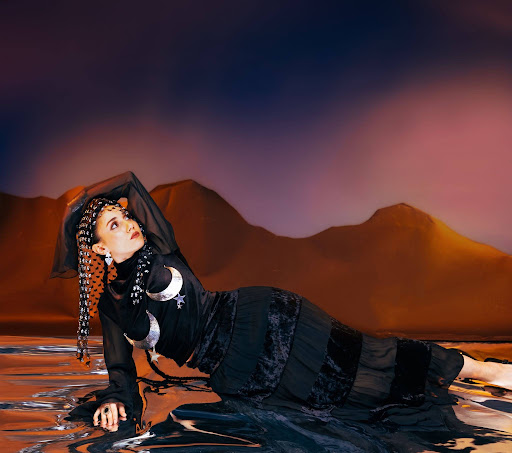
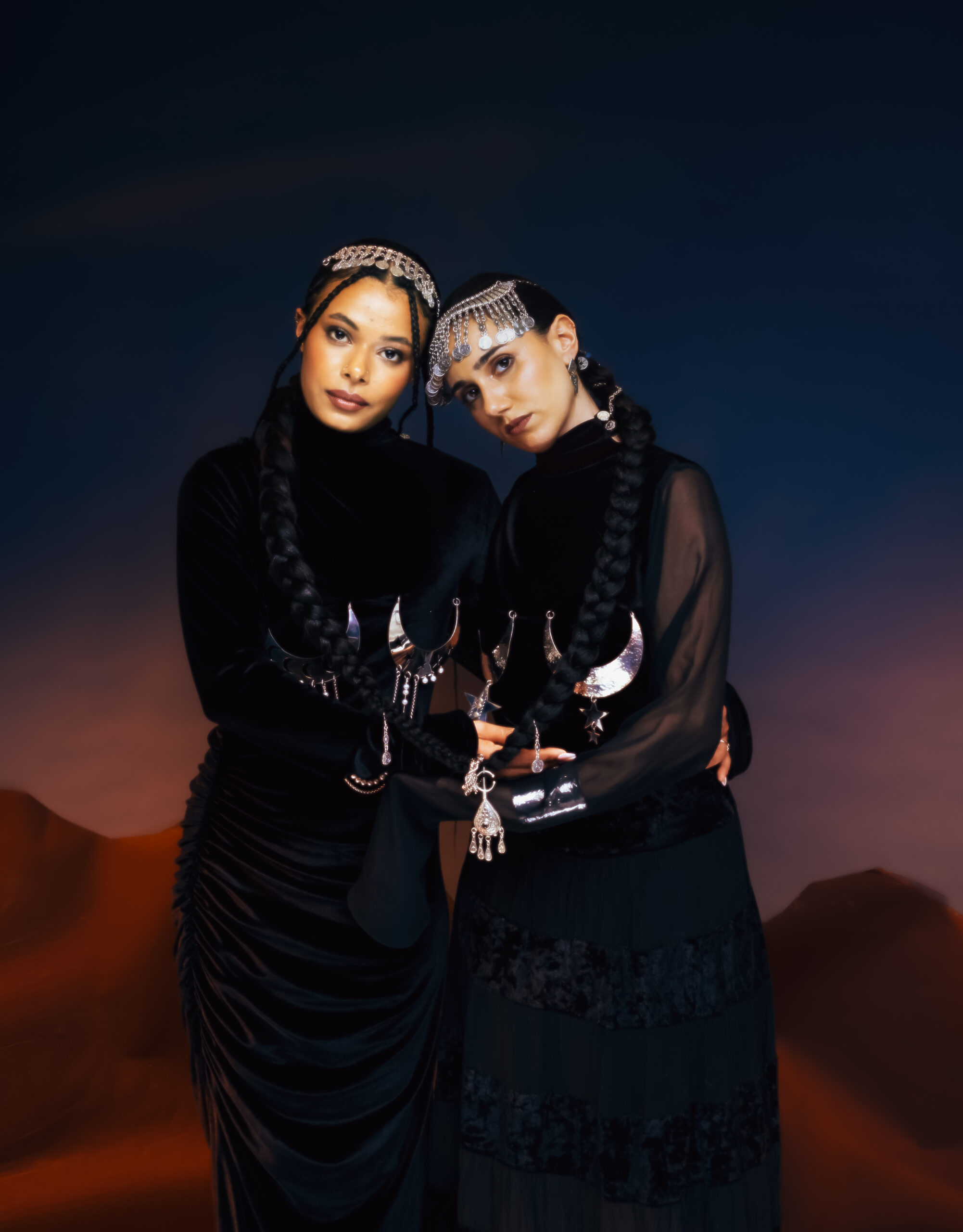
Models Mollie De Meza and Aliyah Le Fouler wearing Ruaa Elmansuri and styled in Tausa World jewellery
The future did not borrow from the Maghreb.
The Maghreb wore the future first.
Credits:
Photographer/Art Director – Yasmine Steele @yasmine_mia
Writer – Yasmine Steele @yasmine_mia
Set Designer – Simon Agyeman @stud.io_moti_propmaker
Lighting – Chengchung Feng @zhone_feng
Production Assistant/BTS content – Ionie Smith @becomingioniewithin
Stylist – Yesmine Naili @enimseyy
MUA – Ekta Vadher @ektavadher_mua
Hair Stylists – Melita Barrett-Blake @melitabarretthair and Nashwah Azam @nashwahazammua
Models – Mollie De Meza @mollie.de.meza and Aliyah Le Fouler @aliyah.l.f
Clothing Designer – Ruaa Elmansuri @ruaaelmansuri and YSR Maison @ysrmaison
Jewellery Brand – Tausa World @tausaworld