

Why Artists Keep Returning to Grand-Popo
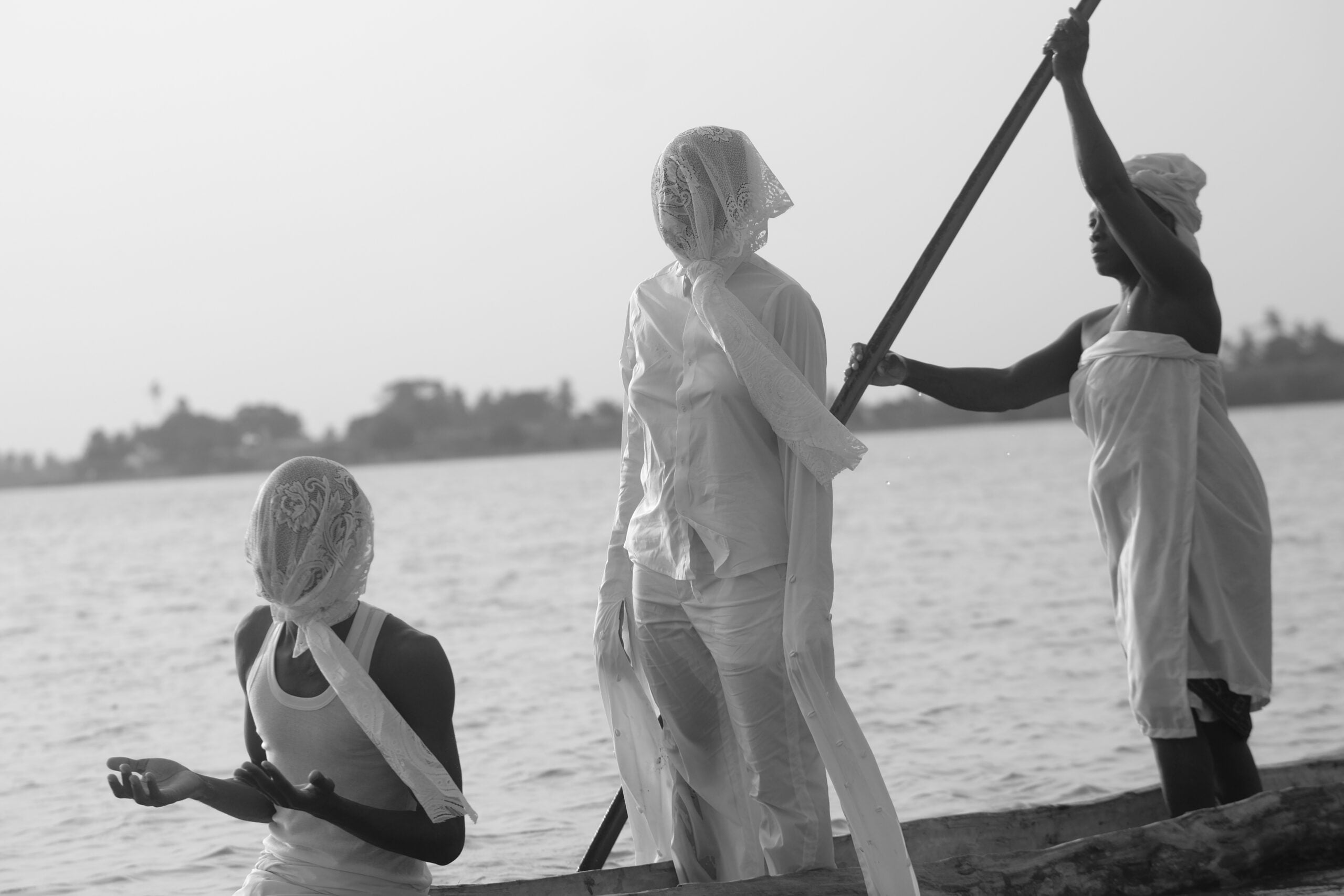
When Joshua Gbengene visited Grand-Popo for the third time in December 2025, he was simply keeping a distance from work. After months of working nonstop on a series of creative projects, including a pop-up and an installation, the multidisciplinary artist travelled to the coastal town in search of somewhere quiet enough to slow down, clear his mind and recover from an intense creative season. And it meant so much to him, his first and second time in Grand-Popo had been swift or rather, an afterthought, having arrived to Benin Republic for the Vodun festival— an annual celebration, held each January in Benin, that honours Vodun (Voodoo) through ceremonial dance, processions and rituals, celebrating the religion’s enduring spiritual and cultural significance across West Africa and the African diaspora.
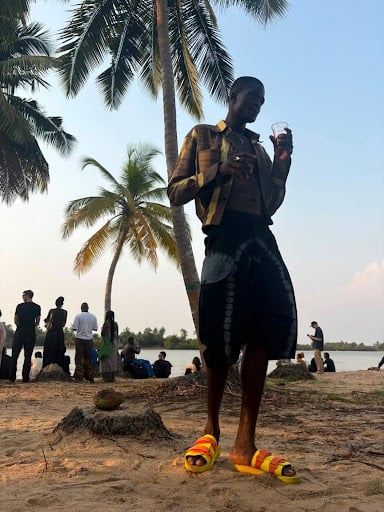
Like a first time surprise, there was something about Grand-Popo that struck him. It was its unfamiliar visual identity that felt liberating, yet small. “The town itself felt completely different from anywhere else I’d been in Benin,” he says. “I was really drawn to architecture. The buildings, the colours, the way everything is laid out, it has its own character.”
Grand-Popo is shaped as its own oeuvre. It is one of those rare coastal towns where time appears to move at the pace of the tide, carried by the Atlantic breeze and the quiet rituals of a town that has never felt the need to hurry. It is situated on Benin’s southwestern coast and essentially built along one long coastal road. One route runs toward Togo, while another follows the coastline. But the question is, how did a town with roughly 58,000 residents become the newest haven for creatives?
Perhaps it’s the stillness. Living in a metropolitan city carries an undeniable weight: relentless traffic, demanding workloads and the constant pressure to keep moving. For many creatives, that pace can become its own kind of exhaustion, leaving little room for reflection. That is why places like Grand-Popo feel so liberating. Life unfolds more slowly there, surrounded by lush greenery and the meeting of the Atlantic Ocean and the Mono River. The cost of living is modest, but more importantly, the town offers something increasingly rare: the space to pause, breathe and create without the constant urgency of the city.
And that is exactly what Joshua found. The residency where he was staying sat about seven minutes outside Grand-Popo, on farmland overlooking the Atlantic. Removed from the bustle of the town, the landscape offered a rare kind of stillness. “It gave me the space to decompress, and for the first time in months, everything around me was quiet, and I finally had space to process everything I’d been working on,” he says.
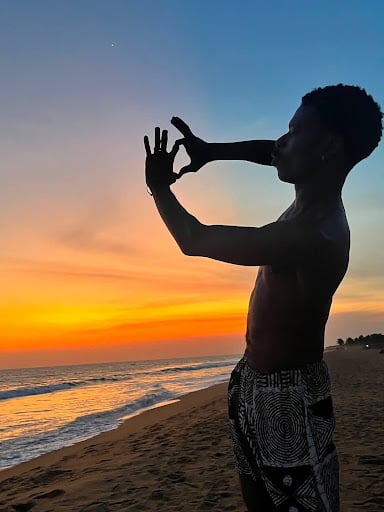
For years, art writer and curator Chisom Peter Job has kept to a quiet ritual of returning to Grand-Popo and that is because his family lives in nearby Cotonou, just two hours away, so Grand-Popo has been part of his life since childhood. “I’ve known Grand-Popo since I was younger. But as an adult, I’ve gone back almost every year. I was there several times in 2024, I visited again in January this year, and I’m actually planning another trip in a couple of weeks,” he tells Guzangs over a call.
Two things, he confesses, keeps drawing him back— the beaches and a close friend who lives there. But more than anything, he goes for the pace of life. “People always describe Cotonou as slow, but Grand-Popo is on another level,” he says. “Everything happens in its own time. There’s a place where we usually go to eat pork, and if you miss the owner while he’s open, that’s it. Once he’s done for the day, he’s done. Nobody rushes.”
That rhythm is what Chisom loves. It’s incredibly quiet. The air feels cleaner than Cotonou’s, there are trees everywhere, and he’s constantly surrounded by nature. It’s somewhere he advises everyone to go to completely reset. He recalls the first time he visited Grand-Popo as an adult, a breezy May in 2023. It was actually for his birthday in which he and a friend who shared similar birthdays had rented a villa and spent the weekend there.
It was exactly what he needed, having been looking for space away from Lagos, somewhere that felt genuinely peaceful. He recalls the feeling of waking up each morning and walking to the beach, which was only a couple of minutes away. Sometimes he’d just sit there for hours. Sometimes he’d fall asleep listening to the waves. “What struck me most was how safe it felt. I could walk around at night without feeling anxious. There was no pressure, no noise, no urgency. Everything felt calm,” he says.
One of Chisom’s favourite places is Bouche du Roi which is an estuary where people have to drive part of the way, then continue on foot. But the walk is part of the experience. You pass through the village, see children swimming, women sitting outside their homes, people going about their daily lives. Grand-Popo still feels like a close-knit community. People know one another. You really feel connected to everyday life there. “When I reach the beach, I usually swim or at least try to improve my swimming. I also collect seashells. There are so many different kinds along the shoreline, and every visit I come home with a small collection,” he says.
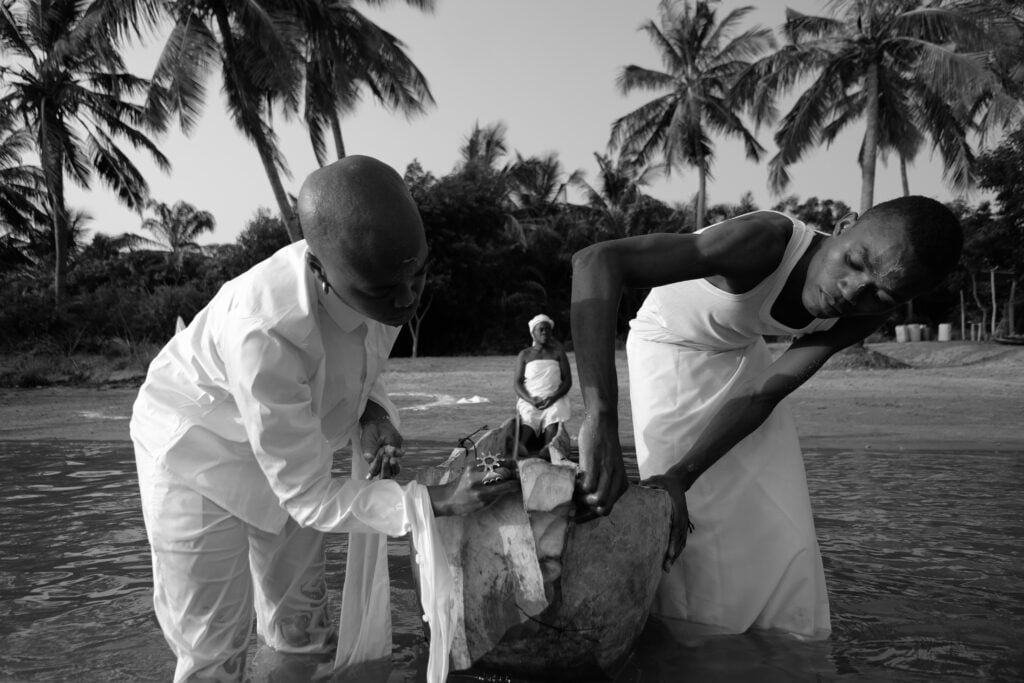
Perhaps, the interesting aspect of Grand-Popo is its proximity to the Vodun Festival in Ouidah and how much of that offers people the need to explore a different place, much quieter. And not because there are no interesting things in Grand-Popo, as a matter of fact, the town houses one of Benin’s oldest community festivals. Known as the Nonvitcha Festival, it is an annual homecoming that brings together the Xwla and Xwéda peoples to celebrate unity, shared heritage and the enduring ties between families spread across Benin and the diaspora. The festival traces its origins to 1921, when the Nonvitcha Association was founded in Grand-Popo to foster solidarity among the region’s coastal communities. The first major public celebration followed in 1923, and it has since become an annual tradition held around Pentecost, attracting thousands of participants from across Benin, neighbouring countries and the wider diaspora.
But there seems to be another festival bringing creatives from West African and beyond to Grand-Popo. Named Lọpọ Lọpọ, it’s a festival founded by interdisciplinary artist Tobi Onabolu in 2025 to create a space for creative practitioners and local communities to examine the physical and ideological transformations of the emerging megalopolis, while envisioning the artistic interventions that could shape its future.
In 2022, Tobi Onabolu abandoned the fast pace of Lagos to find stillness in Grand-Popo. The move was, above all, a search for space. Not simply the physical expanse of the coast, but the mental quiet that had become increasingly difficult to find elsewhere. “I started renting a house on the beach, and gradually artist friends began coming to visit. One friend was travelling from Ghana back to Lagos and asked if he could stop over for one night. He ended up staying for ten days.”
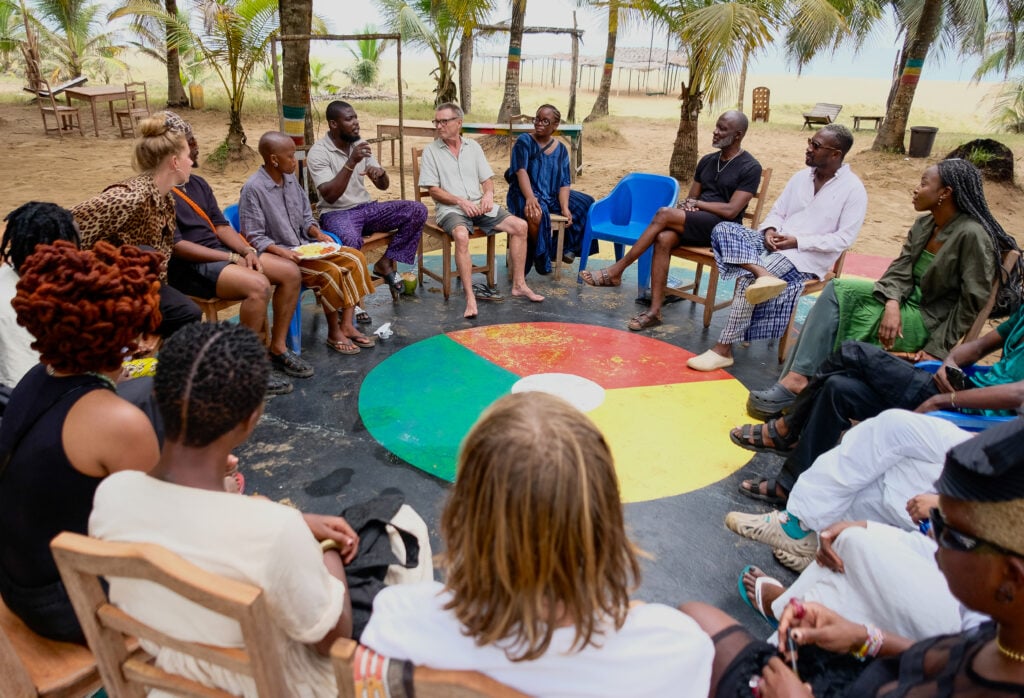
His friend had suggested he create an artist residency. At first he really didn’t consider it, he was caught up in time spent at making his own work and, like any artists, looking for residency opportunities in between. But more and more people kept coming, and eventually the retreat called “Finding Etherea” emerged from it organically.
The Lọpọ Lọpọ festival also followed the same sequence. Every January, his friends like Bubu Ogisi and other artists would visit Grand-Popo during the Vodun Festival. They found themselves exhibiting work around the same period, and eventually they thought of creating a festival around it. “I had been thinking about a UN report1 that projects that by 2100, the roughly 600-mile stretch of coastline between Lagos and Abidjan could become a continuous megalopolis. In West Africa, we tend to build cities laterally rather than vertically, so urban expansion keeps spreading across the landscape,” says Onabolu.
And that was a very important question for them. Grand-Popo is already a spiritually significant place. What happens if places like this are eventually swallowed by urban development? What happens to the communities, the spiritual traditions and the ecosystems that exist there? They thought of ways to distill these questions and bordering the Lọpọ Lọpọ festival around themes was an incredible approach. This year’s theme was titled “Did You Remember to Water Your Plants?” and the argument was that the earth already functions as a complete ecosystem. “Instead of constantly inventing, expanding and extracting, perhaps we should spend more time tending to what already exists. Looking after the earth. Looking after our communities. Looking after our home. The idea is never to privilege one medium over another. It’s about creating different ways of thinking through a shared question,” Tobi adds.
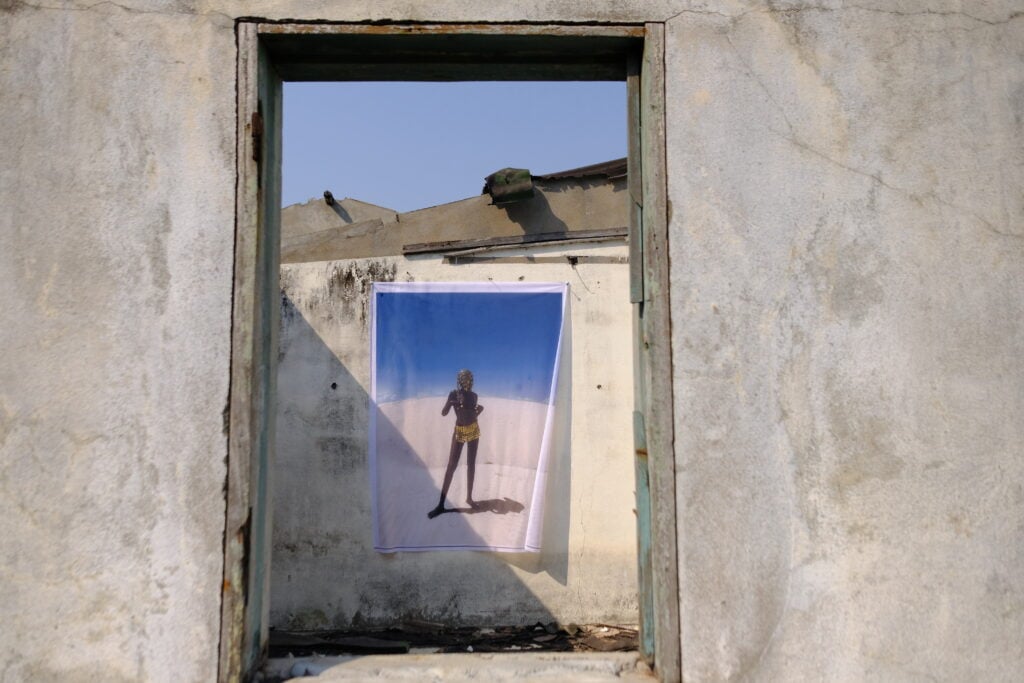
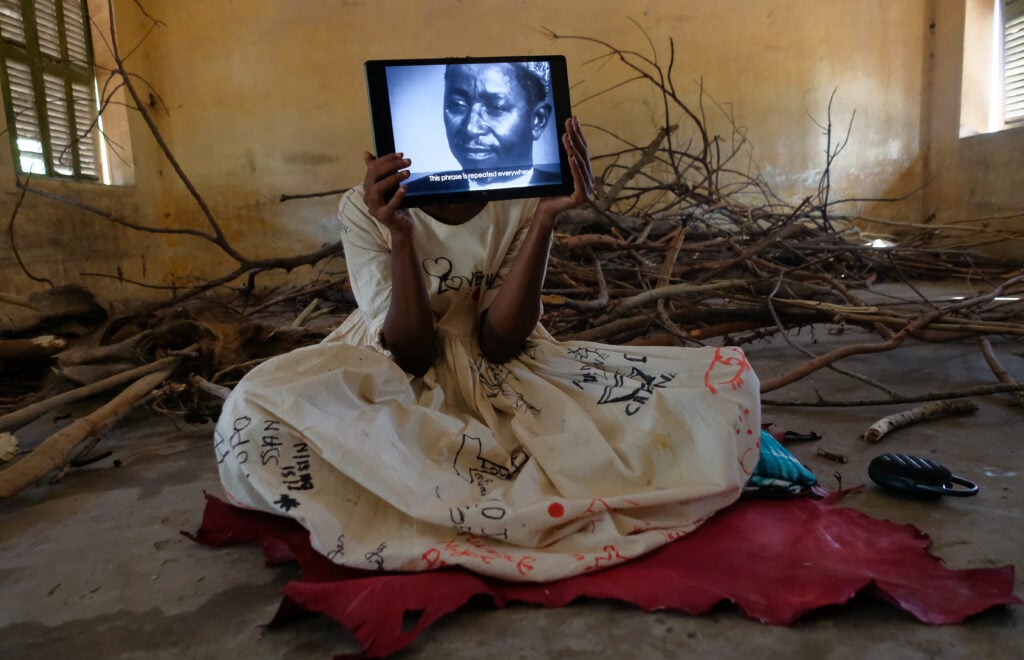
They reimagined art around eight new commissions across installation, performance, photography, music and other artistic practices presented by artists across West Africa and beyond including Lafalaise Dion (Côte d’Ivoire), Lady Donli (Nigeria), Safi Niang (Guinea), n:u (Mélissandre Varin) (France), DJABI (Benin Republic), and Bubu Ogisi (Nigeria).
And for Tobi Onabolu, what makes Grand-Popo such an important place for creativity is his deep interest in rest and stillness as essential parts of the creative process. “Cities like Lagos move at an incredible speed. Everything is about production and surviving. It’s vibrant, but it can also become overwhelming. The question is: when do you pause? When do you become still?” he says.
As a creative myself, I think of artists as substantial mediums. Inspiration doesn’t simply come from ourselves; it requires us to be open enough to receive it. And that is why places like Grand-Popo matter, they offer us an unusually calm atmosphere. And I’m always looking forward to seeing uncrowded beaches and lush greens.