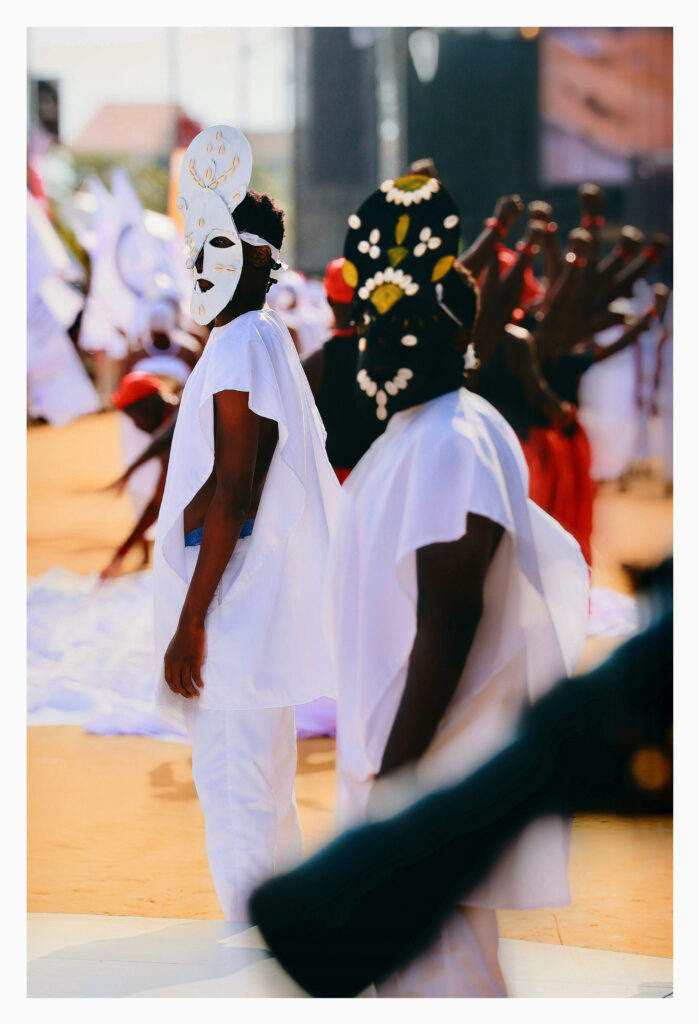
At Porto-Novo’s Festival des Masques, photographer Kelvin Selasie Quist turns his camera toward the masks, movement and crowds of a tradition being encountered by another generation.
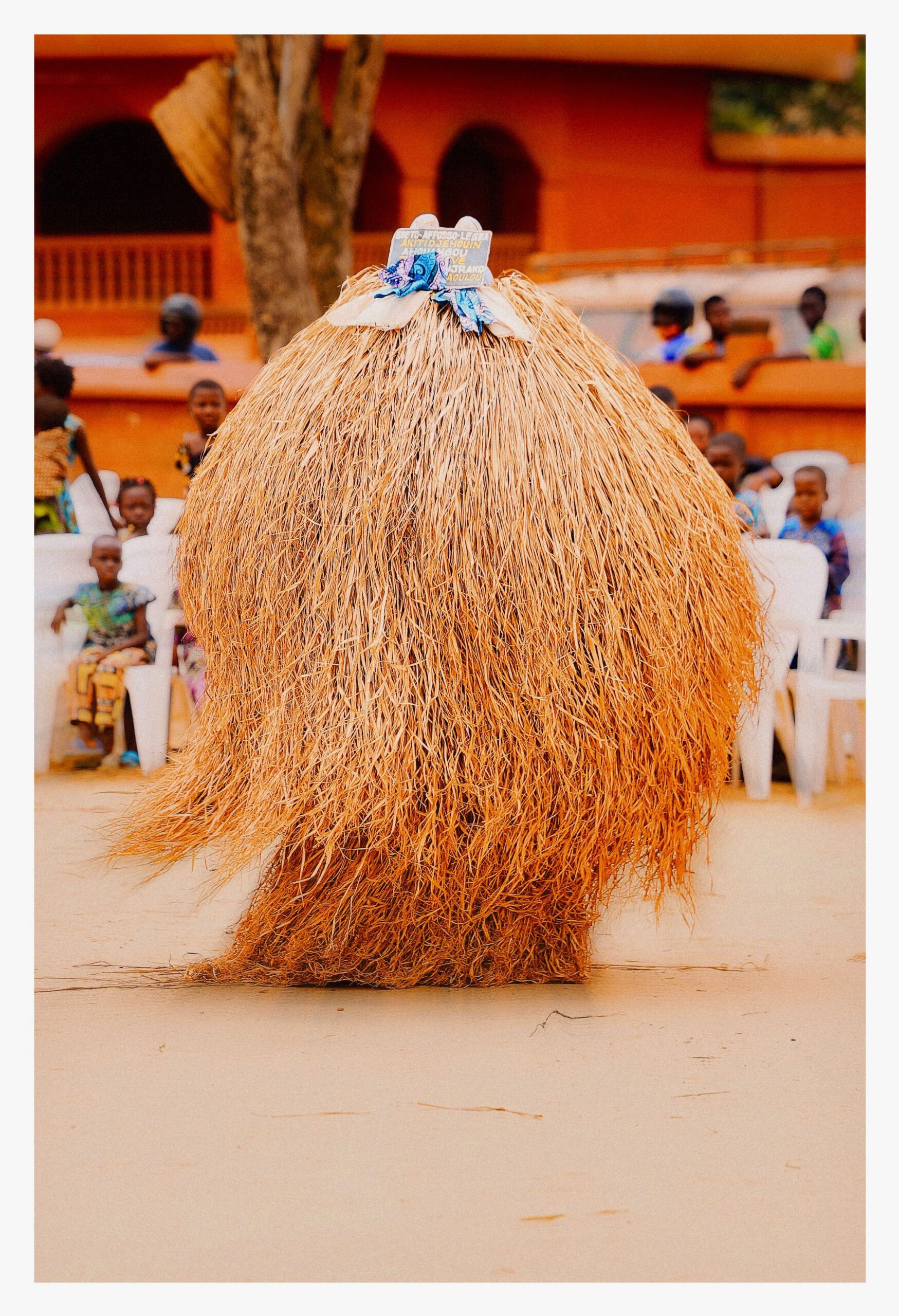
A raffia masquerade turns in the square at Porto-Novo’s Festival des Masques.
At the Festival des Masques in Porto-Novo, music, movement and the reaction of the crowd are part of what photographer Kelvin Selasie Quist remembers most. Over two days in July, he photographed the masquerades moving through the festival, the people gathered around them and the moments in between.
“I was drawn to the energy, colors, masks, and the cultural depth behind the celebration,” he says. “What keeps me fascinated is that every moment tells a different story.”
For Quist, the act of photographing the festival is also connected to what happens between generations.
“They show the importance of preserving culture and passing traditions from one generation to another,” he says. “As a young person, I think documenting them helps keep these stories alive.”
He describes the work primarily as cultural documentation, but says he is also attentive to the spiritual and human emotions surrounding the masks.
One moment stayed with him.
“The moment when the mask appeared, the whole atmosphere changed,” he says. “The music, movement, and reaction of the crowd created a moment that felt powerful and unforgettable.”
What follows is what he saw.
Women in white file between the festival tents before the procession begins.
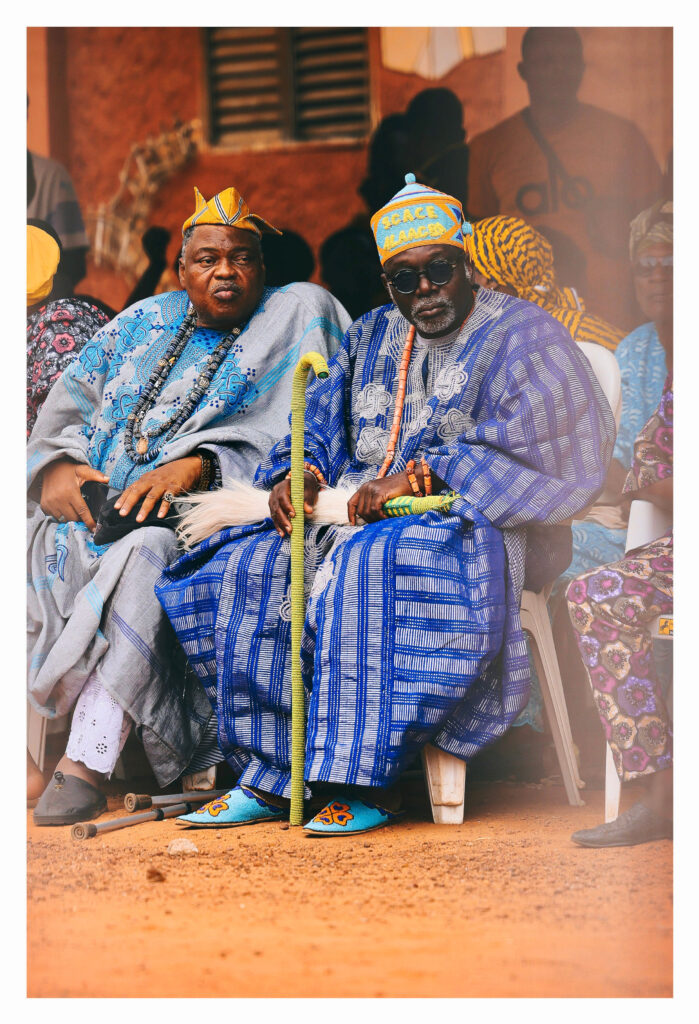
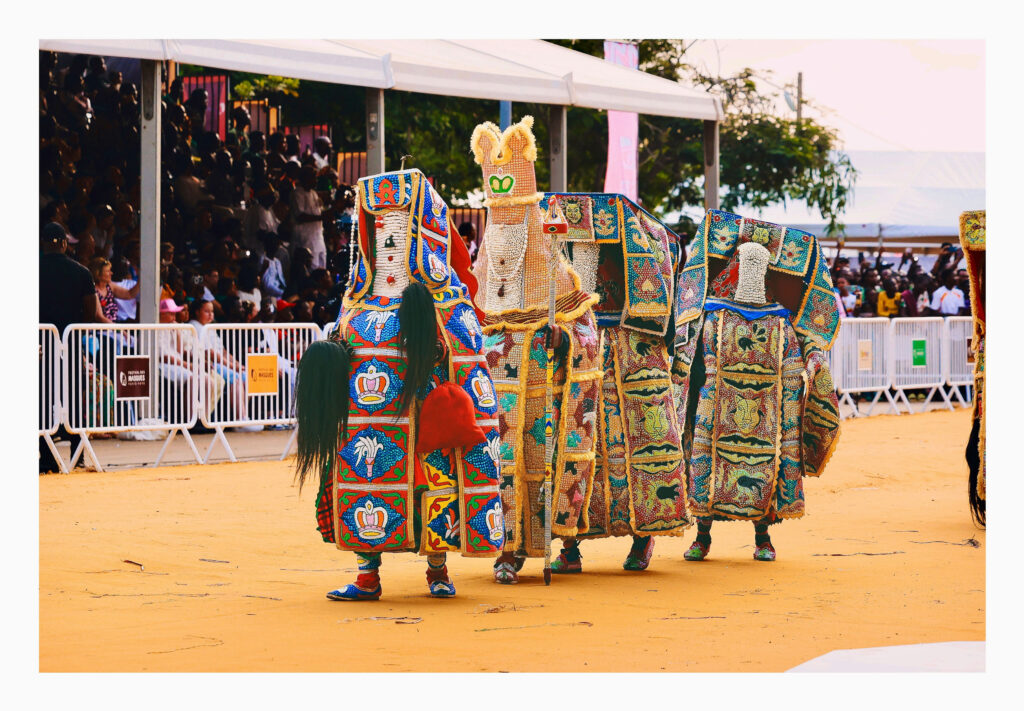
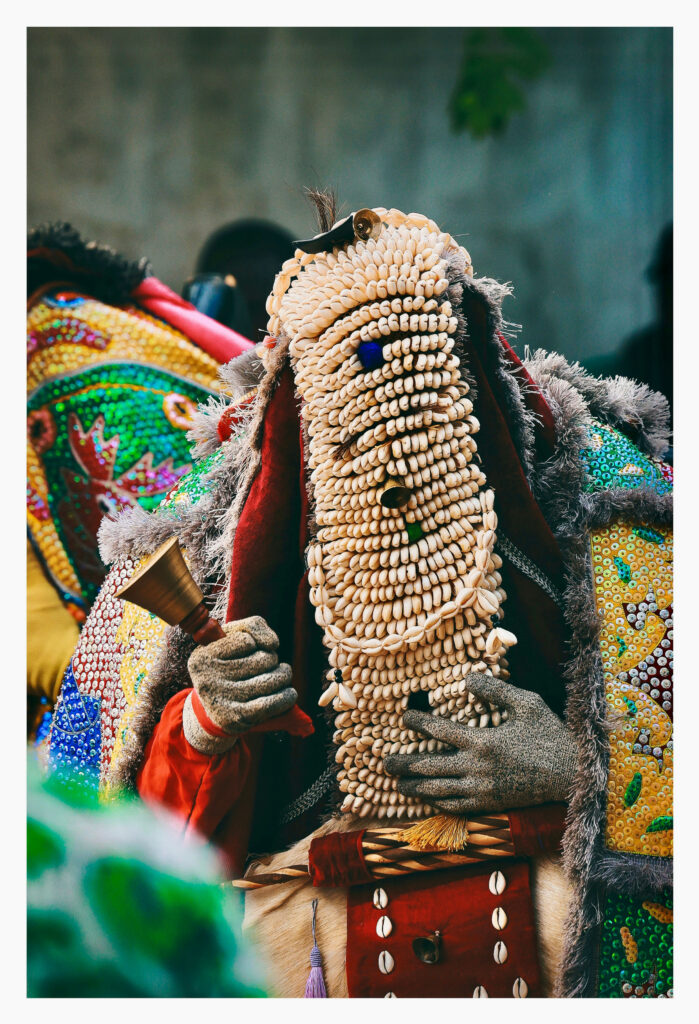
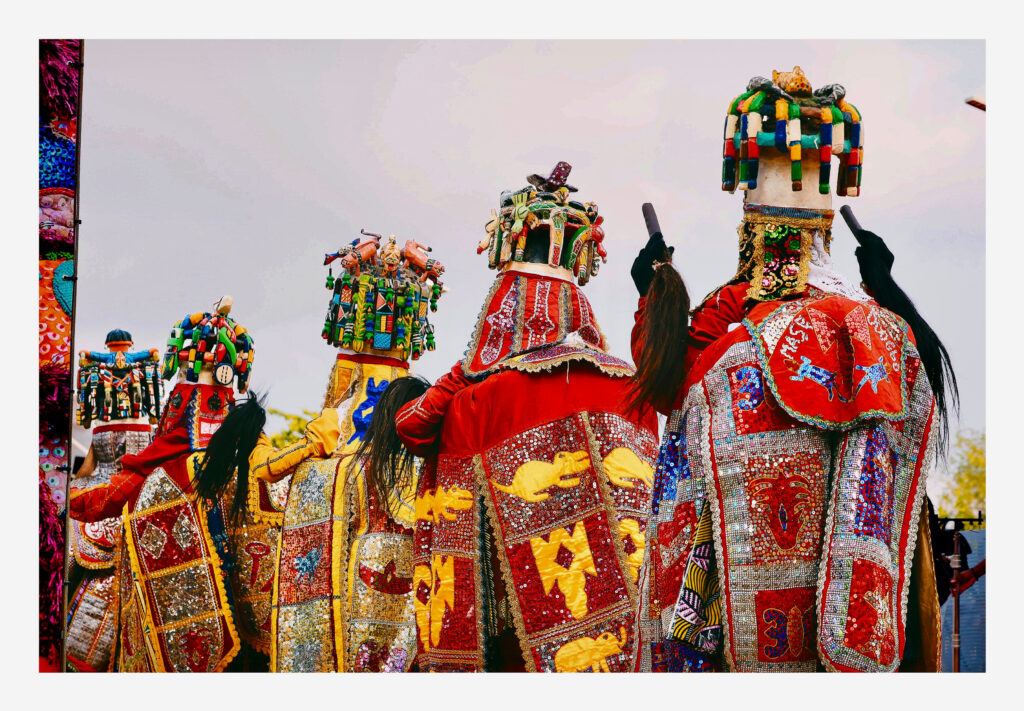
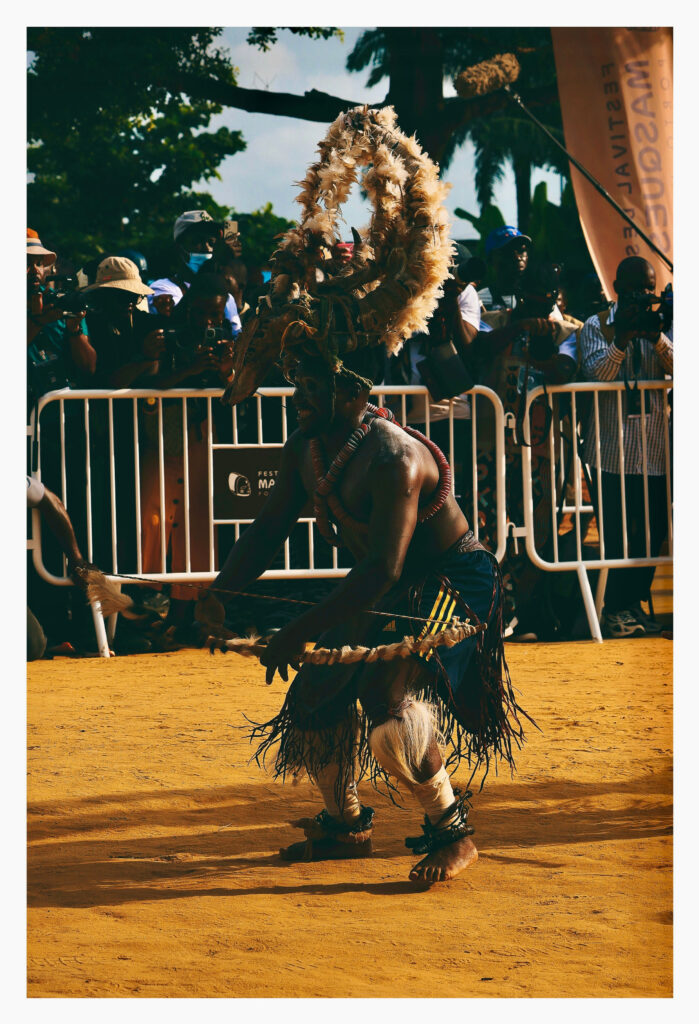
Elders wait for the procession to reach them. The beadwork and coral signal rank.Four masquerades cross the arena in front of the grandstand.A masquerade faced entirely in cowrie shells, bell in gloved hand. Cowries were currency across West Africa for centuries. A mask surfaced with them carries wealth, literally, on its face.The procession from behind: carved wooden superstructures, each a crowded shelf of figures and animals, each one a history worn as architecture.A young guide walks beside a masquerade crowned with carved twin figures. He is barefoot, in wax print, maybe sixteen. The mask cannot see. Someone from the next generation has to walk it through the world.A dancer in a horned headdress performs for a barrier line of photographers. Every lens in the frame is pointed at a tradition older than photography. The question of who documents whom, and for what, runs under the whole festival.
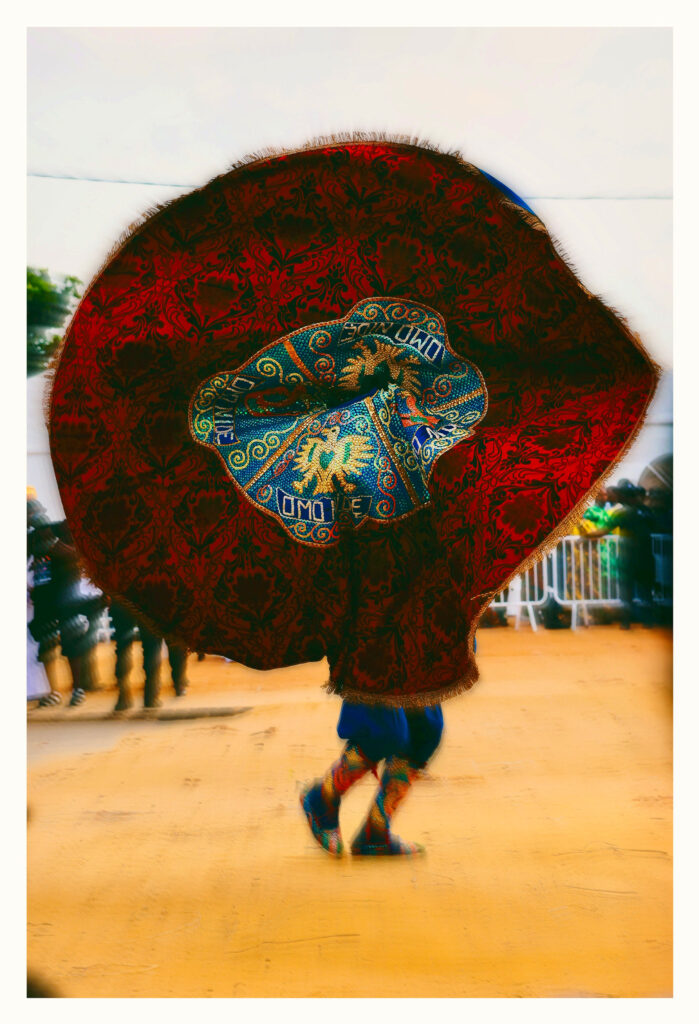
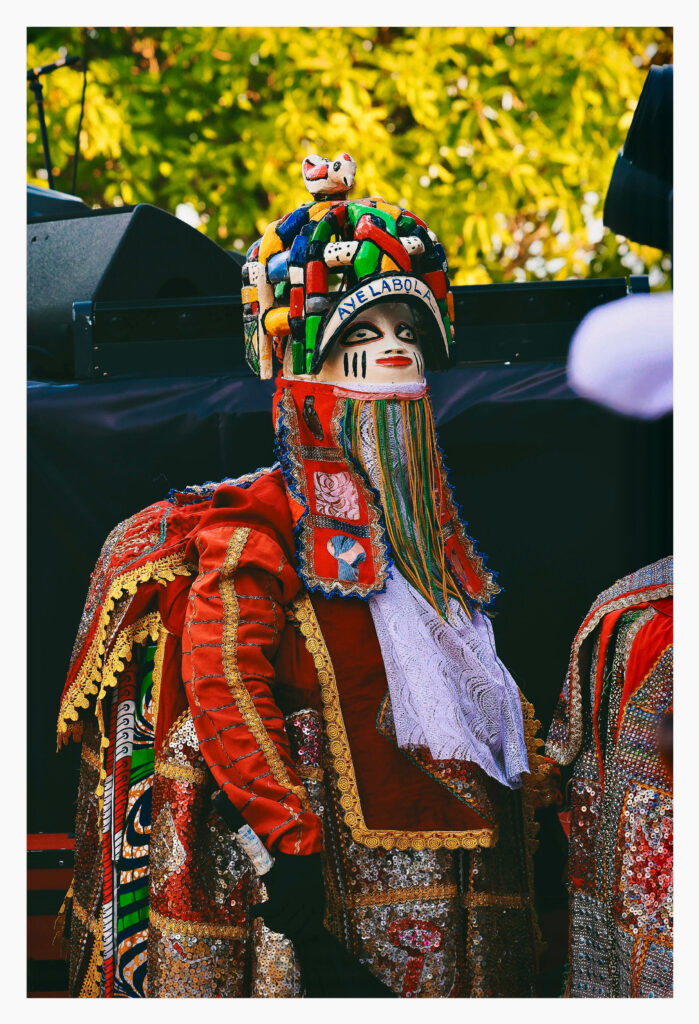
A masquerade opens its cape to full circle, the beaded panel at its center reading Omo Nide. The cloth is the mask. When it spreads, the figure fills the street.A masquerade waits between performances.
Young performers in masks of painted cardboard and cowrie shells. Nobody issued these. Transmission is not a ceremony that happens to the next generation. It is something the next generation does with its own hands.
To provide the best experiences, we use technologies like cookies to store and/or access device information. Consenting to these technologies will allow us to process data such as browsing behavior or unique IDs on this site. Not consenting or withdrawing consent, may adversely affect certain features and functions.
Functional
Always active
The technical storage or access is strictly necessary for the legitimate purpose of enabling the use of a specific service explicitly requested by the subscriber or user, or for the sole purpose of carrying out the transmission of a communication over an electronic communications network.
Preferences
The technical storage or access is necessary for the legitimate purpose of storing preferences that are not requested by the subscriber or user.
Statistics
The technical storage or access that is used exclusively for statistical purposes.The technical storage or access that is used exclusively for anonymous statistical purposes. Without a subpoena, voluntary compliance on the part of your Internet Service Provider, or additional records from a third party, information stored or retrieved for this purpose alone cannot usually be used to identify you.
Marketing
The technical storage or access is required to create user profiles to send advertising, or to track the user on a website or across several websites for similar marketing purposes.