

The Seedpod and the Skin
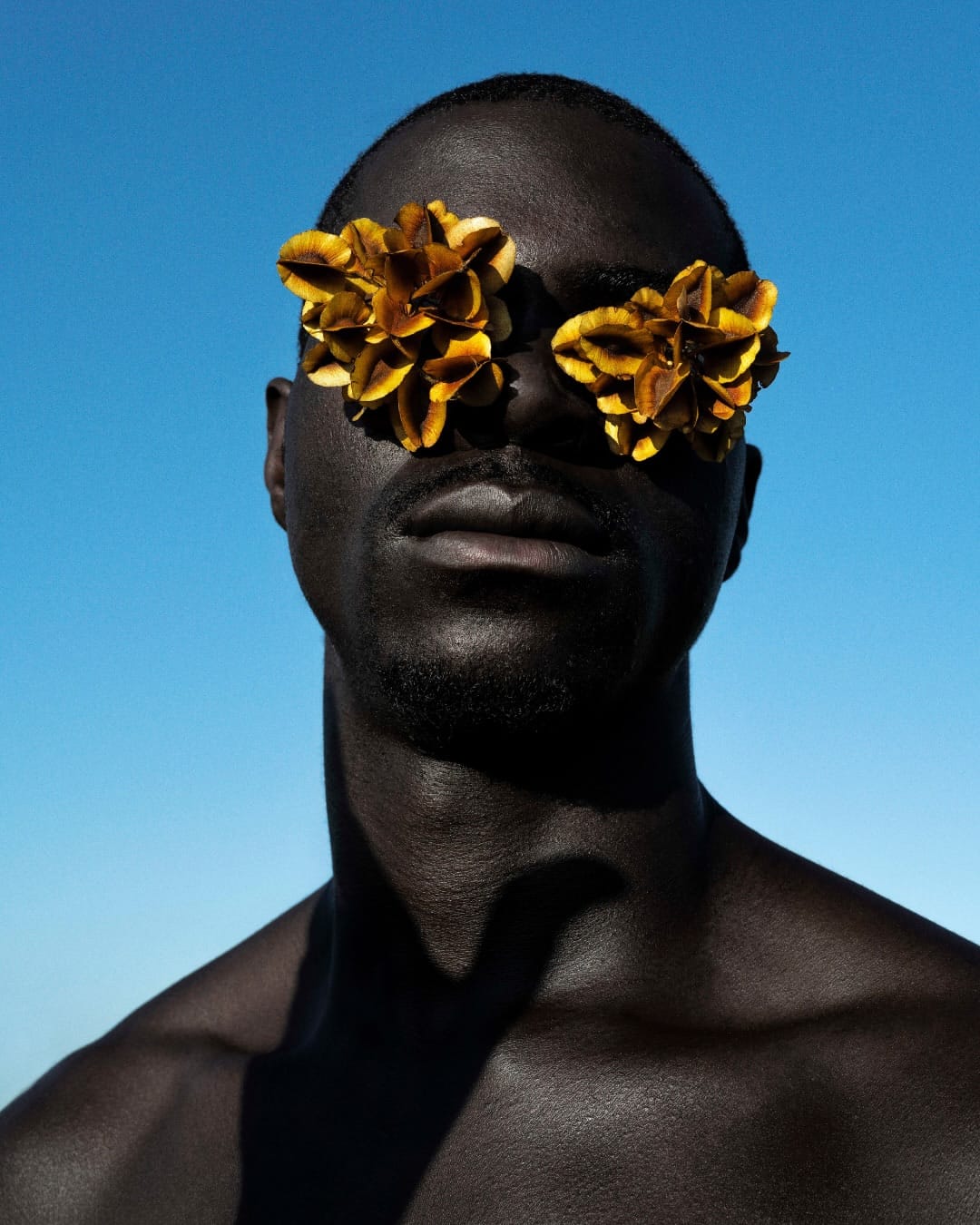
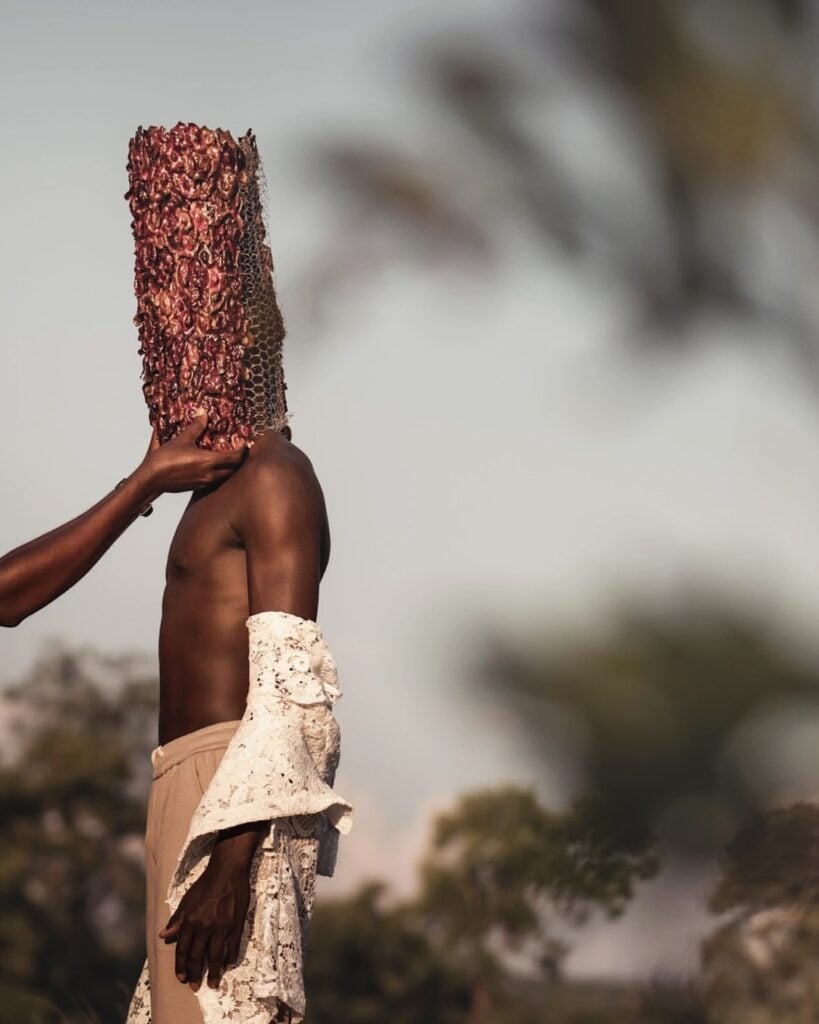
In a small room of white walls and warm wood at Singita Kruger National Park, a set of portraits hangs in quiet succession. The men in them appear faceless. Sculptural masks sit where their features should be, and the bodies beneath are still, set against open sky and water. In one, a figure in velvet red stands against a mountain, his whole posture a kind of silent strain. Together they form Metamorphosis, a series by the Zimbabwe-born, South Africa-based photographer Tatenda Chidora, on show in its gallery through the end of the year.
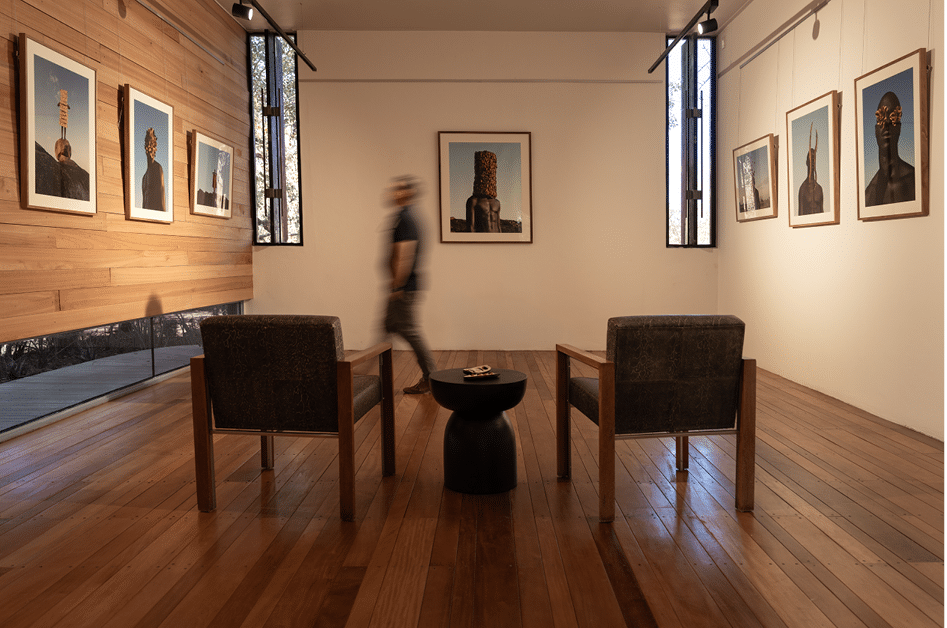
Chidora describes the work as “an exploration of the masks we wear. It’s a study of the layers we build to navigate the world, and the potential we hide beneath them.” The work circles identity, and how much of it arrives before choice: the parts we inherit, the parts imposed on us, the parts we settle on ourselves, and the parts that never quite get named.
The masks themselves are made from fallen seedpods gathered on Singita’s Kruger concession, which makes the land less a setting than a collaborator. Chidora treats each project as a study, and here that meant hours of bush walks and game drives, learning which pods drop in which season, watching them dry and curl, asking about their traditional uses and listening to the stories shared by guides and trackers. The Lebombo Euphorbia, for one, is unique to the Lebombo Granophyre ridgeline, which ties it to a particular stretch of ground rather than a general idea of the bush. Those histories, told on the drive, ended up inside the material.
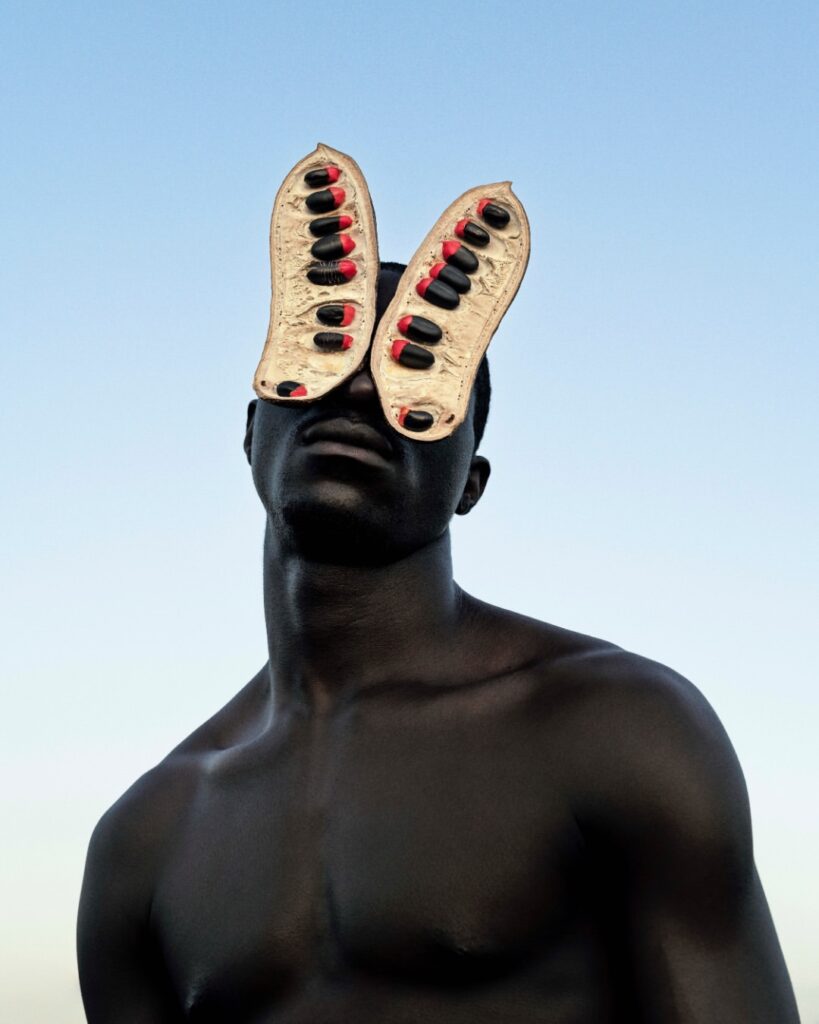
One of the most deliberate decisions in the series is also easy to miss. Chidora cast a model with very dark skin, and the skin grade was chosen to preserve its depth and richness rather than lift or soften it, so the complexion holds its own presence against the pale gold and red of the seedpods. The choice, he says, came out of “conversations around identity, beauty, and the ways in which Black skin is perceived and represented.” The model had told him how his complexion was often remarked on, and at times ridiculed, for how dark it is. Building the work around him became “an intentional act of affirmation.”
The series took shape slowly. It began at Singita Pamushana, in Zimbabwe, in November 2024, continued when he visited Sweni in mid-2025, and developed again on his return to Kruger in March 2026, the later stays filmed by videographer Julian Robinet, who followed both the process and the way each season rearranged the landscape.
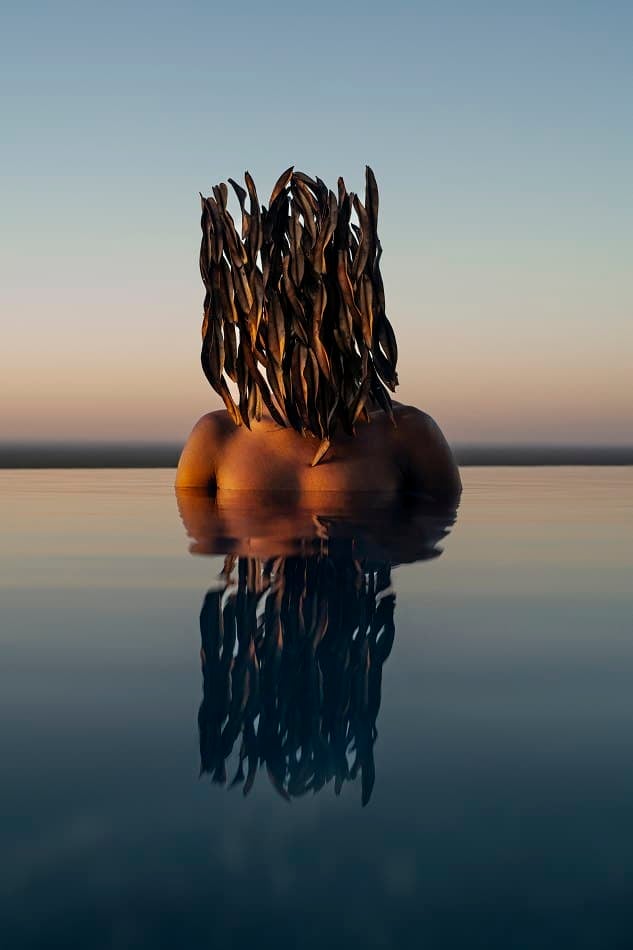
That patience runs through the work in a more personal register too. Chidora doesn’t treat identity as settled; for him it is “continually being uncovered, questioned, dismantled, and rebuilt.” Some of that is geography. Living in South Africa as a foreigner and then going home has left him, in his own words, caught “between being here and not fully belonging, between returning home and no longer feeling entirely rooted there either.”
For most of his life, he says, he has been “someone who helps others make sense of their emotions, often while overlooking my own.” Lately he has turned that attention inward, and grief is part of what turned it. While the series was coming together, his grandmother died. She “was fundamental in introducing me to nature,” he says, “someone who created with her hands,” and her way of touching and transforming materials stayed with him. The work is his way back to those gestures: “collecting, assembling, constructing, and searching.”
For all its scale, the exhibition asks for something small. Chidora wants people, and African audiences in particular, to notice what is already in front of them. “In Africa, we have so much nature around us, and we sometimes take for granted the things that surround us,” he says. He is wary of the idea that you have to go out into the wild to feel reconnected to it. Nature, as he puts it, “isn’t only about the wild bush”; it is “smell, touch, taste, feel and sounds around us.”
Metamorphosis is part of Singita’s Africa Is… series, a collaborative project with creatives from across the continent. It runs in the gallery at Singita Kruger National Park until December; the works are available in limited numbers, with a share of each sale going to the Singita Lowveld Trust.