


Five Sudanese Women Artists Make Art From Memories of Home
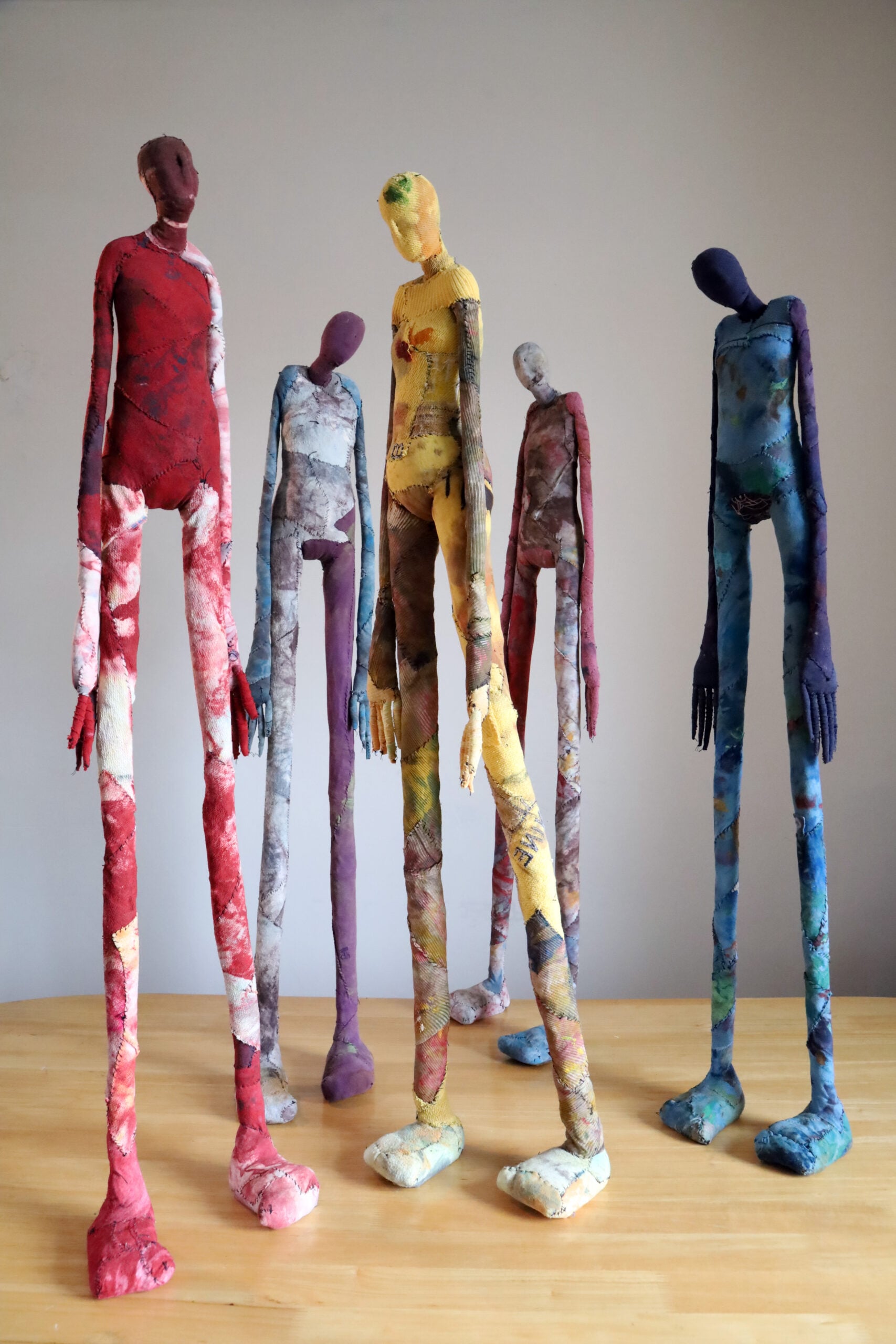
These Sudanese artists are making art from the memories of home. The first is Stefania Indelicato, a jeweller born in Eritrea and raised in Sudan, whose earliest memories of the Souk of Omdurman were spent accompanying her mother in search of meaningful objects.
There is Omeima Mudawi-Rowlings, a textile artist who has spent decades in service to deaf and disabled people in the arts, and who was awarded an MBE in 2022 for that service.
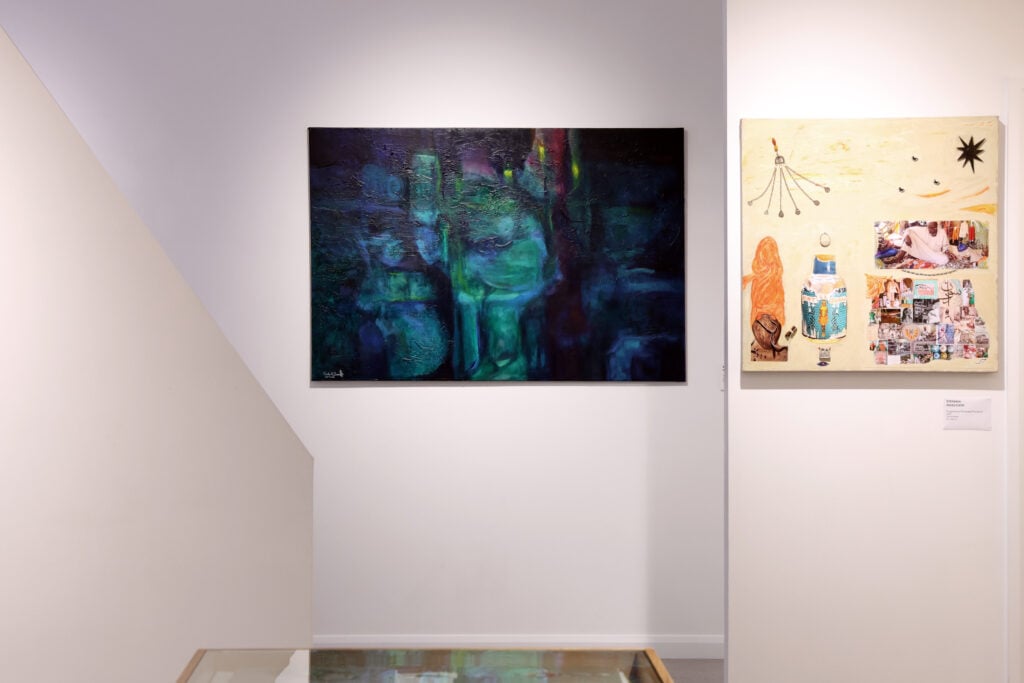
There are the sisters Nasra Mamoun and Aisha Hussein Shariffe, whose artistry was shaped by their parents, Shama Al Mahdi and Hussein Shariffe, the renowned Sudanese filmmaker and painter. Aisha Hussein Shariffe is a painter who, having studied interior design in Sudan, shaped her practice towards abstraction because it afforded her the liberty of expressing things and meanings that don’t meet the ordinary eye. Nasra Mamoun is a jewellery designer who, having studied geology at Yarmouk University in Jordan, found a love of gemstones and metals, and a lasting understanding of them, that continues to shape her work today.
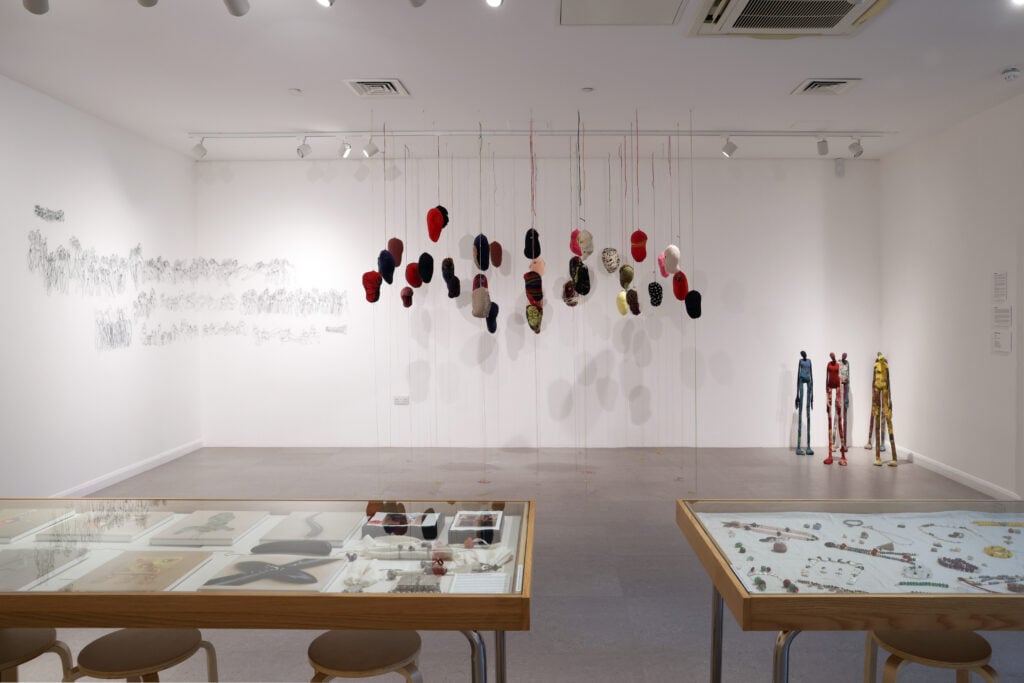
Lastly, there is Fayrouz Omer, a visual and textile artist whose work often engages with themes of resilience and cultural heritage, and who is occupied with developing deeply personal narratives that intertwine with Sudanese politics and identity.
It was this very idea that intrigued the filmmaker and photojournalist Frédérique Cifuentes when she decided to bring together the work and histories of these women in Of Roots and Routes at Almas Art Foundation. What made the project particularly compelling is how deeply rooted it is in contemporary artistic practice while remaining connected to a generation of artists who trained at Sudanese art schools during the 1980s and 1990s.
Sudan’s modern history has been shaped by successive wars. The first civil war stretched across seventeen years (1955–1972); the second (1983–2005) lasted even longer. Across those decades, political instability made life and artistic practice increasingly unpredictable, and Sudanese artists, among millions of others, dispersed into the diaspora, some in search of creative freedom and opportunity, others forced into exile. Each arrived at her life away from Sudan by a different route. What they share is a cultural memory their work continues to preserve, reinterpret and reimagine.
But Cifuentes isn’t oblivious to the affairs of Sudan’s present and past. Her engagement with the country runs back more than two decades: she photographed Sufi festivals in Sudan in the early 2000s, directed the 2008 documentary Cinema in Sudan: Conversations with Gadalla Gubara, and documented the country’s disappearing architectural heritage. Those were years of photographic and filmic research spent building relationships with artists, and perhaps this personal connection informed her understanding of the challenges these artists faced and the successes they achieved, ultimately shaping the curatorial vision of Of Roots and Routes. In a statement, she says this perspective guided both the selection and presentation of the works, drawing attention to how the artists’ experiences in the diaspora have expanded Sudanese art history while inspiring a new generation of creatives, and why the exhibition traced the continued evolution of Sudanese visual culture beyond the country’s borders.
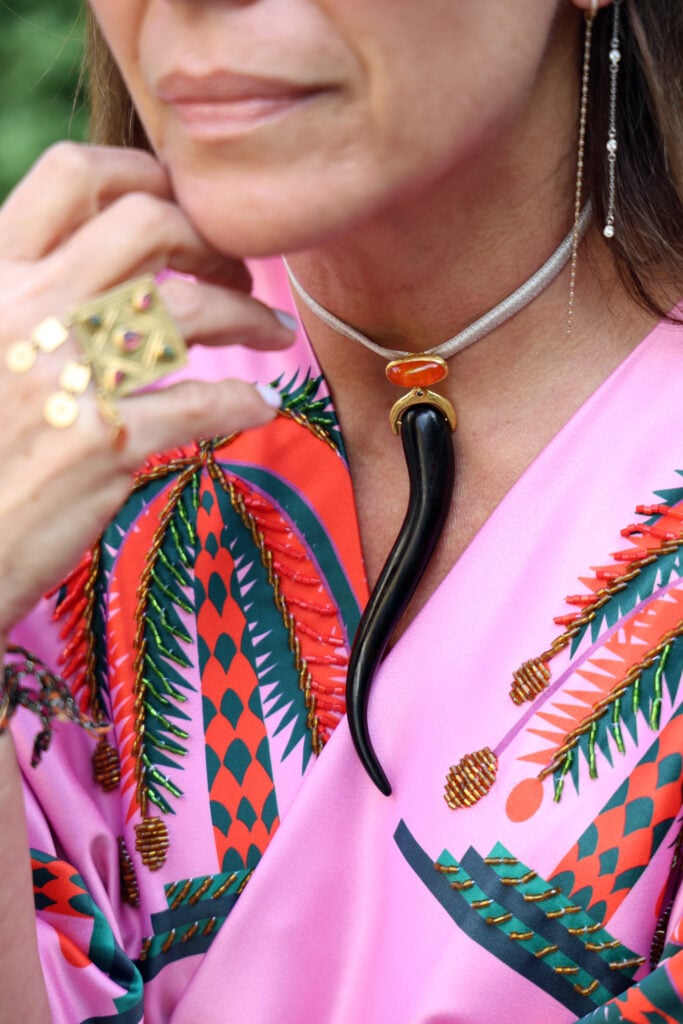
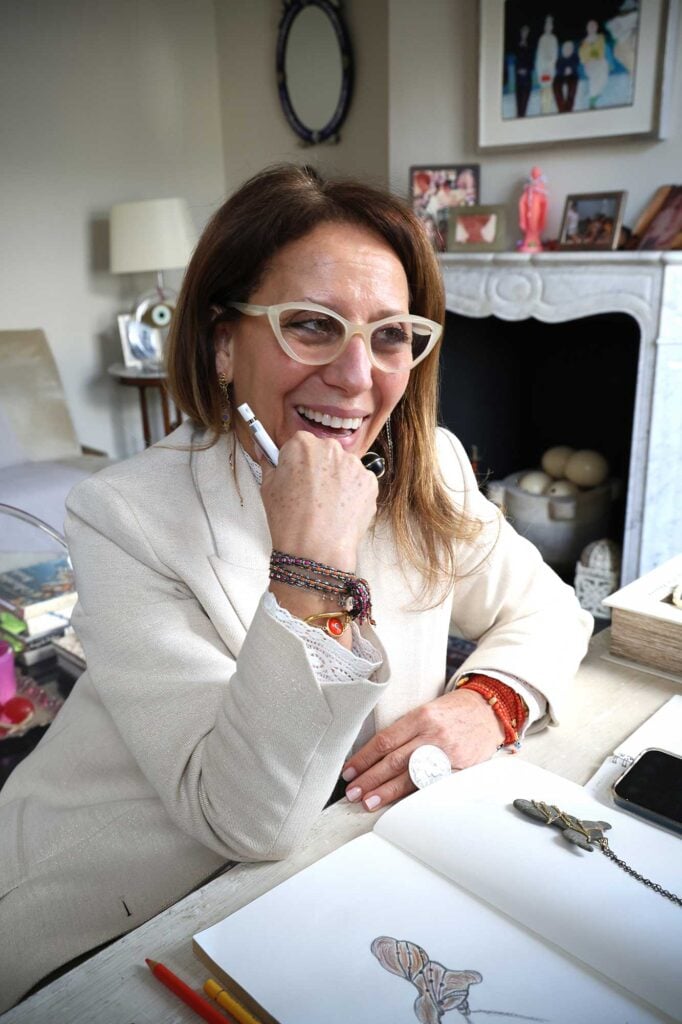
Stefania Indelicato’s practice begins not with designing but with finding, a fitting description of a jeweller’s process, but one with purpose: she treats every material sourced as narrative. Now based in London, where she has lived since 1987, she selects these materials for their presence and the stories they can carry before transforming them into one-of-a-kind pieces that honour the past while acknowledging the present. For Of Roots and Routes, her practice, Ambersouk, unfolded as a sensorial installation with a single golden thread woven through it, a metaphor for continuity across geographies: for what is carried, what is remembered and what is reimagined in diaspora.
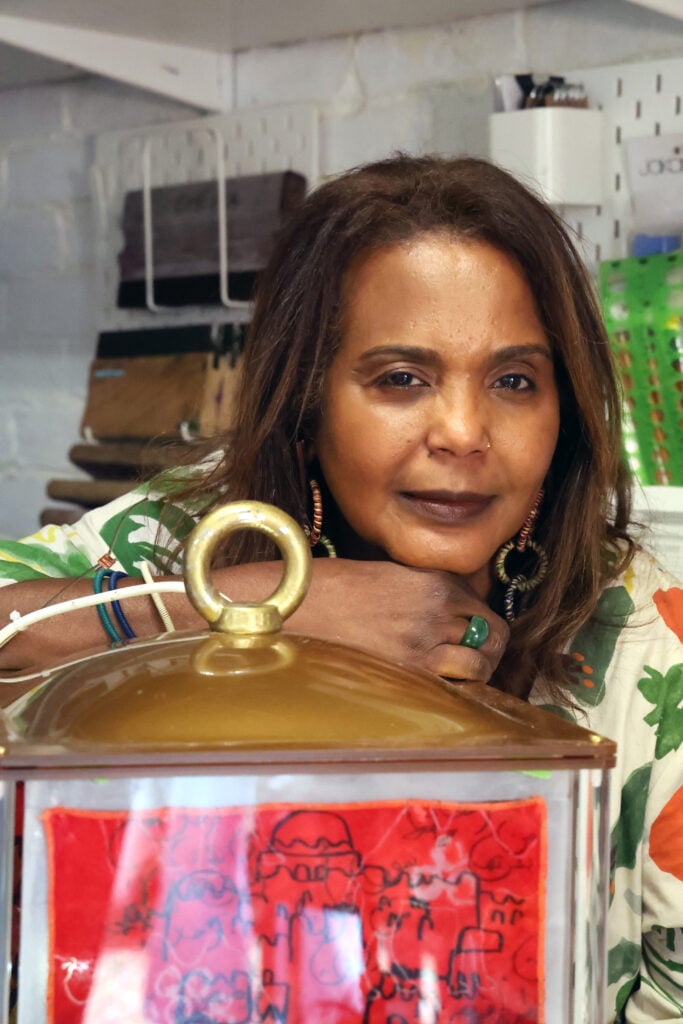
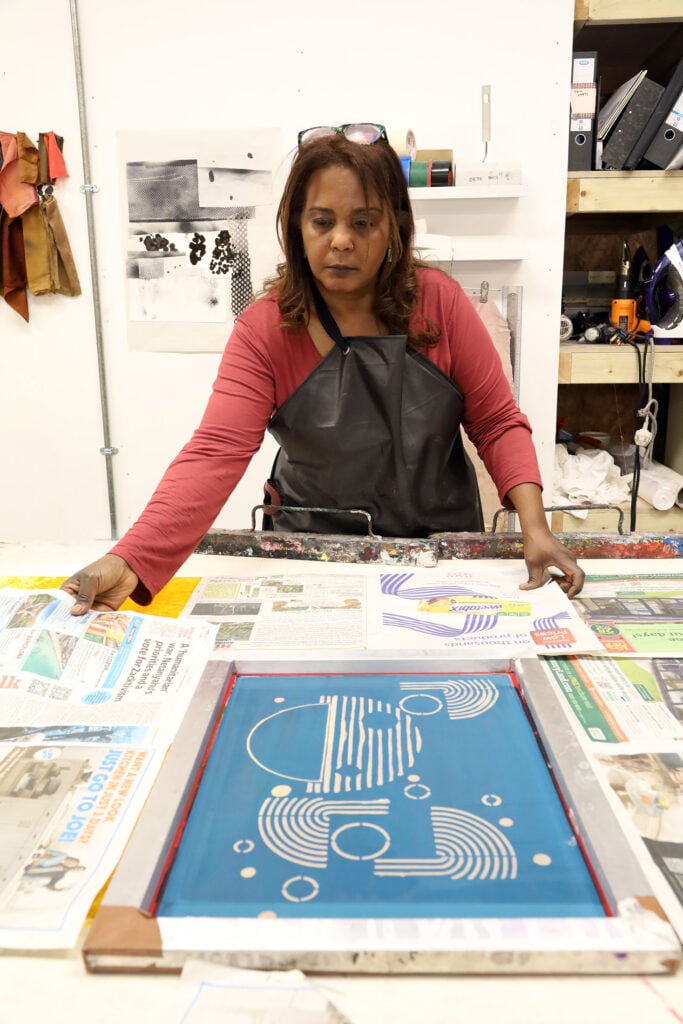
Omeima Mudawi-Rowlings works through a kind of radical optimism shaped by her past. Born in Khartoum in 1969, she moved to the UK at twelve after losing her hearing as a child; at the time, her family could not find adequate deaf education or support in Sudan. Her practice has been about exploring what remains of a place after migration, using textiles and screen printing as mediums, and Arabic geometry and calligraphy as techniques, to fuse eastern and western influences. She has also spent much of her career advocating for greater access and professional opportunities for deaf and disabled people in the arts, founding Resonant, a network of deaf women artists, and later co-founding Flare Arts to mentor and support deaf and hard-of-hearing creatives.
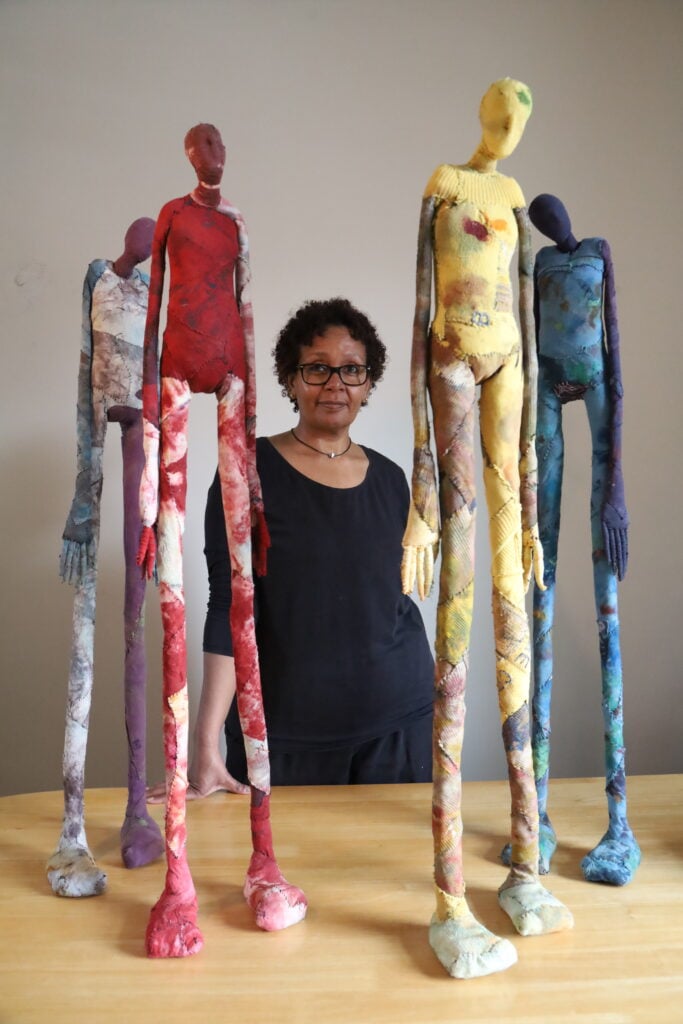
Fayrouz Omer, however, is the artist who has most often faced the challenge of having her work reduced to the label of “African Art,” a categorisation she argues has flattened its complexity and imposed limiting frameworks on how it is understood. In response, she chooses to work with simple, modest and raw materials, not as a constraint but as a deliberate artistic language. “My practice resists the idea that minimal means are inherently limited; instead, I aim to show that they can carry layered meanings and challenge preconceived narratives, both cultural and artistic,” she says.
This notion manifests in Cifuentes’ curatorial statement: “I also believe that being surrounded by meaningful artwork creates opportunities for reflection and dialogue. Art invites us to think, to exchange ideas, and to consider the value of knowledge and shared experience.”
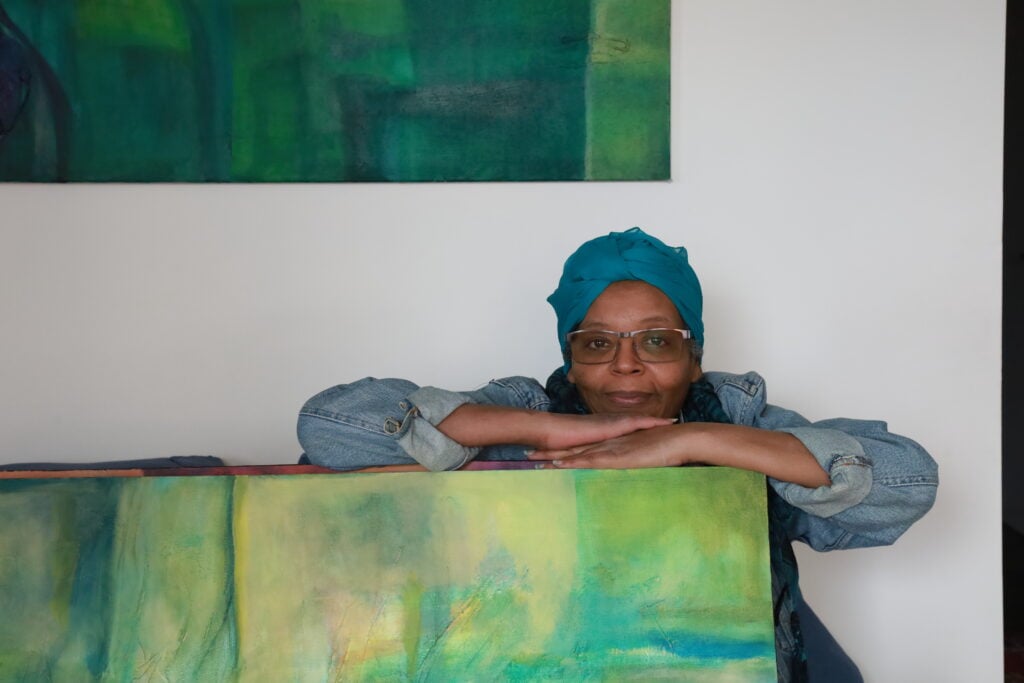
Hussein Shariffe is renowned for many things: as a painter, as the filmmaker behind the critically acclaimed 1975 film The Dislocation of Amber, or, most importantly for the context of this essay, as the father of Nasra Mamoun and Aisha Hussein Shariffe, both of whose practices were shaped by his influence. Aisha Hussein Shariffe finds power in the abstract. For an artist who speaks in the language of forms and colours, abstraction is about connection. Her paintings are largely characterised by dark, atmospheric and elusive marks that often appear tranquil yet mysterious. She calls it drifting, a method she wants her viewers to experience while interacting with her paintings. “You drift with the painting, as though you are gently drawn into its world, suspended within it,” she says.
Nasra Mamoun sees jewellery as a state of being. “What you wear can reflect your mood, your identity, and your presence in a particular moment,” she says. Mamoun first began experimenting with jewellery through beadwork as a student, before later studying silversmithing in London. She often works with agate, a rock variety made of colourful, striped layers of microcrystalline quartz, and her pieces are often inspired by Sudan and its natural world: the Nile, the desert. Mamoun dedicated all the work exhibited to the victims of Sudan’s ongoing war: her own way of remembering loved ones who have lost their lives.
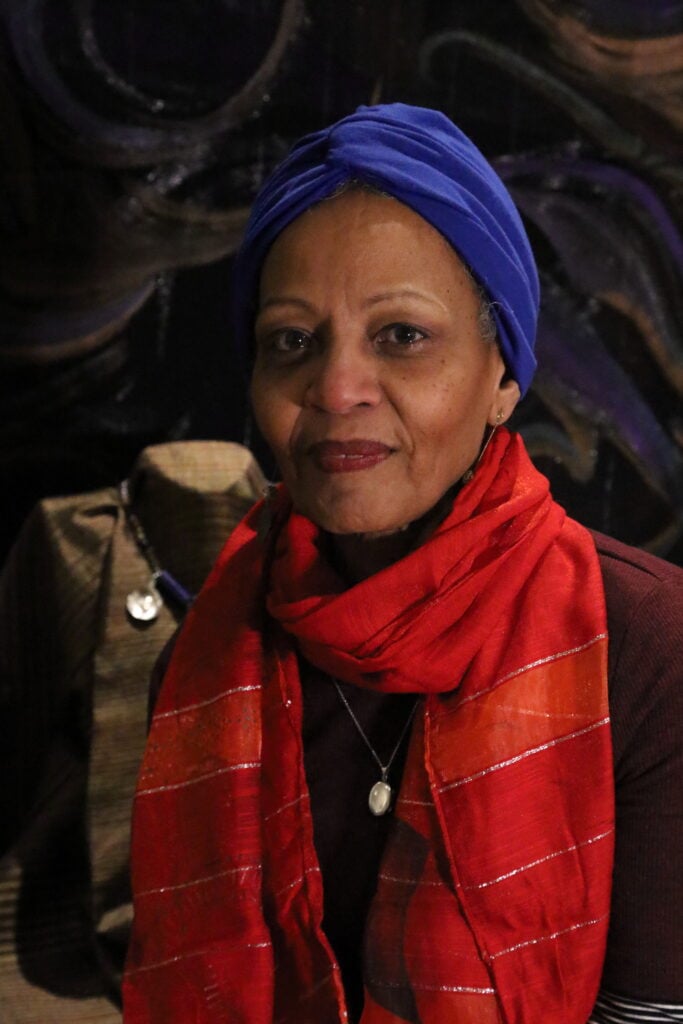
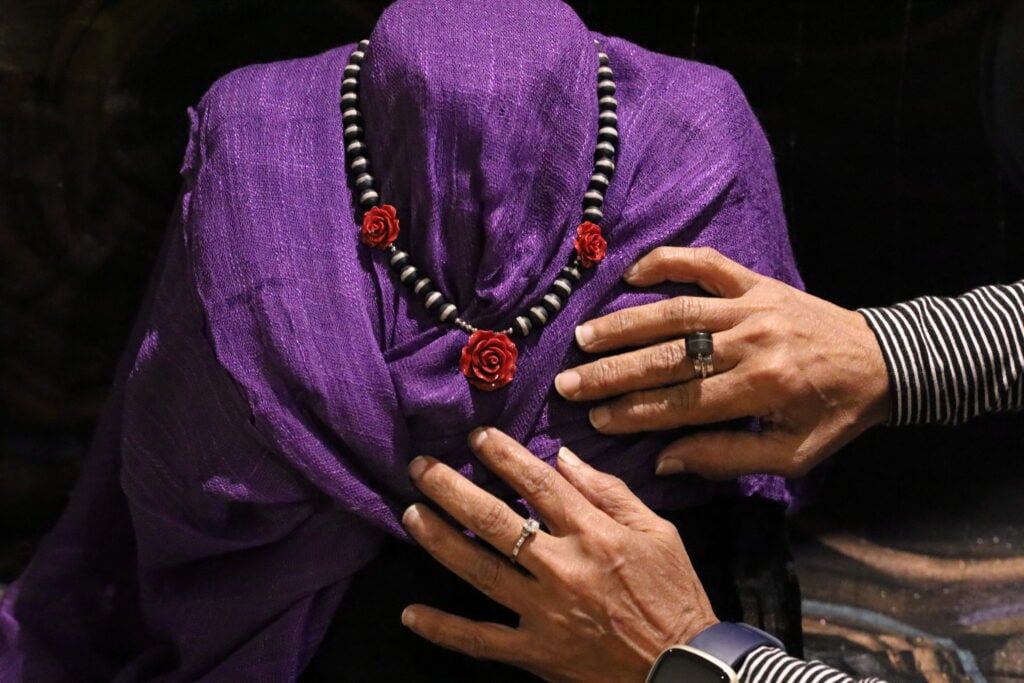
In her statement, Cifuentes notes that she learned valuable lessons from this exhibition. One of them is that there is no single path to becoming an artist, a rebuke to the expectations the art world places on how artists are discovered, how they are represented, and how they are supposed to practise. What sustains a creative career, she says, is not a rigid plan but an embrace of flexibility, uncertainty and change, and each of these artists has practised that in her own way: Indelicato building a jewellery practice in London across nearly four decades, Mudawi-Rowlings making work while founding organisations for deaf and disabled creatives, Mamoun setting her dedication to the war’s victims into silver and stone. Since April 2023, Sudan has been engulfed in a devastating conflict that has placed its cultural heritage under extraordinary threat; museums, galleries and private collections have been looted, damaged or repurposed for military use.
Of Roots and Routes was made in that shadow. Across different experiences of migration, distance and displacement, these artists have continued to work with what Sudan gave them: its materials, its landscapes, its visual languages, its memories. Their practices do not simply preserve what was left behind; they reshape it through the lives they have built elsewhere, at the canvas, the printing screen and the jeweller’s bench, connecting past and present across years and borders.
Of Roots and Routes, curated by Frédérique Cifuentes, ran from 21 May to 18 July 2026 at Almas Art Foundation, Arch 28, Old Union Yard Arches, 229 Union Street, London SE1 0LR.
Photos courtesy of Frédérique Cifuentes
Continue reading