

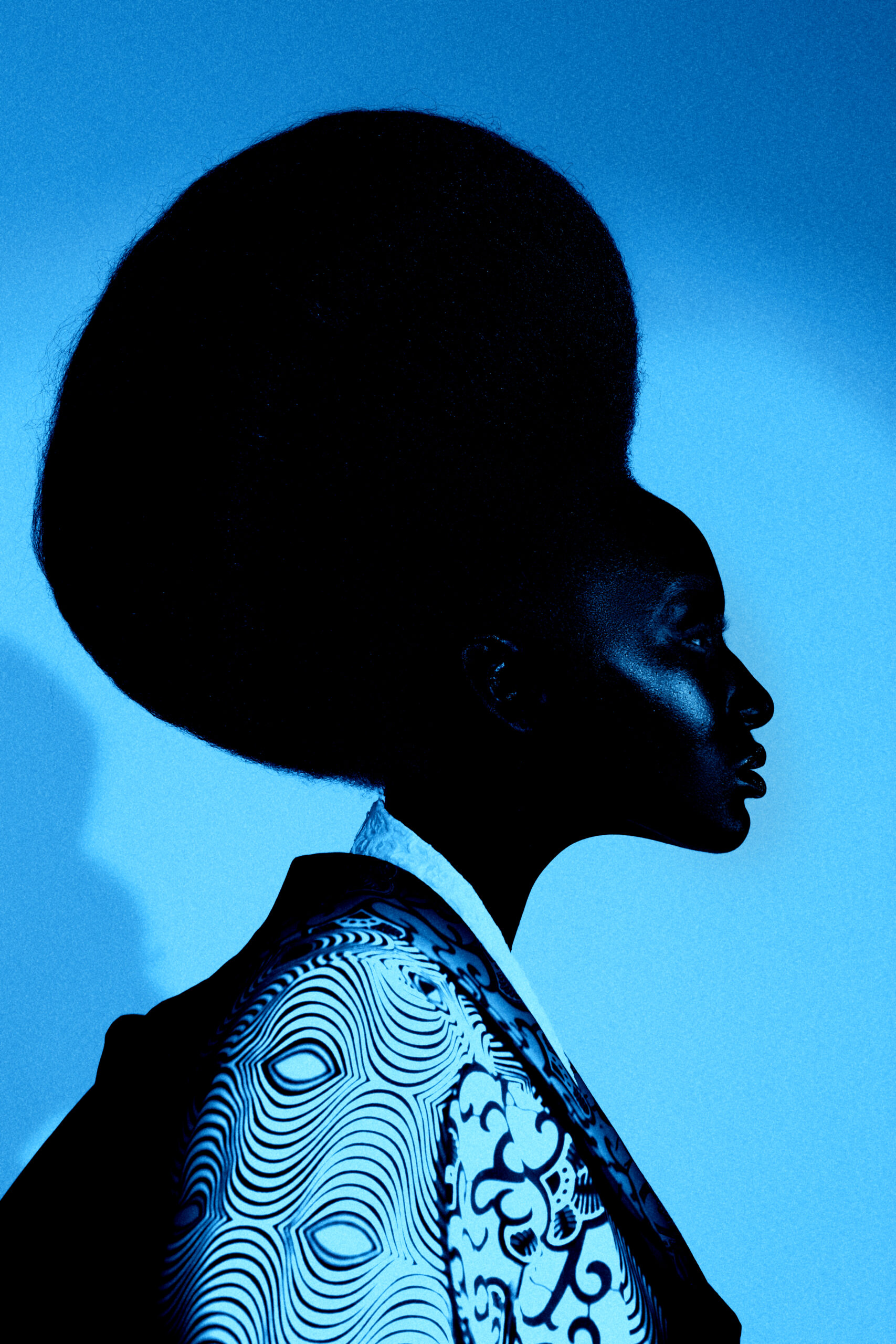
Zikora Ikebuaku knows how to credit their predecessors. There’s a level of surety and admiration in the way the young designer speaks about the people who inspired them and laid the foundation for fashion in their world — in the way they talk about French couturiers Madame Grès and Christian Dior, David Tlale, Ituen Basi, Frank Oshodi, and Deola Sagoe. But the designer knows one thing to be true: names span decades, even centuries. With Ohlanna Bu Zikora, they are aiming to build a brand that will stand the test of time, just like some of the names that inspire them, and they hope that decades forward, people might reference their work and how it shaped them as a designer.
Early Beginnings and the Making of Ohlanna Bu Zikora
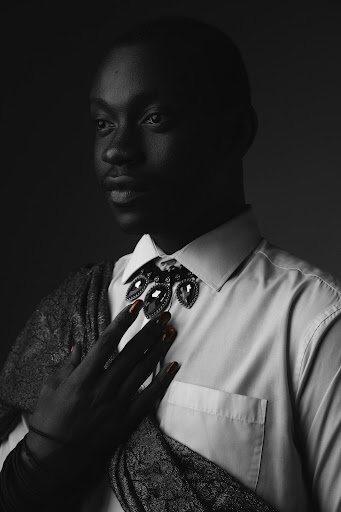
Born Zikoranachukwuebuka Ikebuaku to Igbo parents, the designer grew up in Kogi State, northern Nigeria, spending much of their childhood reading Nigerian literature, playing dress-up, and engaging with local culture. Their love for fashion began to manifest and expand while studying English Literature at the University of Nigeria, Nsukka, where they started a rental business for pageant dresses.
“I began making pageant dresses in school — I wasn’t so perfect at it — but it made me so popular, and soon I started reading and studying how to make clothes. Although I had a short stint learning menswear, I didn’t find it exciting,” Ikebuaku says.
Though they learned how to cut patterns during that brief time, the self-taught practice helped them pivot into womenswear, making Zikora the designer they are today.
After graduating, Zikora spent ten years working at several fashion houses: Q Ruka Couture (Lagos), Ituen Basi (Lagos), House of Farrah (Abuja), and Grass Fields (London), before launching Ohlanna Bu Zikora. In 2021, Zikora was one of ten contestants on Design Fashion Africa, a fashion reality TV show, and emerged as a winner.
Before launching the brand in 2023, Zikora was apprehensive; there was no financial backing from anyone.
“I had just one sewing machine, and I would draft the patterns, cut, and then give them to my joiner. I didn’t think Lagos was ready for the kind of clothes I wanted to make,” they say.
Three years on, Zikora’s designs, often demi-couture pieces, bridal wear, and custom-made pieces, have been worn by Nollywood actresses including Linda Ejiofor, Uzoamaka Onuoha, and Uzoamaka Power.
On Igbo Heritage, Inspiration, and the Art of Dressmaking
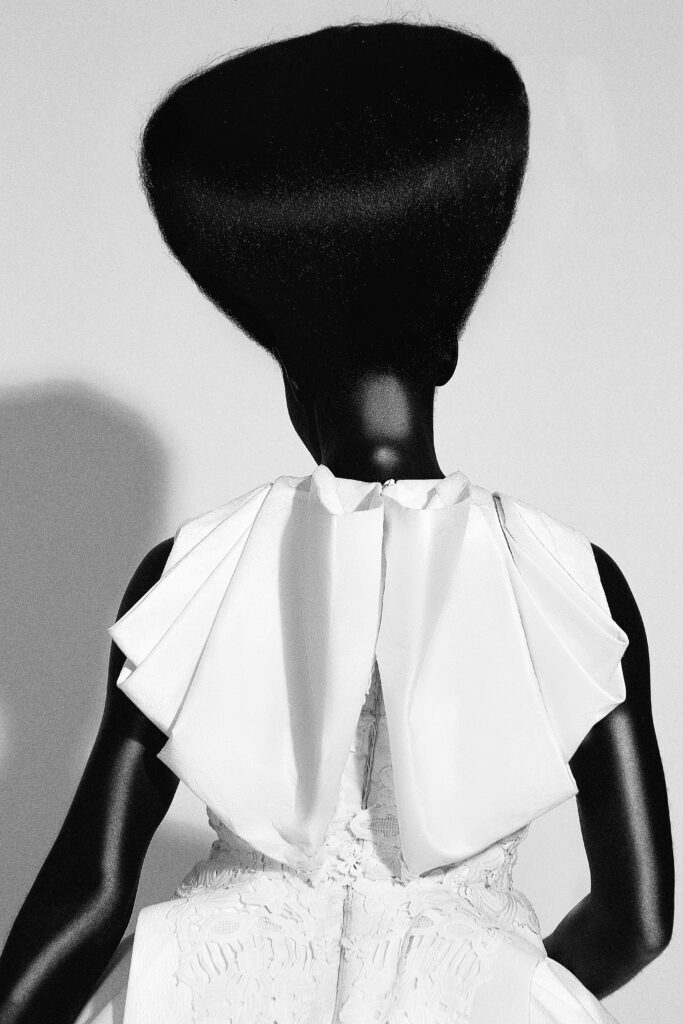
The name Ohlanna Bu Zikora is an alter ego. In Igbo, Ohlanna translates to “most precious jewel of the father,” while Zikora is the beginning of the designer’s full name, Zikoranachukwuebuka, meaning “the world will gather in testament to God’s greatness.” Growing up as a femme-presenting person, the designer assumed Ohlanna would have been their name had they been a woman. Ohlanna Bu Zikora, therefore, functions as a persona of the designer’s self.
Zikora loves dressing women, and most importantly, they are drawn to women who are disrupting the status quo. They are deeply inspired by fashion from the 1930s through the 1950s, a period they describe as offering feminine, sophisticated, and clean techniques that feel simultaneously nostalgic and maximalistic.
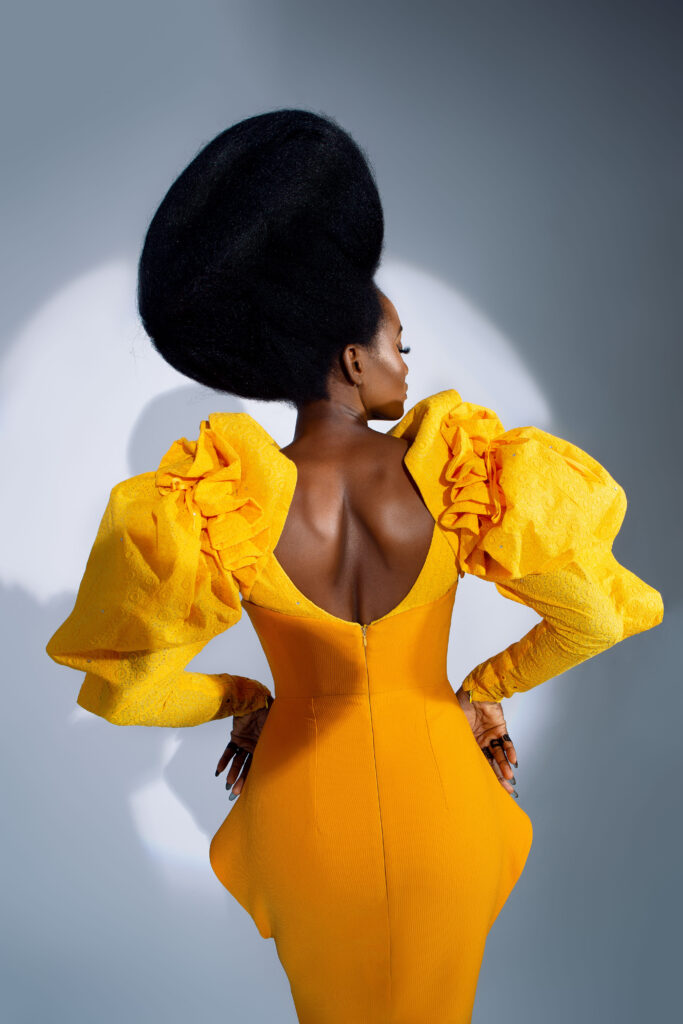
Take the brand’s Fall/Spring 2025 Privé Artisanale collection, titled “The Yassification of Nkali,” which draws inspiration from the Aba Women’s Riot of 1929. Zikora reimagines how dressmaking can make women who revolt feel: textures are soft yet commanding in crimson red; silhouettes are grand, featuring hourglass exaggeration and regal-like coats that borrow design elements from 1950s Christian Dior dressmaking, while weaving in Igbo heritage and culture.
Another collection, the Fall 2021 demi-couture collection titled Umunwanyi Town Council, pays homage to the Umuada, women known for their power in Igbo politics, governance, and decision-making.
“I am constantly exploring power from the lens of an Igbo person, the idea of power through the point of femininity, while also exploring things in my culture: the language, its belief systems, and its craft,” Zikora says.
In Igbo culture, the Agbogbo Mmuo masquerade is known for its feminine features; it was performed by men and often exaggerated the beauty and movements of young adolescent girls. Zikora plays into this irony, borrowing from the cultural rite and using a mirrored version of the masquerade headdress as the brand’s logo, an image that also explores the delicacy of Igbo carving art.
The designer also considers economic factors carefully when making clothes, which is why most collections feature limited pieces, operating under the Privé Artisanale umbrella.
“My collections are very small-scale and curated, designed to be taken in bits. I also design from the point of view of a Nigerian designer, focusing largely on what is economically viable,” Zikora emphasizes.
A New Collection: Egovinu’nwa — The Bridal Edit
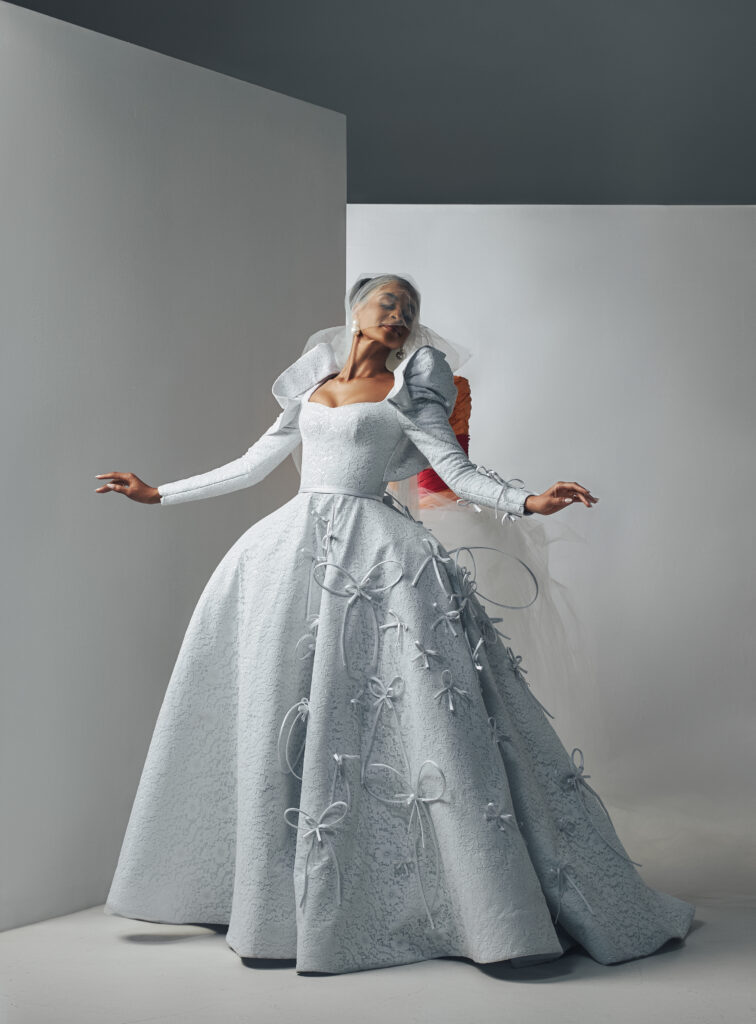
Aside from their love for dressing women, Zikora also knows how to eulogize them. Ohlanna Bu Zikora’s latest offering, a bridal collection that reads as an epitome of softness, encapsulates their craftsmanship in storytelling. Zikora describes bridal work as the very essence of the brand: a bridal dress is a relationship between designer and bride, one imbued with gentleness. Silhouettes tend to be simpler and softer, decorations more restrained, and the overall design language timeless.
With Egovinu’nwa: The Bridal Edit, Zikora wanted to create something for the bride and for every other woman at the wedding.
“When it comes to wedding dresses, I don’t think there are enough options for brides who don’t want mainstream pieces. The Bridal Edit is for brides looking for something unusual, edgy, and fashionable, but in a simple way,” they say.
The collection includes a ball gown with bow detailing, structural dresses with godets, a sculpted dress paired with a textured organza petal skirt, a dress layered with a shawl coat, and a draped dress with tulle gathering. The veils accompanying each piece are inspired by simple Igbo scarves and hairstyles from the early 2000s. All five dresses are simple, and yet deeply nostalgic.
Present Challenges and the Continued Zeal to Stay Grounded
As fulfilling as Nigerian and African fashion feels right now, designers, especially emerging ones, continue to face significant infrastructural challenges. Zikora knows this well. From fabric limitations to a pervasive culture of defeatism, the designer, like many creatives in Nigeria, confronts steep setbacks. But they stay persistent.
“There’s a lot of defeatist culture and limitations in this part of the world. For instance, we recently began exploring glass as a decorative element for our forthcoming collection, and it took quite a while to get there. But for me, I will always find a way out. I might not be able to do it now; it could take another six months, maybe another year. Eventually, I will find a way,” they say.
For Zikora, that persistence is not incidental — it is the very fabric of what Ohlanna Bu Zikora is being built to be.