


Nigerian Women Are Dressing Against the Code
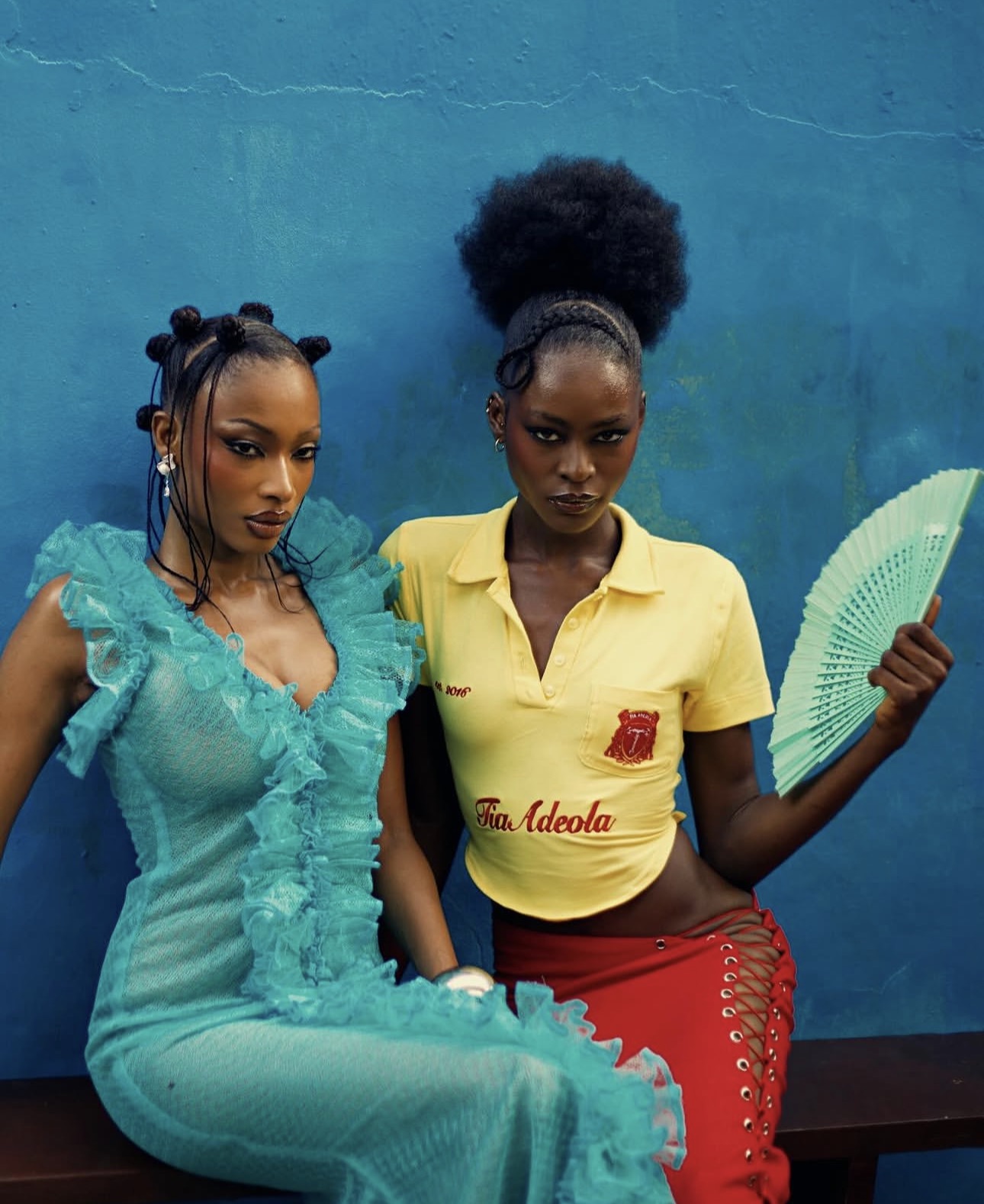
Two decades ago, Y2K marked one of the most expressive moments in Nigerian fashion, shaped by the rise of internet culture and the influence of Nollywood. Visibility, then, felt intentional and confident rather than excessive.
A version of that sensibility has returned, carried by a generation that dresses for how it wants to feel rather than how it is expected to appear. Drawing on the figure of the femme fatale and the more contemporary shorthand of the “baddie,” the style is less about seduction and more about confidence: fitted silhouettes, lighter fabrics, revealing cuts.
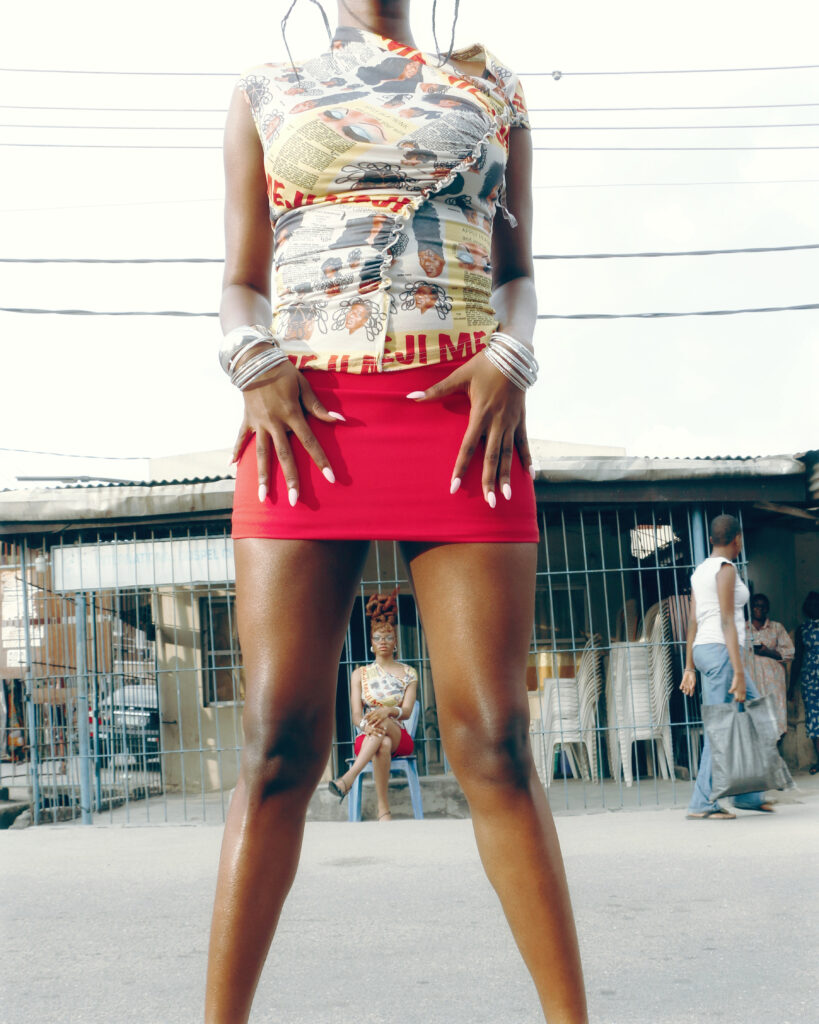
The way Nigerian women dress has never been left to them alone; colonial rule, religion, and state power have all had a hand in it. Before colonialism, dress across many Nigerian societies was fluid and contextual, often guided by climate, status, and community norms rather than fixed ideas of modesty. That shifted when European missionaries and colonial administrators began to recast clothing as a marker of “civilisation.” Indigenous forms of dress were discouraged, while covered bodies became associated with morality, discipline, and respectability.
Missionary schools reinforced these ideas, particularly for girls, who were taught to embody modesty through both behaviour and appearance. In northern Nigeria, Islamic traditions around dress also evolved over time, with the wider adoption of the hijab expanding significantly from the 1970s onward and later becoming institutionalised in some states.
By the 1980s, these norms were reinforced through policy. Under the military government of Muhammadu Buhari, the 1984 War Against Indiscipline campaign brought public behaviour, including dress, under state scrutiny, with “immodesty” subject to criticism and, at times, public reprimand. These frameworks persist today. In parts of northern Nigeria, dress expectations remain shaped by religious and social systems, while across the country, women’s visibility continues to be negotiated within a culture that still links appearance to morality.
The result is an unspoken but widely understood dress code, one that measures the respect a woman deserves by how much of herself she conceals. For women who refuse it, the consequences are rarely neutral. They are labeled, corrected, reminded that visibility carries a cost.
Nigerian designers, meanwhile, have been celebrated globally for their theatricality and sensuality, even as they work inside a domestic market shaped by conservative buying power, social expectation, and the persistent policing of women’s bodies.
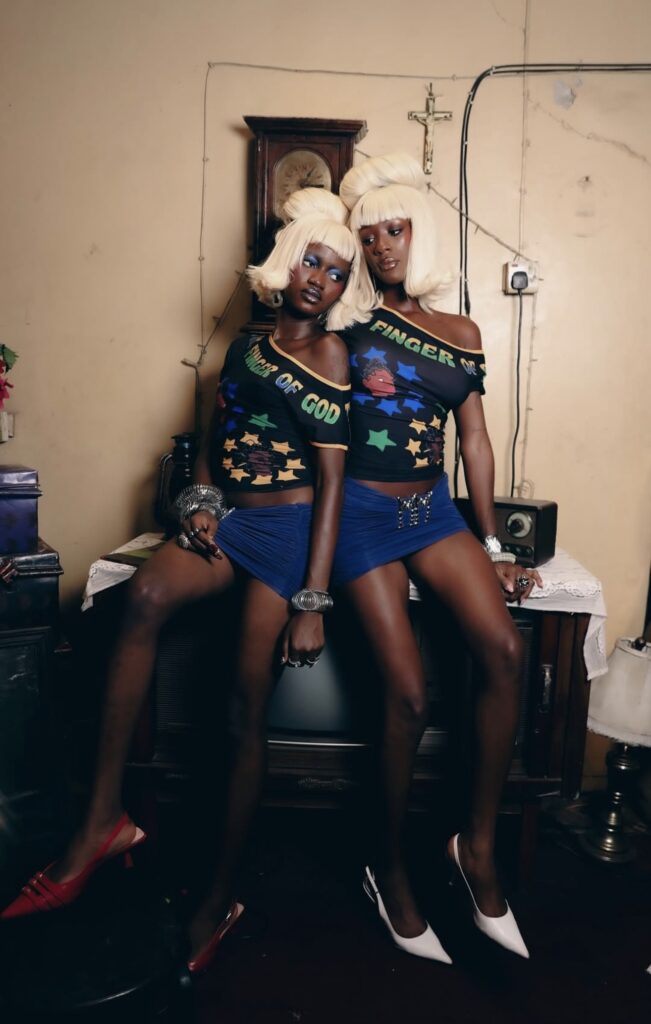
Tolu Oye is a designer, and she belongs to the generation of women her work is built for. Growing up as a pastor’s daughter created an early tension between the world she was raised in and the one she imagined for herself. While her upbringing emphasized modesty and restraint, she was drawn to women who embodied something else entirely. Characters like Betty Boop and Nollywood icons such as Omotola and Genevieve represented a kind of feminine power and freedom she had yet to access.
That tension became the foundation of Meji Meji, a brand built around her alter ego, Meji Meji Mama.
Tolu describes herself as a femme fatale. Meji Meji is built for women who want to inhabit that register openly: desire, power, playfulness, in a culture that has rarely made space for it.
In Lagos, that woman already exists. Tolu points to women like Ashley Okoli, women she describes as happy in their femininity and unapologetically alluring. “That sense of freedom is really important,” she says.
Her community describes the brand as a “breath of fresh air,” a response to an industry that has predominantly catered to conservative tastes. For women who want to embrace more sensual fashion, options in Lagos have historically been limited. “We are filling that gap and doing it from the lens of a femme fatale so you can feel that way in your everyday life,” Tolu explains. That positioning places her outside the mainstream Nigerian fashion ecosystem, something she has fully embraced. “I never thought about the popular fashion shows most designers attend because I knew we wouldn’t fit in,” she says. “We are a subculture for a reason.”
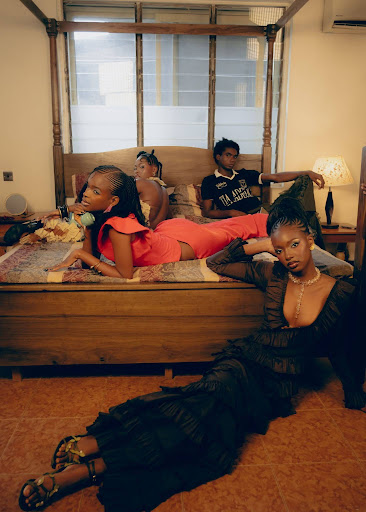
Tia Adeola came up in New York, where she watched the people around her treat clothing as daily self-expression, dressing according to their energy, their feelings, and what they wanted to show the world. She brought that back to Lagos.
In presenting her work, she found herself navigating a different set of expectations. “In my design process,” she says, “I had to find a balance between staying true to myself and being mindful that this is Lagos. It is more conservative. Left to me, I would have broken all the rules.”
The adjustment was not only about audience taste. Showing in Lagos meant showing at home, where her parents and their peers would be watching, and in a society where reputation is communal, the response to her work would not stop with her. It would extend to them.
Both designers know what it costs a woman to be looked at in Lagos, and both are handing that cost back to her on her terms. Their work is authorship rather than rebellion: in a culture that has long equated modesty with respect, the women wearing these clothes are not rejecting the culture so much as expanding it, choosing to be seen on their own terms.
You just read the kind of piece we publish. Subscribe here to get it in your inbox.