


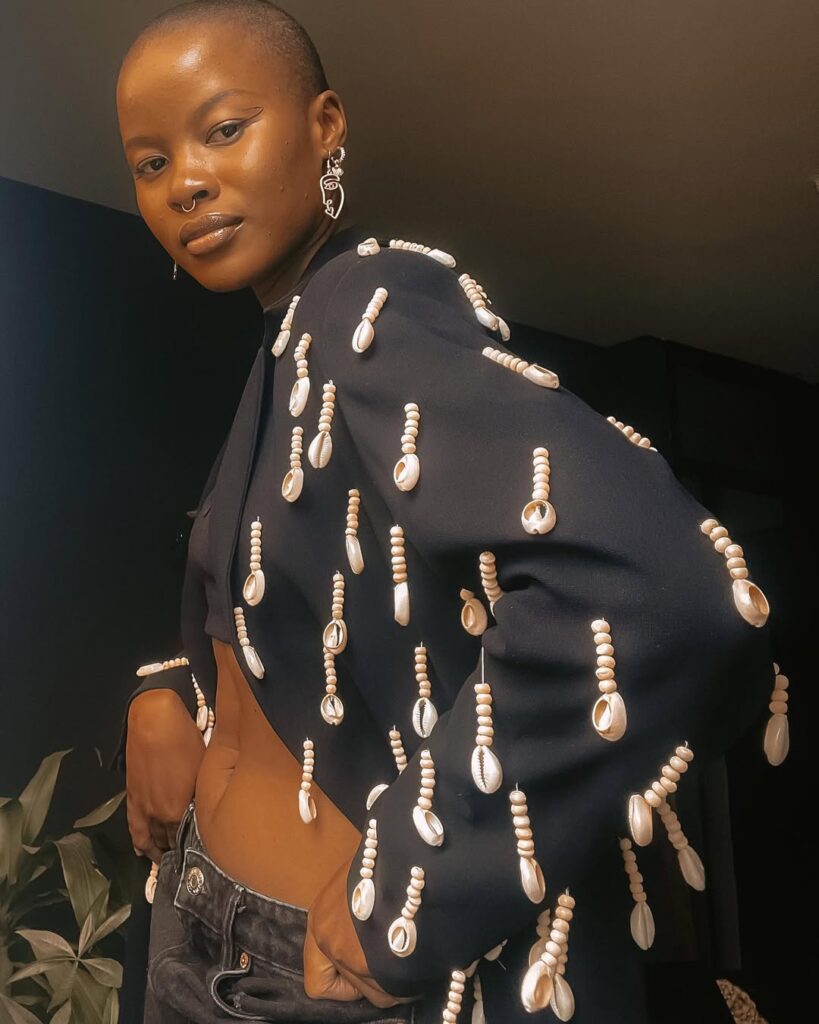
Lafalaise Dion is a force—an artist whose work transcends fashion. Her hands don’t just style; they conjure altars of memory and defiance, weaving stories through fabric and cowrie shells. When Guzangs, the bold voice of African fashion, set out to create its debut cover, “Helmet of Heritage,” featuring NFL star Jeremiah Owusu-Koramoah in Tamale, Ghana, Lafalaise was the style visionary chosen to bring this moment to life.
The cover, captured by photographer Gideon Boadi, is a testament to African identity, unapologetic and alive. As the editor who sat down with Lafalaise, I found myself drawn into her world. Here’s the story of how she crafted a cover that’s more than fashion—it’s a narrative.
The Call to Create
The call to join Guzangs’ debut cover came with a weight Lafalaise felt instantly. “It was about respect,” she told me, her voice steady, eyes sharp with purpose. Respect for Jeremiah, a Ghanaian-American linebacker whose authenticity radiates like a drumbeat; for Guzangs, a platform that’s been lifting African fashion to global heights; and for the chance to build something that honors ancestors while sparking dreams for generations to come.
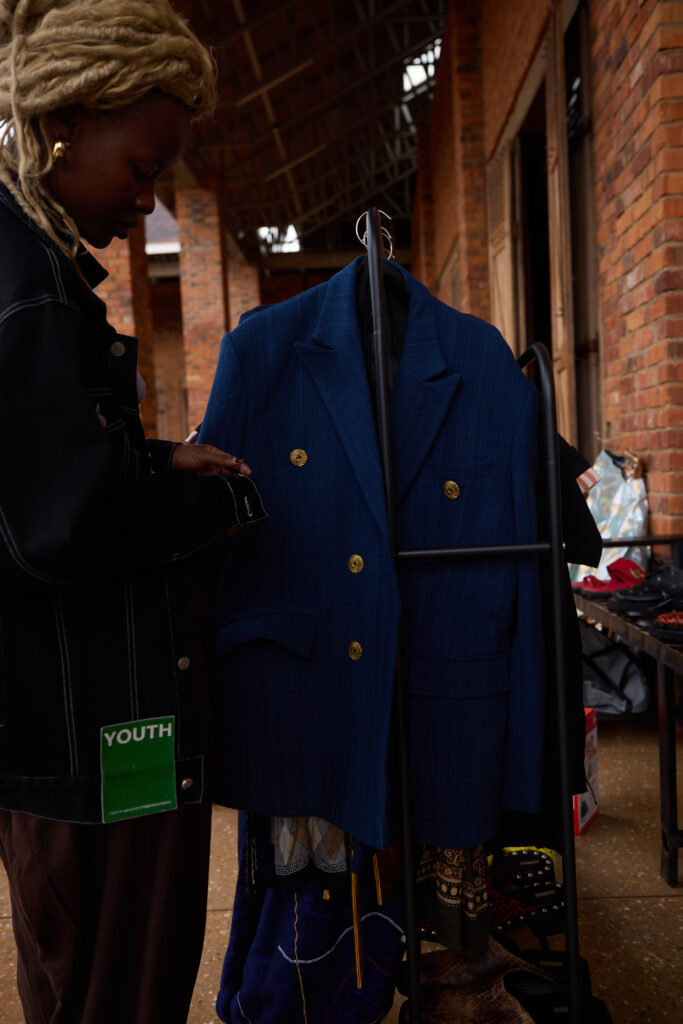
“Some moments demand your full intention,” she said, leaning forward as if sharing a secret. “This was one of them.” For Lafalaise, saying yes wasn’t just about styling a shoot—it was about stepping into a legacy, a chance to weave her own story into a larger tapestry of African pride.
Jeremiah Owusu-Koramoah is no ordinary subject. A 2023 Pro Bowl star with the Cleveland Browns, he’s known as much for his electrifying play as for his pregame fashion, which GQ crowned the NFL’s most stylish. But beyond the field and the flash, it’s his Ghanaian heritage that grounds him. From hosting football camps in Ghana to wearing traditional attire that celebrates his roots, Jeremiah embodies a layered identity—African and diasporic, past and present.
Lafalaise saw this immediately. “His authenticity struck me first,” she said, her words carrying reverence. “He’s a visionary who moves with deep purpose.” For her, this project wasn’t just a cover shoot; it was a declaration, a chance to amplify African narratives through a man who lives them. Guzangs’ courage to tell these stories unapologetically fueled her fire. “Fashion can be a revolution,” she told me, “if we choose it to be.”
The shoot’s setting—Tamale, Ghana—was more than a backdrop; it was a character in the story. “The land claimed me in seconds,” Lafalaise recalled, her voice softening as she described Tamale’s palette of earthy reds, vibrant greens, and golden light. She’d known the city through the monumental work of artist Ibrahim Mahama, whose studio became a sacred space for the shoot.
“Standing there felt like stepping into a living testament,” she said, “a place of vastness, humility, and radical vision.” Tamale’s quiet force—its sacred silence, as she called it—shook her awake. The landscape’s pulse shaped her choices, from the textures of the fabrics to the colors that seemed to echo the land itself. “There’s a power in Tamale that demands you listen,” she said. “It became the heartbeat of the shoot.”
At the core of Lafalaise’s vision was a question: What does African rebirth look like? “I saw this moment as a crossing,” she explained, “a rebirth.” She began with Jeremiah’s message of heritage, letting it guide her hands. What colors, shapes, and textures could carry the weight of ancestral wisdom while whispering of tomorrow?
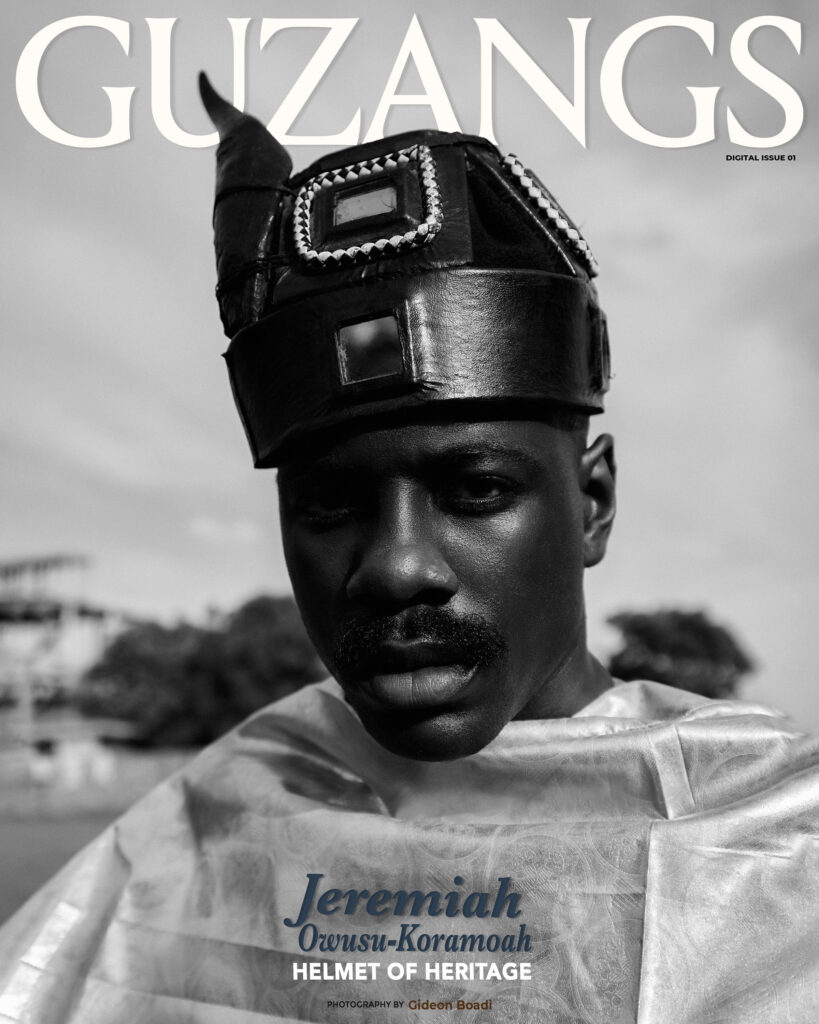
The headpiece, a centerpiece of the cover, became an invocation—resilient, elegant, timeless. “Every piece was deliberate,” she said. She chose materials that felt alive, drawing on Ghanaian traditions while pushing boundaries to reflect a future unbound. The headpiece wasn’t just adornment; it was a crown, a symbol of renewal and pride that spoke to Jeremiah’s journey and Guzangs’ mission.
Cowries, Lafalaise’s signature, were woven into the look with intention. “They found me when I was searching for myself,” she shared, her words carrying the weight of a personal pilgrimage. For her, cowries are more than decorative—they embody abundance, protection, and the divine feminine, holding stories, prayers, and blessings.
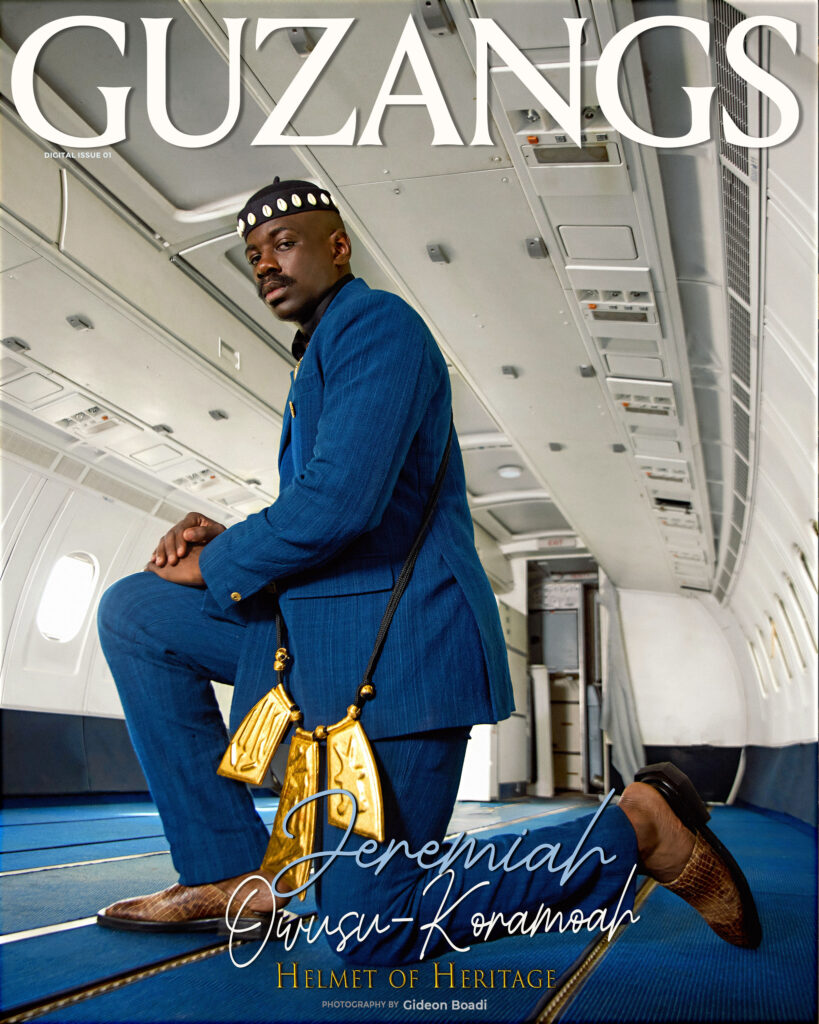
In this shoot, they were guardians of the collective intention, anchoring Jeremiah’s look in spiritual depth. “My medium is human, curatorial, and beautifully unruly,” she said with a smile, her eyes glinting with pride. Each cowrie was a thread connecting the past to the present, a reminder of the stories that live in every African heart. “They guided me back to my origin story,” she added, “a path of reconciling my spirit with my ancestral lineage.”
Lafalaise’s approach to styling is inseparable from her identity as a style curator. “Style, for me, is ceremony,” she told me, her voice rich with conviction. “It’s my heritage speaking through cloth and form.” Her work seeks to make the invisible visible—the ancestral, the sacred, the timeless. It’s a declaration: We are here. We have always been here.
This philosophy found a perfect match in Jeremiah, whose layered identity as a Ghanaian-American demanded a nuanced approach. “Working with him was sacred,” she said. “He knows his vision but holds space for new ideas to be born.” Every exchange pushed her to dig deeper, to honor a vast, complex inheritance. Unlike other collaborations, this one felt like a dance of intention, where every choice had to reflect the power of a fully claimed identity.
The shoot itself embodied community and humanity. “It was the vision woven into every detail,” Lafalaise said, her voice softening with gratitude. From the planning to the final frame, the project pulsed with connection—between the team, the land, and the shared mission. “It reminded me that fashion can be a bridge,” she said, “to ourselves and each other.”
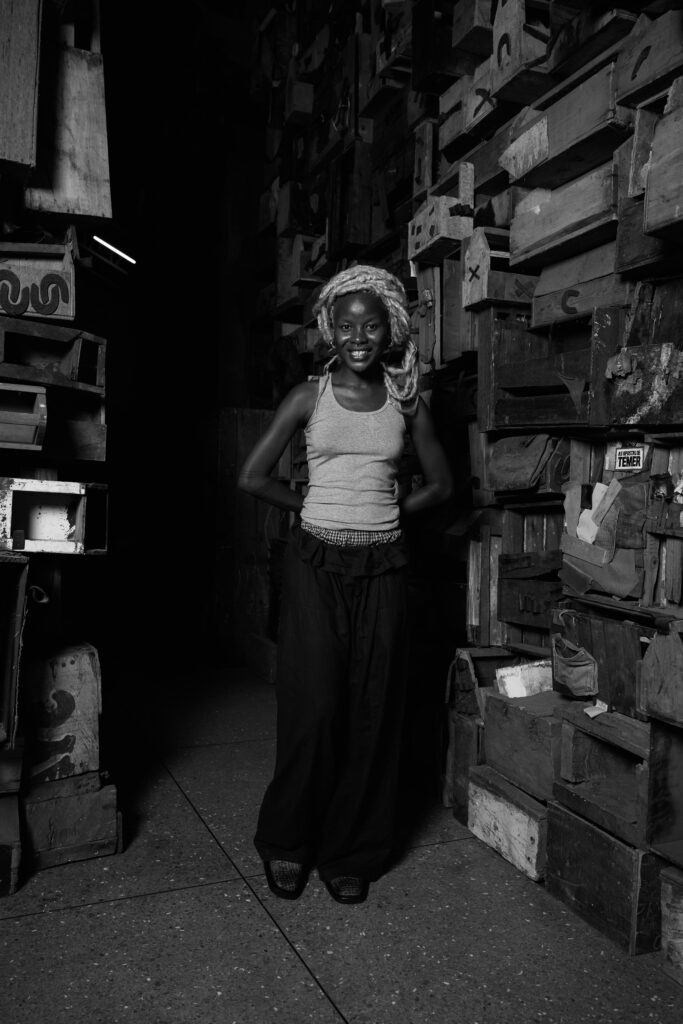
Standing in Ibrahim Mahama’s studio, surrounded by Tamale’s quiet force, she felt the weight of that truth. The community built before, during, and after the cameras stopped made this project personal. It wasn’t just about creating a cover; it was about planting something real, a mark on Africa’s collective soul.
Lafalaise hopes the pieces she crafted for this shoot stand as altars—spaces where memory, beauty, and defiance converge. “Our heritage isn’t a relic,” she insisted, her words ringing with urgency. “It’s a living force that demands we stand taller, love harder.” Each fabric, each cowrie, carries a legacy of courage: to remember, to imagine, to build.
For her, this cover is a call to action, a reminder that African identity is not static but dynamic, a flame that burns brighter when shared. To young Africans and the diaspora, Lafalaise’s message is a clarion call: “Wear your story boldly. Your roots aren’t chains—they’re wings.” She wants this cover to inspire a generation to claim their past as fuel for their future, to see their power as collective and ancestral. “You are part of a greatness that began long before you and will outlive us all if we guard it well,” she said.
“A vision, an action, a mark on Africa’s soul.” As I ended our conversation, I felt the resonance of Lafalaise’s words, like a rhythm I couldn’t shake. Guzangs’ “Helmet of Heritage” is more than a cover—it’s a testament to what happens when intention, heritage, and courage collide.
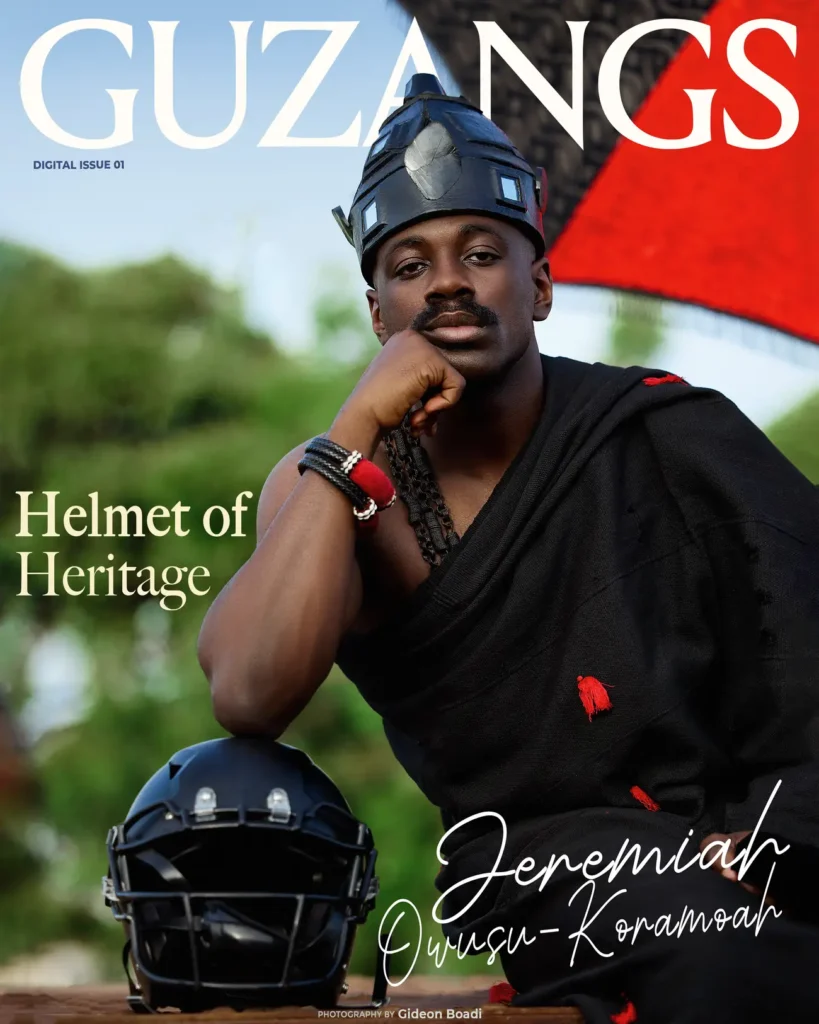
In Tamale’s sacred silence, under Lafalaise Dion’s deft hands, a story was woven that will reach far beyond fashion. It’s a story of Jeremiah Owusu-Koramoah, a man who carries his Ghanaian roots with pride; of Guzangs, a platform unafraid to center African narratives; and of Lafalaise herself, a visionary who reminds us that style, at its highest form, is nothing less than ceremony.
The helmet of heritage isn’t just worn—it’s lived, breathed, and passed down. In every cowrie shell, in every fold of fabric, in every choice made with intention, we see the future of African fashion: bold, unapologetic, and beautifully alive.