


Who Gets to Build Africa’s Skate Future?
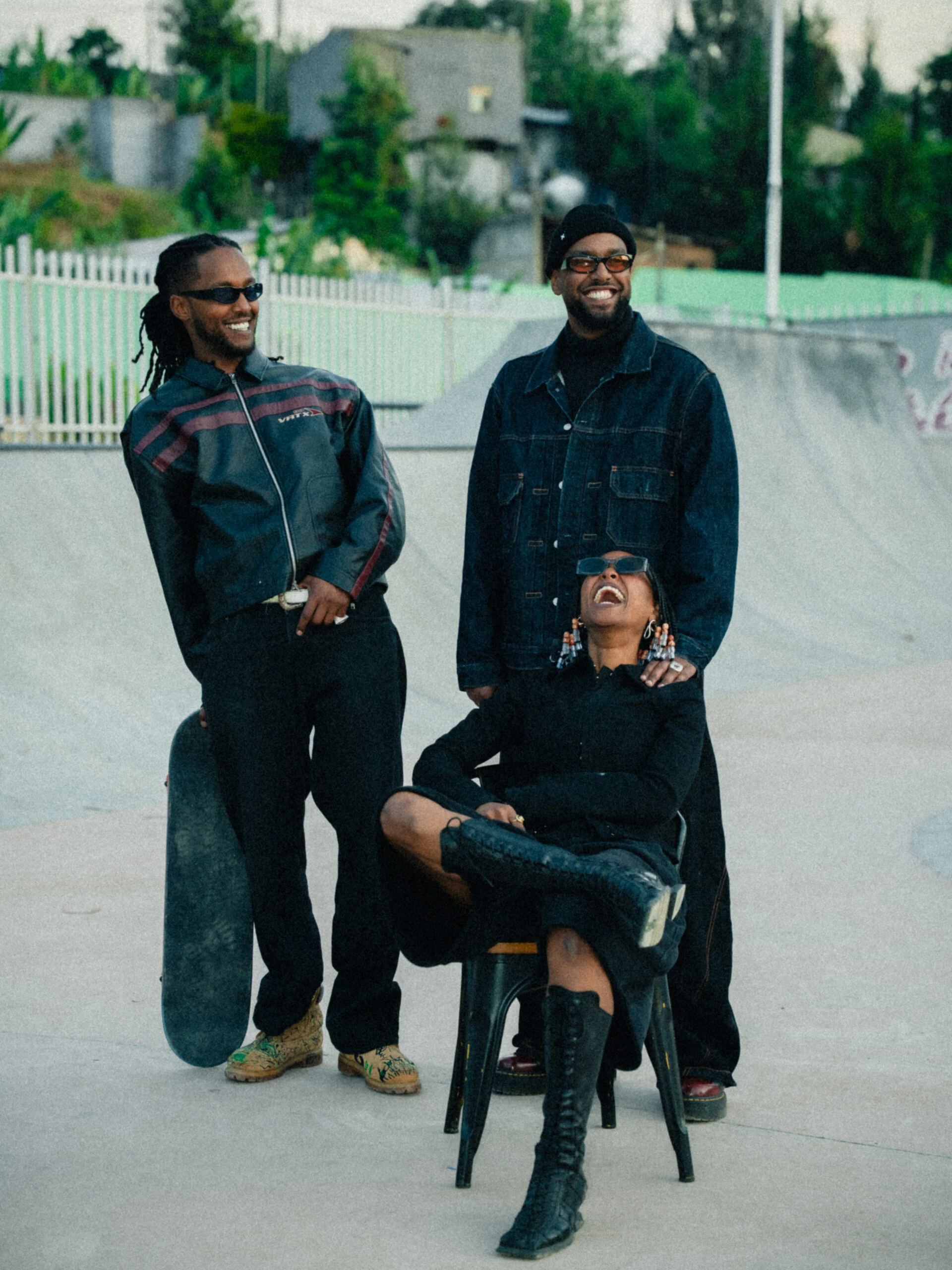
Driving around almost any cosmopolitan sub-Saharan African city is a real-life immersion into a tale of two cities; there are five-star hotels, multinational corporations, and gleaming new high-rises standing directly across from unpaved roads, shanty homes, and unfinished concrete frames. As a young child growing up across the continent, Arsema Thomas, best known internationally as young Lady Danbury in Netflix’s Queen Charlotte: A Bridgerton Story, learned early to question the juxtaposition.
As the daughter of two diplomats working in economic development, she understood the contrast she was seeing carried more weight than it appeared. “I remember driving around as a kid,” she says. “You could see beautiful buildings like the Hilton and the Sheraton, and right next to them would be an informal housing settlement. I never understood how those two things could be literally right next to each other.” She recalls asking her mother why the government could not provide proper housing. She knew the Red Cross, USAID and the UN were all over Ethiopia, but she couldn’t fathom why none of that aid seemed to take effect.
The conversation around foreign aid has always been about whether the funding works rather than who it actually empowers. Looking at a sample of large gifts made between 2010 and 2019, a 2021 study by the African Philanthropy Forum (APF) and The Bridgespan Group found that African donors directed just 9% by value to NGOs based on the continent, and non-African donors just 14%. In Bridgespan’s 2024 update, that share for non-African donors rose to over 55% in 2022 and 2023, driven largely by two funders, the Gates Foundation and the Mastercard Foundation.
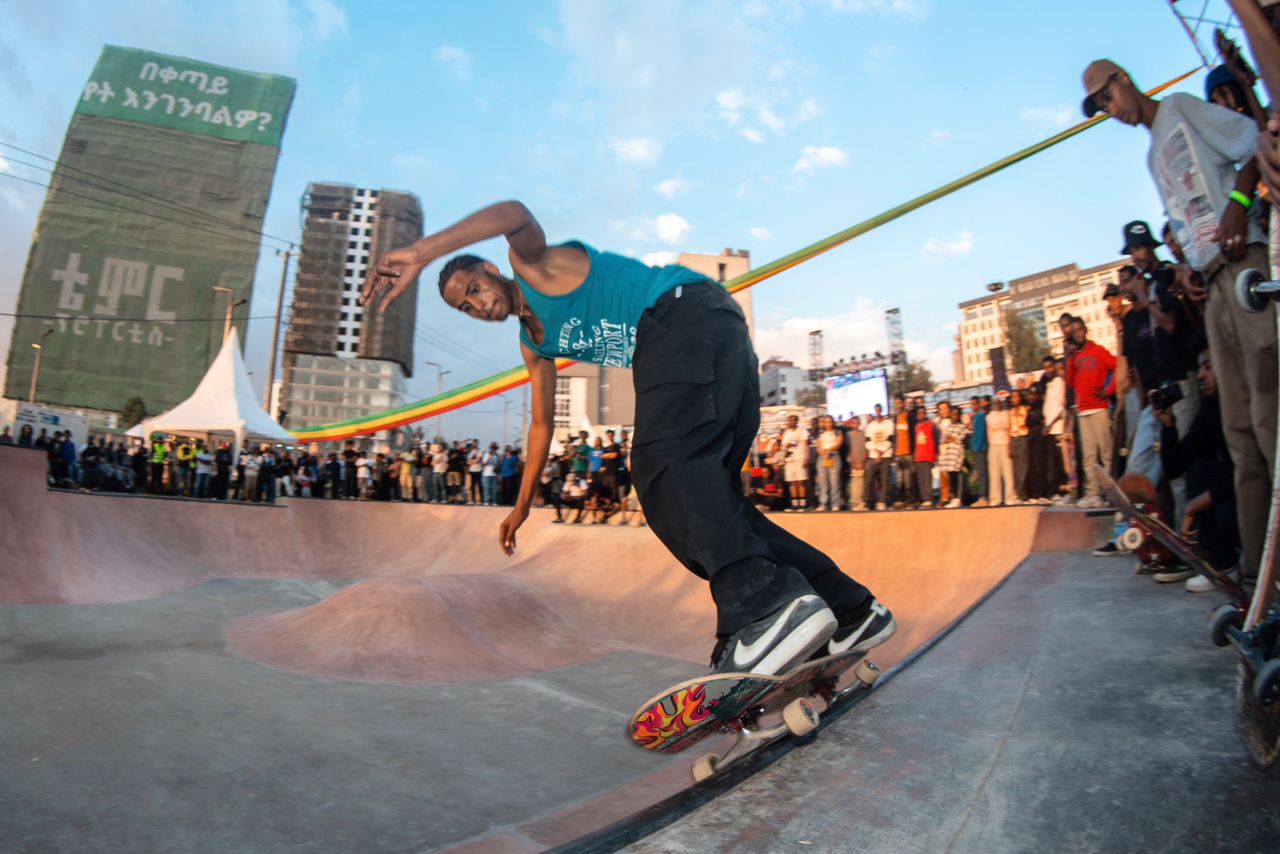
Arsema’s early exposure to that disorienting contrast became the thread running through everything that followed: a Master of Public Health at Yale, an acclaimed talk titled Charity: One Hell of a Drug, and now her work with Africa Skate. Co-founded with Abenezer Temesgen and Robel Yohannes, Africa Skate is a community-driven organisation building a self-sustaining skateboarding ecosystem across the continent.
It was born out of the hard and continuous work of Ethiopia Skate, which has spent more than a decade building skate parks, training athletes, and developing a community in Addis Ababa. Africa Skate builds on that groundwork, with the ambition to scale it. Africa is the youngest continent on earth. By 2050, one in four people on the planet is projected to live in Africa. What that generation is allowed to become — what culture they are permitted to build, own, and pass on — is the question organisations like Africa Skate exist to answer.
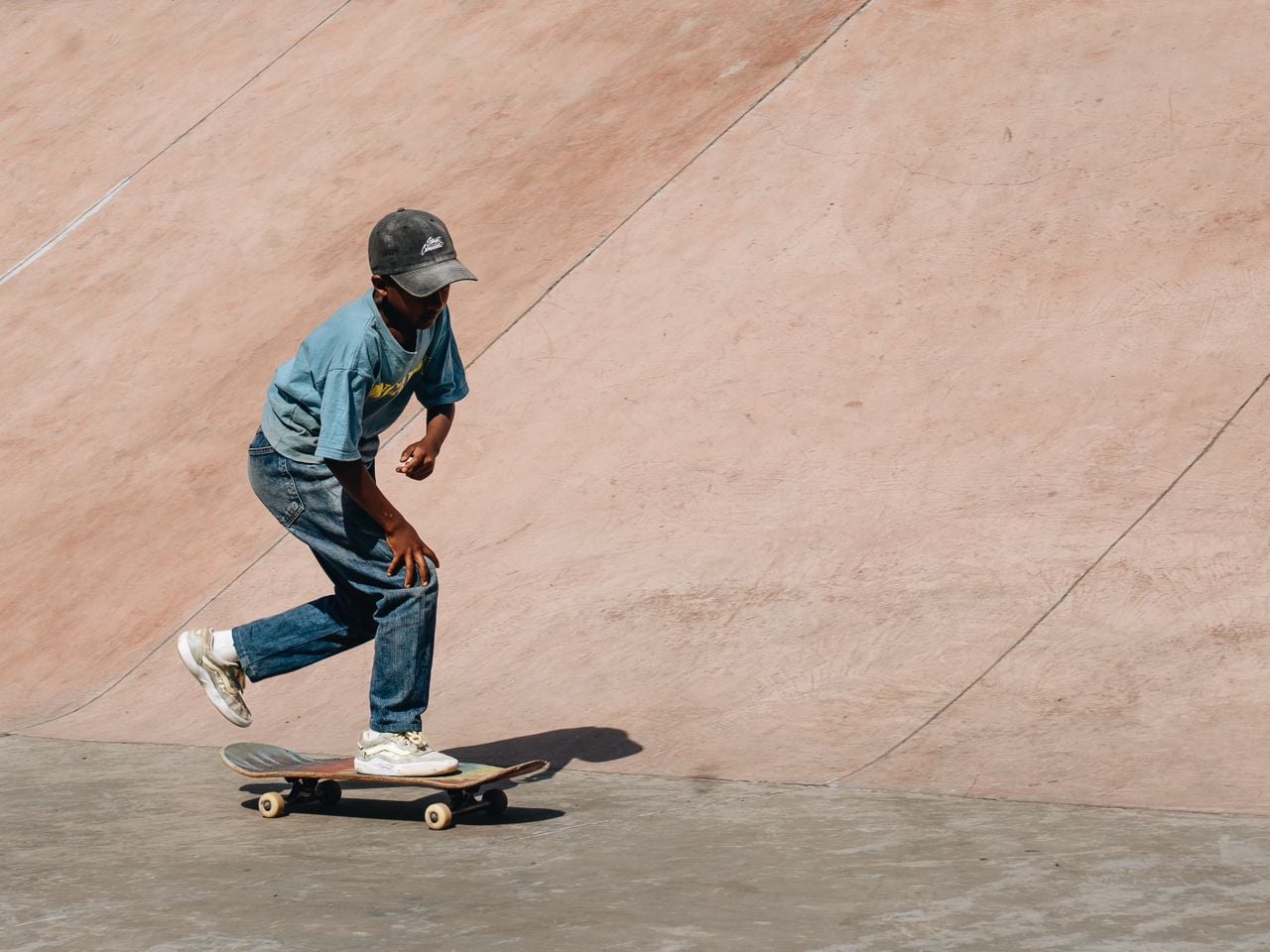
Africa Skate sits at the centre of that question, expanding what culture looks like and providing the quality of experience that young people in the West take for granted. “Why not allow everybody to have the same amount of choice that somebody born in Brussels gets?” Arsema asks. “If I want to make silent black and white movies with choreography, and I’m born in Ouagadougou, then I should be able to. I shouldn’t be forced to be a mechanic unless I want to.” Skateboarding is one expression of that question. The point is whether young Africans get to choose, and whether the infrastructure to support that choice even exists.
Abenezer Temesgen, known to everyone as AB, has spent more than a decade building the Ethiopian skateboarding community from the ground up. He has also lived in Germany for nine years, which means he has seen both versions of the same sport. In Europe, the pipeline is self-sustaining: a shop spots you, sends you boards and shoes, a brand turns you pro, pays you monthly, and puts your name on a deck. Each stage funds the next. In Ethiopia, that chain has yet to form. Even the associations governing the sport, he says, are run by people who have never skated. Ethiopia Skate can find talent, train talent, and send talent to compete. “We can’t turn any skater pro,” AB says. “Once they’re a professional skater, the company that turned them pro has to pay them monthly. That’s how it works in the rest of the world. In Africa, we’re not there yet.” The athlete stays dependent on the organisation. The organisation stays dependent on donors. The donor decides what happens next.
That is the aid dependency cycle, and equipment compounds it. Boards wear out fast under serious training, and when they arrive as donations, replacing them depends on donors too. The pathway to becoming a professional skateboarder is determined by affordability, not talent.
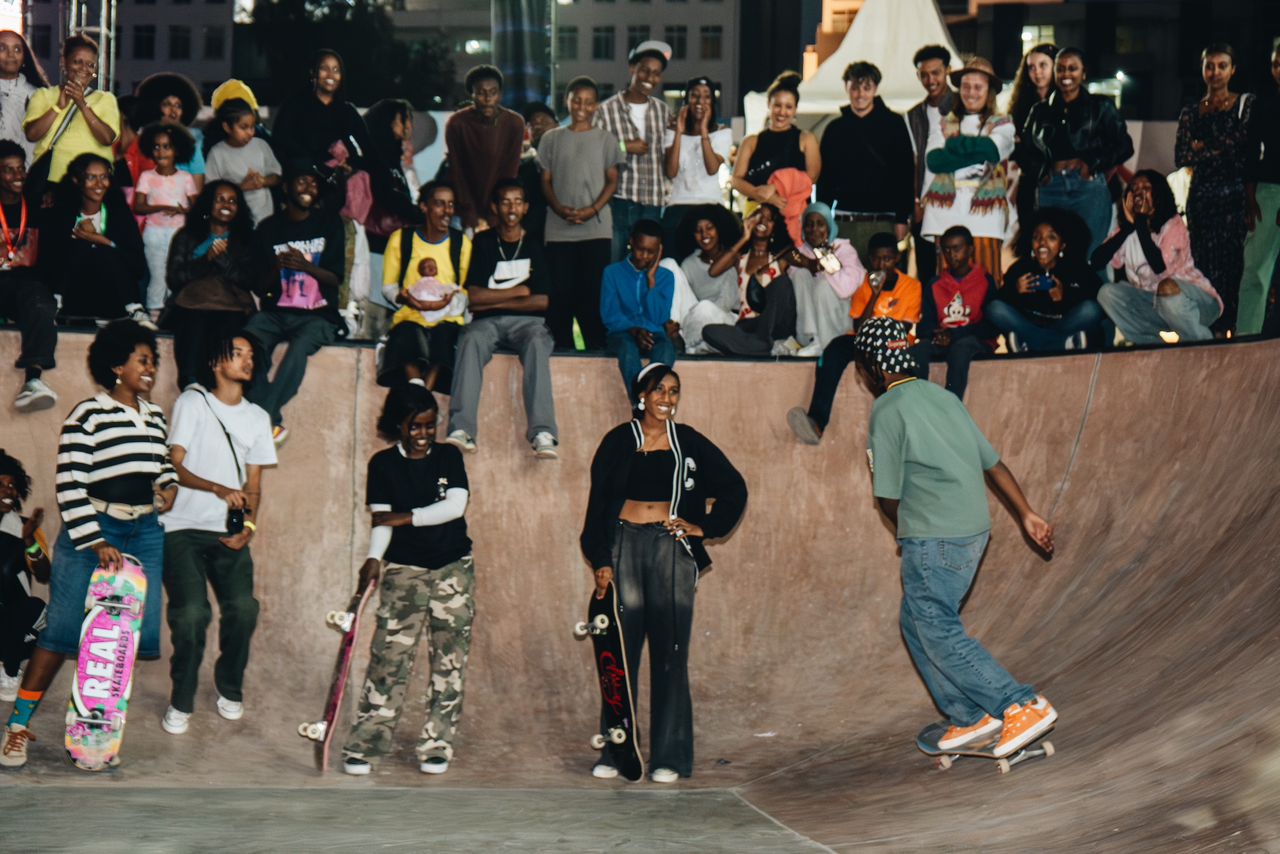
Africa Skate’s answer has been to build a symbiotic relationship with both private and public partners to drive and preserve culture, and local government in Addis Ababa has become a crucial partner in that journey. Since 2024, Ethiopia Skate has had the city’s backing and has built new skate parks across the capital with that support. It marks a shift for an organisation whose first park, Addis Skatepark, was crowdfunded in 2016 on the grounds of a government youth centre and was removed in February 2026 after renovation work there.
The continent has seen this before. FESTAC ’77, the Second World Black and African Festival of Arts and Culture, hosted in Lagos, brought together some 17,000 artists, scholars and performers from 56 nations across Africa and the diaspora, and a government willing to build the infrastructure to hold it. It remains one of the largest celebrations of Black and African culture ever staged. It showed what becomes possible when government, community, and cultural ambition move in the same direction.
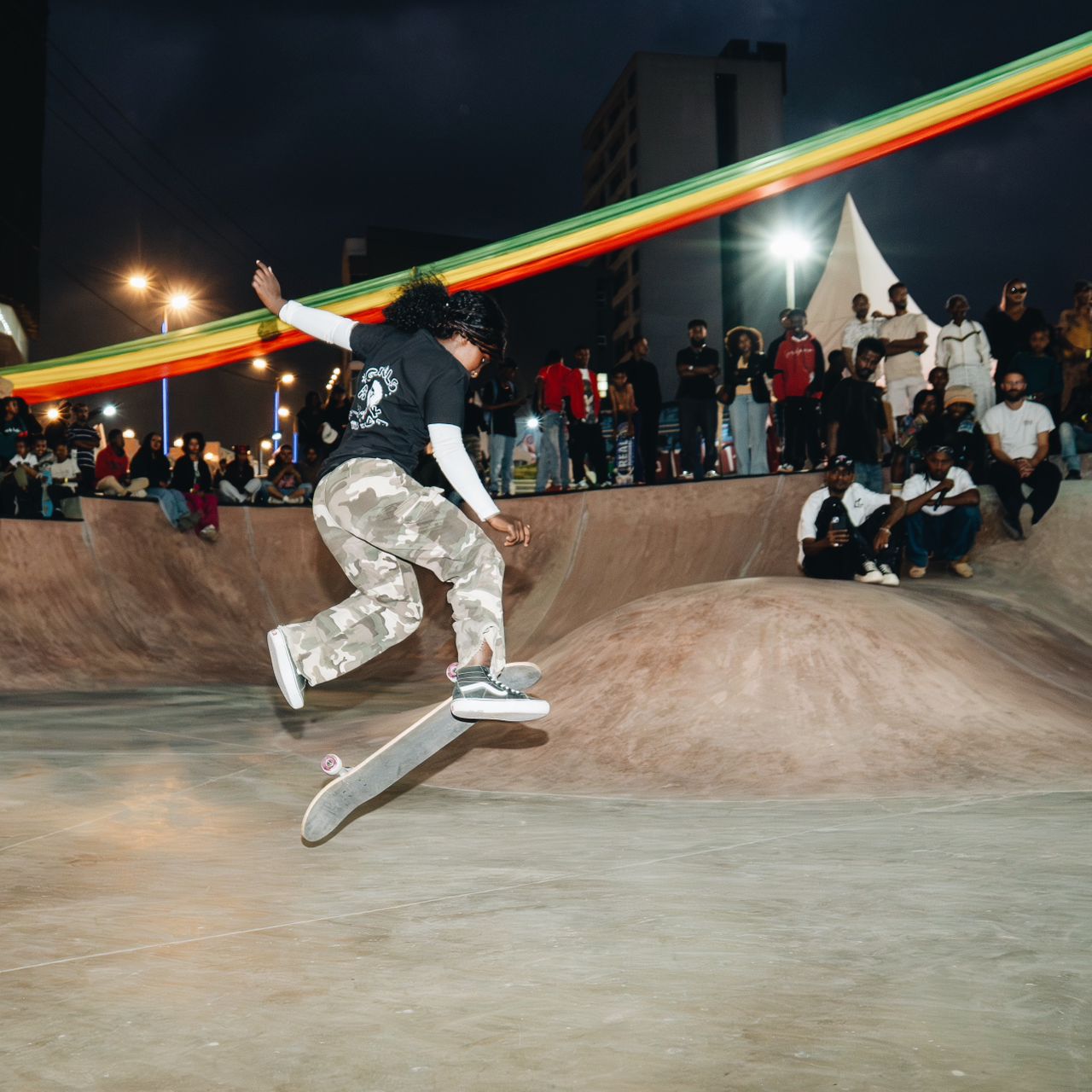
Nearly 50 years later, a new generation of Africans is building the next stage. From 14 to 16 January 2027, Addis Ababa will host UNSANCTIONED: Africa Skate Cup, a three-day continental celebration of skateboarding, culture and African youth. Fifty elite skateboarders from 15 African nations will compete.
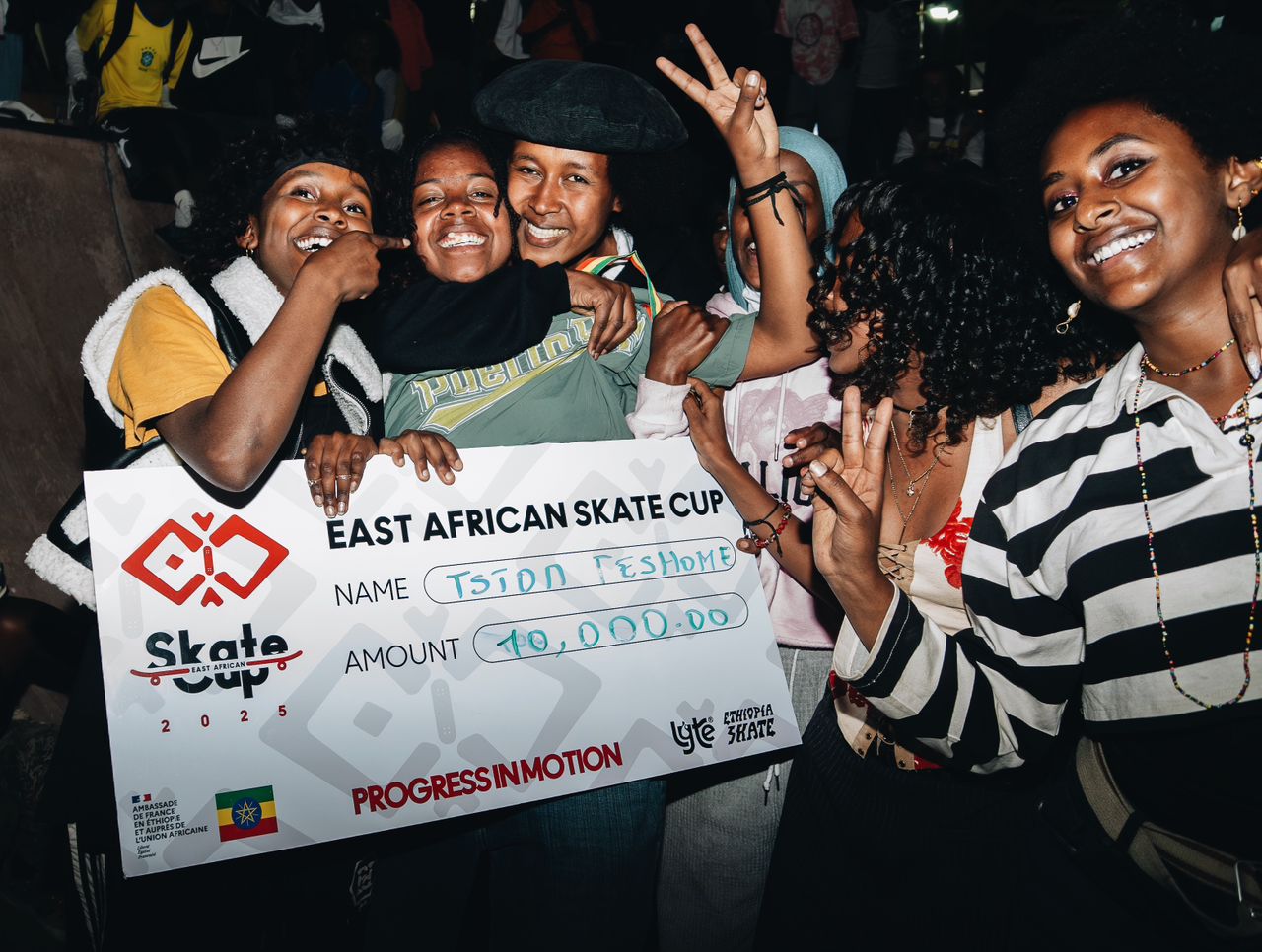
The competition is one part of a larger programme. Alongside it, the Africa Skate Film Festival will showcase independent skate film from across the continent, the Africa Skate Forum will take on the future of African skate culture, and the event will close with a pan-African concert.
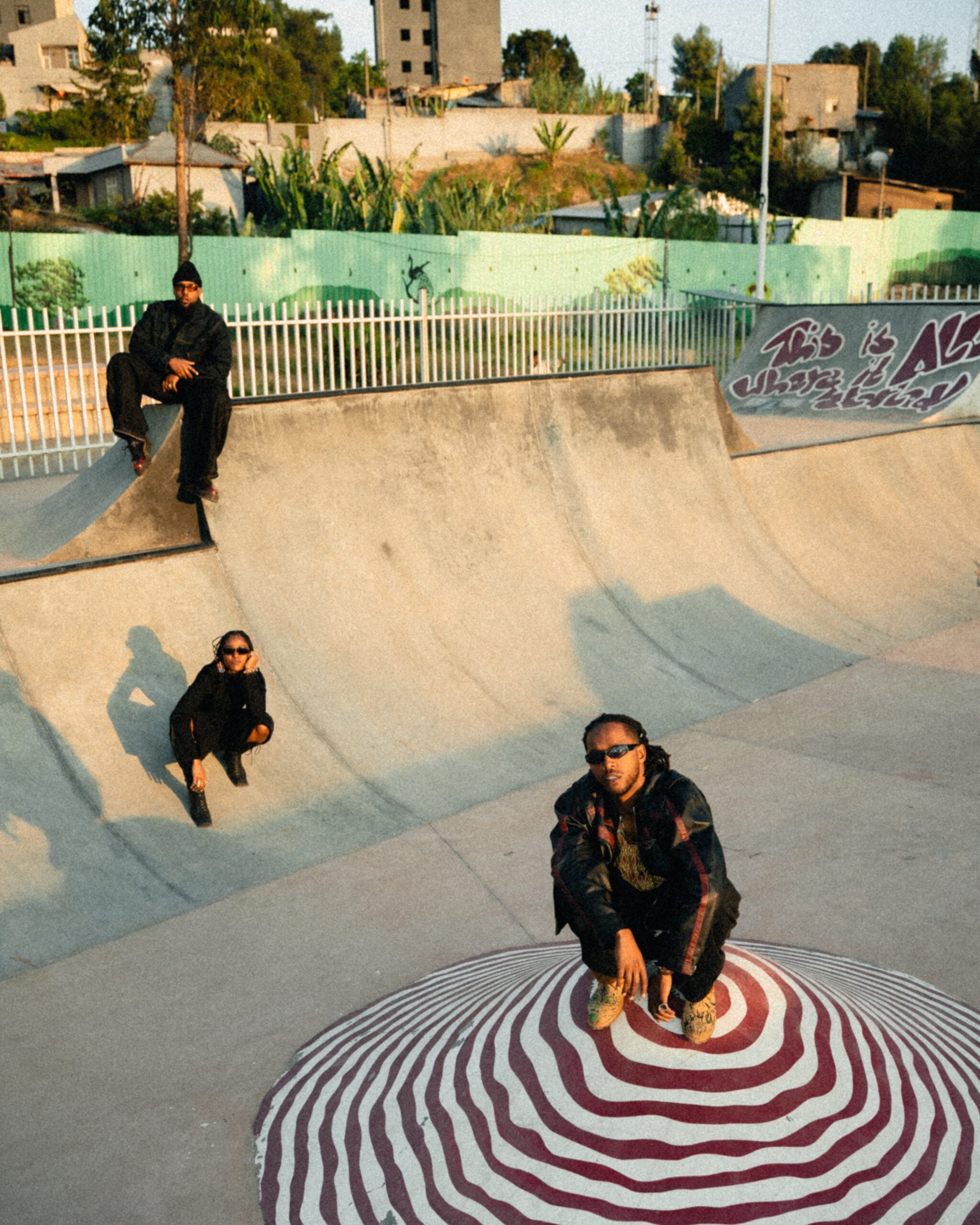
“Skateboarding is not just what you think,” Arsema says. “It’s filmmaking, it’s design, it’s architecture, it’s urban planning, it’s community organising, it’s fashion, it’s photography. It’s this entire universe. So it’s almost a competition and a festival in itself, on four wheels.”
The Africa Skate Cup is the beginning of a long-term strategy to build a self-sustaining skateboarding ecosystem across the continent. The team is already working with material scientists to develop a skateboard using locally available fibres, an effort to bring down the cost of boards, generate a continental commercial market, and address the dependency cycle at its root. “The goal is creating jobs,” AB says. “People who are not dependent on you for the rest of their lives.” It is the argument Ethiopia has long made about sovereignty, applied to a supply chain.
If the model scales, if the blueprint built in Addis Ababa gets handed to the city minister in Kampala, in Accra, in Lagos, the effect could reach far beyond skateboarding. “I would hope,” Arsema says, “that the model sets up a pan-African idea. What happens in one country is likely happening in another, because we are all treated and looked at the same from the outside.”
The Africa Skate Cup is a test of that model: community, culture, and government moving together, without waiting for permission from outside. The model does not travel wholesale. What works in Addis has to be rebuilt in Accra, renegotiated in Lagos, rooted in whatever each city already is. That is what pan-Africanism actually looks like: uniquely tailored solutions, from the inside out.