


The Choreography of Inherited Identity
How often do we call ballet ethnic? Or figure skating culture? And when we do, how often do we ask whose culture we mean? Anthropologist Joann Kealiinohomoku takes up this question in her essay “An Anthropologist Looks at Ballet as a Form of Ethnic Dance.” She argues that “every dance form must be an ethnic form.” Calling ballet “high culture” doesn’t tell us anything about the people and the traditions that made it.
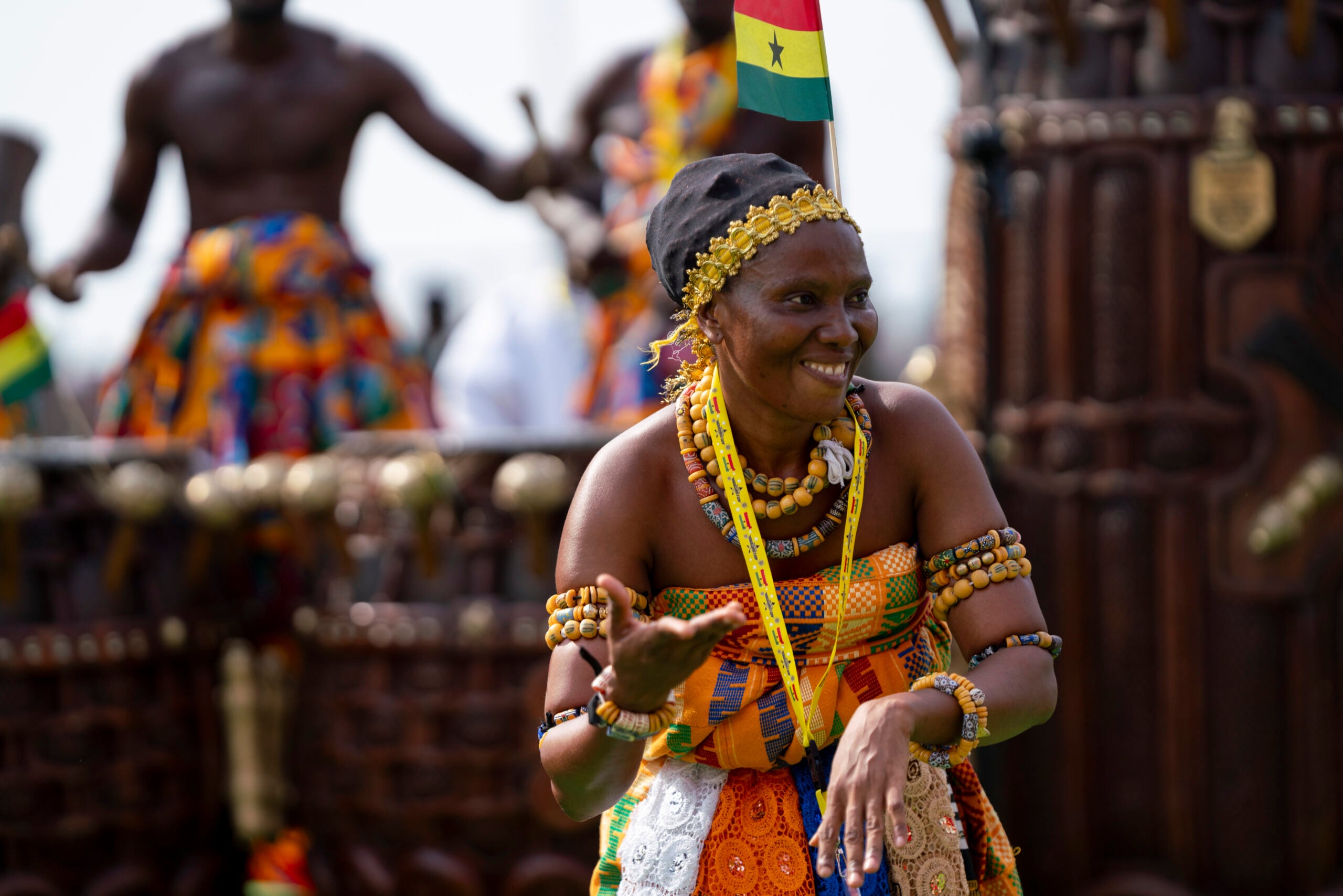
If every dance carries its own culture, then the dances in ADOWA, the short film I’ve been working on, carry a lot more than I might’ve first thought. The film centres on a Ghanaian-American ballerina and adowa dancer whose ambitions don’t quite line up with what her family expects of her. I started with ballet as an allegory for the American Dream: the life she could build for herself. Adowa stood for what she inherited from her Ghanaian identity and the responsibility to carry it forward.
Originally, I associated ballet with working your way to the top. With status, hierarchy and precision. And adowa with honouring the people who came before you. One seemed to face toward the life you wanted; the other, toward the life you inherited. But the more I tried to apply my assumption to the film, the less it held up. Even the way I learned to want something for myself must’ve come from somewhere. Right?
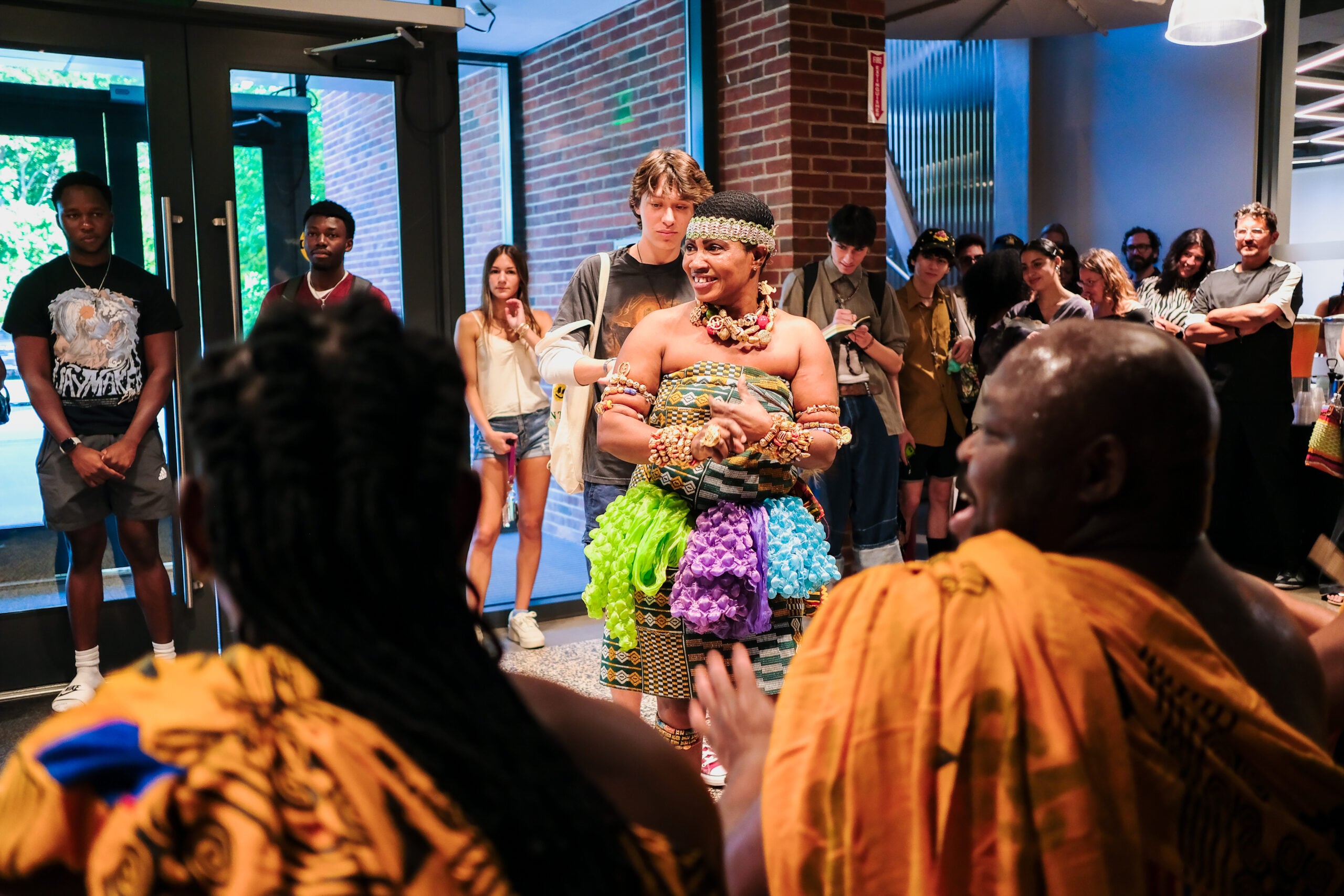
I grew up in Columbus, Ohio. Home to one of the largest Ghanaian communities in the U.S. I would see adowa performed at funerals, weddings and birthday parties. It was a way to bring Ghanaian culture to an otherwise American space. Scholars at the University of Ghana describe adowa as “a distinctive Akan funeral dance” that “features deliberate movements conveying reverence and melancholy.” That explains the respect I first associated with it. One can learn it by watching the elders dancing until the movement becomes yours. My generation in the U.S. learns it the same way, then posts it on TikTok for others to learn.
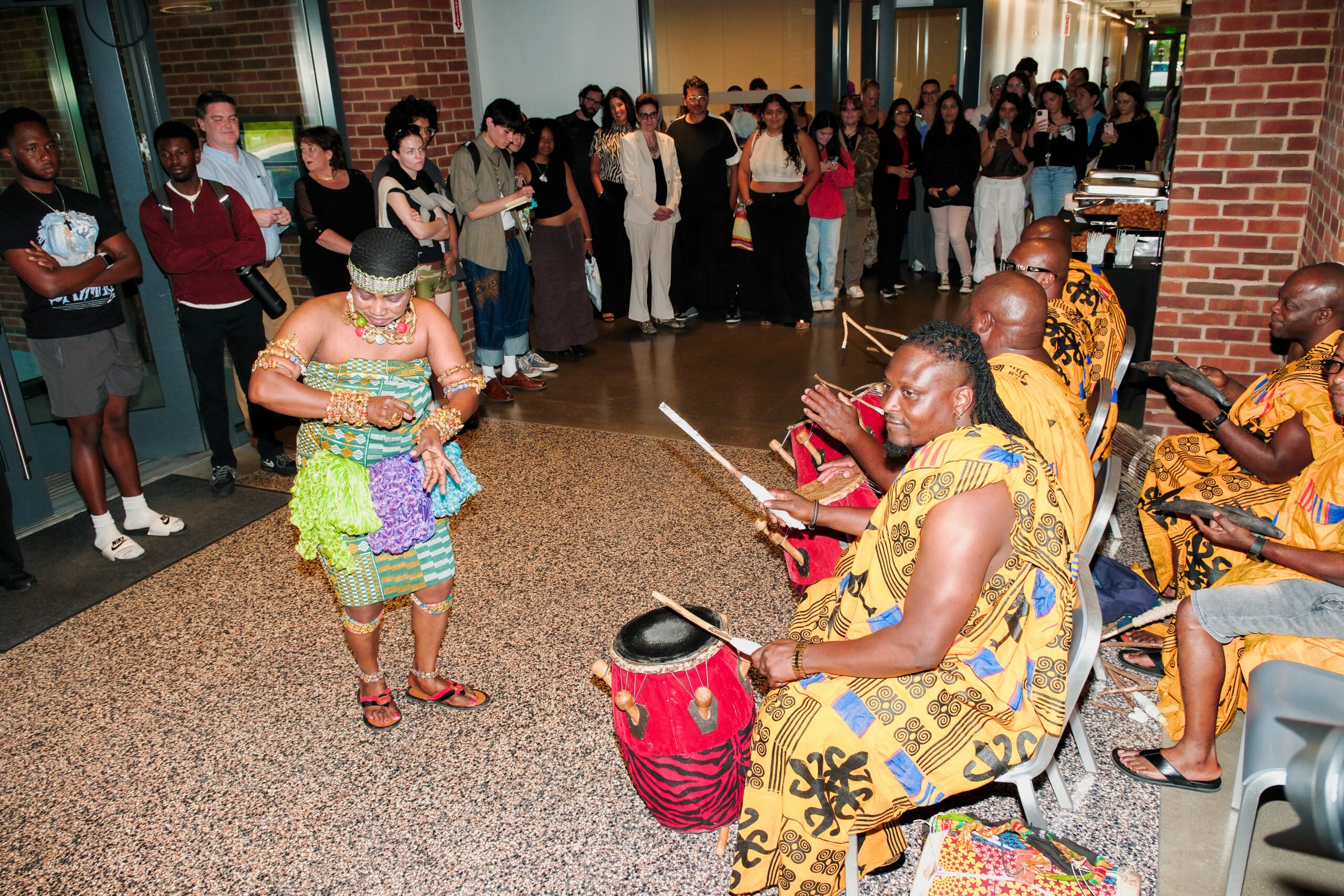
At a Ghanaian wedding in Ohio, adowa goes through the filter of distance. The kete drums play from a recording through the DJ’s speakers, for Africans in H&M suits and Fashion Nova dresses. The dance becomes a short introduction at a wedding, fitted into the occasion we’ve brought it into. But in bringing Ghanaian Akan culture to Ohio, we change what gets passed on. We can learn this dance without learning anything about what it means. The movement can reach me, but some of its context doesn’t. And when it’s spread via a TikTok trend, the learner is even further from the occasion that gave it meaning. I had treated adowa as the part of my inheritance that stayed the same. But even here, we were changing what we carried forward. If adowa doesn’t work as an allegory for an unchanged inheritance, I had to ask whether ballet could stand for the ambition to build something entirely on your own.
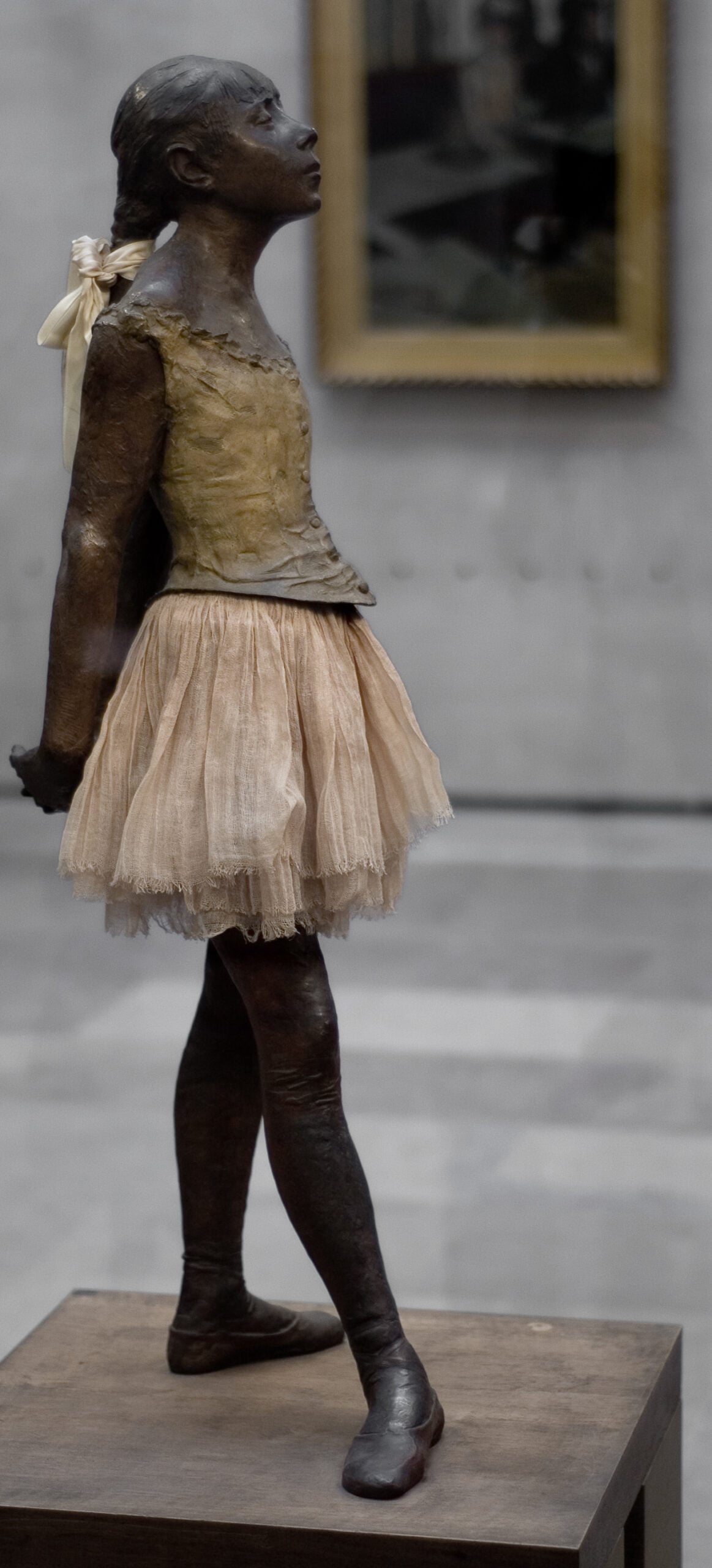
Ballet’s history makes that idea harder to hold. Ballet developed in Italian Renaissance courts, where the dancing master taught it to the nobility. Eventually, French kings participated in court ballets too. A dance founded on aristocratic rank doesn’t line up as a symbol for the self-made individual. At Akan funerals, rank has its own dance: kete, which is associated with chieftaincy and political authority. Hierarchy is present on both sides of the division I had drawn.
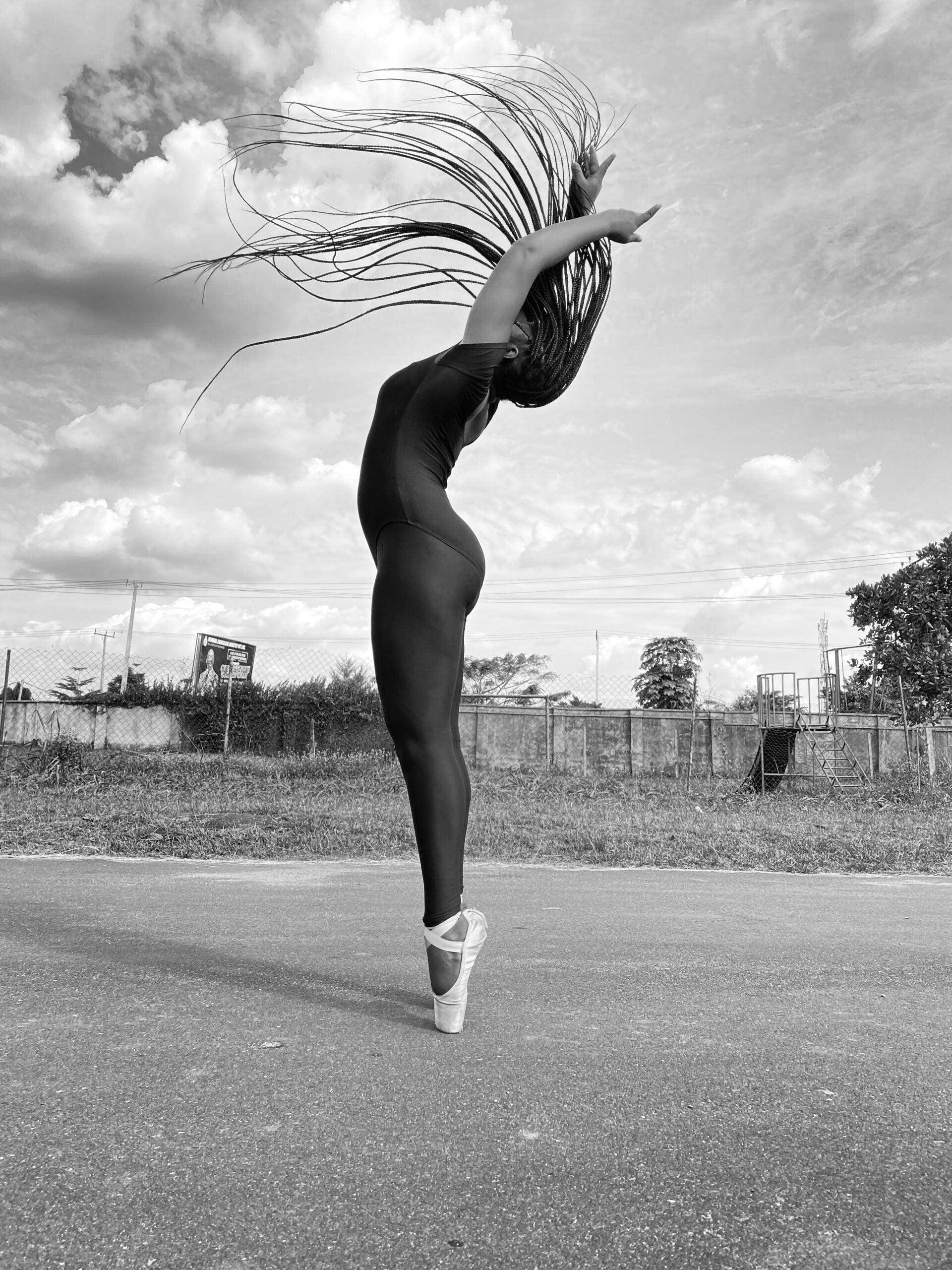
Ballet’s reach also makes this comparison even harder. At Leap of Dance Academy in Lagos, children learn ballet through free training. Daniel Ajala Owoseni, its founder, speaks of “making the art form our own.” Its European history doesn’t disappear, but it doesn’t explain how ballet changes when these children take it up. If ballet becomes theirs too, I can’t use its origins alone to decide what it means in my film. Adowa in Columbus and ballet in Lagos both force me to question where an inherited form ends and where the person carrying it begins.
Maybe the analogy was too neat because I was asking each dance to stand in for my perspective on my two cultures. After all, ambition isn’t exclusively American and inherited responsibility isn’t exclusively Ghanaian. In ADOWA, both forms of dance exist within the same person’s artistic life. Maybe the question of what she owes her family is more complicated than choosing a creative career over a conventional one. Why does one ambition feel like building my future, while another feels like paying a debt?
Outside of the occasional weddings and funerals, I’d mostly encounter adowa in academic writing about ethnic dance and diasporic movement. Belgium’s Royal Museum for Central Africa describes it as “a popular dance that is widespread among the Akan,” then explains the social occasions when it’s performed and the ensemble that accompanies it. Britannica’s definition of ballet foregrounds “a formal academic dance technique.” One dance gives me the people; the other gives me the technique. An opening line for a definition doesn’t tell the whole story of a dance. But the emphasis on technique and finesse fits how I already subconsciously see ballet: something you get good at for yourself. Adowa’s definition sends me to the people and settings. Therefore, I end up thinking of my family.
That’s why Kealiinohomoku begins her argument where she does. She writes that Western scholars treat ballet “as if it was the one great divinely ordained apogee of the performing arts,” rather than as another ethnic dance. Treating ballet as the highest form of dance inadvertently creates a standard which everything else is measured against. We see this in how institutions draw those boundaries in their labels. The Grammys have a Global Music category. The Oscars define an International Feature Film partly by its production outside the U.S. and predominantly non-English dialogue. Each label makes me ask whose location is being treated as the starting point.
What bothers me is how easily I notice the culture attached to someone else’s art and overlook the culture attached to my own standard. Ballet had a specific and ethnic history before it ever felt universal to me. Adowa arrived as ethnic material, while ballet is just “art.”
I think about the American Dream in the same way. Growing up here, I never really thought about it as something inherited. If anything, it was just common sense. If you can dream and work hard, you’ll get it. So when I tell my friends that I would rather send money to family in Ghana than add to my 401(k), I’m looked at as if I’m tethered, as if I’m throwing away an American Dream handed to me on a silver platter.
I saw this most clearly in the earlier versions of ADOWA. A character chasing their ambitions to become a ballerina feels inspiring. No cultural explanation needed. But when she willingly rushes home to meet eldest daughter responsibilities, I feel the need to provide an account of where her family is from and why she owes them. I’d learned to name her obligations to her family as Ghanaian, while letting her personal ambitions pass as common sense. That’s the connection I see with ballet. The familiar choice never has to explain where it came from.
Historian James Truslow Adams, who popularised the phrase “American Dream,” pictured a society where everyone could reach their fullest potential “regardless of the fortuitous circumstances of birth or position.” I took the American Dream to be about leaving behind what you inherit and seeking what you want. To me, it was a promise to reach something different from what was handed down to you. But the American Dream doesn’t negate my Ghanaian one. Working on ADOWA made me question why I’d read it that way. My father makes that difficult to ignore.
He left Ghana around my current age in pursuit of a different life, chasing the American Dream. But what he wanted out of that dream was different from what I thought everyone would’ve wanted. The money from his fancy U.S. job could have moved him out of the one-bedroom apartment shared by five guys; instead, it was sent back to Ghana. He could have put that money into bitcoin back in 2010. Instead, he built his siblings a new house. As decisions like these started visibly impacting our family, I used to criticise my dad for it as I didn’t see it as a necessity. If anything, it felt like a money sink. I hated when my summer league basketball dreams got shut out because of this Ghana family tax.
Before making ADOWA, I would’ve bought the bitcoin. But calling this a choice between one ambition and another fails to address the underlying truth. His American Dream included his Ghanaian family. I might’ve got this ambition from him, but we imagined what that dream would make possible differently. I wanted the room to chase my ambitions; my dad made room for his siblings in his.
I’m beyond blessed with the opportunity to follow my own path because of the decisions and risks my parents took, but those same decisions leave me with the obligation to pay it back. There are parts of me that want to put everything into this ambition; other parts wonder how I could even think to do that without turning on the people who made that ambition possible.
Creating ADOWA has made me ask why I even thought each choice had to belong to one side. Homi K. Bhabha’s idea of the third space helps me question that division, and he is clear that it isn’t a space that simply integrates the two. It’s people negotiating what their inherited cultures mean as they live for themselves. My father was already doing this when the American pay cheque built the Ghanaian home. I’m doing it in ADOWA, trying to write a character whose ambition and responsibility grow out of the same life. Whatever I choose to carry forward will arrive with some of my own life in it. God willing, someone else will learn from that version.
I never took a class on adowa, but I also never took a class on familial obligations, and I know both just fine. Maybe I was spoon-fed the American Dream through school and media. Maybe it was my coach who put hoop dreams in my head. Regardless, ADOWA revealed how my father taught me ambition and responsibility at the same time. The choice is still mine, but I learned how to decide from him. And as I get older, I wonder: what might someone watching me learn?
Sources12 references
- Academy of Motion Picture Arts and Sciences. “Special Rules for the International Feature Film Award.” 99th Academy Awards, Rule Sixteen, I. Definition.
- Amakye-Boateng, Benjamin, Adwoa Arhine, Joshua Alfred Amuah, and Kofi Agyekum. “Music, Dance and Language as the Primary Elements of Funerary Rites for Chiefs: A Case Study of the Chief of New Juaben.” Journal of African Arts and Culture 8, no. 3 (2025): 53–70.
- Bhabha, Homi K., and Anish Kapoor. “Homi Bhabha and Anish Kapoor: A Conversation 1993.” 1 June 1993.
- Encyclopaedia Britannica. “Ballet.” Reproduced in the Ballets Russes Special Collections and Archive subject record. Accessed 22 November 2026.
- Kealiinohomoku, Joann. “An Anthropologist Looks at Ballet as a Form of Ethnic Dance.” Habibi 18, no. 3 (March 2001). Originally published in Impulse (1969–1970).
- Leap of Dance Academy. Official website. Accessed 22 November 2026.
- Neilsberg Research. “Ghanaian Population in United States by City: 2026 Ranking & Insights.” Updated 15 October 2026.
- Opéra national de Paris. “I. How it all started.” A Certain Air of Italy: The Paris Opera from Louis XIV to the Revolution. Accessed 22 November 2026.
- Pittsburgh Ballet Theatre. “A Brief History of Ballet.” Accessed 22 November 2026.
- Recording Academy. “Best Global Music Album.” Accessed 22 November 2026.
- Royal Museum for Central Africa. “Adowa Dance.” Accessed 22 November 2026.
- Wills, Matthew. “James Truslow Adams: Dreaming up the American Dream.” JSTOR Daily, 18 May 2015. Updated 24 August 2018.