African cinema seems to finally be getting its due—perhaps not enough, but the shift is visible. It’s beautiful to witness the world beginning to acknowledge the works of talented filmmakers from the continent. Only a year ago, C.J. Obasi’s Mami Wata premiered at the Sundance Film Festival, where cinematographer Lílis Soares received the Special Jury Prize for Cinematography in the World Dramatic Competition.
Now, in 2025, My Father’s Shadow—a feature film by Akinola Davies Jr.—has been selected to compete at the 78th edition of the prestigious Festival de Cannes, under the Un Certain Regard section. The selection marks a historic milestone: it is the first official Nigerian selection at Cannes.
To Davies, the recognition is deeply meaningful. “This is a testament to everyone dedicated to telling authentic Nigerian stories—from crews to the countless technicians who power our film industry.”
The Autobiography of a Director
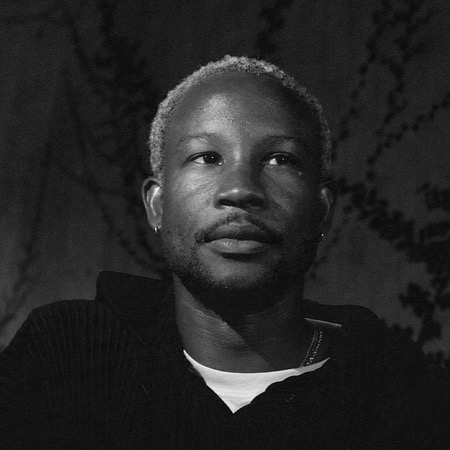
Akinola Davies Jr. began his creative career in the late 2000s, assisting as a fashion and documentary photographer before moving into music. DJing and curating music videos became his early artistic language, and eventually, he pivoted into filmmaking—starting with fashion shorts, narrative shorts, commercials, and long-form work.
Although he’s now celebrated as a director, Davies tells Guzangs that he never set out to be one. “I wanted to edit films. I’ve always had a very emotional response to editing,” he explains. But over time, his ability to lead and manage people naturally drew him into directing.
He also recognized something missing: “There weren’t many Nigerian-British or Black directors in the spaces where I was doing my apprenticeship. I wanted to add to the impact.”
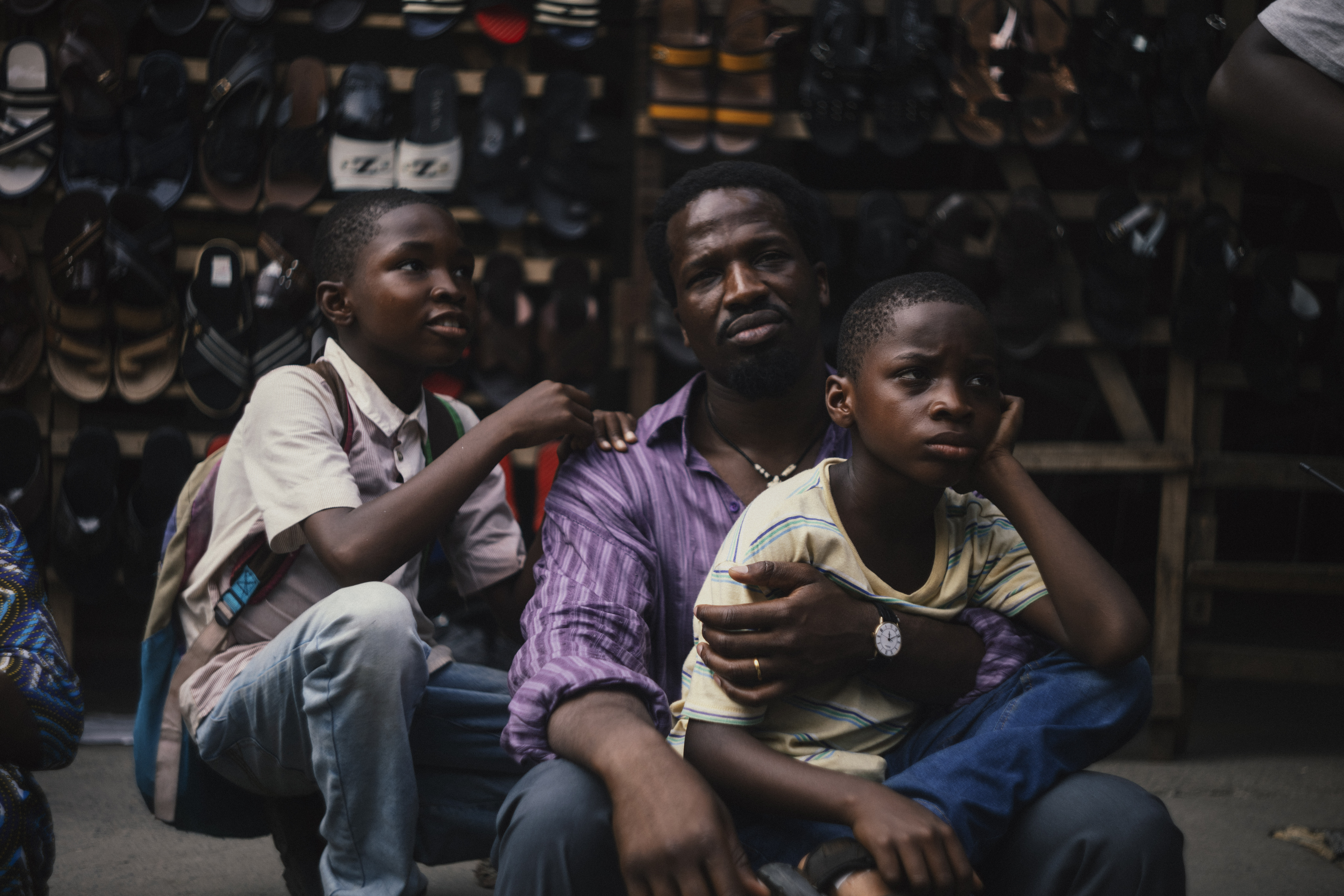
My Father’s Shadow marks Davies’ directorial debut. The semi-autobiographical film unfolds over the course of a single day in Lagos during the 1993 Nigerian election crisis. It follows a father, estranged from his two young sons, as they journey through a tense city while political unrest threatens their path home.
Starring Ṣọpẹ Dìrísù alongside Godwin and Marvellous Egbo, the film is steeped in political and emotional nostalgia. “We needed something that foreshadowed that time in Nigeria,” Davies explains. “Wale and I were there—we remember it deeply.”
Funmbi Ogunbanwo on Producing My Father’s Shadow
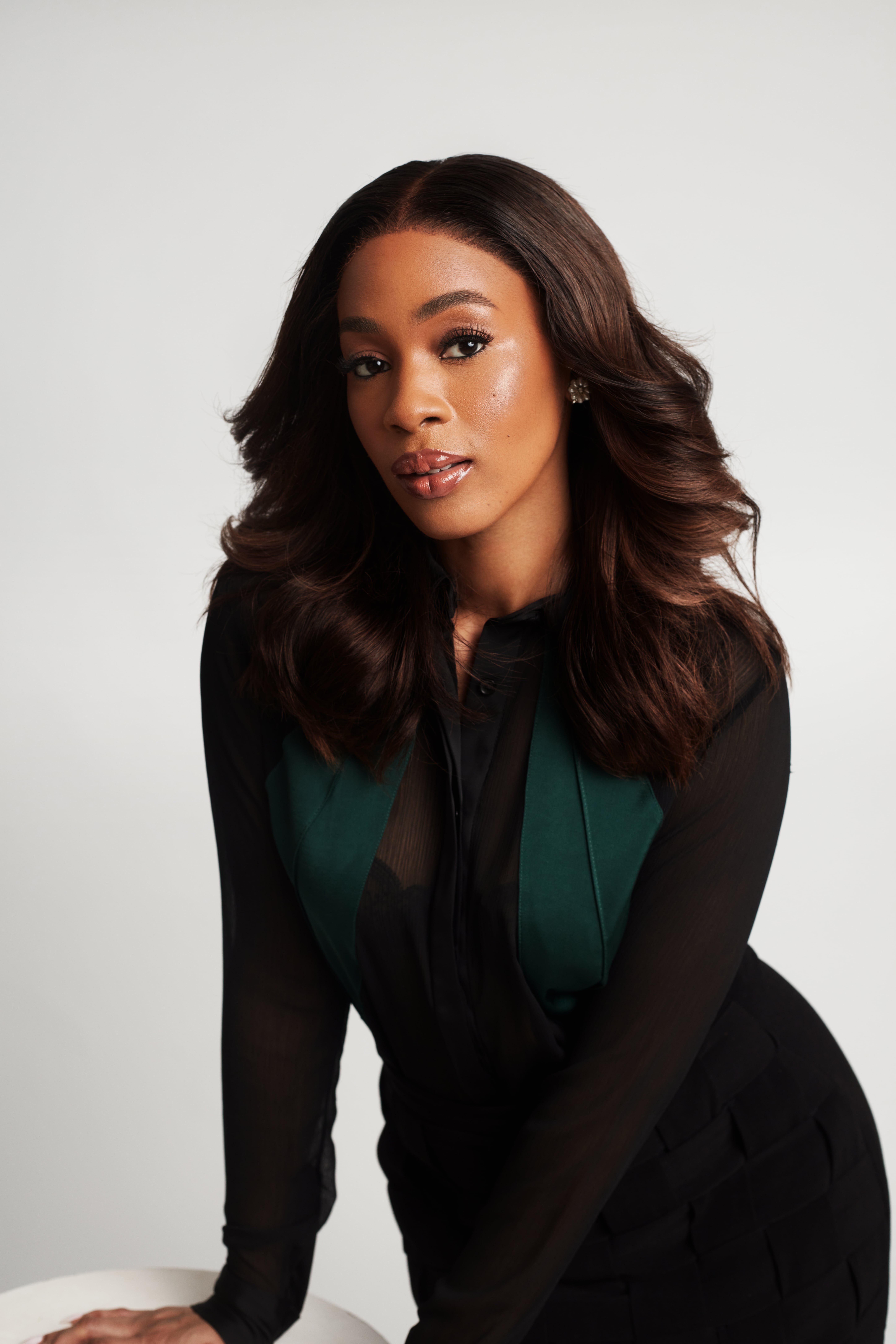
Funmbi Ogunbanwo, one of the film’s producers, admits that the magnitude of this moment wasn’t something the team anticipated. “Truthfully, we didn’t set out to be the first. We didn’t even know we were the first until we found out,” she says. “But it feels amazing. I’m so proud of the team. This shows that our stories—though culturally specific—are universal. That’s all I’ve ever wanted to do.”
Ogunbanwo’s journey into filmmaking wasn’t linear. She began her career as a lawyer, which she saw as a stepping stone. While working as a commercial model, she was offered an administrative support role on a creative project—a Google campaign, in fact—which unexpectedly sparked her love for storytelling.
That experience evolved into producing, working closely with colleagues like Rachel, who managed the financial architecture, while Ogunbanwo developed systems to support international partnerships.
She describes the making of My Father’s Shadow as deeply collaborative. Co-financed by BBC Film and the BFI, she credits their belief in the project: “We’re especially grateful to Eva from the BBC, Anna from the BFI, and all our financiers and The Match Factory. They saw something in this Nigerian story that resonated—and if it moved them, we know it can resonate across language, culture, and country.”
The Way Forward for Nigerian Cinema
When asked what the Nigerian film industry should take from this moment, Davies doesn’t hesitate: build the ecosystem. “We need infrastructure so people can learn their craft—and do it in a dignified way. Our stories matter. They resonate. What happens in Nigeria might be specific to us, but people everywhere fall in love, lose family, feel fear. The emotions are universal.”
“It’s about finding the human element in those stories—and taking people on a journey, through character and through situation. There are amazing directors and films being made in Nigeria. We just need to keep building.”