
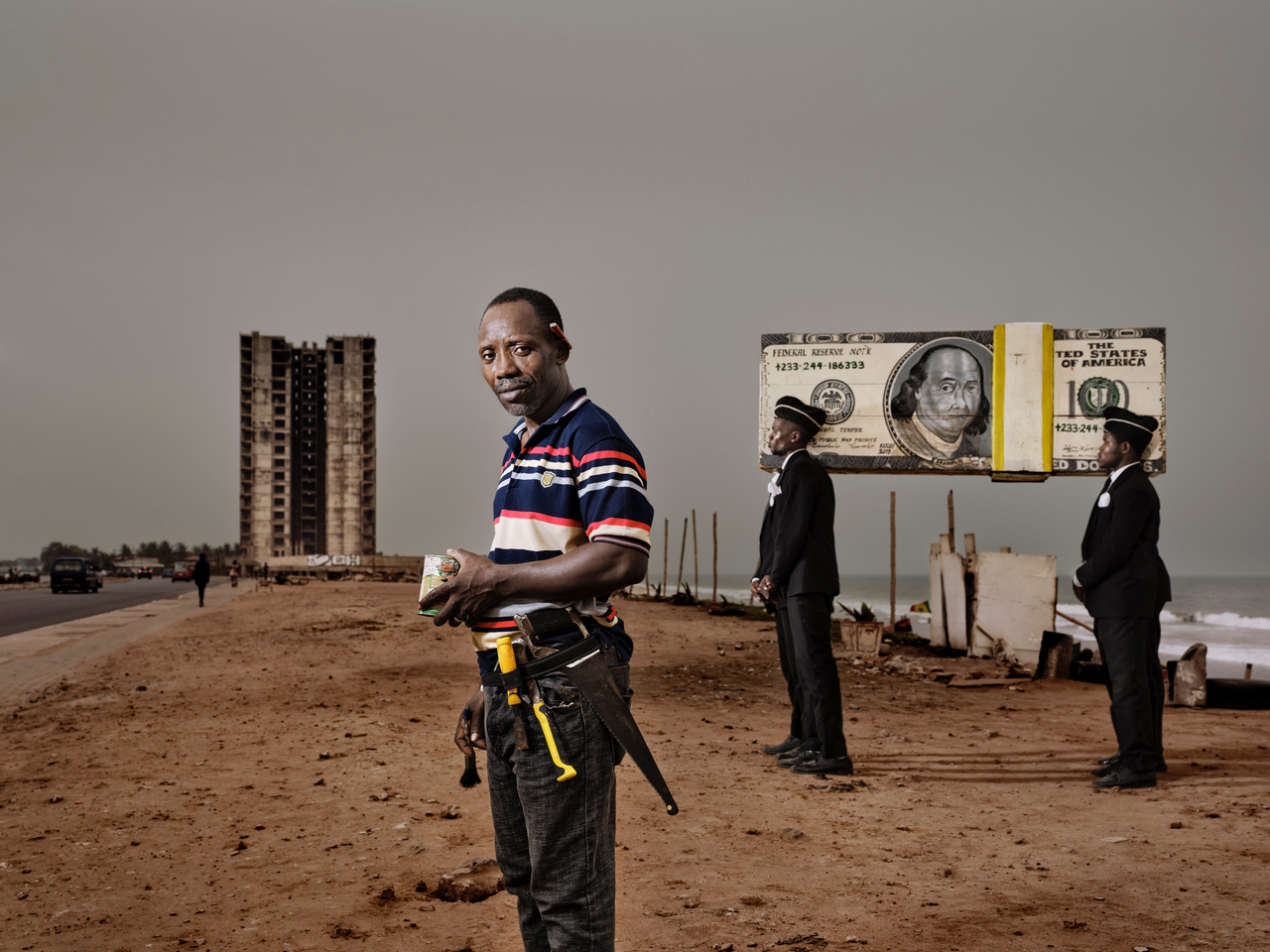
The band begins before the sun rises. Brass horns wail through the streets of Accra as women in red-and-black lace sway past, their headwraps towering like crowns. A coffin shaped like a gleaming Mercedes rests on a platform of flowers. The crowd claps, sings, and dances — not in defiance of death, but in celebration of life.
Here, in much of West Africa, funerals are not quiet occasions. They are the grandest stage a person will ever have — part ceremony, part carnival, part act of love. Grief is dressed in color, music, and choreography. To mourn is to perform remembrance.
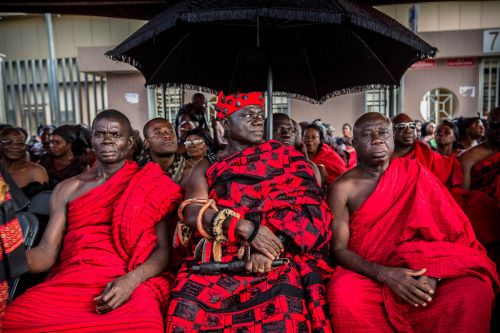
Across Ghana, Nigeria, and Benin, a funeral is less an ending than a journey. Death is seen as passage, not rupture — the moment a soul crosses into the ancestral world. The living must help that journey along, and they do it with everything they have: drums, food, prayers, and spectacle.
The gatherings last for days. Villages swell with returnees. Streets close for processions. Musicians play until dawn. The more elaborate the farewell, the deeper the honor.
“A funeral here is never only about the dead,” said Kofi Ackon, a cultural historian in Accra. “It’s about the living proving that love still binds them. You mourn loudly so the ancestors will hear.”

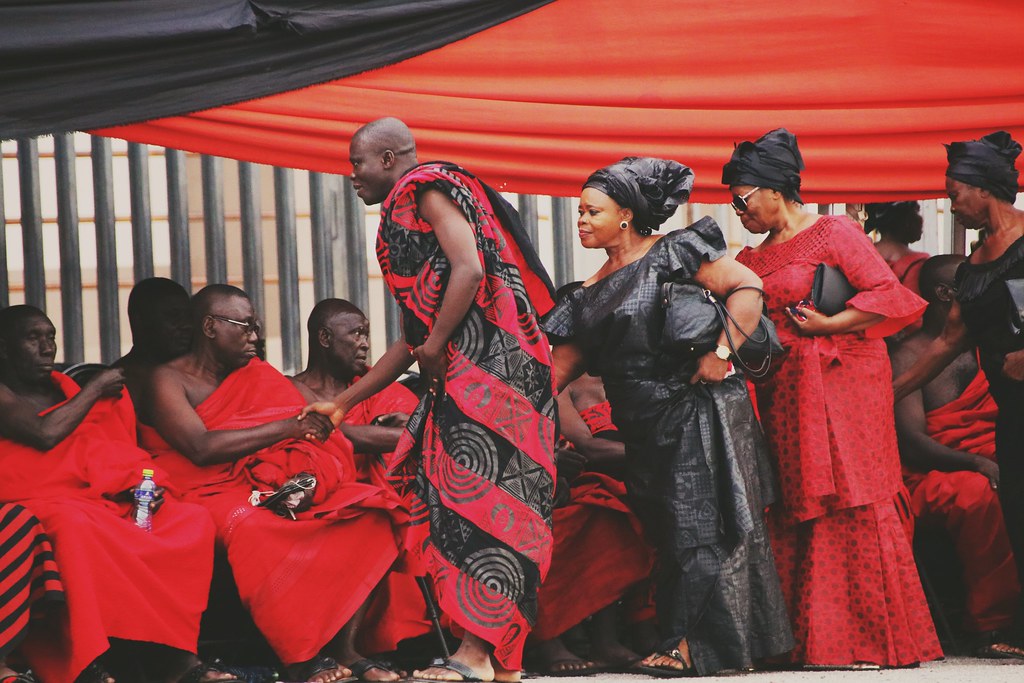
Elegance is its own language of respect. Families commission matching aso ebi — uniform cloths printed with the deceased’s image or initials. Seamstresses cut the fabrics into lace dresses, flowing agbadas, and perfectly pressed suits. Black and red dominate for mourning; white and gold shimmer for elders whose passing is considered a triumph.
“You must look good for your loved one,” said a mourner at a burial inside Osu, straightening the folds of her headtie. “We don’t come in sorrow alone — we come in honor.”
In cities like Accra or Abidjan, funerals have become runways of remembrance. Makeup artists, stylists, and photographers capture each moment — a curated grief, at once public and deeply personal.
Clothing, like ritual, says what words cannot: we cared, we showed up, we remembered.

On the edge of Accra, in a small workshop that smells of sawdust and varnish, master coffin maker Adotey Eric bends over a casket shaped like a camera. Behind him stand others — a Bible, a bottle of beer, a taxi, a fish. Each is painted in vivid detail, crafted for someone whose life demanded a story as colorful as their time on earth.
“People come to me to make art coffins,” Adotey Eric said, running a hand over the smooth lens of the camera. “A fisherman wants a fish. A driver wants a car. A photographer wants this,” he smiled, tapping the wooden shutter. “They want to be remembered as they lived.”
To Adotey, these coffins are not eccentricities; they are biographies in wood. The work has brought him both local fame and gallery exhibitions abroad. Yet, he insists, the real purpose is spiritual.
“When you bury someone in a coffin that tells their story,” he said, “you’re saying their life mattered. That’s art.”
Behind the beauty lies an industry that sustains thousands. Funerals can cost families more than weddings — from the band to the caterers to the tailors sewing hundreds of coordinated outfits. Communities organize fund-raising drives to cover expenses. Entire economies hum around death.
Market women sell drinks and snacks at processions. Printers design memorial posters. Photographers produce glossy booklets of remembrance. And artisans like Adotey keep the stories tangible.
“It’s expensive, yes,” said Adotey, “but you cannot bury your mother quietly. The world must know she lived.”
For many, the cost is not extravagance but obligation — a visible measure of gratitude. In honoring the dead, they reaffirm their place among the living.
As cities modernize and younger generations migrate abroad, the funeral culture evolves. Diaspora families livestream ceremonies, ship elaborate coffins home, and blend Christian hymns with ancestral rites. Critics argue that funerals have become too commercial — more performance than remembrance.
But within the spectacle lies something enduring: the insistence that death deserves beauty.
Because in Africa, to die is to be remembered not with silence, but with sound — with rhythm, cloth, and art. Every drumbeat, every stitch, every carved coffin says what words can’t: a life happened here, and it was worthy of celebration.