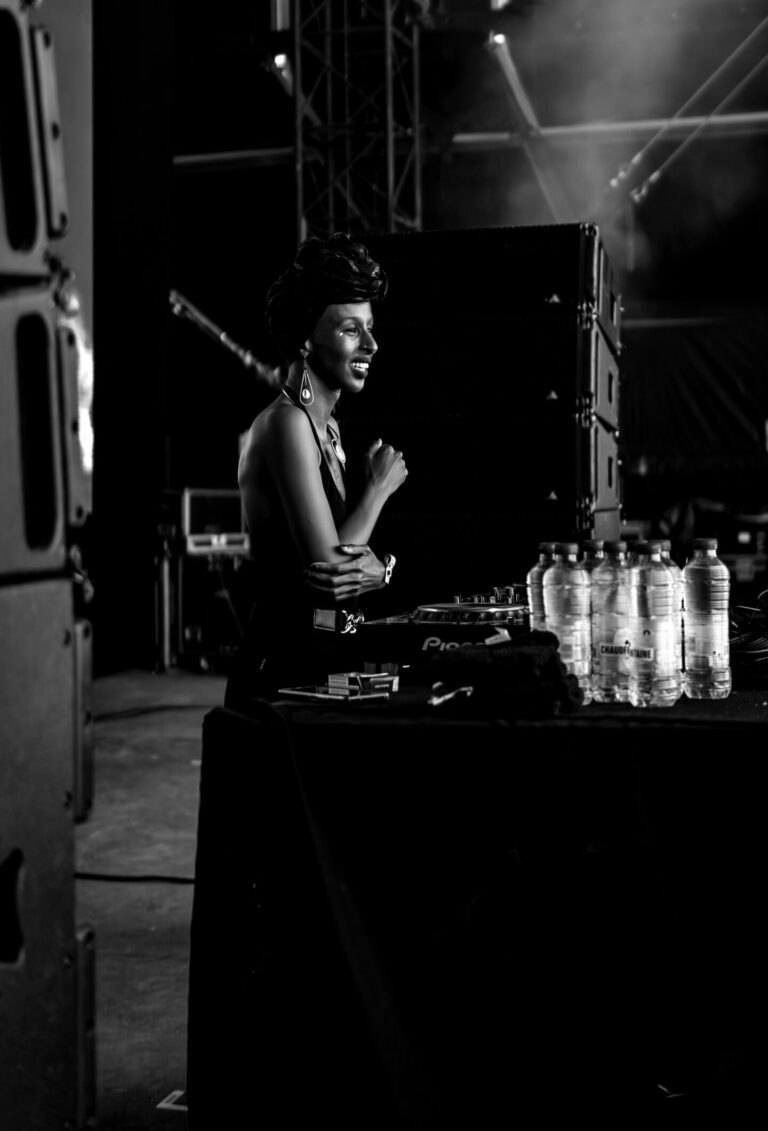
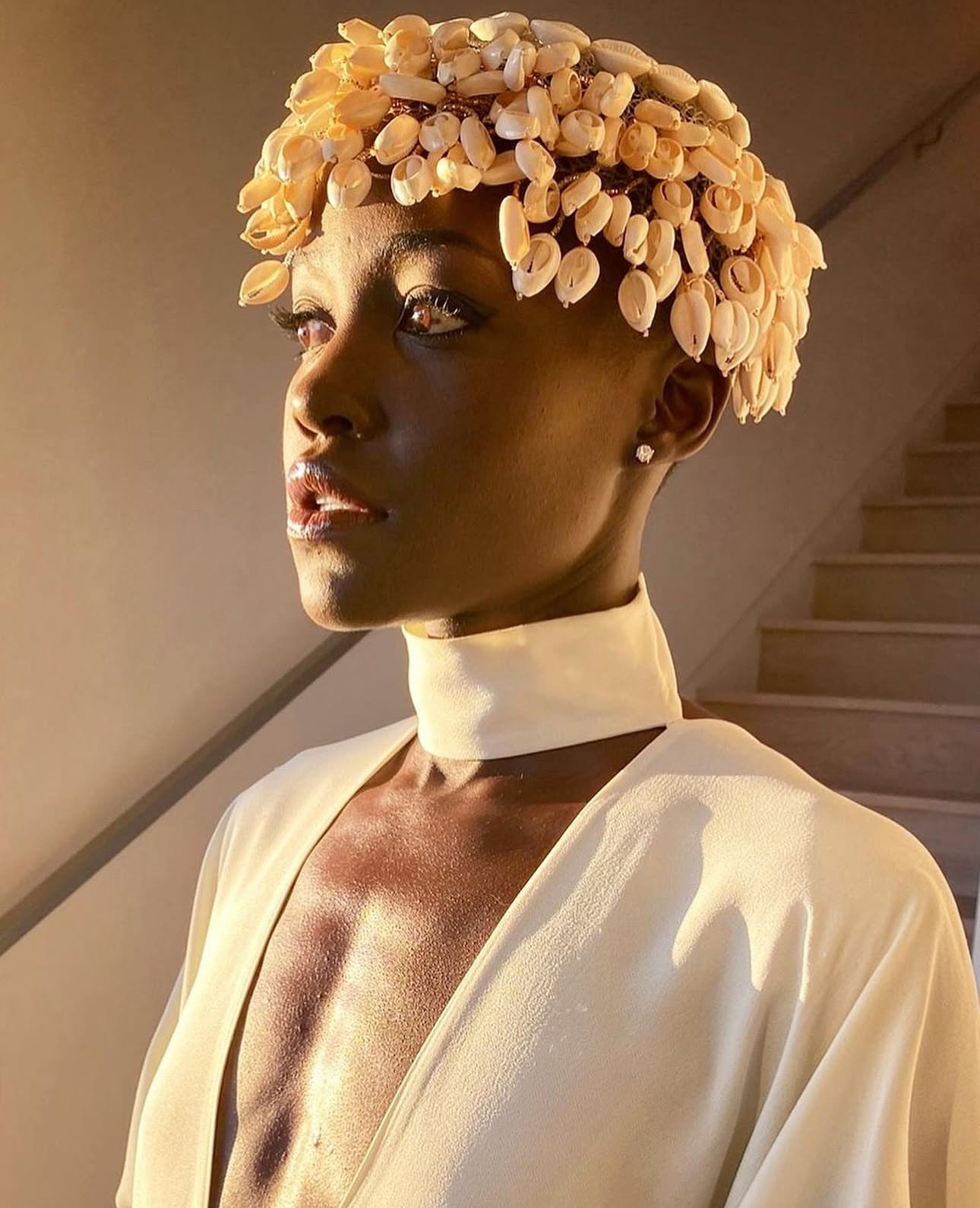
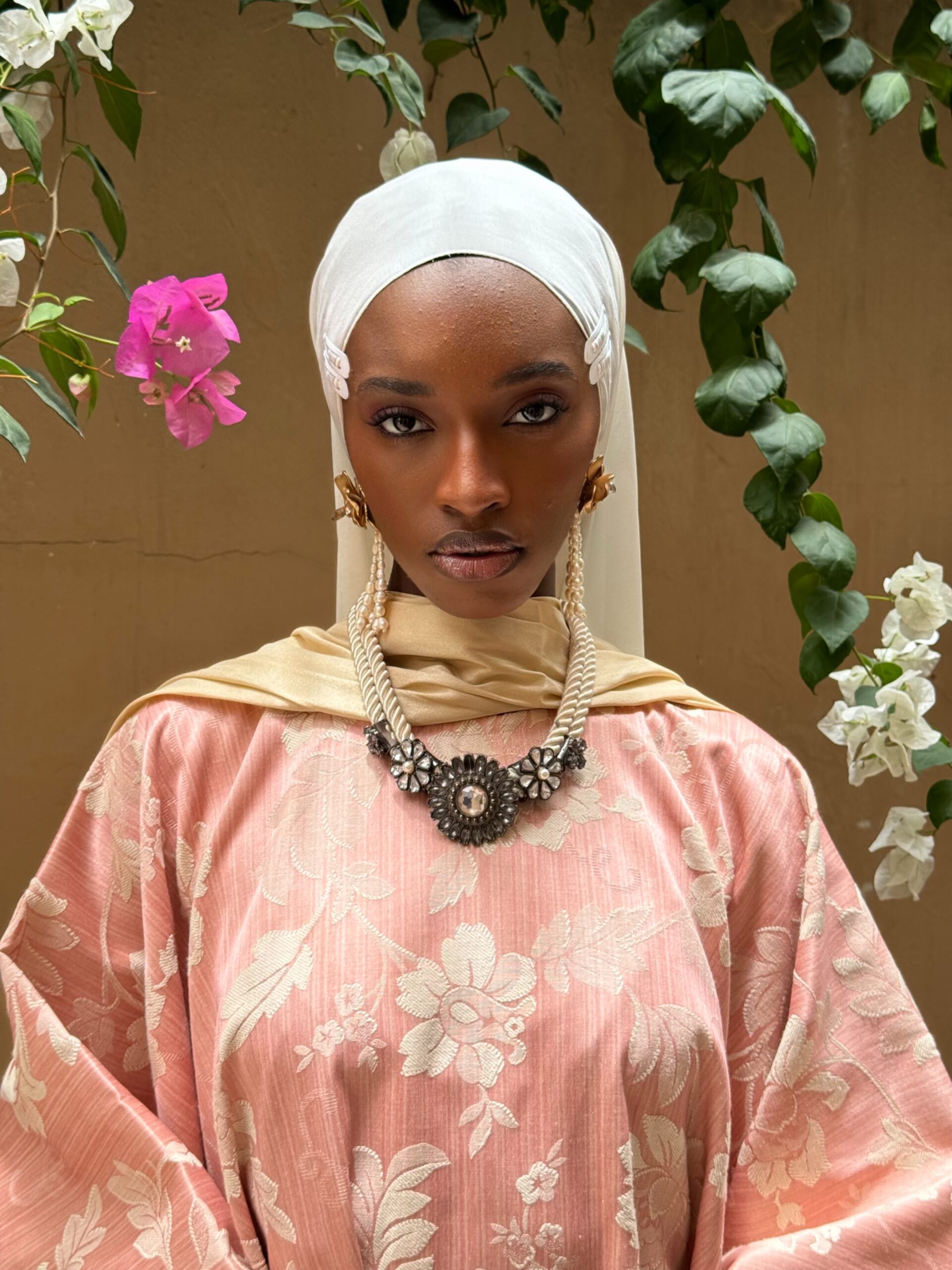
In the liminal spaces between displacement and defiance, between Addis Ababa and Mogadishu, between woman and warrior stands Hibo Elmi, the artist known as DJ Hibotep. She is not merely a DJ, nor a filmmaker, nor a cultural force. She is an alkemist. One who melts borders. One who distills pain, memory, and ancestral rhythm into something that transcends language. Her sound doesn’t just move you—it reclaims you.
Born in Ethiopia to Somali parents, Hibotep’s earliest memories are shaped by exile. “We were born in a place where we were not welcome,” she says. “And in our own Somali communities, we were told we were not Somali enough.” This double rejection created not confusion, but clarity. If she didn’t belong to any place, then she would make one. From scratch. From spirit. From sound.
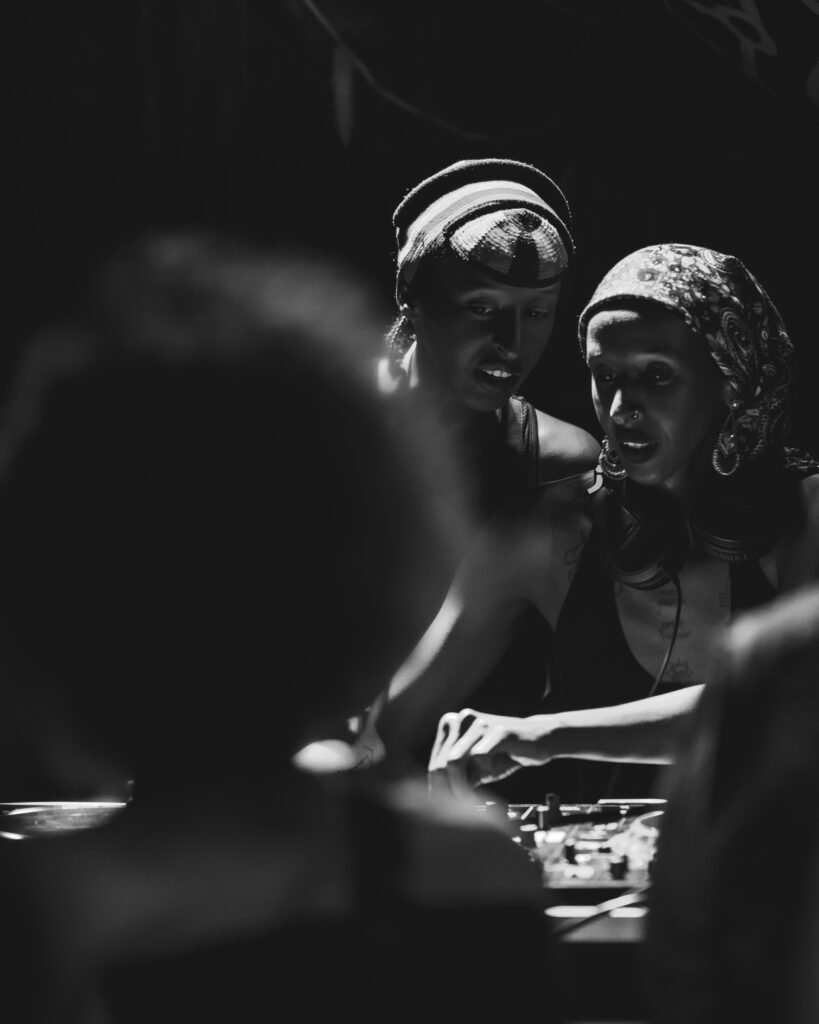
And she did not walk alone.
By her side since birth is her twin sister, Hoden known in Kampala’s underground as DJ Hodini. They are twin flames, mirror rebels, sonic soulmates. Together, they carved out their identity beyond politics, beyond patriarchy, beyond expectations. Together, they burned the script.
“I love being Ethiopian. I love being Somali. But I don’t belong to either. So I chose to belong to myself.”
The Woman Who Raised the Storm
Much of the freedom Hibotep embodies can be traced to one woman: her mother, Habiba Shadi. A woman so defiant of cultural norms that her daughters call her a unicorn. In a community where women are often told who to be, Habiba refused the role. She rejected dogma, challenged religion, and taught her daughters they were limitless.
“She never handed us a script to follow. Instead, she told me: ‘The only thing a man cannot give is life itself. Beyond that, my daughter, every door is yours to open.’ That is the woman who raised me.”
Ironically, Hibotep and Hoden turned to religion in their teens—as rebellion against their mother’s irreverence. They became holy warriors, armed with scripture and conviction. And still, their mother stood by with unshakable grace. “She was waiting,” Hibotep says. “She knew we would return to ourselves.”
This dance of freedom and form, of spirit and structure, is what defines Hibotep’s work today. It’s why she loves Somali culture—its poetry, its musicality—but resists its dogma. She inherited her mother’s eclectic taste, her open mind, and her hunger for truth over tradition.
Becoming Hibotep
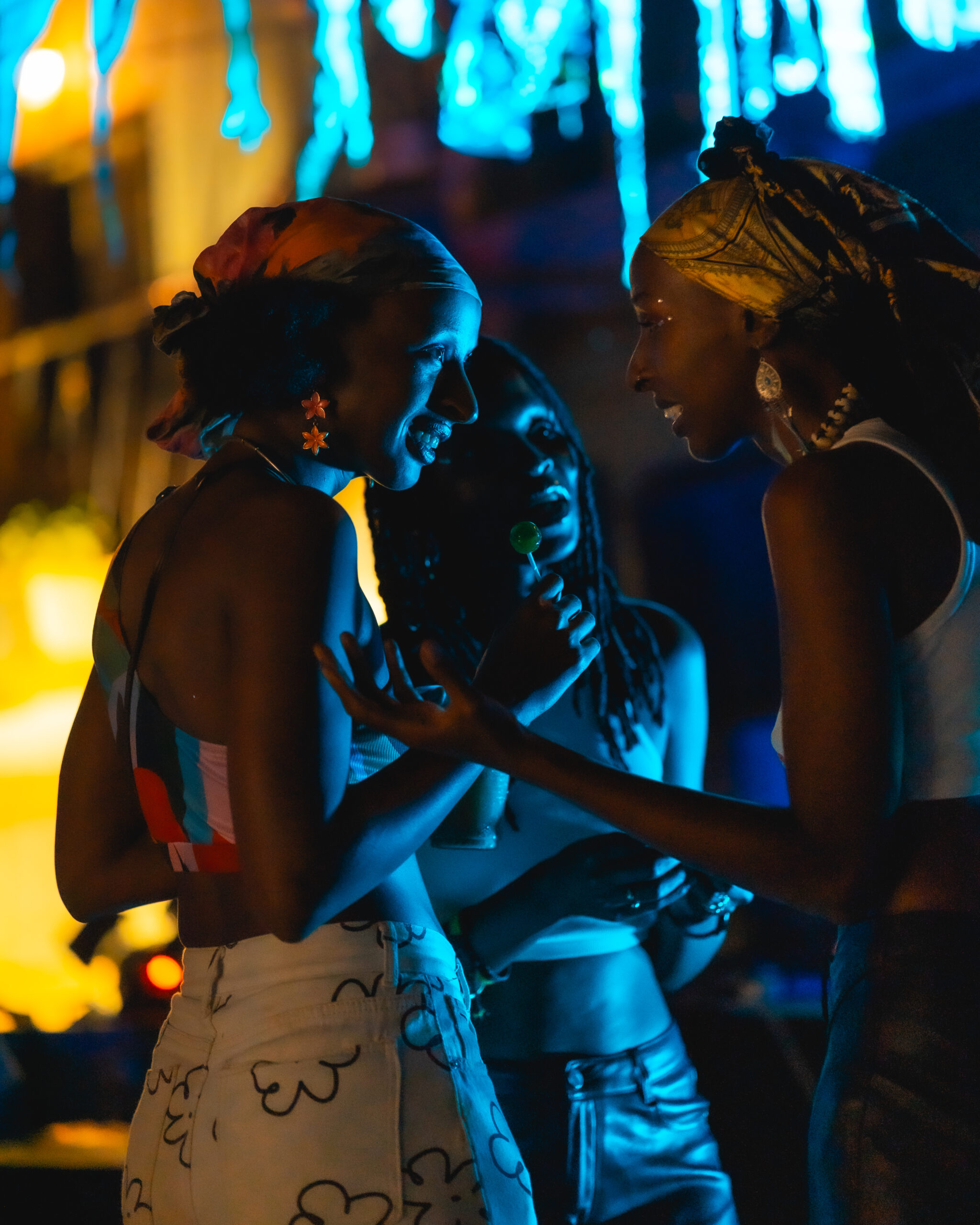
The name Hibotep itself is a reimagining—a fusion of her own name, Hibo, with Imhotep, the ancient Egyptian polymath and mystic. It’s both declaration and invocation: she is a vessel for knowledge, for healing, for sacred chaos. Music, for her, began as survival. As children in Ethiopia, she and Hoden were outcasts. Their safe space was a shared playlist. “We used music as our therapy,” she says. “It was our way of feeling less alone.”
But everything changed when they relocated to Kampala, Uganda, in 2012. There, they found the music scene stale, repetitive, male-dominated. “Everyone played the same thing. We wanted something else.” One night, Hoden plugged in her phone at a party and transformed the energy in the room. People came running, asking: What is this? The music had spoken.
“That’s when my sister said, ‘You’re selfish. You have this music and you keep it to yourself. People need to hear it.’”
And so, Hibotep began. Not out of ambition. Out of necessity. Out of rebellion. At the time, there were barely any female DJs in the region. The stage was hostile. The sabotage was real. “They would pull our cables out, cut our sound, shorten our sets,” she recalls. “They wanted us to break. But we didn’t.” Instead, they built.
Kukaata, Nyege Nyege, and the Art of Collective Survival
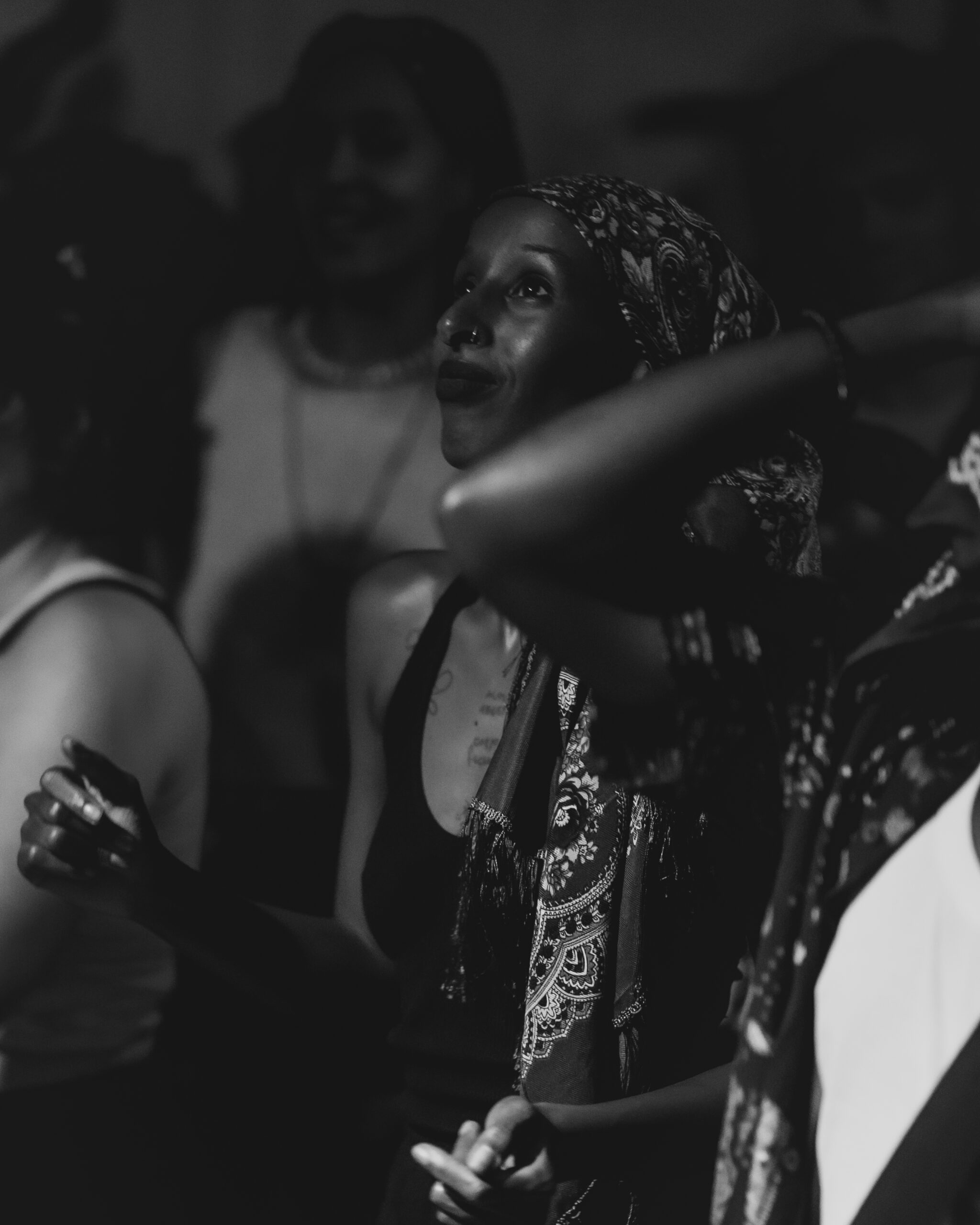
Together with DJ Hodini and producer Titoffee, Hibotep co-founded Kukaata Records, a label and creative home for East African misfits—queer, femme, neurodivergent, diasporic. The mission? Radical self-expression. Zero compromise. Total sovereignty.
That same ethos led them to the now-legendary Nyege Nyege Festival, first held in 2015. It was the brainchild of Derek Debru and Arlen Dilsizian, two visionaries who wanted to create a platform for the artists that didn’t fit the mainstream mold.
“They believed in me before I believed in myself,” says Hibotep. “No pressure. No expectations. Just space to grow.”
Nyege Nyege, which means “a sudden uncontrollable urge to dance” in Luganda, became a haven for experimental African sound. Not a scene—a sanctuary. And Hibotep became one of its high priestesses.
Through Nyege Nyege and Kukaata, she helped seed an entire ecosystem of underground artists now touring the world. “We used to be just one community. Now, there are so many. That’s beautiful. But I still hope we don’t lose the soul—the intention to uplift, not profit. To include locals, not just foreigners.”
Roho Day, Roho Night, and the Future of Frequency
For Hibotep, the future is not corporate. It’s ritual. It’s ceremony. It’s hers.
She’s currently curating Roho Day and Roho Night—twin events that honor the duality of African music. Roho Day is rooted in nostalgia—African and Caribbean sounds from the 1930s to 60s. Roho Night is experimental—Afrofuturist, glitchy, raw. Together, they form a whole. Past and future. Light and shadow.
She’s also working on her magnum opus: Mogadishu Moshpit. “It’s going to be the first Somali heavy metal album—past and future deconstructed. It’s a protest and a prophecy,” she says. “It will take time. I’m not in a rush.”
And yet, if tomorrow she walked away from it all and became a farmer, she says she would still be fulfilled. “I’m not defined by desire. I can change. I am change.”
Decolonising Sound: Breaking the Rules That Never Served Us
To understand Hibotep’s sonic rebellion, you must first understand this: she is not interested in categories. “What’s good sound? What’s bad sound? Who decided that?” she asks, her voice fierce but certain. “Just like we were told what good hair is, what good skin is, what beauty is—sound, too, was colonized.”
Her musical philosophy is rooted in decoloniality—not just as a trend, but as a sacred act of resistance. “Genres were created to control,” she says. “To say what belongs where. But I don’t believe in borders. Not for people. Not for music.”
This belief isn’t theoretical—it lives in her sets.
A sudden Nina Simone drop in the middle of a techno build. Somali vocals warped into industrial trap. Glitch interludes that sound like cracked radios speaking to the ancestors. “I play what moves me,” she says. “Not what makes sense to the algorithm.”
Her ADHD, she adds, is part of this freedom. “My brain doesn’t move in a straight line. So neither does my sound.” For her, neurodivergence becomes sonic divergence—a refusal of linearity, of predictability, of performance as product.
In Mogadishu Moshpit, Hibotep aims to tear down the last sonic gatekeepers. “It will be Somali. It will be metal. It will be ugly and beautiful. It’s protest. It’s prophecy. It’s proof that our sound doesn’t need permission.”
To decolonise sound, for Hibotep, is to remember what was lost, and remix what was never ours to begin with.
“It’s not just about sound. It’s about sovereignty. About saying: we are enough. As we are. Loud. Wild. Off-beat. Sacred.”
To Her Younger Self—and Every Girl
If she could speak to a young girl navigating life between cultures, between borders, between selves, Hibotep knows exactly what she would say:
“Naag nool iska dhig. Be like a woman. Because a woman is the ultimate power.”
“Our community tells us this when we feel down. Be like a woman. Not a man. A woman.”
“We are not reflections of our parents. They are our portals. We pass through them. But we are not bound by them. They are the past. We are the future.”
And the future, if Hibotep has anything to do with it, sounds nothing like the past.
Sidebar: Nyege Nyege Festival — Where the Weird Belong
Founded in 2015 by Derek Debru and Arlen Dilsizian, Nyege Nyege Festival was never meant to be a mainstream spectacle. It was an experiment in belonging—a radical space for East Africa’s musical outliers to gather, share, and shapeshift.
Held annually in Uganda, it has grown from a local secret into a global mecca for experimental African sound. From traditional drumming to hardcore techno, from queer collectives to ancestral healers, the festival is a living organism—fierce, messy, vibrant.
For artists like Hibotep, it was the first place they felt fully seen.
Listen to the Guzangs playlist on Apple Music, selected by DJ Hibotep.