In Kampala, in a neighborhood called Kitintale, a half-pipe rises from the red earth. It is not polished concrete poured by a city planner or a glossy installation by a global sports brand. It is a handmade monument, built nearly twenty years ago by Jackson Mubiru, who believed Uganda’s children needed a place to roll, fly, and fall safely. Around him, barefoot kids borrowed boards, shared trucks and wheels, and carved out their own slice of freedom.

That half-pipe—patched, cracked, but alive with energy—became one of the first true skateparks in Africa. It was also a starting gun. Today, from Accra to Addis, Johannesburg to Lagos, skateboarding has grown from a fringe curiosity into a movement that shapes fashion, art, and the very architecture of youth culture across the continent. What was once dismissed as a foreign import is now a vehicle for empowerment, style, and social change.
Skateboarding’s African story begins, as so many subcultures do, with improvisation. Boards were scarce, imported only occasionally, and protective gear even rarer. In Kampala, Mubiru’s Kitintale park became a gathering point not just for skaters but for artists, dreamers, and outsiders.
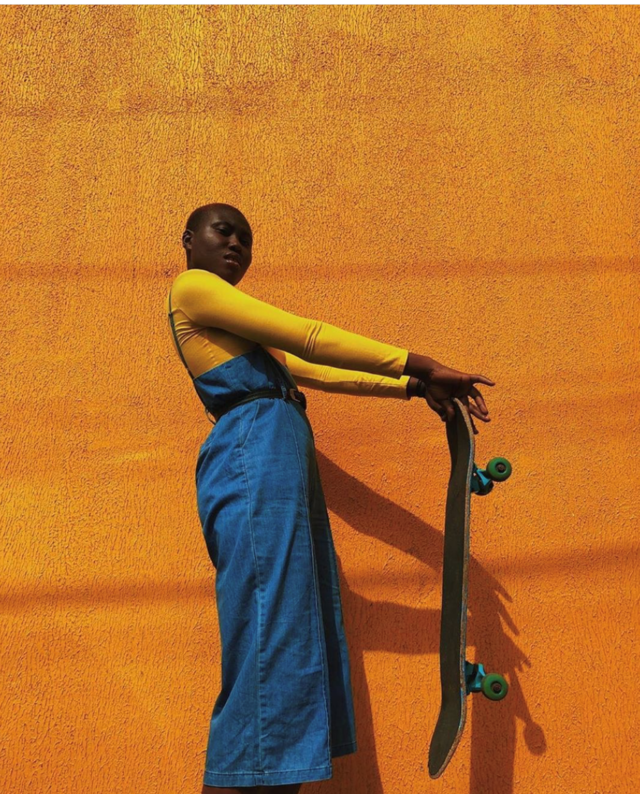
In Addis Ababa, a collective known as Ethiopia Skate took to the streets in the early 2010s, dodging traffic to practice kickflips. By 2016, they had pooled resources with international nonprofits to build Addis Skatepark, a free, open-air space that quickly filled with local kids. Some arrived barefoot, others taped their shoes together, but they showed up—and soon an entire scene was born.
Across the continent, similar stories played out. Where there was no sports infrastructure, people built it. When boards were too expensive, they were shared. If the wider public scoffed at “dangerous tricks,” kids skated anyway.
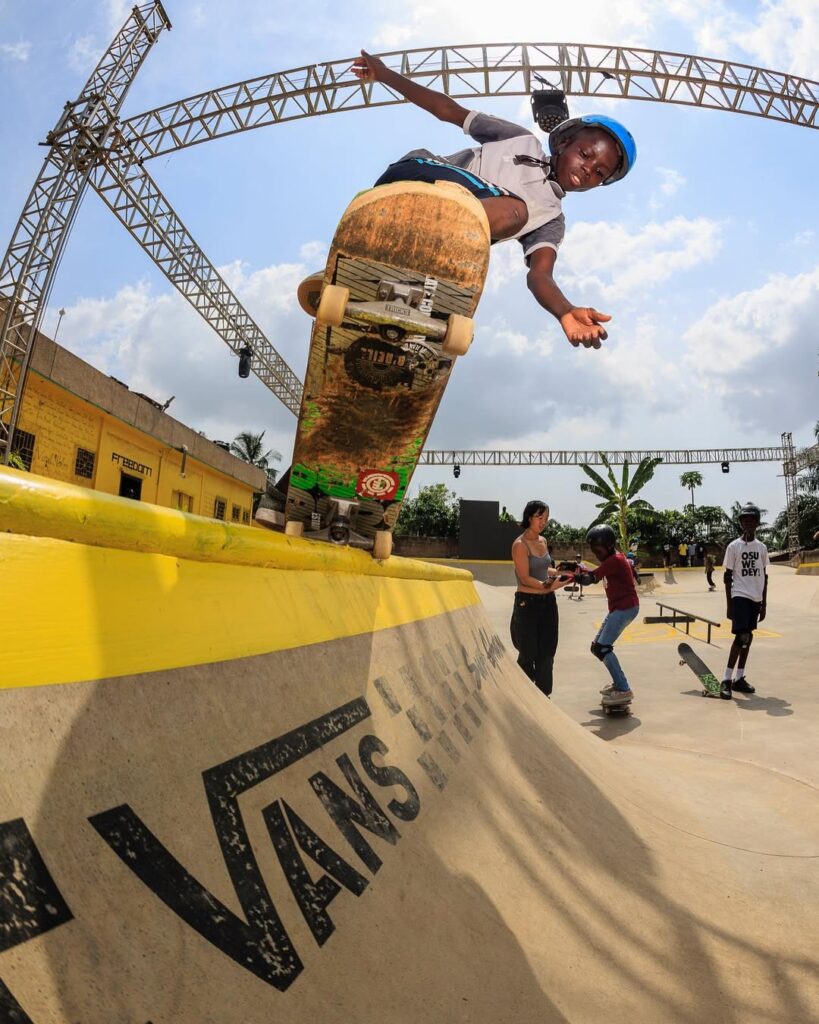
If East Africa planted the seeds, West Africa made them flourish with flair. In Ghana, French-Martinican activist Sandy Alibo founded Surf Ghana after falling in love with the energy of Accra’s young boarders. What began as an Instagram page documenting local talent grew into a nonprofit and cultural movement. The group organized sessions, created mentorship programs, and opened doors for young people especially women who had few outlets for athletic expression.
The crescendo came in 2021 with the opening of Freedom Skatepark, a gleaming facility on the edge of Accra. Backed by the late Virgil Abloh, Vans, Daily Paper, and a wave of crowdfunding, the park was designed not only as a place to skate but as a community hub with a café, creative studio, Wi-Fi hotspot, and cultural center.
Nigeria has cultivated its own distinctive scene. In Lagos, WAFFLESNCREAM—part skate crew, part streetwear label has become a beacon of youth identity. Their T-shirts, caps, and decks circulate across West Africa, turning Lagos skaters into fashion ambassadors. Their events blend skating, music, and art into a subculture that feels as Lagosian as Afrobeats. In a country where gender and sexuality norms often run rigid, women and queer-led collectives like DenCity have carved out safe spaces and reshaped the narrative of who belongs on a board.
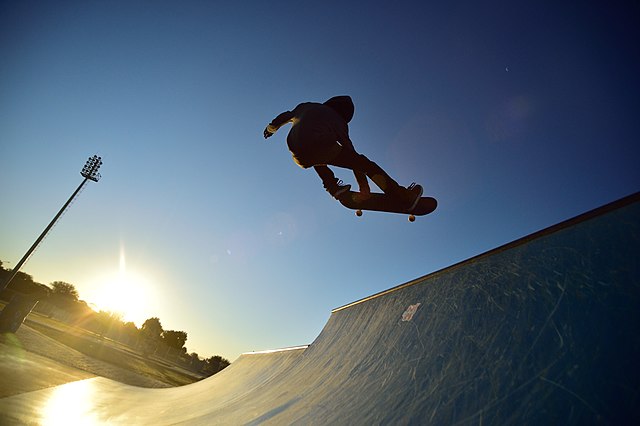
Further south, skateboarding has become a tool for social change. In Johannesburg, Girls Skate South Africa hosts regular meet-ups, donates gear, and teaches girls to claim space in a male-dominated sport. Their mantra is simple: if you can learn to drop into a ramp, you can learn to face anything else life throws at you.
In Zimbabwe’s Victoria Falls, the Push Project transformed a handful of secondhand boards into a youth revolution. From just ten skaters a decade ago, the Victoria Falls Skate Club now counts hundreds of members. Midday sessions often spill into art workshops, fashion shows, and community events. The board, once a symbol of rebellion, has become a platform for leadership.
South Africa also produced the continent’s first Olympic skateboarder. Brandon Valjalo, who grew up skating Johannesburg’s streets, competed in Tokyo 2020 with a broken wrist. He didn’t place, but it hardly mattered. His presence on that global stage was proof that African skateboarding had arrived.
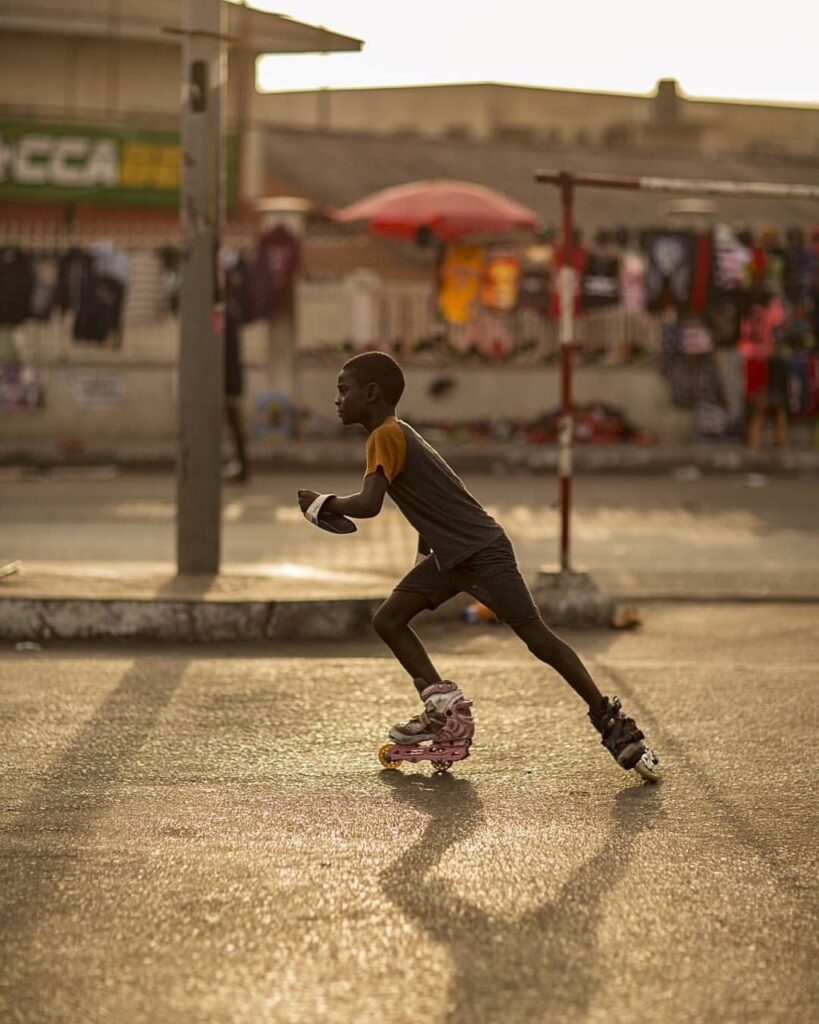
To watch skateboarding in Africa is to see more than athleticism. It is fashion in motion. Scuffed sneakers, oversized tees, and thrifted cargo pants mirror global skate aesthetics but carry local accents: wax prints tucked into belt loops, beads jangling at the wrist, slogans scrawled on thrift-store finds. Skaters here are not just riders; they are stylists and designers in their own right.
This creative instinct has drawn collaborators from the wider fashion world. Ghana’s Freedom Park carries the fingerprints of Virgil Abloh. Lagos skaters model for local brands that riff on skatewear’s relaxed silhouettes. Johannesburg crews appear in international campaigns that frame them not as novelties but as cultural equals.
And then there is music. From Accra’s highlife remixes to Lagos’ Afrobeats rhythms, skate culture blends seamlessly with the continent’s sonic explosion. To skate is not just to move, but to perform.
Obstacles remain. Skateboarding is expensive—decks, trucks, and shoes wear out quickly, and importing gear is costly. Parks are rare, and where they exist, they often rely on foreign funding. Many governments still view skateboarding as a distraction, not a sport worthy of recognition or investment.
Yet scarcity has bred resilience. Community-driven projects from board donation drives to DIY ramp construction are the backbone of the movement. And the more visible skateboarding becomes, the harder it is to ignore. Every time a Ghanaian girl drops into a bowl, every time a Nigerian skater rolls through the streets of Lagos, every time a Zimbabwean kid picks up a board instead of picking up trouble, the culture deepens.
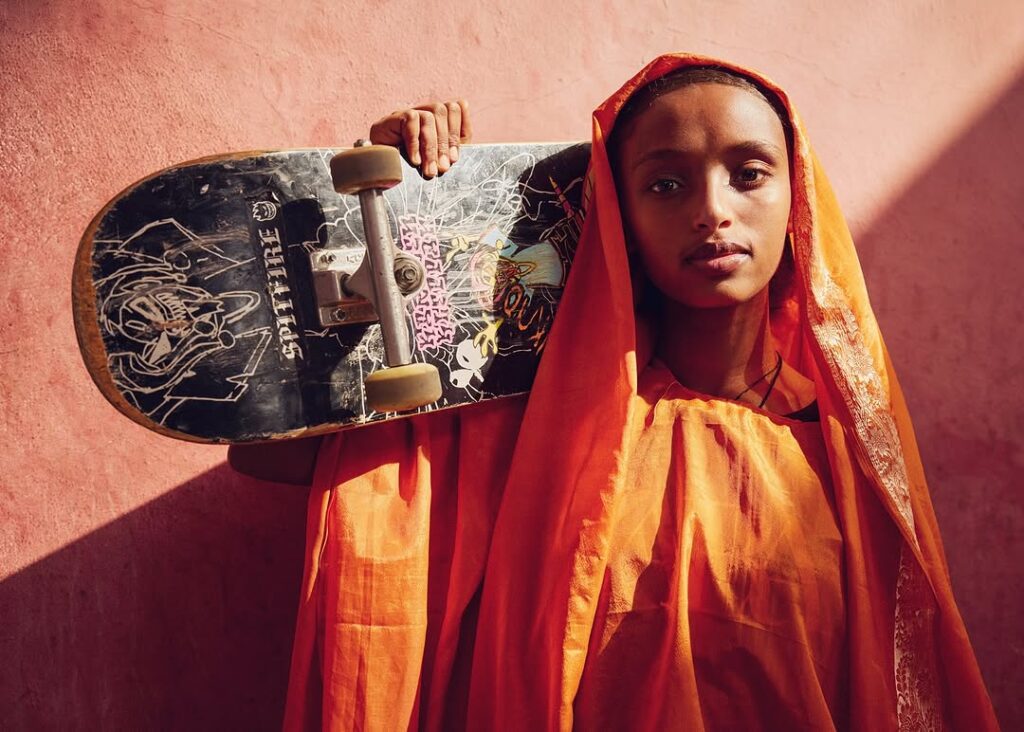
The future of African skateboarding looks less like a straight line and more like a winding rail—improvised, risky, but exhilarating. The continent is likely to see more skateparks, more collectives, and perhaps its first Olympic medals. But the real victory lies in the culture it nurtures. Skateboarding has become a lens through which Africa’s youth express autonomy, style, and resistance. It has created micro-economies in fashion and media, and inclusive communities where race, gender, and class blur under the rush of wheels on concrete.
In the end, the story of skateboarding in Africa is not about catching up to California or mimicking Europe. It is about carving its own lines across a continent that knows something about resilience.