


The 2026 Loewe Foundation Craft Prize shortlist runs thirty finalists from nineteen countries. Three of them work with African craft traditions as method, and what makes their submissions worth reading together is what each piece reveals about the depth of the system it draws from.
Fadekemi Ogunsanya
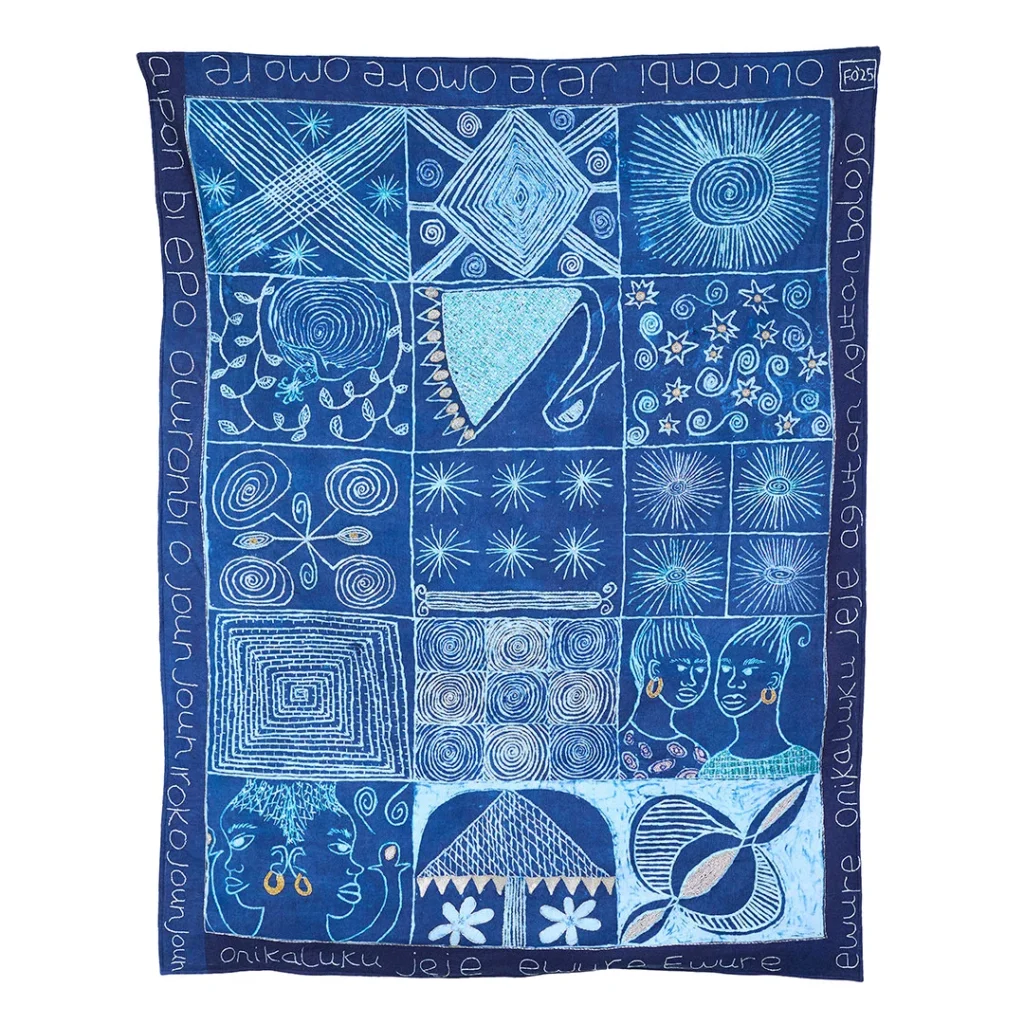
Fadekemi Ogunsanya’s We Are Not Lying, Your Language is Not Enough is a hand-embroidered, beaded quilt built on Adire Eleko, the Yoruba resist-dyeing practice that encodes proverbs, folklore, and social instruction into cloth through cassava starch paste applied with a feather quill. She drew the patterns across fifteen segments, bordered them with Yoruba script, and sent the cloth to the Kofar Mata indigo pits in Kano, among the oldest continuously operating dye sites in West Africa. After dyeing, the surface was embroidered and beaded by hand. Adire Eleko is not decoration. It is communication infrastructure. A system for transmitting complex meaning through material. The title says as much.
Xanthe Somers
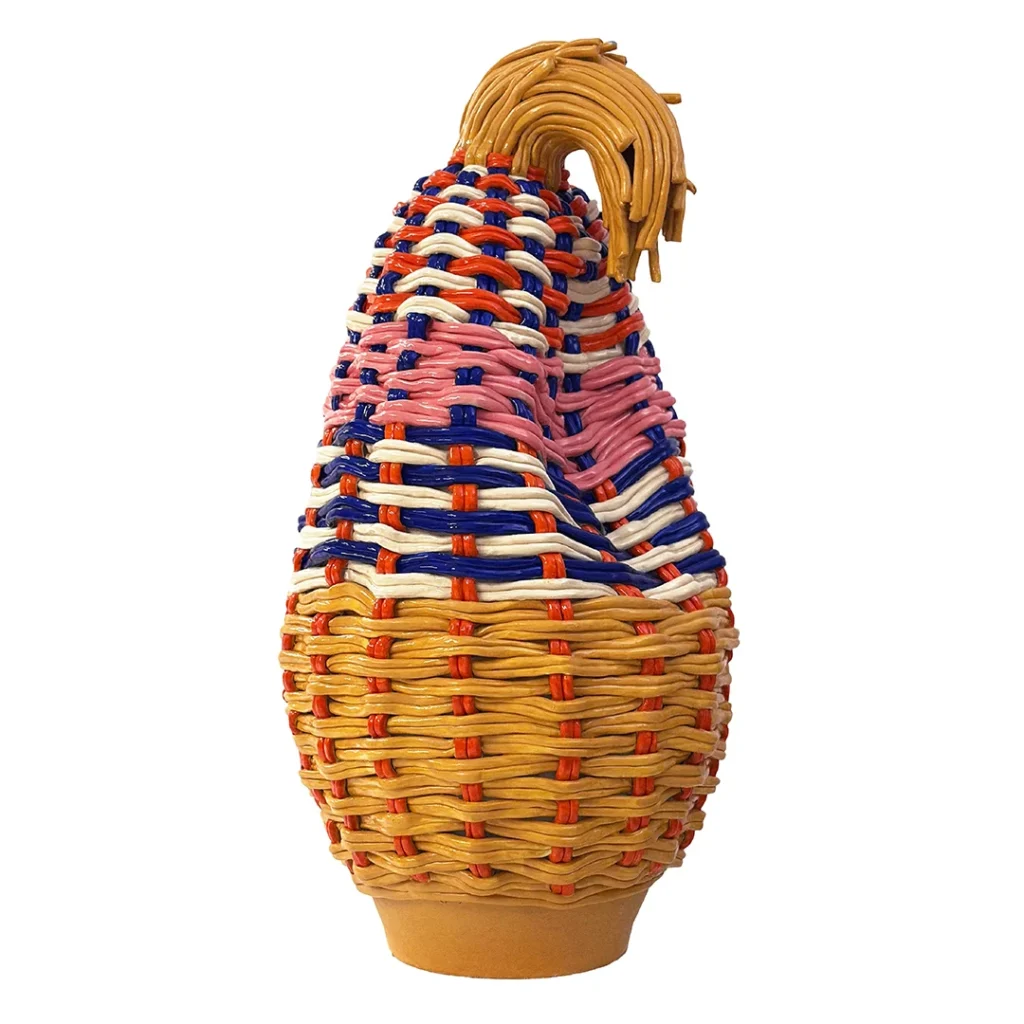
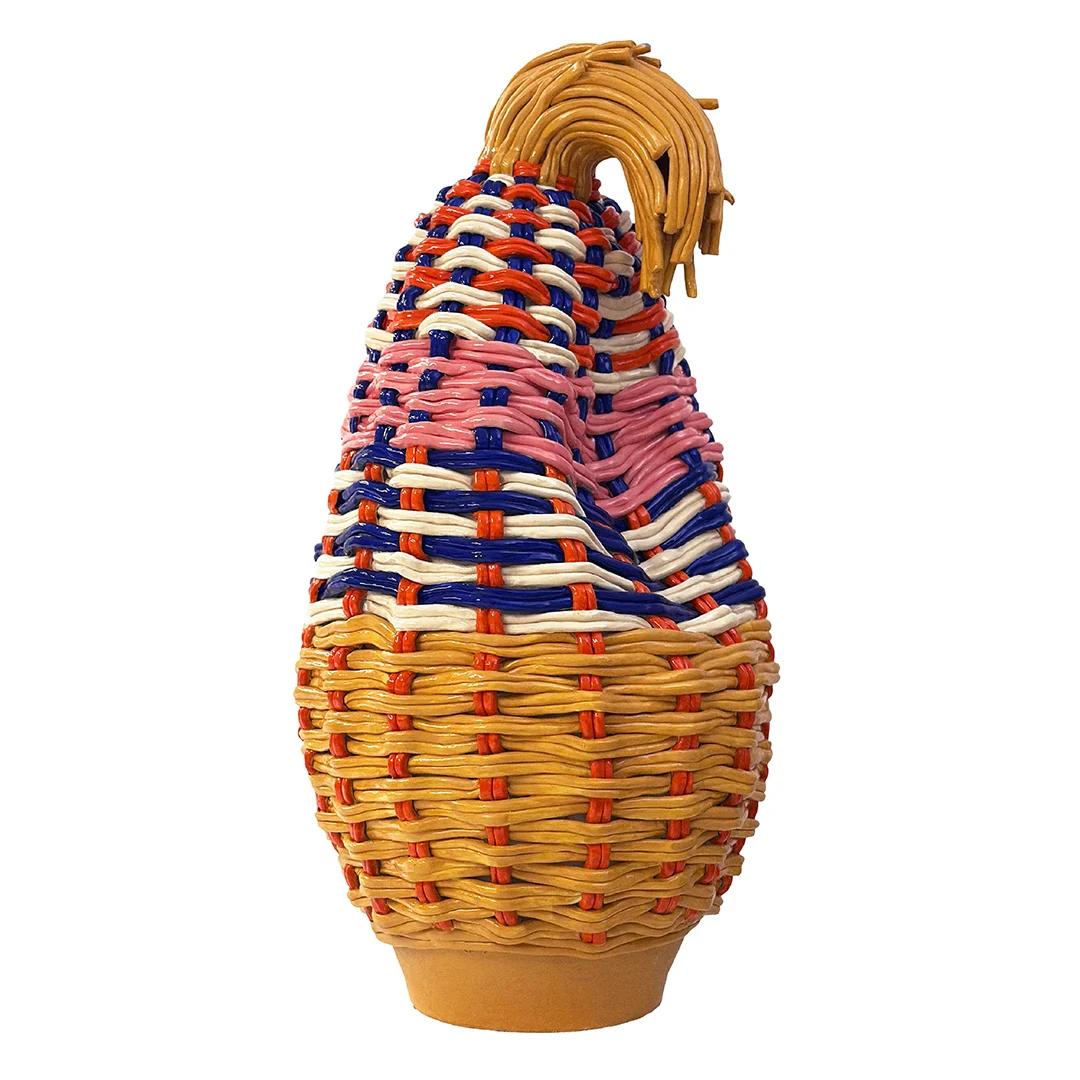
Xanthe Somers, working from Zimbabwe, takes a different system to a different material. The Caretaker’s Clotheshorse is a large stoneware vessel whose woven-clay exterior draws from Binga baskets, the tightly coiled vessels made by Tonga women in the Zambezi Valley. Binga baskets are structural engineering: tension, compression, and pattern logic resolved in a single handmade form. Somers extends that grammar into clay, coiling her vessel by hand, puncturing and weighting it to produce a controlled collapse, then painting the surface to reference kitchen cloths, blankets, and grass baskets.
Baba Tree Master Weavers × Álvaro Catalán de Ocón
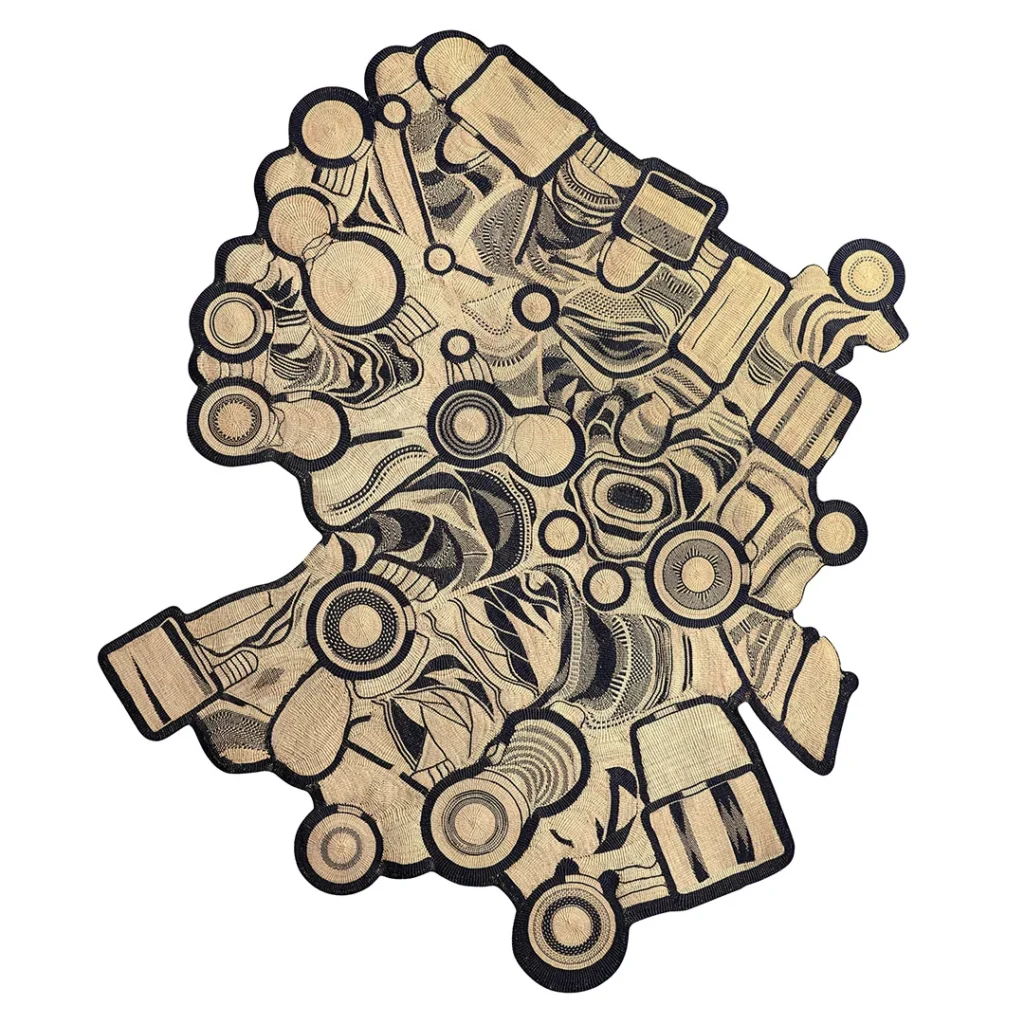
Then there is Fra Fra Tapestry #2, a collaboration between the Baba Tree Master Weavers, a Frafra collective in northern Ghana, and the Spanish artist Álvaro Catalán de Ocón. Overhead drone photography of Gurunsi circular adobe housing was drawn as architectural plans in Madrid, then developed into woven elephant grass by Mary Anaba and the weavers using traditional basketry techniques. Gurunsi architecture is a design system of extraordinary density: spatial organization, thermal regulation, social hierarchy, and decorative tradition in a single built form.
What connects these three pieces is that each operates from a tradition complete enough to generate new form on its own terms. Adire Eleko is language. Binga basket-making is structural engineering. Gurunsi compound construction is integrated spatial design. None of the makers borrowed from these systems. They thought through them.
The jury includes Magdalene Odundo among its fourteen members. The Expert Panel includes Nifemi Marcus-Bello and Ibrahim Mahama. The winner will be announced May 12 at the National Gallery Singapore, where the exhibition runs through June 14.
Also worth watching: Hervé Sabin from Haiti, whose carved, charred, and ebonised wood vessel “Sèvi-Tè” draws on ancient techniques of hollowing wood for communal use.