


In Côte d’Ivoire, a New Generation Learns to Read the Waves
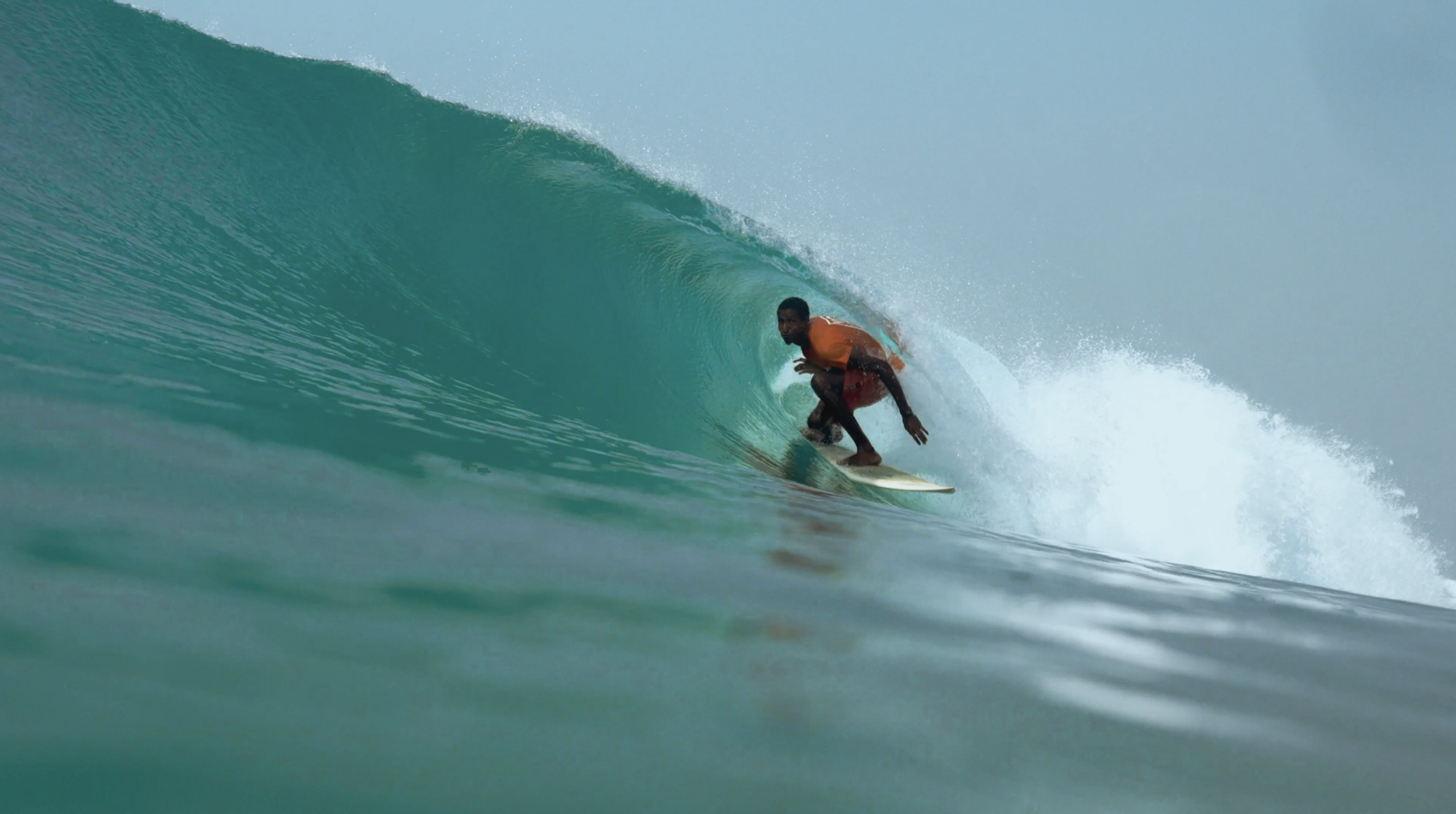
Along the Ivorian coastline, the ocean has never been a playground. It feeds families, holds spirits and commands a caution passed down through generations. For most of the country’s history, almost nobody looked at those waves and imagined riding them. The Rising Dawn, a feature documentary by Ivorian filmmakers Nadi Saddy and Nuits Balnéaires, is about the generation that did. The film premiered in Abidjan last year and is now making its way through a series of screenings in California.
Saddy and Nuits Balnéaires filmed for four years, from Assinie in the east to the untouched breaks of the western coastline, much of it reached by 4×4 over unpaved roads. The film documents the birth of a surf culture in a country that possesses world-class waves and, until recently, almost no surfers.
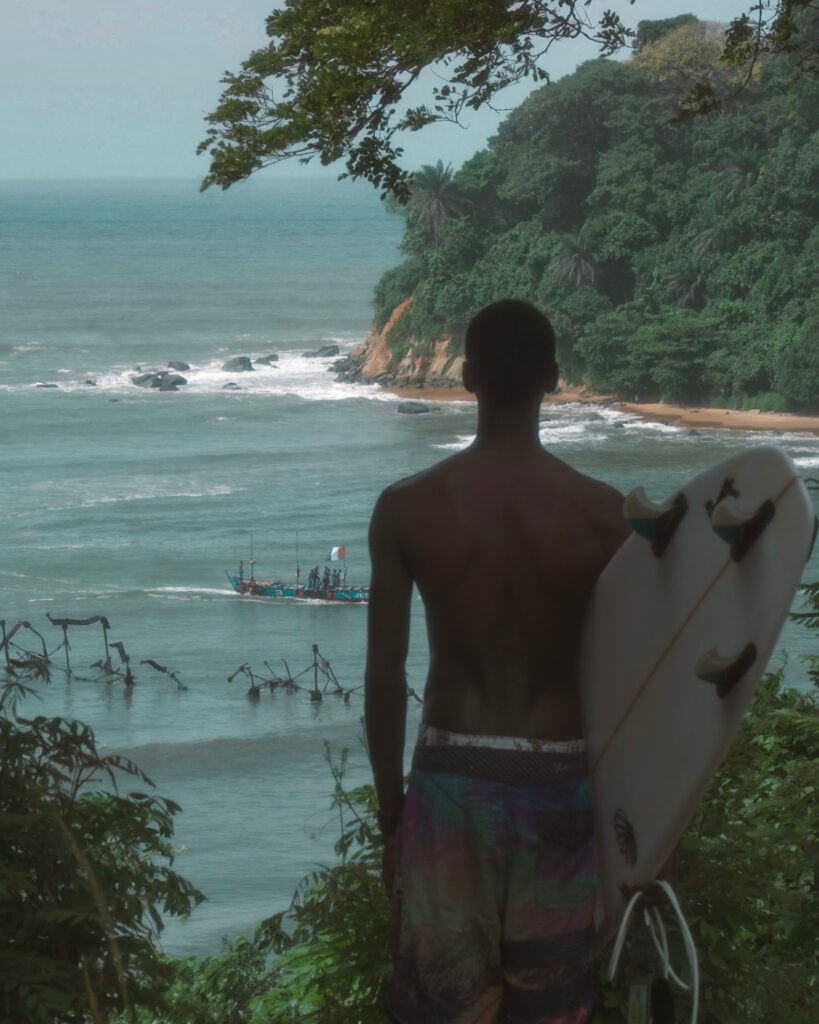
At its centre is Souleymane Sidibé, one of the pioneers of surfing in Côte d’Ivoire. Sidibé came up in a community where the sport was virtually unknown and had to convince his family that the passion was worth the ocean’s dangers. Today he is one of the very few Ivorians who make a living on a board. “This wasn’t the story of one individual,” Saddy says of meeting him. “It was the story of an entire generation redefining its relationship with the ocean.”
It is not, the directors insist, a sports documentary. Saddy, who grew up between Abidjan and the beaches of Assinie and discovered surfing while studying in California, and Nuits Balnéaires, the visual artist and poet whose work moves between memory, spirituality and the natural world, cite the 1972 classic Morning of the Earth as a lodestar. Much of the film was shot at dawn and dusk in natural light, built on long silences and slow observation. The coastline, as Saddy puts it, feels suspended between reality and dream.
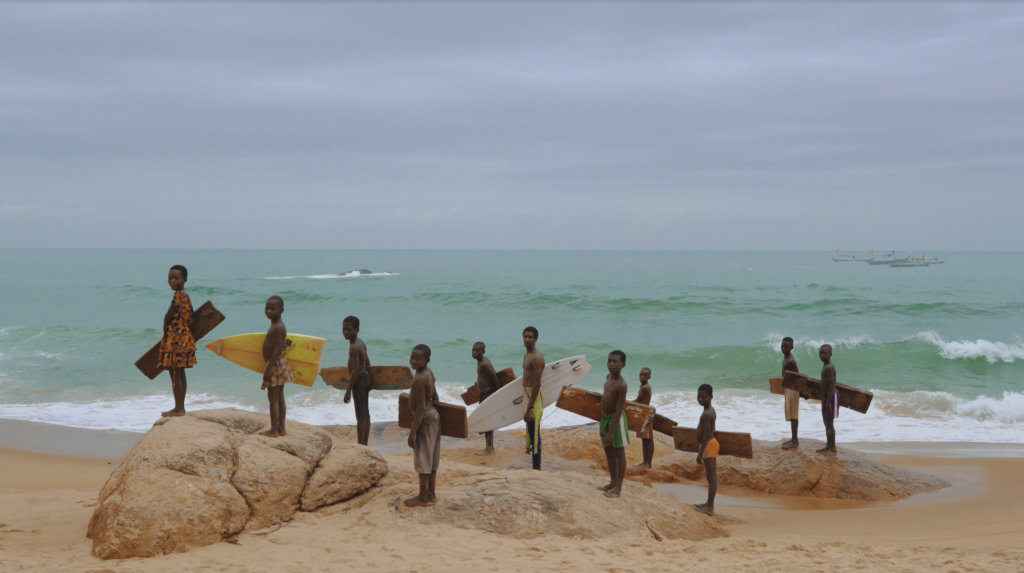
The film has already outgrown its frame. Four years of production seeded Surf Côte d’Ivoire, a nonprofit that now runs weekly youth training in Assinie, redistributes donated boards through Provide the Slide, the board-donation initiative that also supplies Liberia’s Robertsport Surf Club, and organised the country’s first international surf competition. Its Diaraby Surf Club is Côte d’Ivoire’s first surf club for girls.
“At its heart, this film is about transformation,” Saddy writes. “Surfing is simply the wave that carries us there.” Watch the official teaser for the Rising Dawn.