
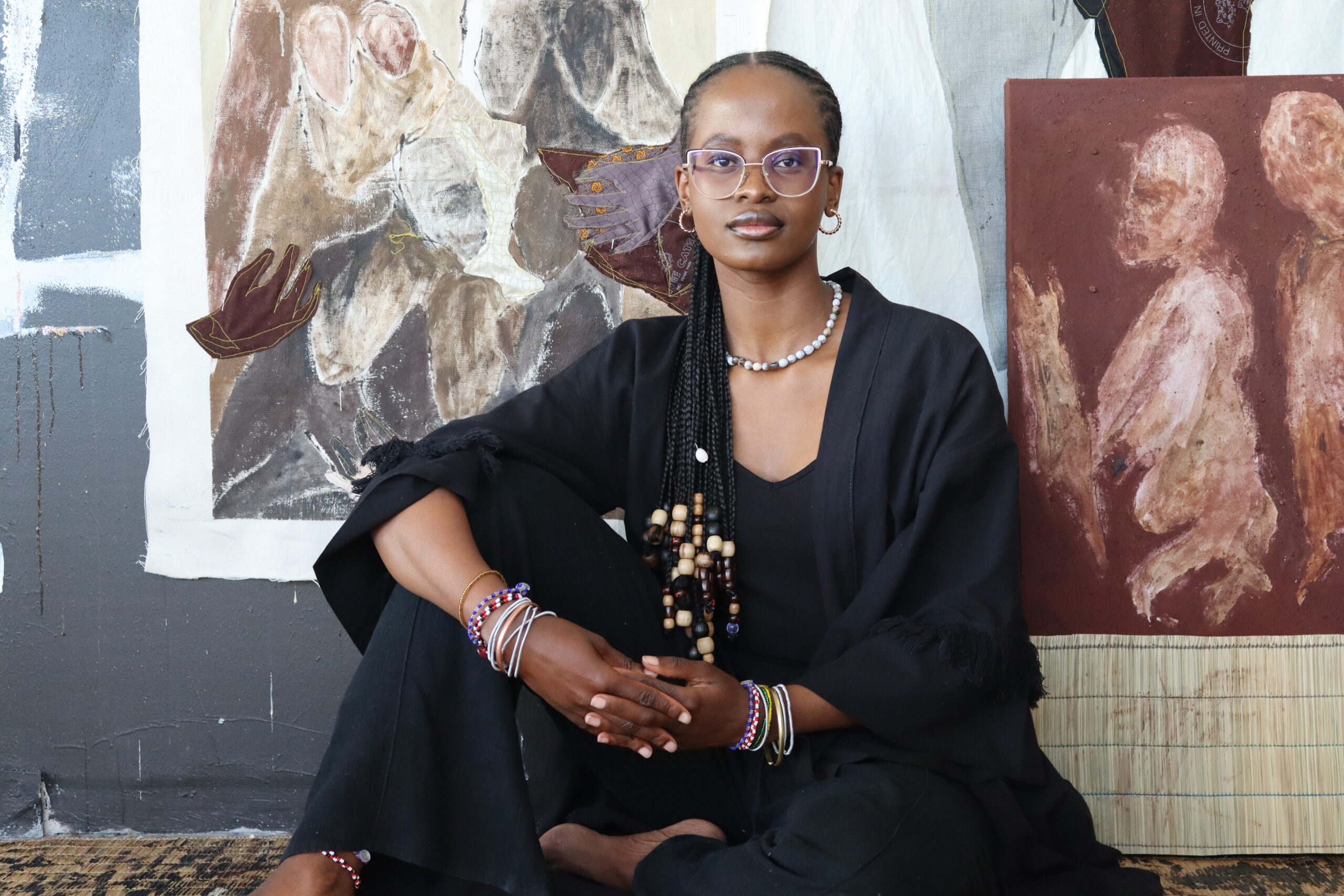
At 26, Nthabiseng Kekana is building a practice that refuses the boundaries between art and spiritual work, between contemporary expression and ancestral knowledge. Fresh from her debut solo show Sankofa: A Call to Remembrance at FNB Art Joburg this September—where Lagos-based Wunika Mukan Gallery brought her home to Johannesburg’s premier art fair—the Alexandra-born artist is proving that the most radical work often comes from looking backward to move forward.
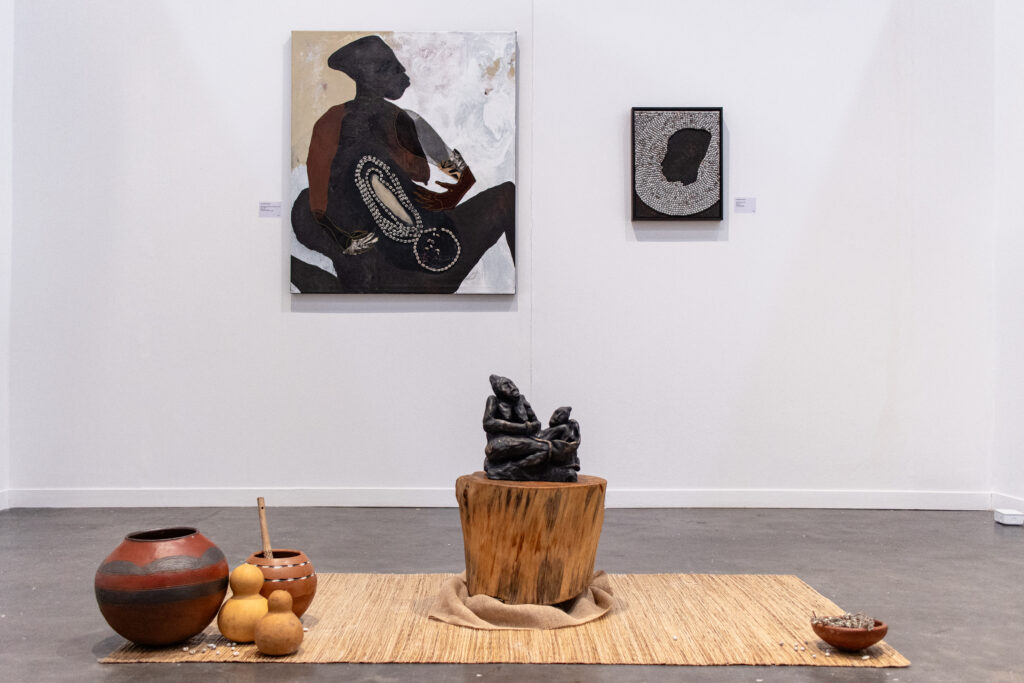
The collaboration itself tells a story: a Lagos gallery championing a Johannesburg voice on her own turf, creating the kind of Pan-African synergy that the continent’s art ecosystem calls for but rarely achieves with such intentionality. But the real revelation is Kekana herself—an artist whose work as an initiated sangoma isn’t separate from her studio practice but inseparable from it.
Born and raised in Alexandra, Kekana’s journey reads like a search for the right language. She moved from the National School of the Arts to fashion design at LISOF, then multimedia studies at the University of Johannesburg—each step a form of exploration, each discipline teaching her something about expression and form. But her most transformative education came through her initiation as a traditional healer, a process that demanded she confront what had been lost, forgotten, or deliberately severed from her lineage.
“They were unfamiliar, but they were mine,” she says of the family members, languages, and cultural practices she encountered during her training. These were strangers who carried her features, behaviors, and histories—people who belonged to her because she belonged to them. The year-long preparatory work before her initiation became more than spiritual training; it became the conceptual foundation for the body of work that would emerge from her Johannesburg studio.
The word Sankofa comes from the Akan people of West Africa, often symbolized by a bird looking back while flying forward. It means “go back and fetch”—a directive that carries particular weight in a continent still grappling with colonial fragmentation, apartheid’s deliberate cultural erasures, and the dislocations of forced migration and urbanization. For Kekana, this isn’t romantic nostalgia. It’s necessary spiritual archaeology, a retrieval mission for wisdom that modernity has tried to bury under the myth of progress.
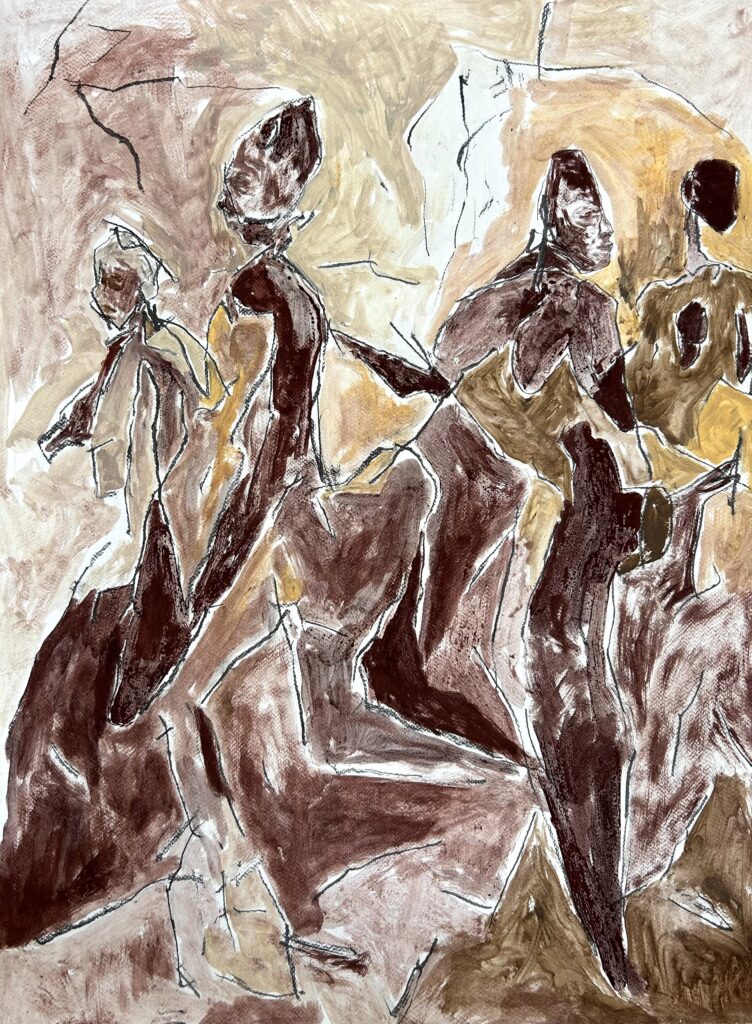
In her studio, Kekana works with ritualistic deliberation. Each piece becomes an act of excavation, built through patient layers of oil paint, acrylics, charcoal, pastels, and natural fibers. The process is slow, almost ceremonial—a deliberate rejection of the speed and superficiality that contemporary culture demands. Every brushstroke, every texture becomes a form of remembering, of piecing together what was broken or hidden.
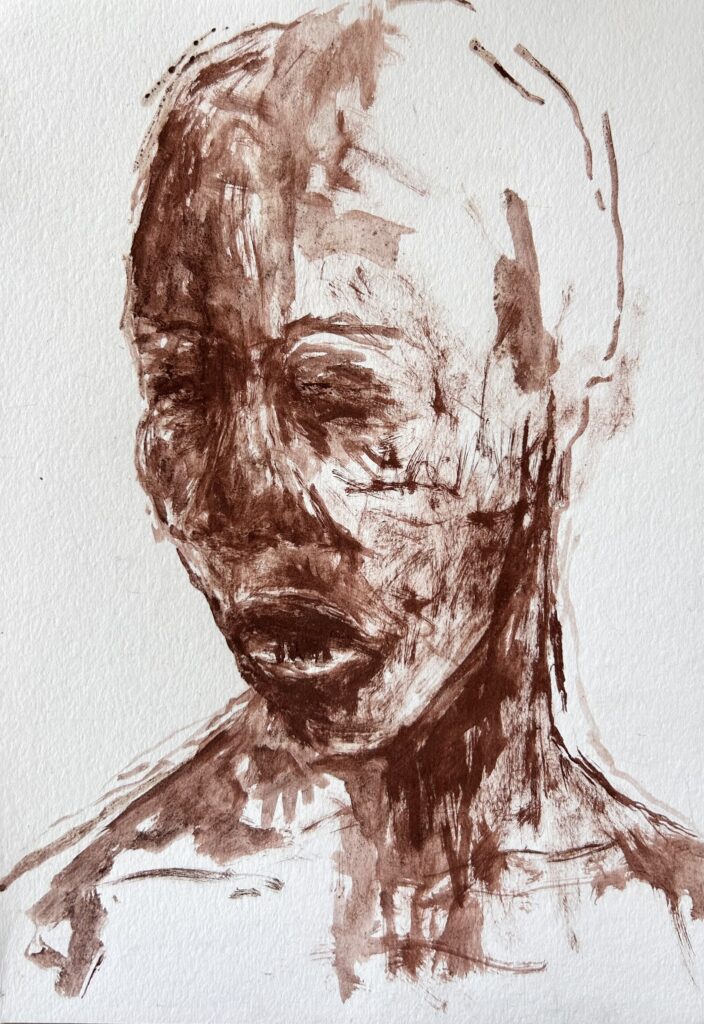
What emerges are works she calls “textured portals”—surfaces that don’t simply hang on walls but create thresholds into contemplative space. The rough grain of charcoal against canvas, the organic presence of natural fibers woven into composition, the layered depth of paint that seems to hold time itself—these elements demand that viewers slow down, step closer, remember.
“Spirit is calling for us to drop all the facades, the distractions, the pretenses and cages that keep us hidden from our true selves,” Kekana explains. Her work doesn’t offer prescriptive answers or didactic messaging. Instead, it creates conditions for personal revelation, mirroring what she describes as subconscious narratives while insisting that personal histories—however fractured or forgotten—are sacred and worth preserving.
This openness to interpretation reflects both her artistic philosophy and her spiritual practice. Each piece carries intention, but once complete, it must find its own destiny in dialogue with whoever stands before it. Meaning emerges in relationship; wisdom activates through encounter. It’s the understanding of a healer translated into visual language.
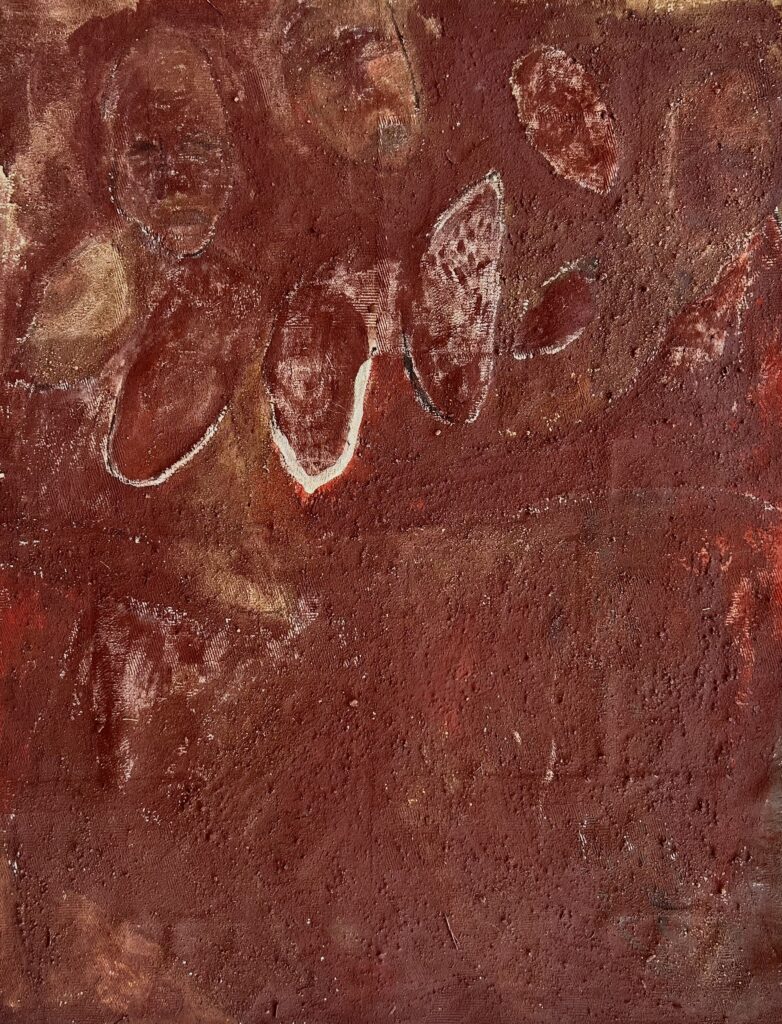
In a moment when the art world often privileges novelty over depth, spectacle over substance, Kekana’s work serves as counterweight. She doesn’t reject the contemporary; she interrogates what we’ve sacrificed in our rush toward it. Her practice proposes that authentic forward movement requires deliberate return to source, that progress unmoored from tradition becomes drift rather than direction.
This perspective resonates beyond South African borders, which perhaps explains why Wunika Mukan Gallery—a Lagos institution committed to building networks across African cities rather than looking to Western validation—chose to present her debut solo show. The collaboration represents the kind of intra-African dialogue that strengthens the continent’s contemporary art ecosystem from within.
Kekana’s work poses questions that transcend geography: What is your story? What have you forgotten that deserves to be retrieved? What does your spirit remember that your mind has been taught to dismiss? Whether you’re from Alexandra, Lagos, or elsewhere, these questions land with equal weight.
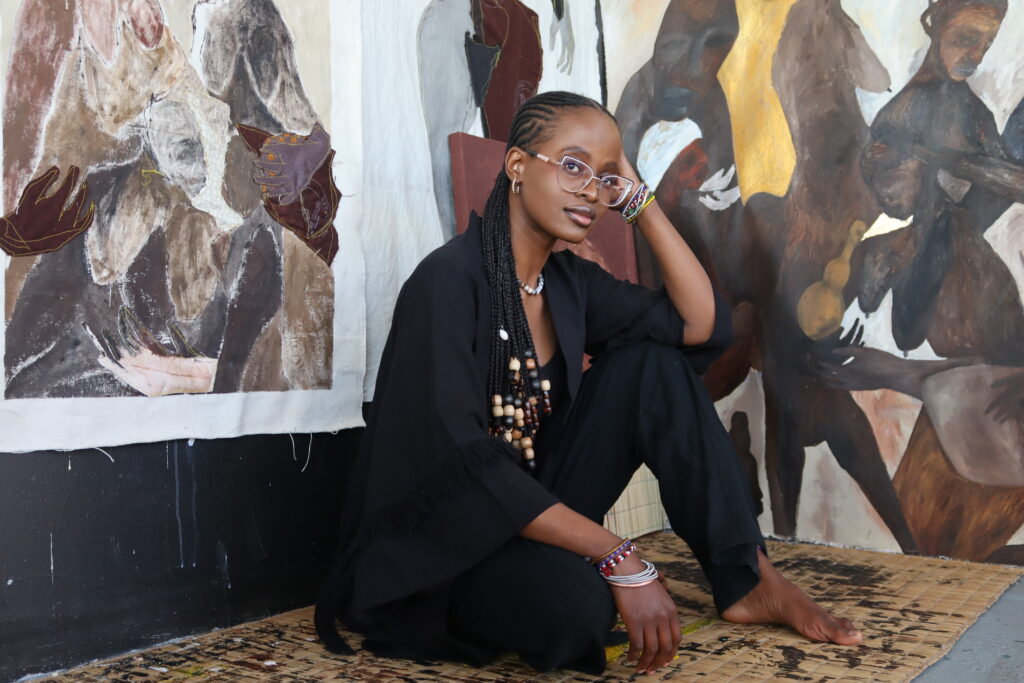
Stand before one of Kekana’s pieces long enough, and you might find yourself remembering something you didn’t know you’d lost—a language, a ritual, a way of being that modernity buried but never quite killed. That’s the power of her practice: it insists that going back is sometimes the only way forward, and that the past we retrieve might be precisely the future we need.
As she builds her career from this foundation—artist and sangoma, contemporary practitioner and ancestral channel—Kekana is charting a path that feels both ancient and urgent. In her hands, tradition isn’t constraint but liberation, and the call to remember becomes the most radical act of all.