
At the base of Kalagala Falls in Kayunga District, Uganda, designers from across Africa are gathering November 20–23 for the sixth edition of Kwetu Kwanza—Swahili for “Ours First.” What started as a festival has evolved into something broader: a year-round platform for how circular fashion actually works.
Founded by IGC Fashion (Ibrahim & Godfrey’s Community), Kwetu Kwanza now includes the newly established Fashion Cypher Residency in Kazo, Kampala, where designers conduct material research and develop new techniques. IGC also runs the Fashion Cypher Foundation, a vocational training programme that has reached over 13,000 people across East Africa, and produces the podcast “Beyond Bark: The Legacy of the Lubugo Textile.” This year’s edition runs alongside Nyege Nyege Festival, Uganda’s largest music and arts gathering. It brings over 30 designers, daily workshops, film screenings, talks, and a marketplace—all operating within a temporary village built by members of the semi-nomadic Karamajong community using tree branches, sticks, leaves, cow dung, and straw.
The festival’s theme, “What Can Emerge from Collapse?”, describes what’s happening: designers working with materials shaped by both ancestral knowledge and immediate necessity.
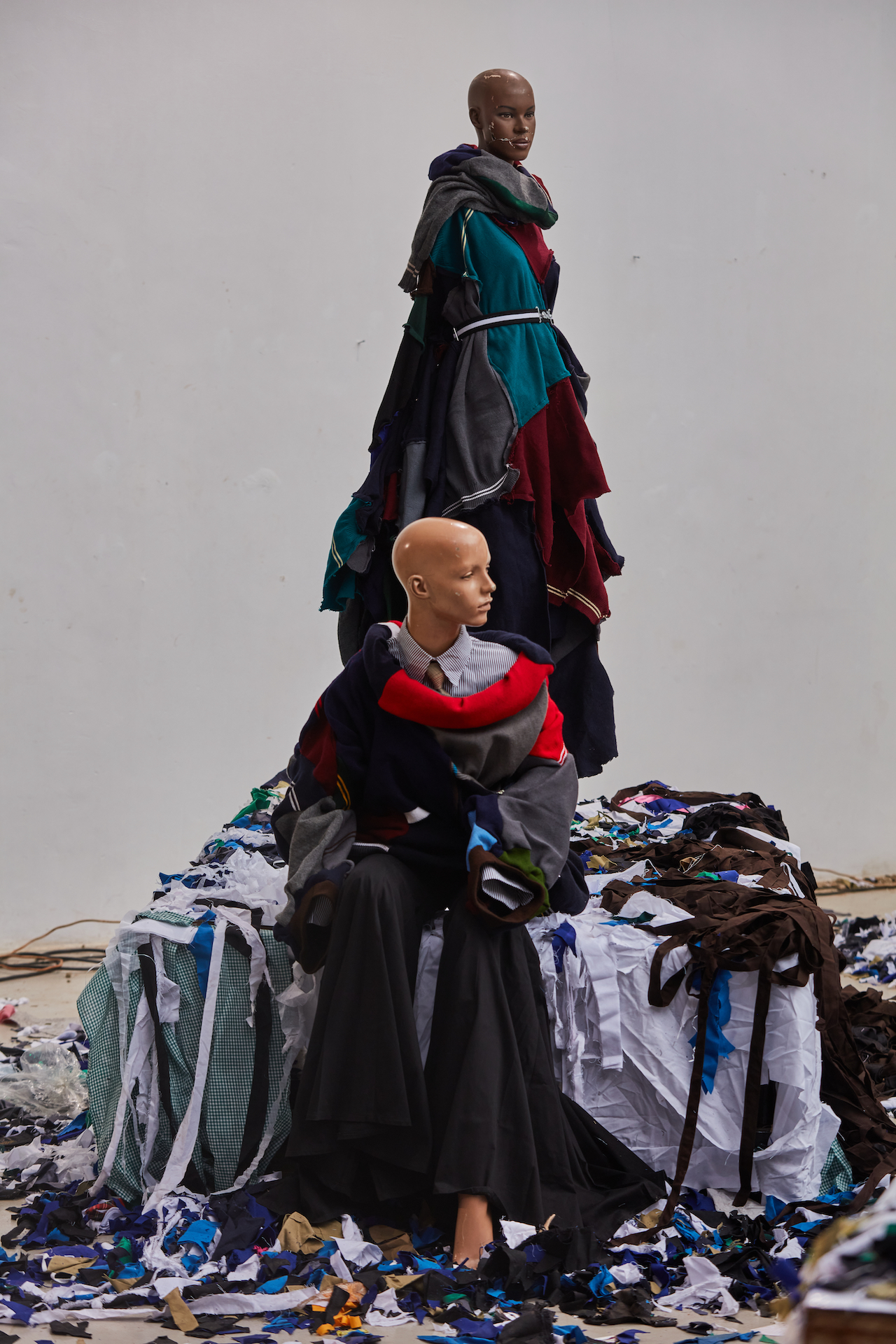
Uganda receives approximately 80,000 tonnes of secondhand clothing annually. Much of it arrives unwearable—textile waste that becomes someone else’s problem to solve. For designers working here, circularity isn’t a choice. It’s how you work.
Orwigi, Motley Minds, and Lw Nsimbi source materials from Kampala’s Owino Market. Tutabaale deconstructs and repurposes imported garments from the same market. Ghana’s AlphaTribe and Calcul Studios work with materials from Kantamanto Market through the OR Foundation’s OWO School. Kenya’s Maisha by Nisria sources from Gikomba Market, while also running vocational training programmes as the fashion arm of a children’s rescue programme in Gilgil.
This year, Kwetu Kwanza runs on-site at Nyege Nyege Festival, which is celebrating its 10th anniversary with over 300 artists performing across six stages. The partnership between the two platforms creates what Derek Debru, Co-Founder of Nyege Nyege, describes as an intentional emphasis on “the important relationship between the grassroots sustainable fashion movement and underground music scene in Africa.”
“Kwetu Kwanza stands out as a singular, immersive experience: a true portal into the avant-garde of African fashion,” said Debru. “In our second year of partnership, Kwetu Kwanza brings a carefully curated selection of designers and a vibrant programme of events, elevating our anniversary edition to new heights.”
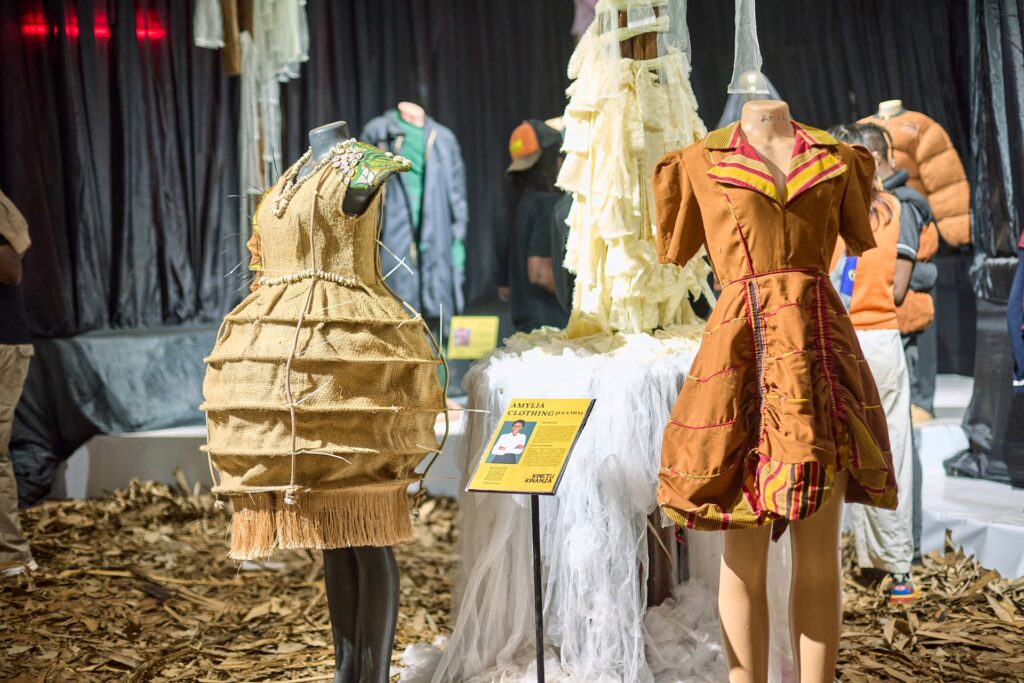
What makes Kwetu Kwanza different is how it’s organized around mentorship and continuity. In partnership with Fashion Revolution Uganda and the Fashion Cypher Foundation, three emerging designers have been mentored by industry peers. Returning designers Ali Musinguzi (Quill Clothing) and Edward Muyizi (Seamline Atelier) now serve as mentors to Orwigi and Lw Nsimbi, while Ritah Mirembe, a graduate of IGC Fashion’s mentorship programme, will debut her first collection. Brands like Kolakisa and Amylia Clothing champion inclusion—Kolakisa’s works arise from founder Samir’s education programme in Kakuma Refugee Camp, while designer Amynata of Amylia Clothing trains deaf artisans in textile craft.
“Working with a skilled team from Karamoja, we are literally building a village entirely from natural materials to house this exhibition,” said Natalie Kaza, Chief Operating Officer of IGC Fashion. “It’s a convergence of art from across Africa and beyond, rooted in indigenous knowledge, traditional practices, and new circular techniques.”
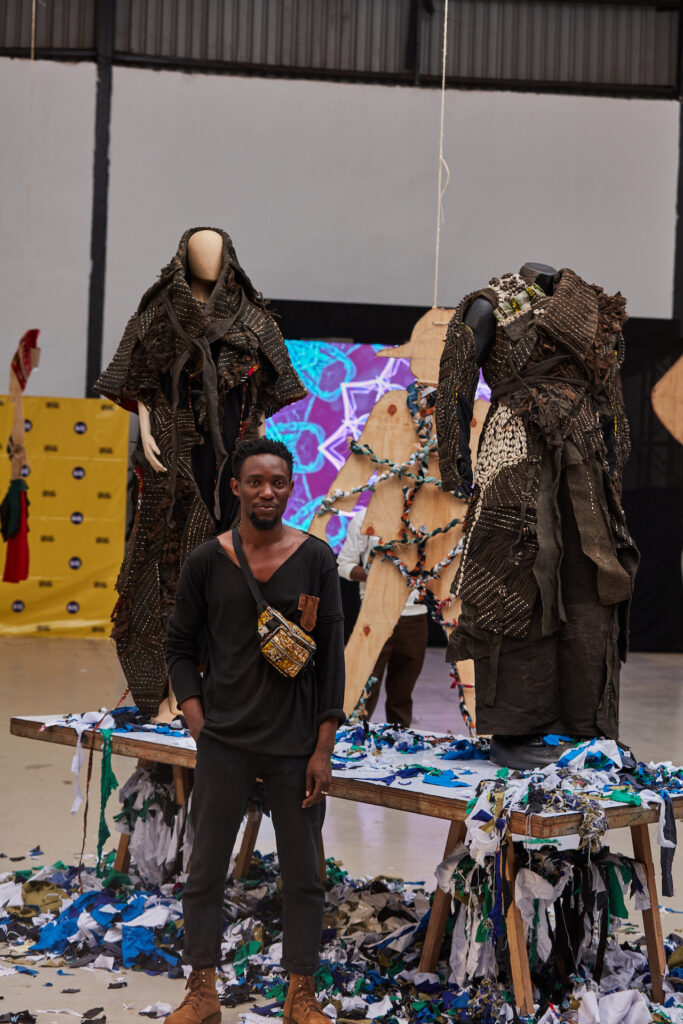
The materials at Kwetu Kwanza 2025 aren’t new. They’re traditional systems being brought back. Lubugo (barkcloth made from Mutuba tree bark), Nsimbi (cowrie shells), raffia, and sisal all appear in works across the exhibition. Lubugo can be harvested without harming the tree, which makes it an ancestral form of circular production. IGC Fashion and The Studio Craft are reinterpreting it for contemporary wear. The festival will premiere “Resurgence of Lubugo,” a collaboration between British designer Hannah Allchurch and IGC Fashion.
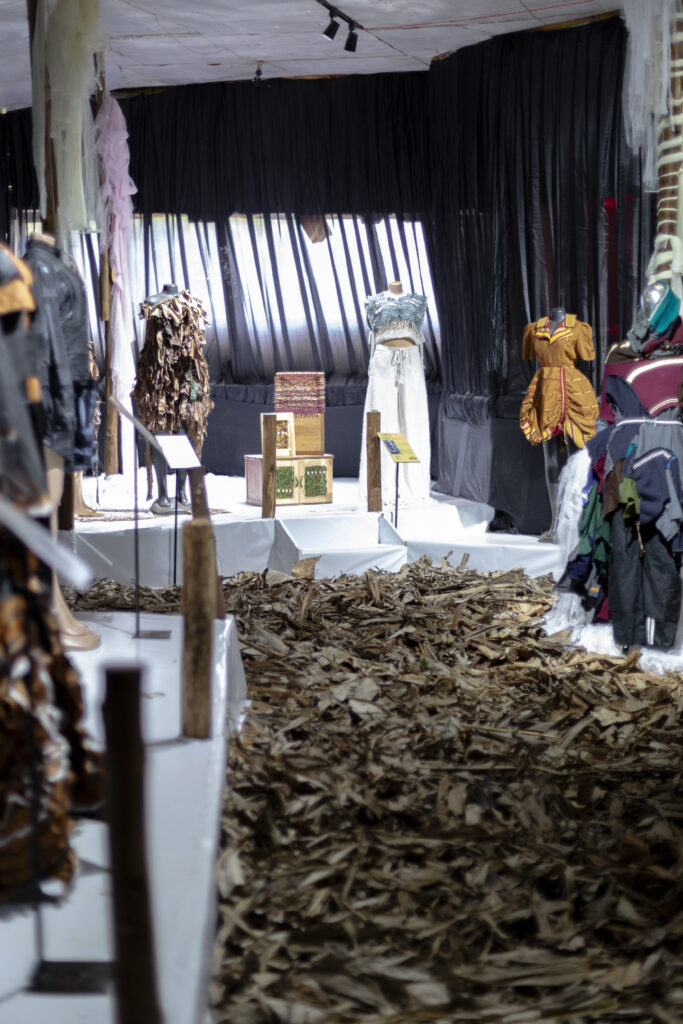
Designers are also working with natural dyeing techniques using sorghum and onion skins. The exhibition space demonstrates this: a temporary village built by members of the semi-nomadic Karamajong community using tree branches, sticks, leaves, cow dung, and straw. Made entirely from natural materials, the structure is both setting and statement.
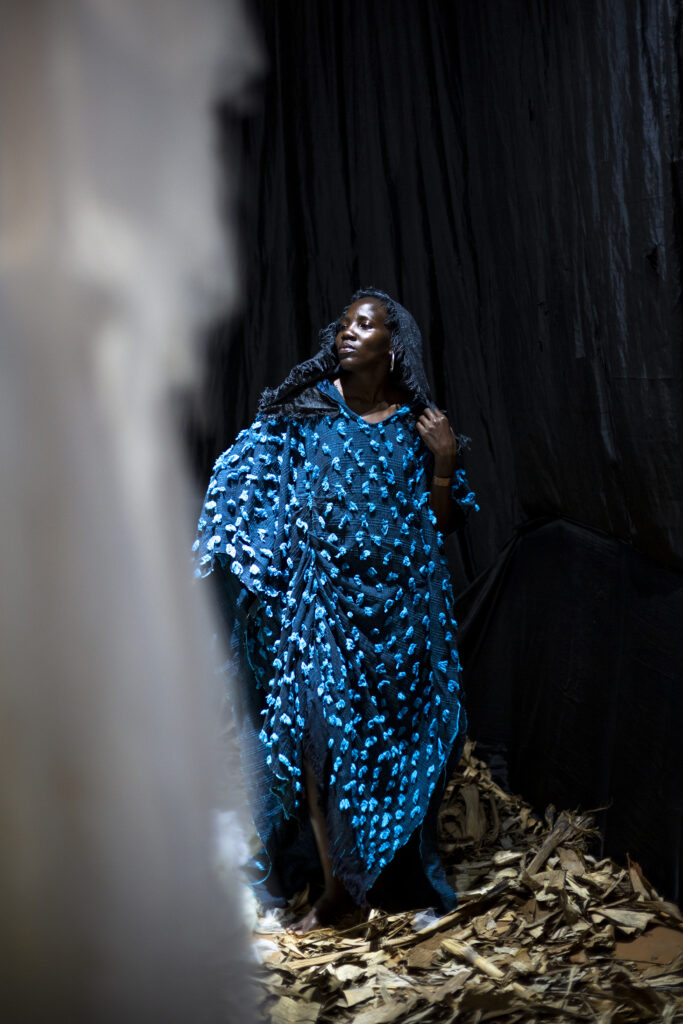
While Kwetu Kwanza is a moment of convergence, it also marks the beginning of something year-round. The newly established Fashion Cypher Residency in Kazo, Kampala, provides space for training, research, and collaboration in indigenous fashion and circular design.
During the festival, designers from Uganda, Ghana, Kenya, and Turkey will use the Residency studio for workshops and collaborative projects. Among them: Maganda Shakul (Tutabaale) and Saba Arat developing an interactive sound rug that transforms touch into music.
“Spaces like the Fashion Cypher Residency are vital,” says Saba Arat, Textile Sound Artist. “They allow artists from completely different contexts to meet, exchange, and create together. I’m thrilled to share what we’re creating at Kwetu Kwanza and the Nyege Nyege Festival.”
Tutabaale prints cowrie shell patterns onto deconstructed secondhand textiles. Amylia Clothing employs Deaf artisans in garment production and wooden homeware. Turkey’s Saba Arat weaves conductive thread into traditional kilims, creating surfaces that respond to sound.
“At Maisha by Nisria, we believe sustainability begins with intention, in how we create, consume, and connect,” said co-founder Cynthia Mwangi. “Our participation at Kwetu Kwanza 2025 celebrates fashion that not only tells our story, but also honors the planet and the people behind every piece.”
What Kwetu Kwanza shows is what circular fashion infrastructure looks like when it’s operating: temporary villages where designers share knowledge about material craft and natural dyeing. Mentorship programmes where experienced designers guide emerging talent. Residency spaces where designers work through material problems together. Festivals that function as educational platforms.
Festival Dates: November 20–23, 2025
Location: Kalagala Falls, Kayunga District, Uganda
More information: www.igcfashion.africa