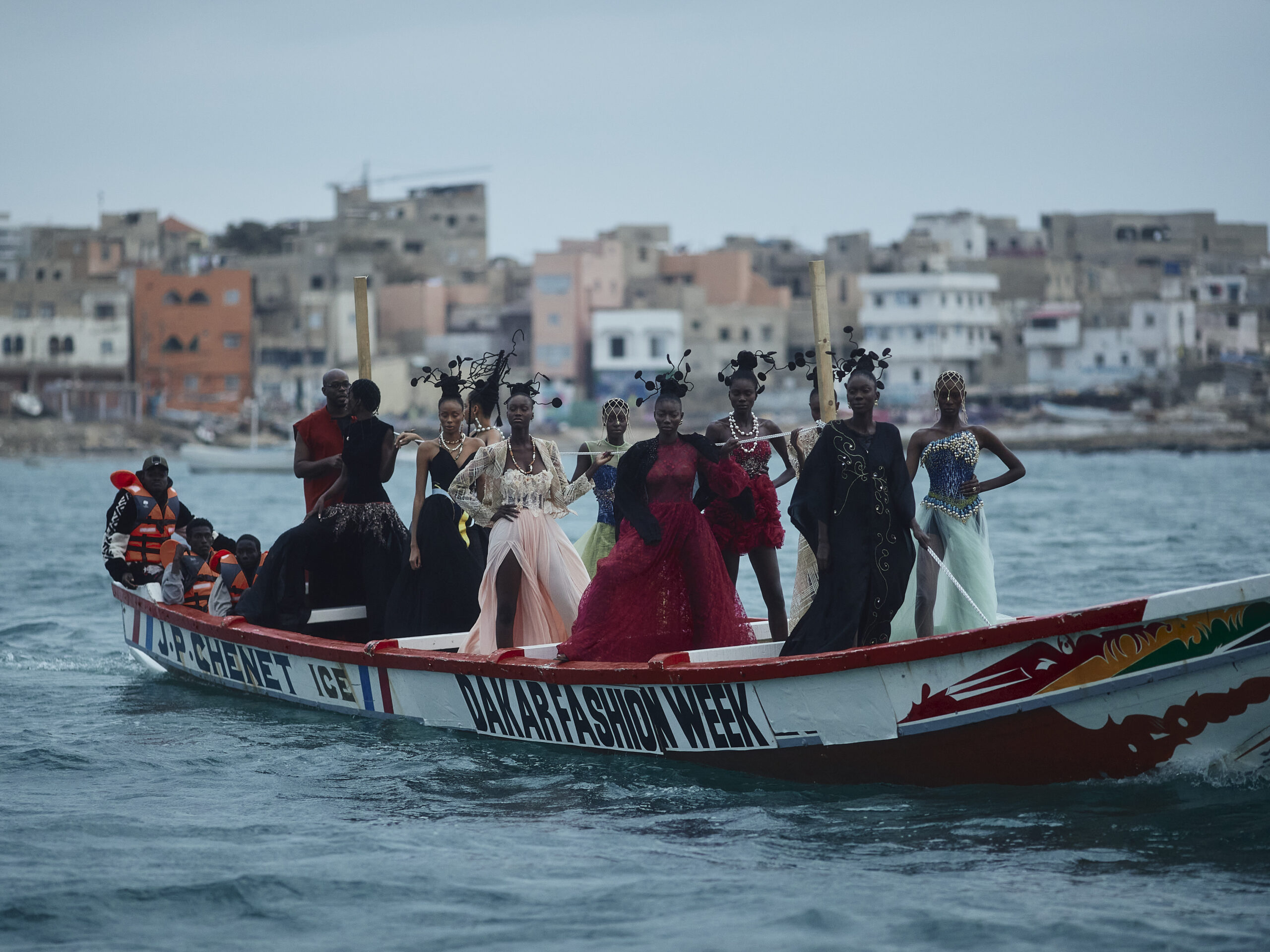
In Ouakam, a seaside neighborhood in Dakar where the Atlantic wind carries stories from centuries past, a quiet revolution is unfolding. Not in protests or politics—but in fabric, form, and rhythm.
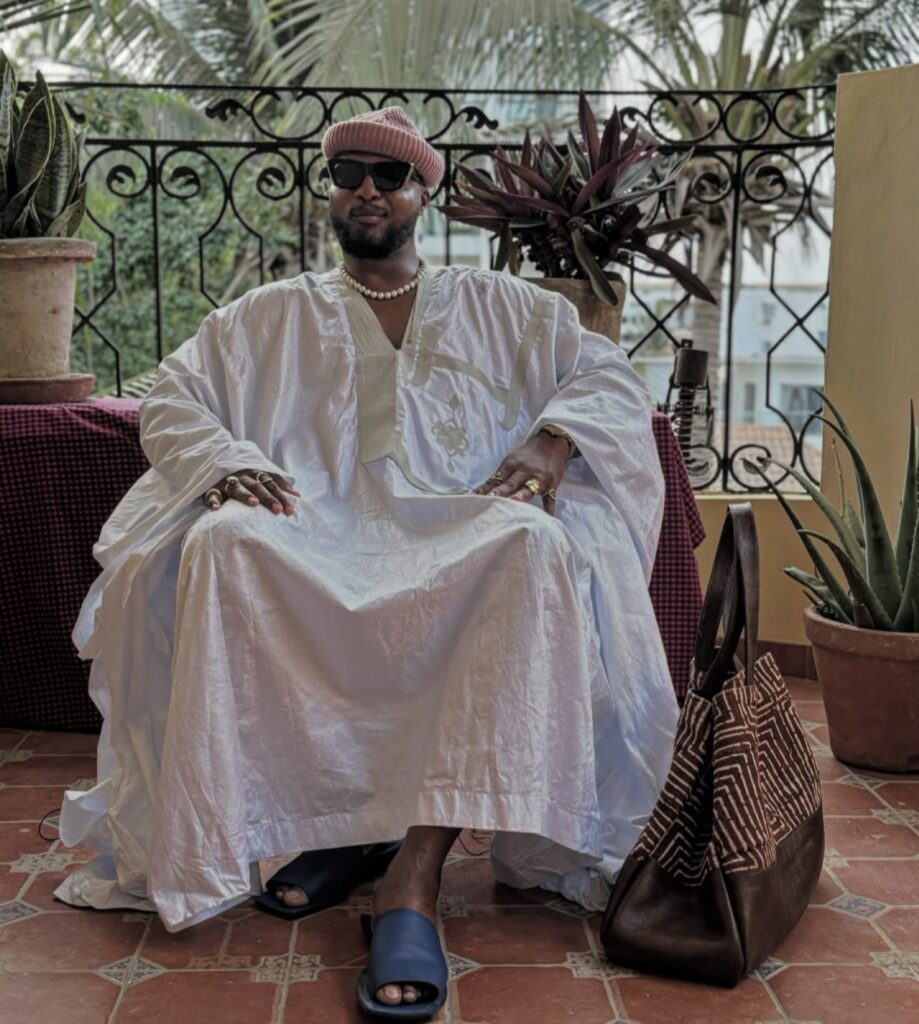
Tucked into a side street, far from the chaos of car horns and vendors, sits a boutique with no neon signs, no loud displays—just the subtle hum of a speaker and the warm scent of dyed cotton. Inside, earth-toned garments move as if breathing: soft ponchos, structured tunics, thick bags with stories stitched deep into their seams. This is Kakinbow, the fashion label founded by Aboubacarim Ndaw, a Guinean-Senegalese designer whose journey is as textured as the fabrics he uses.
There is always music playing—Afrobeat, jazz, reggae, Mandinka chants—soft enough to think, loud enough to feel.
“Music is mental and spiritual for me,” says Aboubacarim, seated at his worktable, fingers moving across linen and bogolan samples like a percussionist’s on djembe. “It helps me understand what I’m going through. It’s part of how I listen to myself. Every type of music makes me want to create something new.”
The First Dream: Football as Rhythm
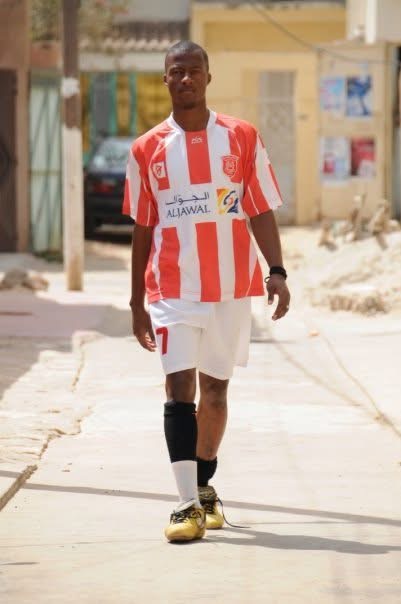
Before the fashion, before the fabric, there was football. As a teenager, Aboubacarim trained with the Dakar University Club (DUC), balancing school, sweat, and ambition. Football wasn’t just sport—it was structure, identity, and escape. Like many young boys across West Africa, he dreamed of the pitch as a passport to the world.
“I believed in it completely,” he says. “Football teaches you things early—discipline, sacrifice, routine. You don’t skip training. You don’t fake effort.”
In 2010, at just 20, he left for the United States, chasing the dream with boots laced and heart open. He played semi-pro with Real Maryland, a club known for giving international players a foot in the door. But the dream, like many, came at a cost. He was newly a father, working in restaurants to survive, playing without pay, and pushing through pain until the inevitable—a torn ACL.
“That was the turning point,” he says quietly. “I knew I had to make a choice.”
The injury ended his football pursuit, but not the fire. That same rigor, that daily commitment to craft, would be reborn in another form. And slowly, fashion became the new field.
The Second Calling: Stitching Memory into Form

In 2015, Aboubacarim returned to Senegal and launched Kakinbow, a name drawn from Kakimbo, the forested neighborhood of his childhood in Conakry, Guinea. Once the green lung of the capital, Kakimbo has been ravaged by unchecked urbanization. The forest, once vast and alive, now survives as a fragment—just ten percent of its original size.
“That forest raised me,” he says. “We played there, prayed there, listened to elders under the trees. Kakinbow is my way of keeping that alive.”
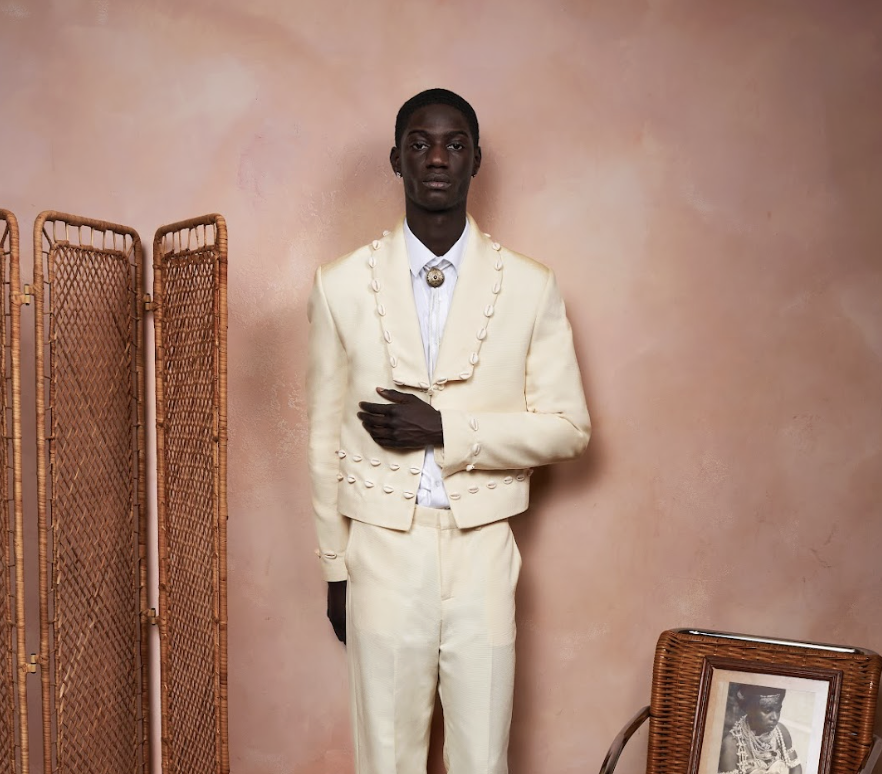
That spirit is woven into every piece. His garments are dyed in hues that echo the Sahel: clay red, charcoal black, mineral white. The hand-stitched seams resemble migration paths—bold, curved, never straight.
The boutique, opened in November 2024, is more than a store. It’s a sanctuary—where the sound of sewing machines mingles with Miles Davis, and where every rack holds garments that feel like tactile poetry.
The Beat as Muse: Music in the Studio
Music isn’t a backdrop at Kakinbow—it’s a co-designer. A Sabar rhythm might shape the cut of a new kaftan. A jazz solo might inspire a print that flows like melody. “Music guides the hands,” says Aboubacarim. “If I’m listening to Ali Farka Touré, I might work more slowly, more spiritually. If it’s Burna Boy or Youssou N’Dour, the energy shifts—there’s movement, boldness.”
This isn’t romanticism—it’s process. His studio team begins every day with music. Not because it’s mood-setting, but because it’s ritual. In Aboubacarim’s world, the sound is just as sacred as the stitch.
Discipline, Disruption, Design
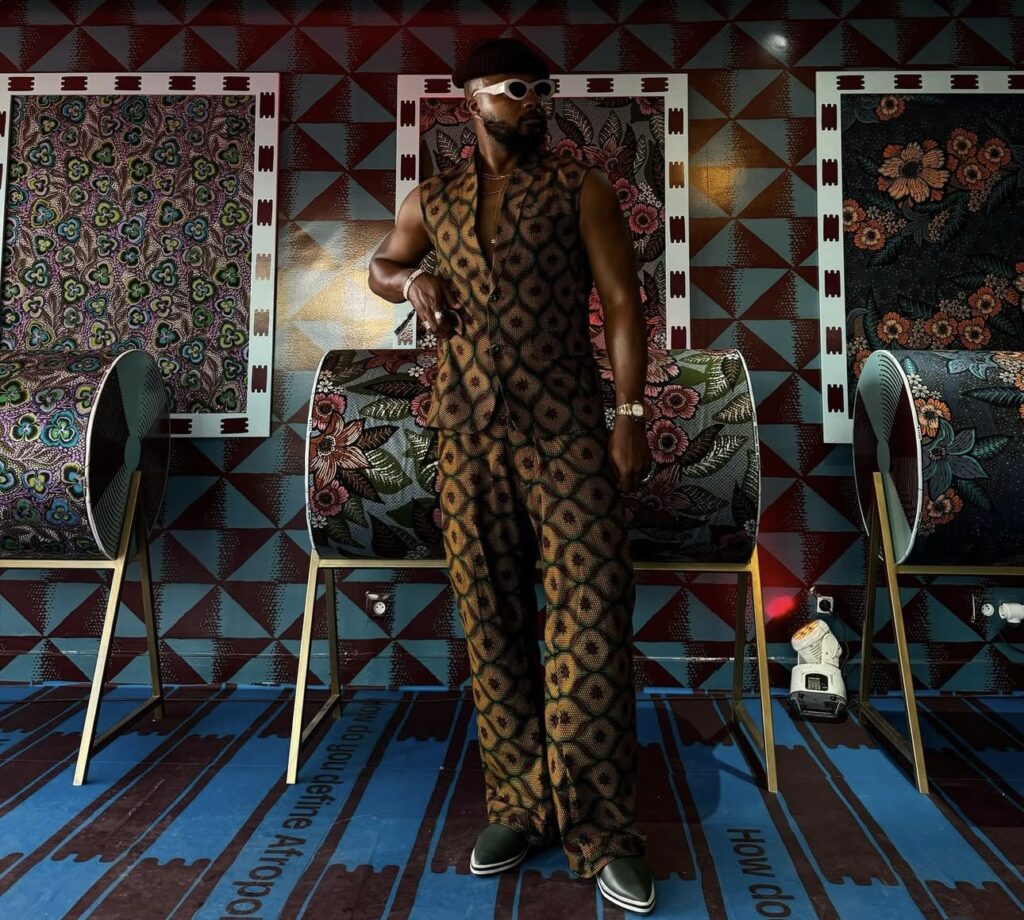
What links sport and fashion is not surface—it’s structure.
“In both football and design, you need systems,” he explains. “You have to trust repetition. You wake up and work—even when it’s hard, even when you’re uninspired. It’s that rhythm that brings results.”
From football drills to fabric swatches, from sleepless games to late-night sketches, Aboubacarim has learned that the real art lies in commitment. “Design isn’t glamorous every day,” he laughs. “But it’s alive. It keeps you honest.”
That commitment has paid off. Kakinbow now ships internationally via the ANKA marketplace, reaching clients in the U.S., France, Belgium, Canada, and the U.K. Yet, Aboubacarim’s vision isn’t driven by Western validation.
“I want more shops across Africa. I want Kakinbow in Cotonou, Abidjan, Bamako. I want young African creatives to see you don’t have to leave to be relevant.”
What the Hands Remember: Materials as Memory
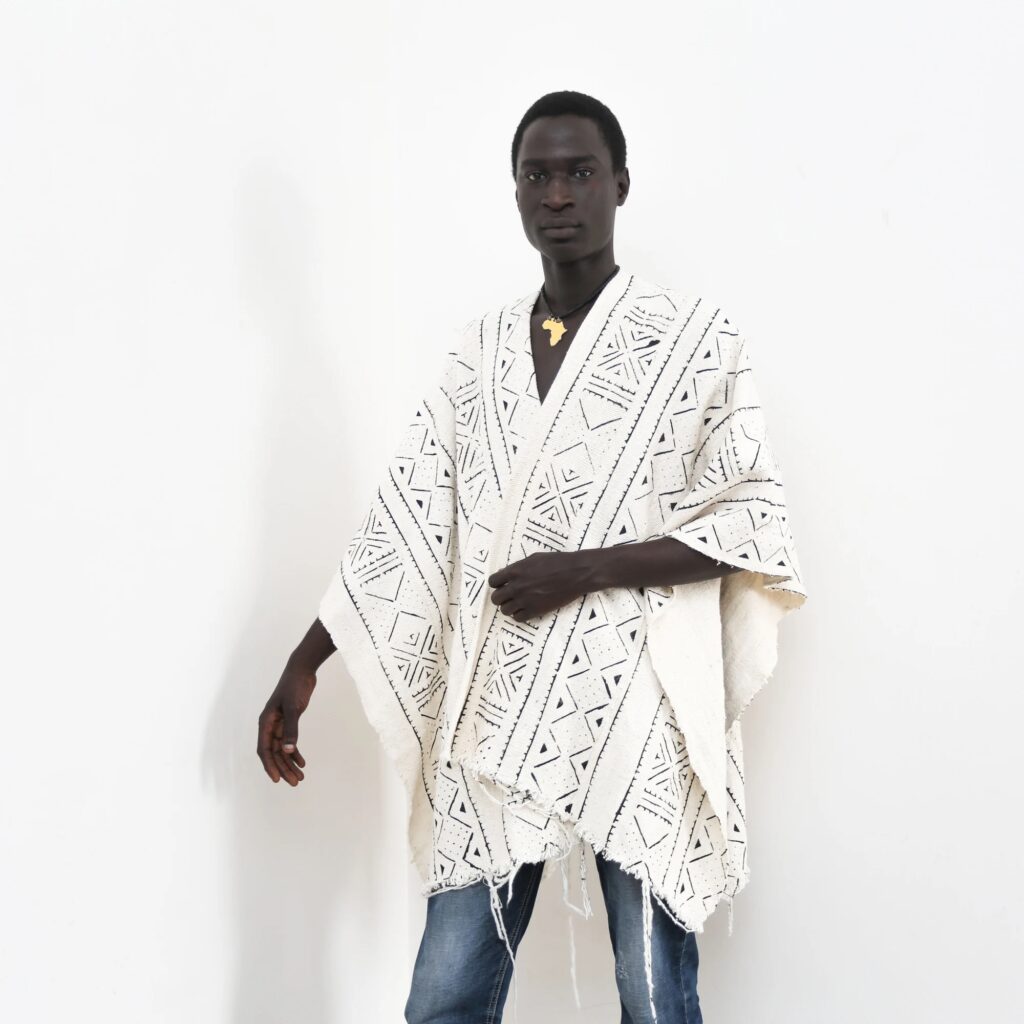
At the heart of Kakinbow’s design language lies a profound reverence for materials that speak—fabrics chosen not just for beauty, but for their stories, textures, and cultural memory. Every piece begins as a conversation with heritage. Aboubacarim works primarily with handwoven cotton, West African waxprint, natural-dyed linen, and bogolan—the iconic Malian mud cloth traditionally used in ceremonial garments. “Bogolan isn’t just a fabric,” he says. “It’s a language. Every brushstroke of clay tells a story.”
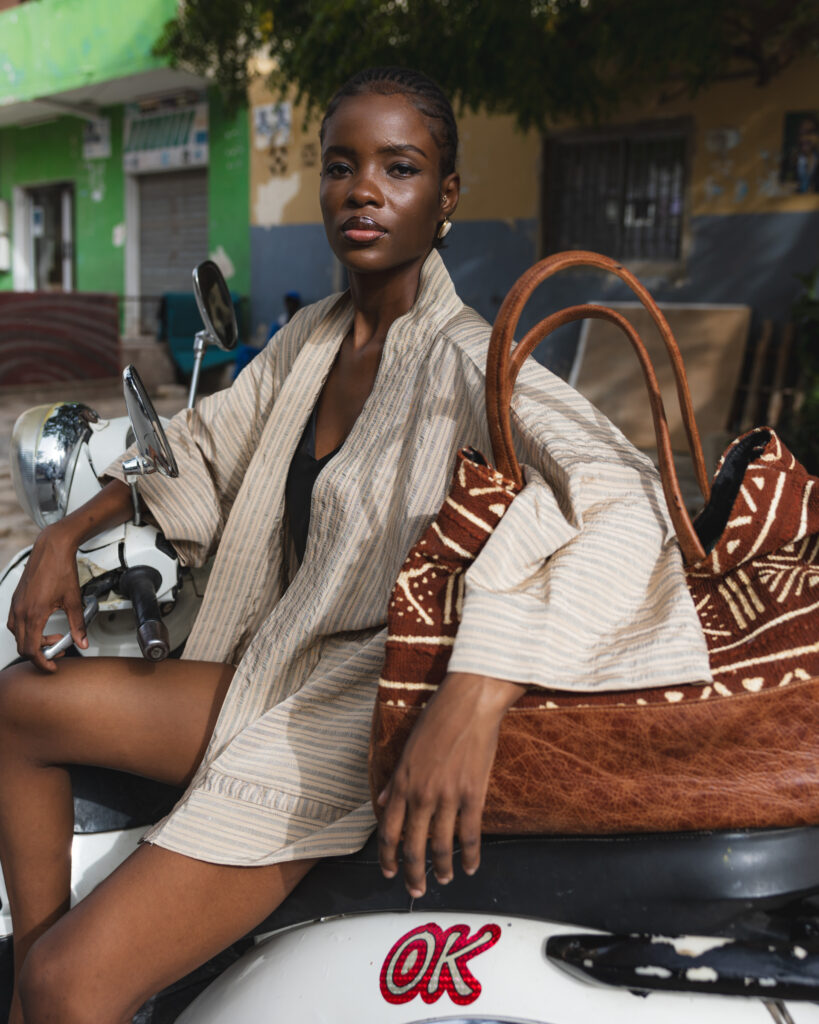
The brand’s diverse range reflects this storytelling spirit: from soft cotton tees and cozy ponchos and wraps, to bold bof plan jackets that fuse utility with artful design. His flowing jalabas and structured kaftans pay homage to classic West African silhouettes, while breathable linen two-piece sets bring modern ease to traditional form.

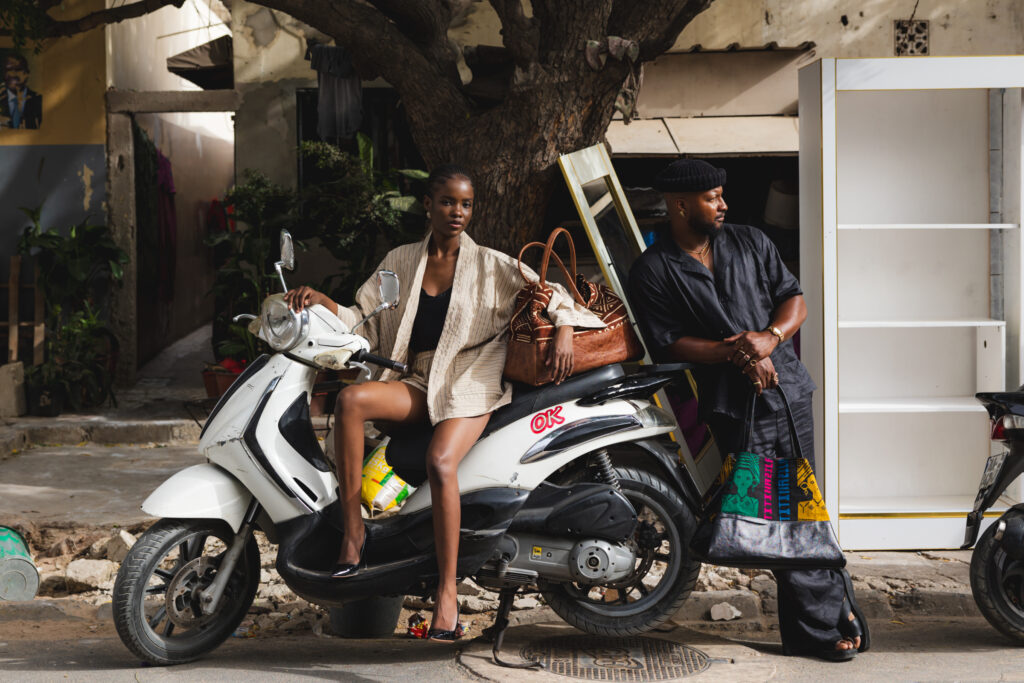
Kakinbow’s Touki Kat bags are standout pieces—handcrafted from bogolan and finished with carefully selected leather trims. These sculptural handbags and duffle bags feel like travel companions, carrying the weight of history in their hand-dyed patterns and tactile surfaces.
Together, this collection is more than fashion—it’s a living archive of craft and culture, designed to be worn, felt, and remembered.
“Kakinbow is about what the hands remember,” Aboubacarim reflects. “The rhythm of weaving, the silence of dyeing, the weight of cotton against skin. These things speak before words do.”
The Dream Continues
If the first dream was football, and the second was fashion, what is the third?
“Expansion. Joy. Teaching others,” he says. “I want to create something people enjoy. I want them to wear a piece and feel the story in it. And for me, that story always begins with rhythm—whether it’s the beat of the ball or the beat of the drum.”
As dusk settles over Dakar, the boutique lights flicker on. Inside, a new garment is being pinned. Outside, the call to prayer mingles with the distant beat of a djembe. And in the center of it all, Aboubacarim sketches—still moving, still dreaming, still dancing to his own soundtrack.
Listen to the Guzangs playlist on Apple Music, selected by Aboubacarim Ndaw.