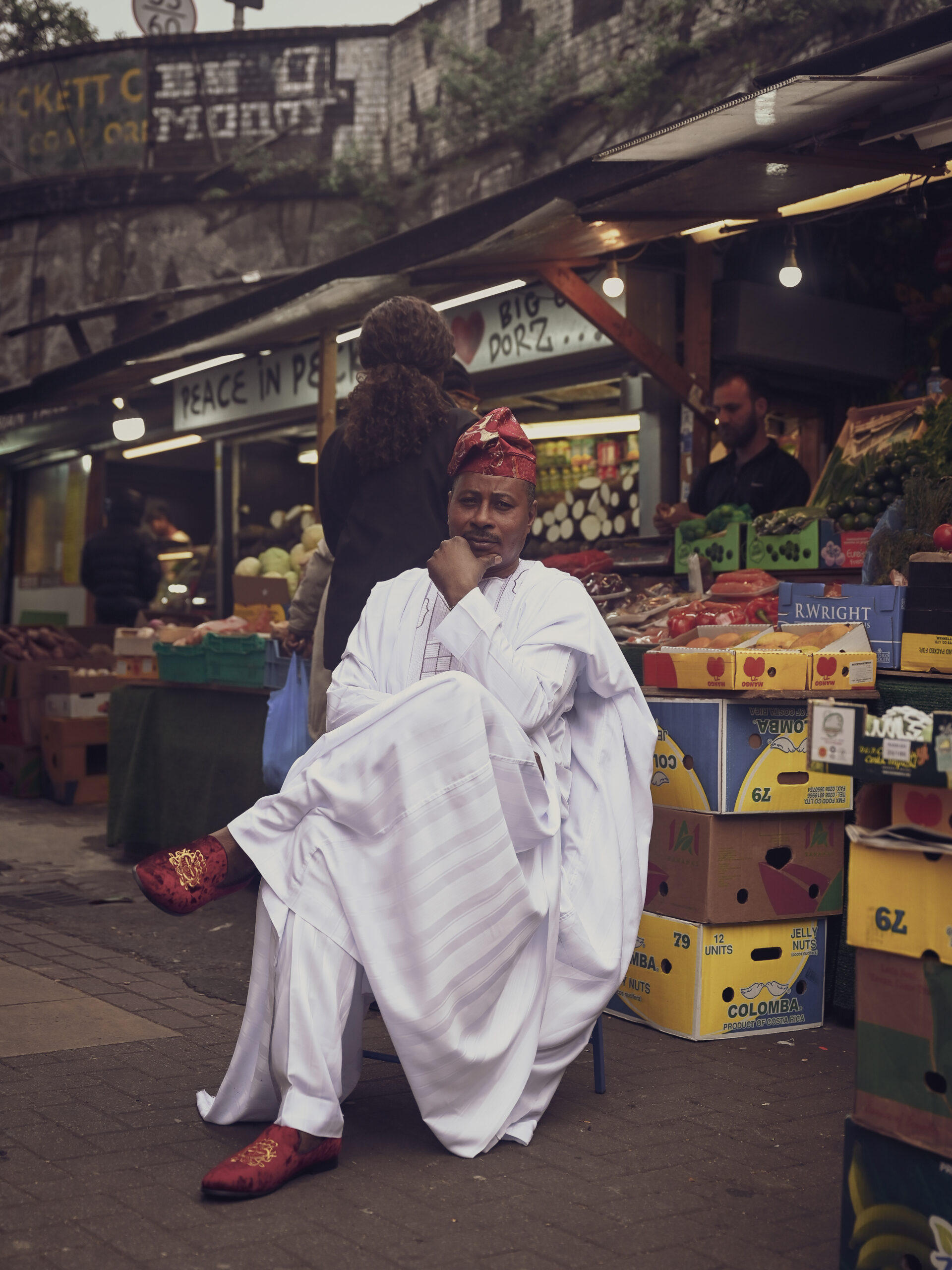
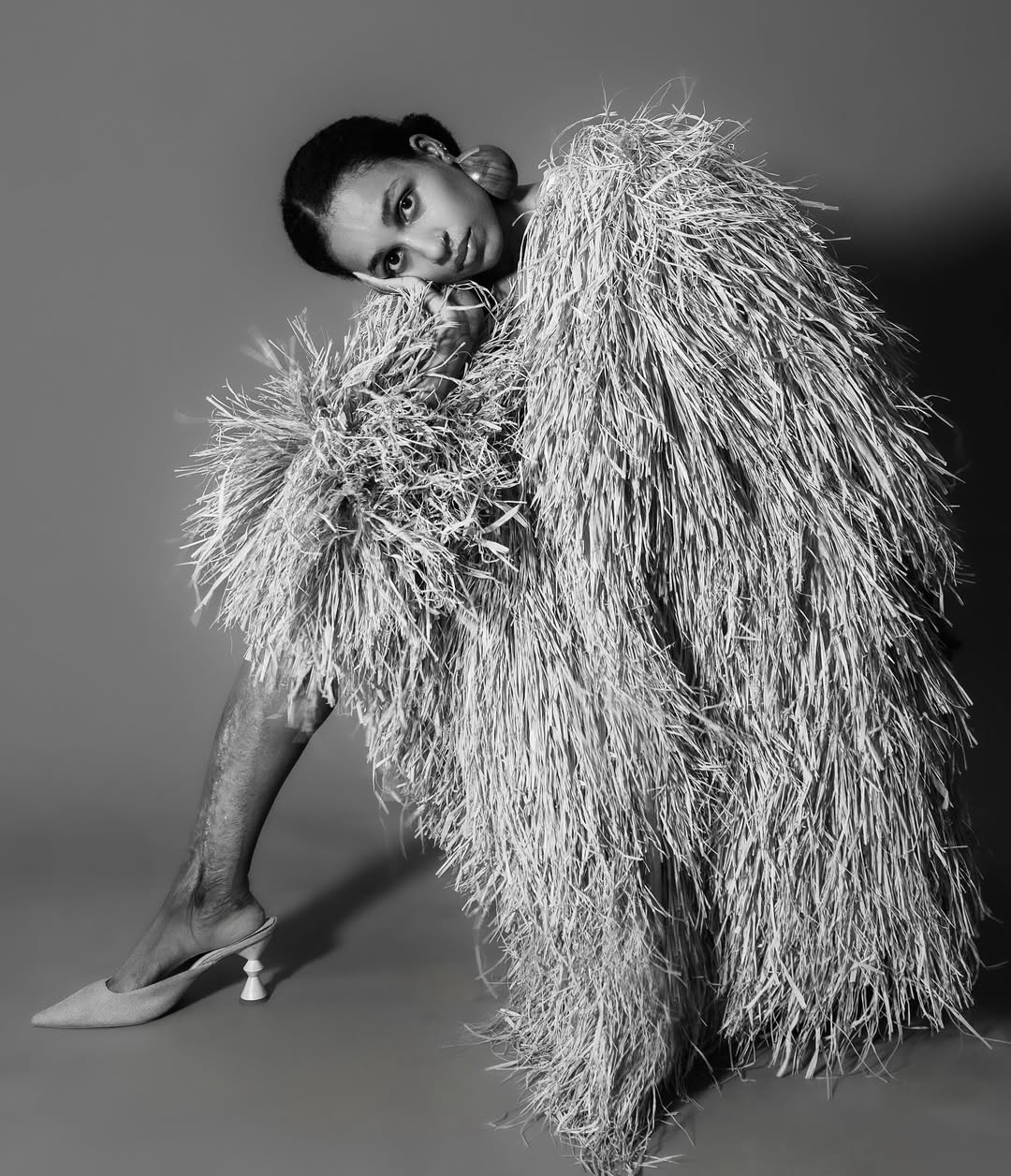
What does it mean to feel displaced, to long for home even when it’s far away? For photographer Mike Kure, the answer lies in the eyes of children who carry the weight of lost faith but still harbor hope that tomorrow might bring better opportunities. Working predominantly in dark tones and black and white, Mike’s portraiture calls to mind the vibrant images of Seydou Keïta and Rotimi Fani-Kayode—that smooth visual activism that captures their subjects’ souls, allowing viewers to interpret their own emotions alongside those within the frame.
Kure was born and raised in Lagos, a city he describes in many ways but most memorably as “a city where everything stood in motion with everyone chasing something, and no one standing still, even when it hurts.” It was this context that shaped his early days, growing up among people who were constantly creating something out of nothing.
He recalls his most cherished day of the week—Saturday—spent with friends in the field near his house where they played football. It was his first real community and one that introduced him to creative spirit, alongside the painter who lived down his street, renowned for her work.
“I didn’t understand it at the time, but something about her presence stayed with me. There was a quiet defiance in how she worked, how she made space for herself in a world that didn’t make it easy. That was the first time I realized art could be a kind of survival,” he recalls.
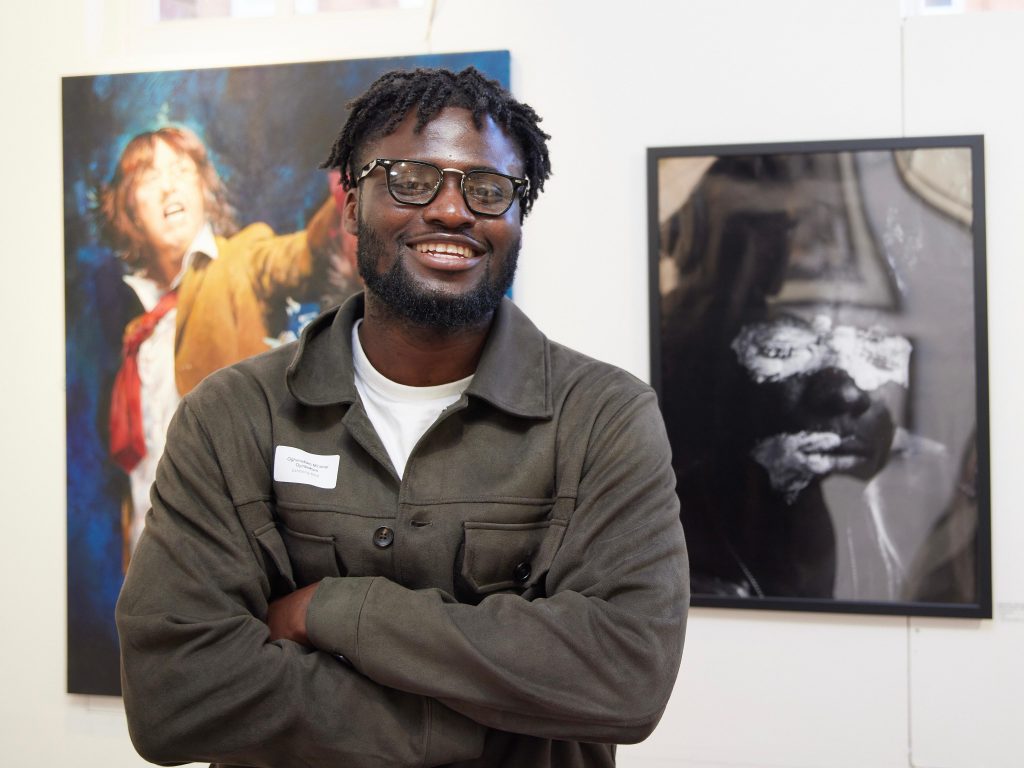
Her creativity inspired him to pick up a camera, even though he was young and still learning. “I felt this pull to document, to tell stories, to hold onto the everyday beauty of the people around me. That courage to lift the camera and say, ‘this matters’—that was the beginning. That’s a memory I carry with me always.”
His pivot into photography came as a response to loss. At first, it was a way of holding on to things he was afraid would disappear, especially people. But over time, it became a language for what he couldn’t say out loud: the feeling of being physically present but emotionally lost, the weight of migration, the silence that comes with fear. This became especially true after relocating.
When he started experiencing what he now understands as agoraphobia, photography became his way of reclaiming space—emotionally and psychologically—allowing him to face difficult truths without always having to explain them.
Kure draws inspiration from the visual aesthetics of prominent photographers from the 1960s and 1980s, particularly Seydou Keïta and Rotimi Fani-Kayode, who have been fundamental in shaping his artistic vision. Keïta’s portraiture taught him how identity can be preserved in the most subtle details. Fani-Kayode, on the other hand, gave him the courage to lean into vulnerability, into the surreal, and into the truths of displacement—his work is almost spiritual in how it confronts exile and longing.
“They didn’t just influence my photography; they helped strengthen what I call my inner eye of art,” he notes. “They refined what was already in me, helped me work with intention to create images that don’t just look beautiful but say something—especially about the complexities of belonging, migration, and becoming. Their art continues to remind me that photography is not just about seeing; it’s about witnessing. About holding space for what isn’t always easy to articulate.”
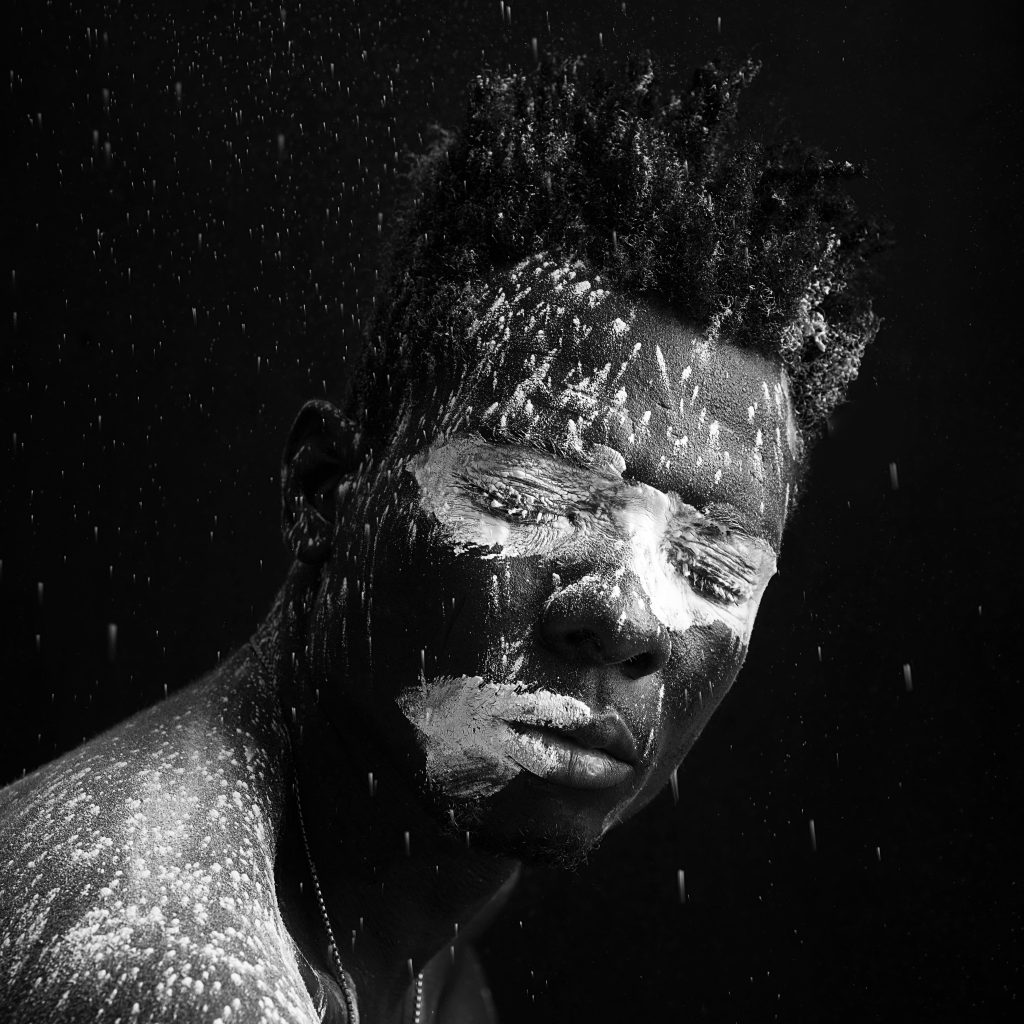
Mike moved to the UK in 2020. At first, he thought he was chasing creative freedom, maybe even safety, but what he found was a different kind of confinement. The first few months were quietly intense, marked by an immediate sense of emotional dislocation. He wasn’t prepared for how isolating it would be or how hard it would be to exist in a place where he was physically present but emotionally suspended. That sense of not belonging gradually evolved into agoraphobia.
“Coming from Lagos, where there was so much sound, community, and movement, the stillness I experienced in the UK felt loud in a different way. I missed home in waves—not just the people or places, but the feeling of being seen without having to explain myself. There were moments I wanted to return, moments I questioned what I had walked into,” he tells Guzangs.
But even in that discomfort, one thing remained clear: he had to tell this story. The story of migration as a complex emotional landscape of displacement, internal fragmentation, and longing. That urgency became the seed for his work. It wasn’t about recreating Lagos—it was about documenting what it means to carry your home within you when the outside world refuses to make space for it.
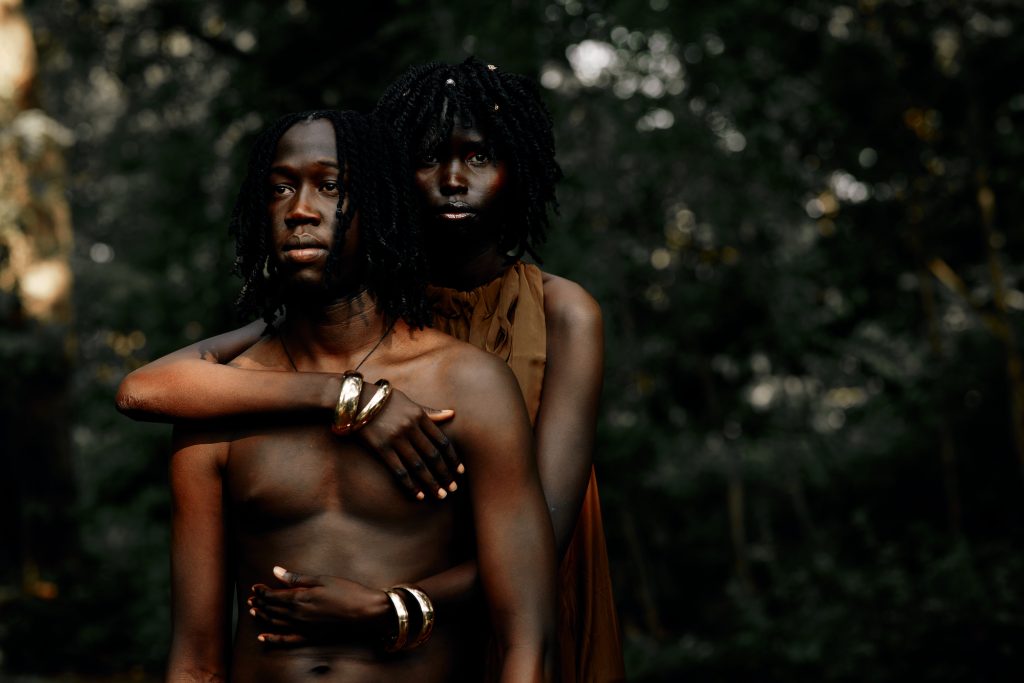
Now, his work serves as a visual archive of these emotions. Titled “Echoes of Pain,” it’s a series of portraits that explores displacement and longing. But Kure doesn’t examine the subject only through his own lens—he explores the pain experienced by migrants, especially Black migrants, who live with this silent grief, the feeling of being away from home, of being unable to belong anywhere fully.
“Echoes of Pain was born out of the need to tell that story—not just mine, but ours,” he states. “It became a way of mirroring my emotional state for others who are living through that same experience, or who have lived through it, or who may one day find themselves there. I wanted people to look at these portraits and feel less alone. I wanted them to see their own fears, longings, and displacements reflected and, in that reflection, find some kind of quiet affirmation.”
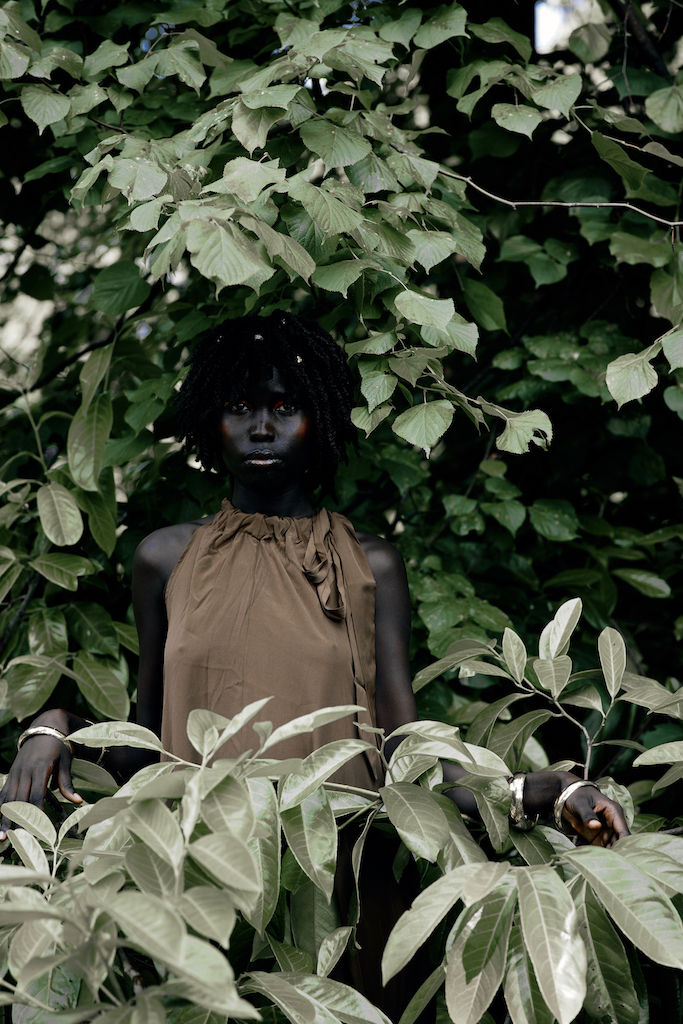
In the portraits, children stand together in a forest, their faces weary and their bodies echoing with the urgency to return home. The concept of lost children in a forest emerged from the photographer’s need to represent that inner state: the confusion, the silence, the vulnerability of navigating a new world with no clear path forward.
Mike created the work in Switzerland, choosing the forest because it represents something deeply familiar, something that transcends geography. It was his way of maintaining connection to cultural and emotional roots, even on foreign soil. Healing emerges as a recognizable theme throughout the body of work, and though it feels silent, it aligns with grief.
“Migrants carry invisible grief that makes them feel stuck between where they’ve left and where they haven’t fully arrived. Through this work, I wanted to create a mirror that says, ‘You’re not alone in this.’ That’s the greatest gift my work can offer: a reminder that someone else feels it too. And for others who may not carry these particular stories, I hope the work becomes an invitation to witness, to feel the weight and beauty of lives that are often unseen. Because when we feel each other’s stories, we start to understand what it means to belong to one another,” he adds.
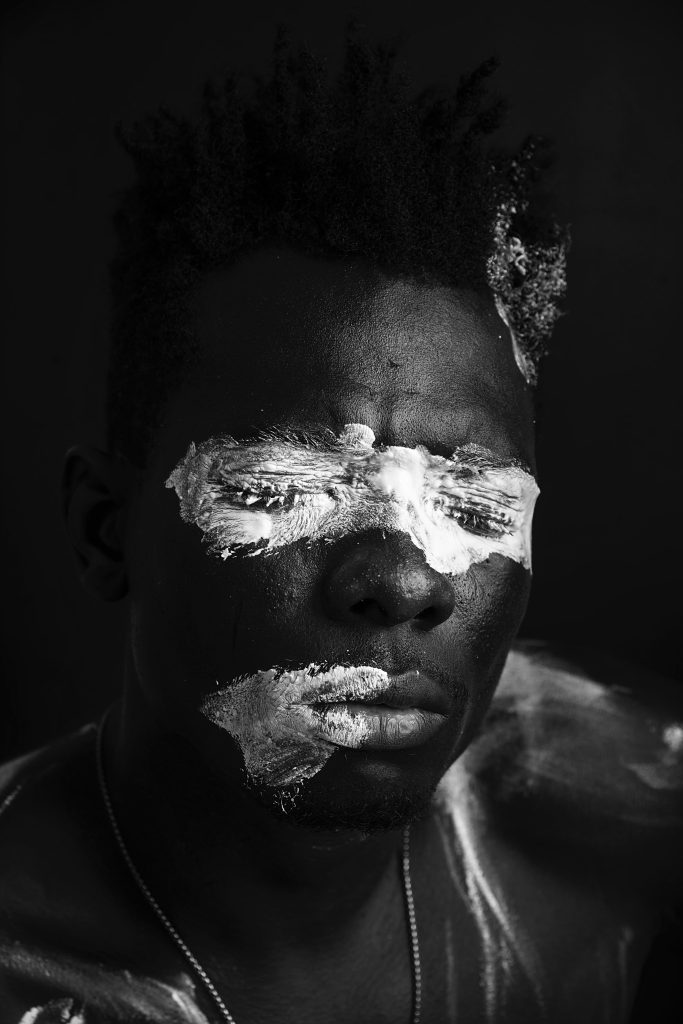
Currently, Kure is working on a new body of work titled “Root and Reach Paradise”—a project he’s pouring all of his passion into.
“The work has already begun, and I expect it to be completed within the next five to six months. My hope is that by the time it reaches people, it will land in a way that feels timeless. I believe this project will stand the test of time because it’s coming from an honest place,” he says.
Get the latest stories, runway news, and emerging trends delivered straight to your inbox. Subscribe to Guzangs