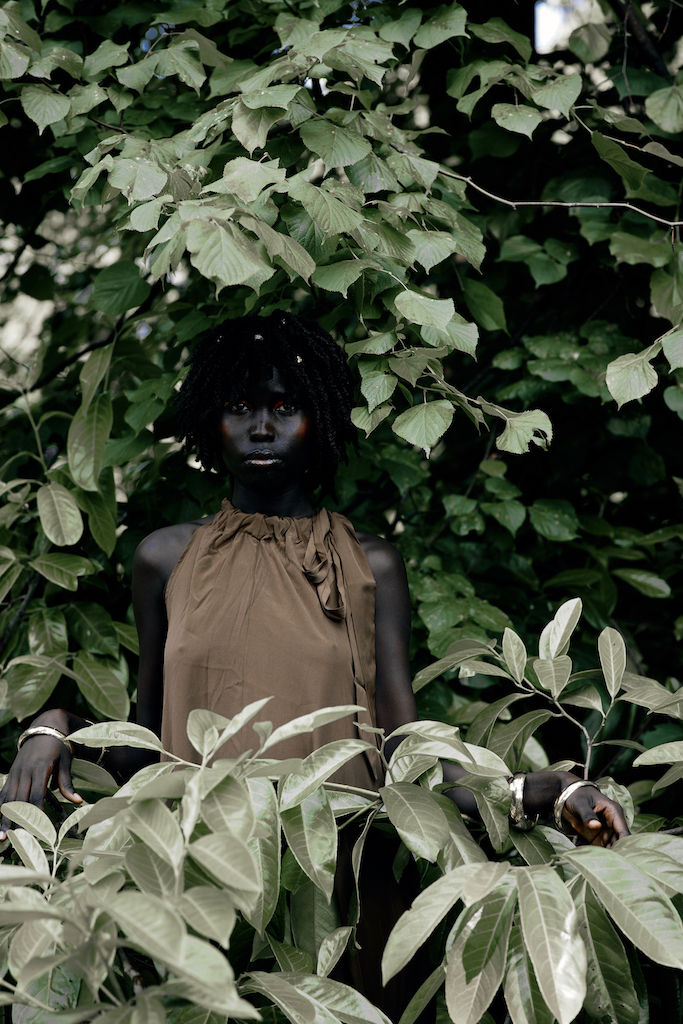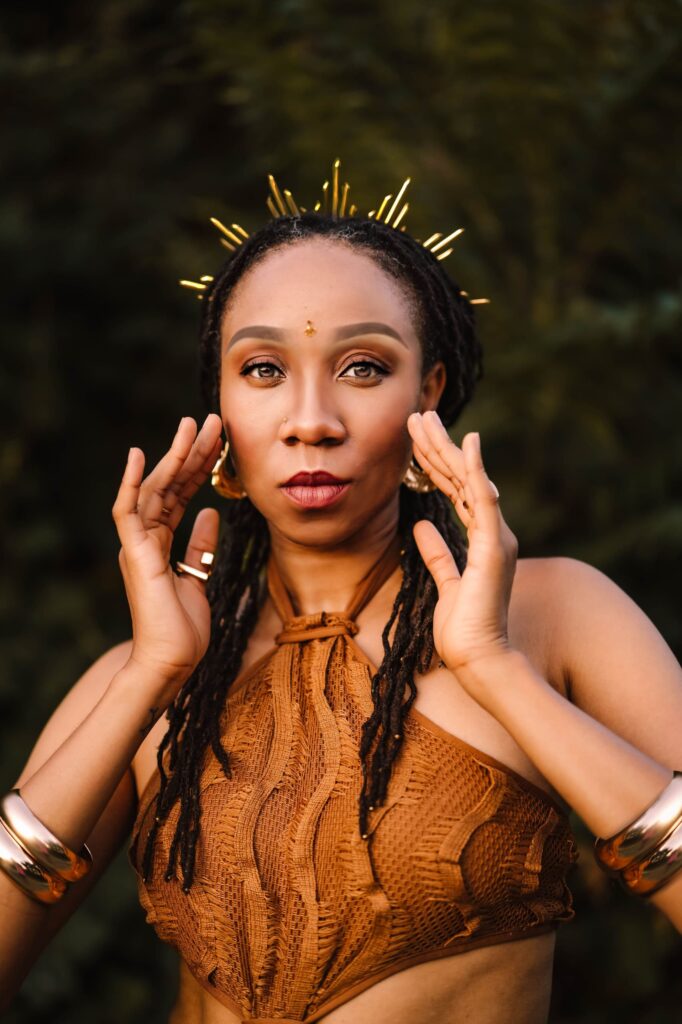
In a world seduced by speed, surface, and spectacle, Data Oruwari moves like an ancestral drumbeat — steady, sacred, and impossible to ignore. Known as The Ancestors’ Scribe, she is not merely a visual artist, but a sound alchemist, a spiritual technologist, and a living archive of African ancestral cosmology. Through glyphs etched in ink and frequencies summoned in ritual, Oruwari conjures portals of remembrance — spaces where sound is sacred code, and silence is a language of its own.
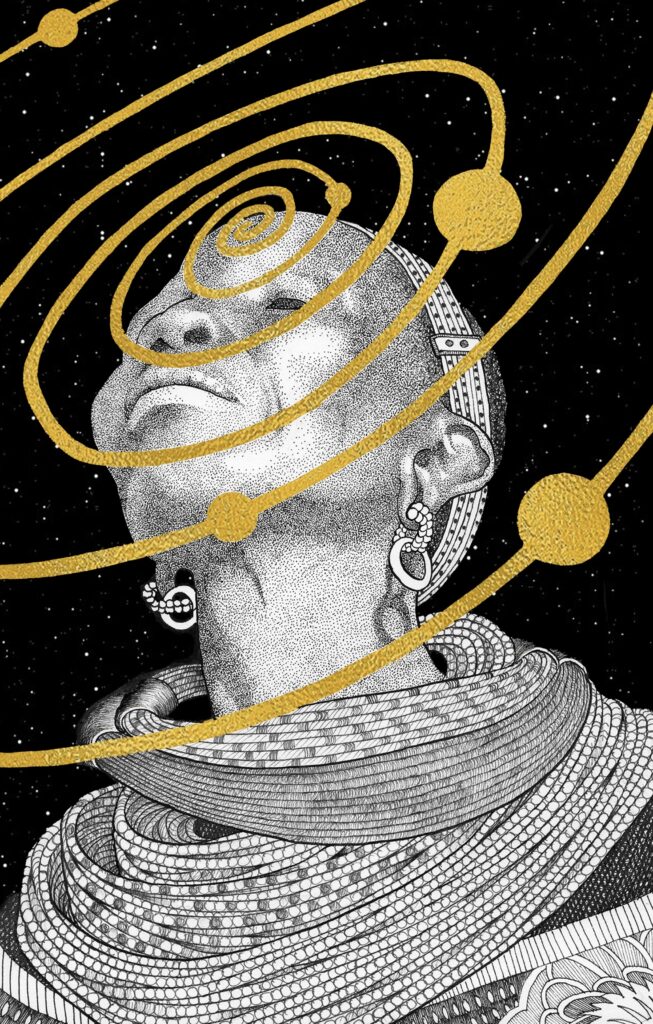
A Nigerian-born, Virginia-based visionary, Oruwari works primarily in pen, ink, and gold leaf. Her intricate, iconographic artworks channel Afro-spiritual cosmology and explore the sacred interconnectedness of the seen and unseen realms. Both her visual and sonic practices are rooted in ritual, functioning as tools of decolonization, cultural preservation, and spiritual reawakening.


“My work deeply honors ancestral knowledge systems,” she tells me. “Cultural preservation isn’t just about archiving memory. It’s about becoming a vessel—absorbing, embodying, transmitting what the ancestors encoded into symbol, rhythm, and spirit. It is a portal to wholeness.”
Guided by both Yoruba and Igbo heritage, and deeply rooted in Kemetic and Odinani philosophies, Oruwari’s practice dissolves the Western split between sound and image, the seen and unseen. Her canvases vibrate with sacred geometry and spirit-led iconography. Her soundscapes hum with elemental energy and spiritual precision. Nothing is incidental. Everything is intention.
Her paintings are not ornament. They are invoked. Created through trance, prayer, and ancestral dialogue, each piece emerges as a transmission—part relic, part roadmap. Rendered in earthy ochres, celestial blues, and the occasional shock of gold leaf, her work evokes not just aesthetic awe but cellular recognition.

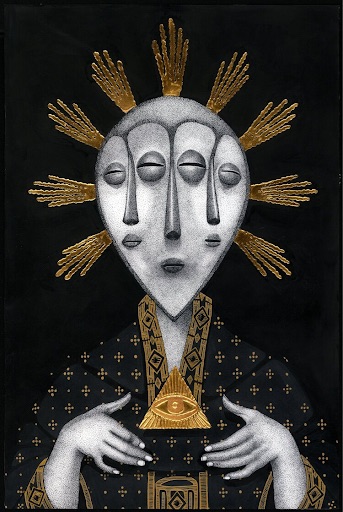
Her recurring muse is an ancestral feminine archetype—sometimes winged, sometimes crowned, always sovereign. The presence of this feminine frequency is not limited to her visuals—it reverberates through her music. In Sacred Elemental Ritual, her original soundscape and spiritual offering, Oruwari weaves wind, water, chant, and handpan drum into a meditative sanctuary. It is a sonic altar—part lullaby, part lightning strike.
“There is a misconception,” she says, “that progress means moving beyond our ancestors. But I’ve come to understand that they left us blueprints—spiritually, ecologically, cosmologically. The further I go into my practice, the more I realize: we don’t need to create something new. We need to remember.”
And remember she does.
Oruwari’s creative process is ceremonial. Before picking up a pen or playing a note, she prepares her studio like one might prepare a temple: cleansing the space with ancestral herbs, invoking spirit through prayer, aligning her energy through sound. Her preferred instrument is the handpan drum, whose resonance induces a trance-like state.
She calls this artistic divination—a practice where creation is less about execution and more about surrender. Surrender to what the soul already knows. Surrender to what the ancestors are still whispering.
Her musical palette is as intentional as her visual one—each track a tool for ritual, alignment, and ancestral connection.
These aren’t songs for mood—they are medicines for memory.
And yet, for Oruwari, the most potent sound is not always audible. This belief—that silence, like sound, is a frequency—underpins everything she creates. Her art does not demand attention. It invites listening. Her music does not entertain. It initiates.
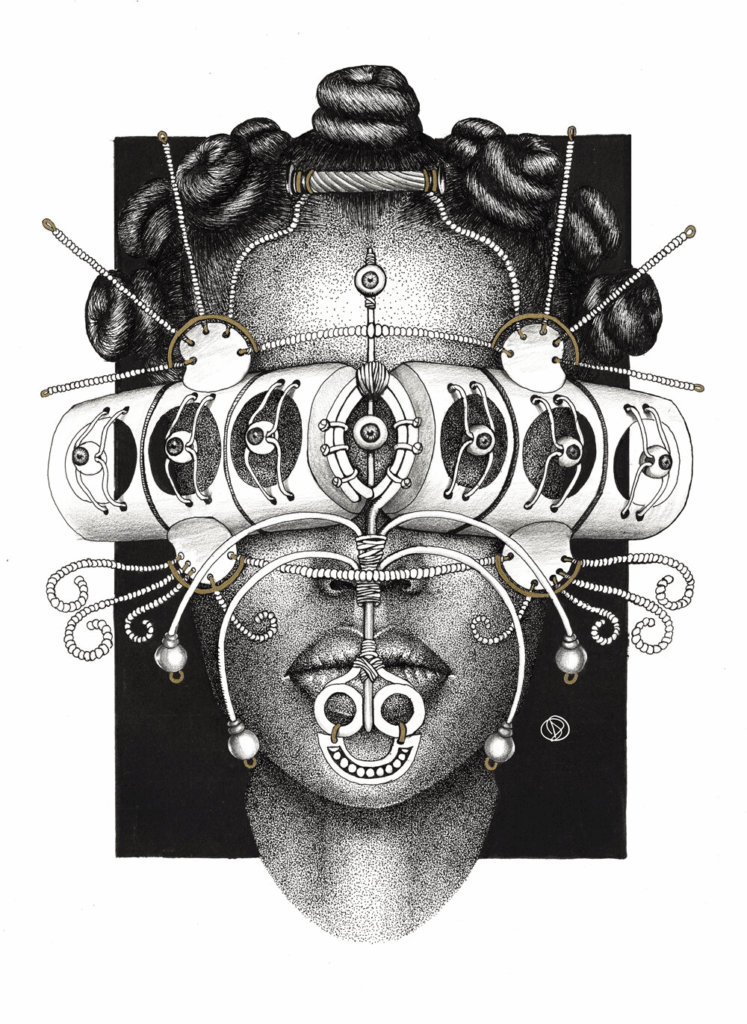
Today, Oruwari stands at the helm of a new wave of spiritual creatives reclaiming indigenous African technologies—not as aesthetic inspiration but as sacred responsibility. Her upcoming solo show, Echoes of the Nile, opening this August in Richmond, Virginia, reinterprets the ancient spiritual laws of Ma’at through contemporary art. It is both remembrance and prophecy. Both offering and mirror.
“I don’t create to impress,”she tells me. “I am created to awaken. To remind us of what we already carry in our bones.”
In a time when culture is commodified, and the sacred often stripped of its soul, Data Oruwari’s work feels like a return. A return to truth. To spirit. To the original frequency from which all creation springs.
Her art doesn’t just speak.
It vibrates.
It summons.
It remembers.
And for those ready to truly listen, she offers the key back home.