
Every year on July 28th, Harlem becomes the stage for the Senegalese, and more importantly, the Murid diaspora in New York City for Bamba Day, a march honoring Cheikh Ahmadu Bamba’s teachings and excellence. The streets of 116th and 7th Avenue resonate with chants of Allah (swt) and Bamba, creating a communal presence that publicly affirms Ahmadou Bamba’s holiness, the Senegalese diaspora’s place in Black America, and the global excellence of Islam. In anticipation of the march, organizers circulate an all-white dress code. This coordinated fashion choice stands out and calls for closer attention—a visual statement parallel to the chants.
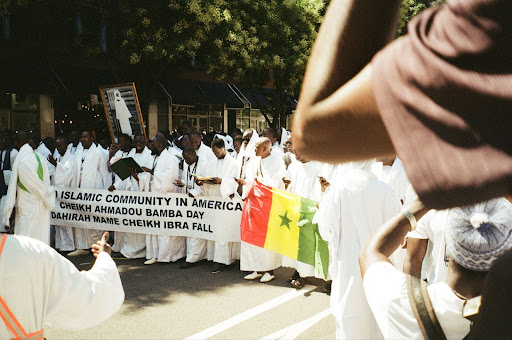
Of the many traditions in Murid teachings, Bamba Day is unique in that it originated in the diaspora. Cheikh Ahmadu Bamba Mbacke was a saint born in the 1850s in Central West Senegal. He was known for his teachings of non-violence, spiritual cleansing, and khassaid, or poetry, which are part of chants. Bamba’s son, Mourtalla Mbacke, traveled to New York in the 1980s, visiting a growing community of Senegalese and other West African migrants.
This visit helped establish what would become a thriving Murid presence in Harlem. Today, a diaspora of Murids is situated in Harlem, with “Little Senegal” booming with Senegalese restaurants, corner stores, hair salons, and other businesses on 116th Street. In 1988, the mayor of Manhattan proclaimed July 28th a day “to honor [Bamba’s] distinguished memory and his outstanding achievements for the benefit of African personality and culture.” From this official recognition emerged what has become a yearly broadcast of excellence in identity for the Murids, transforming a spiritual commemoration into a public declaration of community presence and values.
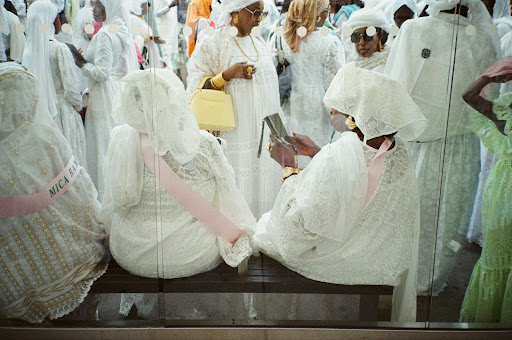
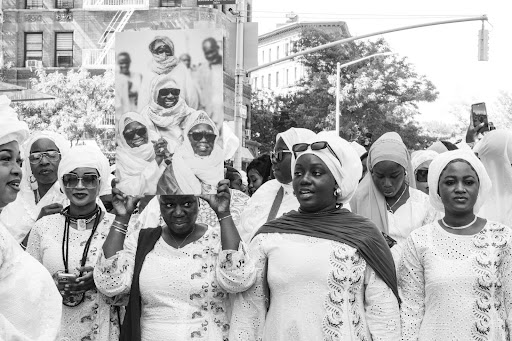
The procession is split into sections; dahiras, or Murid circles that coordinate beforehand, wear matching outfits and lead different chants. The Murid Islamic Center of America (MICA) runs the celebration and has a group of affiliated women in the back. They all wear matching white dresses of eyelet fabric (brode in Wolof). Four months before the march, these women vote on a dress design, keeping modesty and weather in mind, and place a bulk order with their trusted tailor in Senegal. “You won’t wear the same thing for Bamba Day that you would for a naming ceremony or wedding. We need to have our shoulders covered and all that,” said an organizer. The color white represents peace, and it’s worth noting that there is only one known photograph of the saint in which he’s wearing a white thobe and headwrap. The marchers imitate his dress and print his photo onto necklaces and bracelets, invoking his memory and his barakah (blessing).
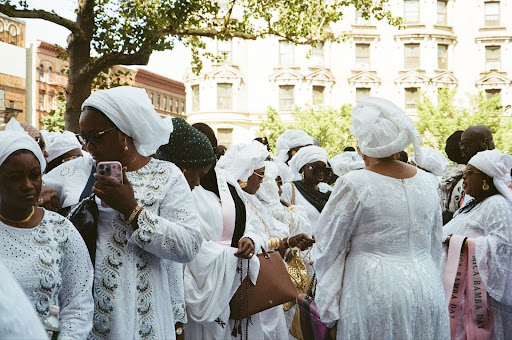
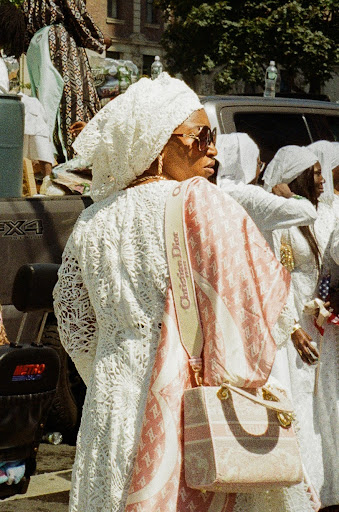
The specifics of what is worn are not necessarily important, but how it’s worn matters. With sartorial excellence on display, the cultural significance of this practice is apparent. Senegalese women embody the idea of sañse, or dressing up that involves “an extreme performance of elegance and sophistication” or “the creation of an elegant and refined presentation of self.” Dressing up is essential for Senegalese women. “We want to show people that Islam is beautiful,” says an attendee and organizer. Everybody has their makeup done with new outfits, gold jewelry, and flashy handbags. Excellence in appearance is supposed to draw in spectators, serving as dawah, calling people into the practice and inviting questions about who this group of people is and why they are gathered. “Islam has its own fashion,” says one of the attendees. “When somebody sees you, they know you’re Muslim.” Many onlookers stop to record videos of the procession, asking what is happening. A summer camp instructor brought her students out onto the street to watch, and another passerby commented on how beautiful everyone looked.
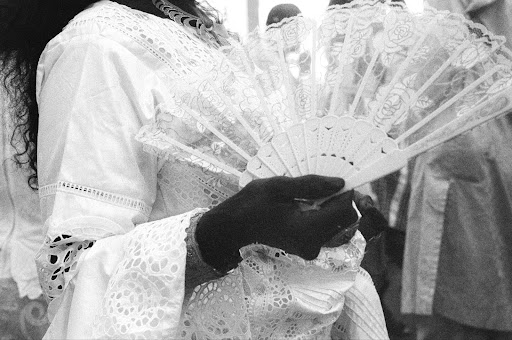
Henna-manicured and gold-adorned hands carry posters advertising MICA and calling for donations for community development. Most people also carry tasbihs, or prayer beads, which are used to repeat phrases of remembrance—a more subtle accessory but just as significant. Remembrance, or dhikr, is a central part of Islam, and the beads, varying in color and size but always in sets of 33, facilitate repetition of phrases glorifying Allah. One of them, “la ilaha ila Allah” or “there is no one but God,” was repeatedly chanted during the march.
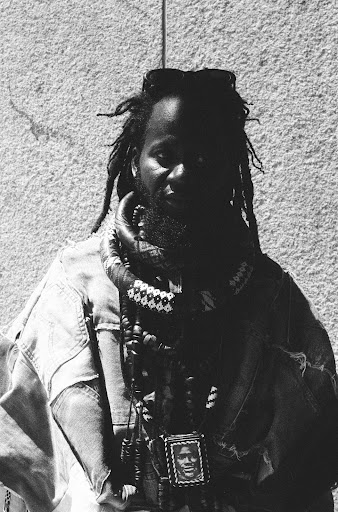
One of the loudest groups in the procession is the Baye Fall, a subgroup of the Murids that follows the teachings of Ibrahima Fall, a disciple of Bamba. They have a more flexible approach to the requirements of Islam, such as prayer, but they emphasize a strong work ethic. They intentionally dress differently, known for their patchwork clothing and dreadlocks, which symbolize their rejection of all things worldly. Their clothing speaks of humility and hard work, values that the group is known for. Men in the community, including many recent migrants to New York, join the procession as well. The event demonstrates a sense of unity, reflected in the women’s all-white attire, the Baye Fall’s patchwork clothing, and the men’s dashiki sets—distinct yet cohesive expressions of participation.
The primary purpose of the Bamba Day march is to honor Bamba’s teachings and legacy. However, in recent years, previously subtle messages have taken the spotlight. While it was once common to see phrases or slogans on posters carried by participants, today most marchers can be seen holding their phones up—on video calls with family, live streaming to social media, or simply recording the march.
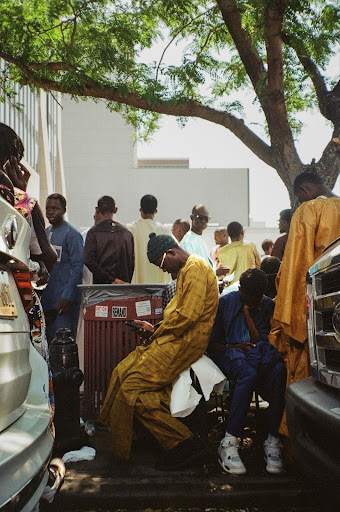
This digital engagement creates a fascinating duality. The same hands that carry tasbihs for dhikr now simultaneously hold smartphones, broadcasting traditional spiritual practices through contemporary technology. Family members in Senegal can witness the march in real time, while Instagram stories and Facebook Live streams extend the reach of what was once a localized community event. The careful coordination of white outfits and gold accessories becomes even more intentional when viewed through this digital lens—every participant aware that their image will circulate far beyond the streets of Harlem.
This use of technology, combined with the participants’ Sunday best and sartorial elegance, serves as a signal to those watching from afar that the Murid community in New York is thriving spiritually, socially, and financially. The march becomes simultaneously intimate and global, preserving tradition while embracing modernity’s tools for connection and visibility.
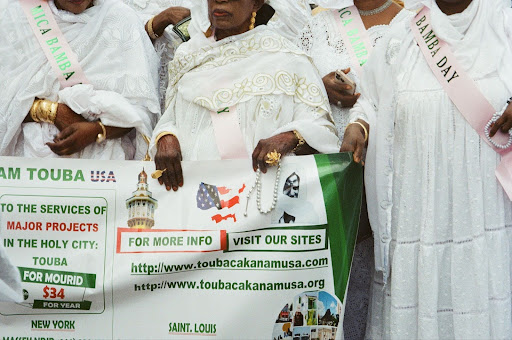
The collective image and each meticulously curated outfit remind us of the elements central to Harlem’s Murids: spirituality, elegance, and community. On Bamba Day, dress becomes individual and communal, local and global. The march demonstrates how diaspora communities use fashion as both preservation and adaptation—maintaining connections to spiritual traditions while asserting their place within their new urban environment.
Through coordinated clothing choices, the Murids transform public space into sacred space, making visible what might otherwise remain private. The all-white attire, the henna-adorned hands, the careful selection of accessories—these choices collectively argue for the beauty and dignity of their faith tradition. In doing so, they challenge any assumptions about Muslim identity while celebrating their particular expression of it. The performance is not merely aesthetic; it’s a form of cultural survival and assertion, ensuring that their presence in Black America is both seen and understood on their own terms.
Sources:
Best of Culture 2025
Oury Sene