
At COP30 in Belém, world leaders pledged to triple adaptation finance for the Global South by 2035. Cameras flashed, standing ovations echoed, and the Amazon dominated every speech.
A thousand kilometres south, in Rio de Janeiro, Yayra Agbofah watched the livestream and felt the familiar split screen of global climate politics.
“Two climate narratives were unfolding at once,” he told me days later, back in Accra. “One about preservation of centuries-old forests. One about communities surviving a flood of imported textile waste. Both are emergencies, but only one gets the billions and the microphones.”
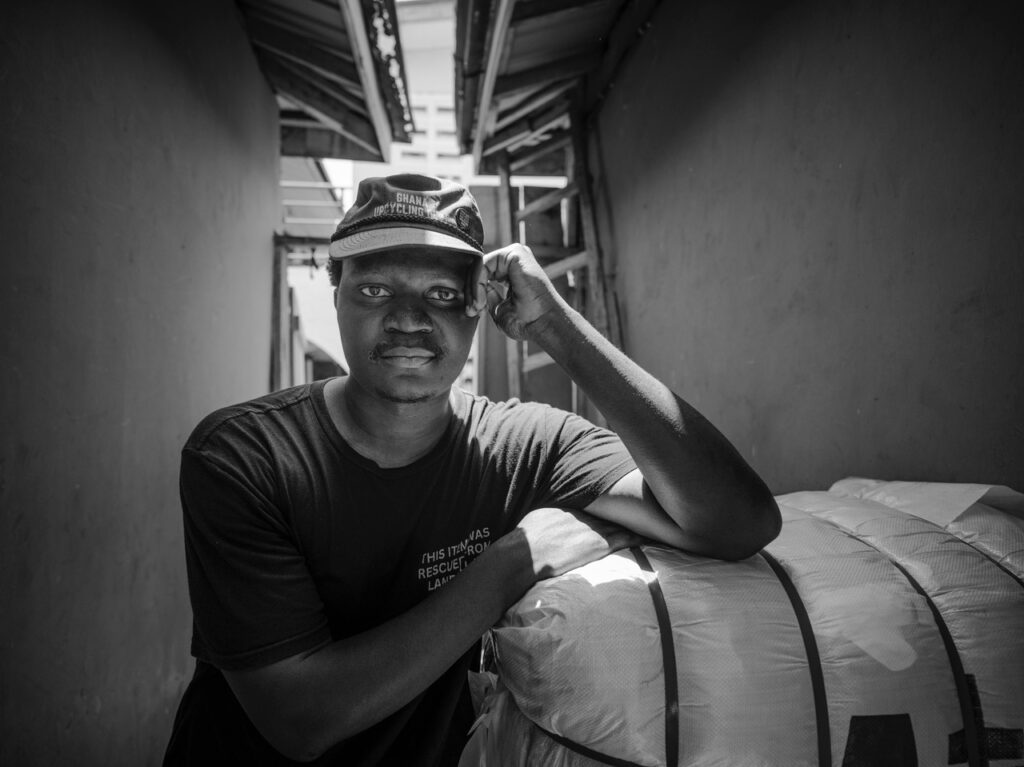
That split screen is the lens through which Agbofah, 34, has built The Revival, the nonprofit he founded in 2018 to turn Kantamanto’s textile waste into jobs, training, and new designs.
He refuses to repeat the viral statistic that has come to define the market—”15 million garments arrive in Ghana every week, 40 percent unsellable.”
“I don’t endorse those figures,” he said. “Sources contradict one another, and the methodology is rarely transparent. When real communities are involved, precision matters more than punchlines.”
What is indisputable, he insisted, is the sheer volume. Kantamanto, West Africa’s largest secondhand-clothing hub, receives far more used garments each week than traders can sell or the country’s waste systems can handle. The result is what Agbofah calls “displaced responsibility”: donations framed as charity in Europe and North America become environmental and economic burdens in Ghana, paid by traders, kayayei, tailors, and waste pickers who never profited from fast fashion’s boom.
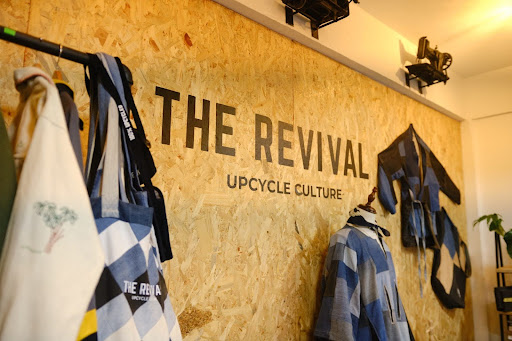
Inside the market, The Revival now runs six upcycling studios. Twelve full-time artisans and dozens of trainees pull damaged or unsellable items from bales, repair, redesign, and resell them through pop-ups and online. Revenue funds salaries, skills programmes, and emergency relief—most recently after the January 2025 fire that destroyed more than 9,000 stalls. The organisation has also seeded two independent upcycling businesses in northern Ghana and is preparing a second Circularity Lab in Kumasi.
Agbofah’s connection to Kantamanto is generational. He bought his school uniforms here as a child. “One memory stays with me clearly,” he said. “Standing inside a stall as a boy, watching traders reshape discarded clothing into something full of possibility. Creativity, survival, and dignity lived side by side.”
After university and several years in marketing, he walked away. “It wasn’t a career pivot,” he said. “It felt like returning home to do the real work.”
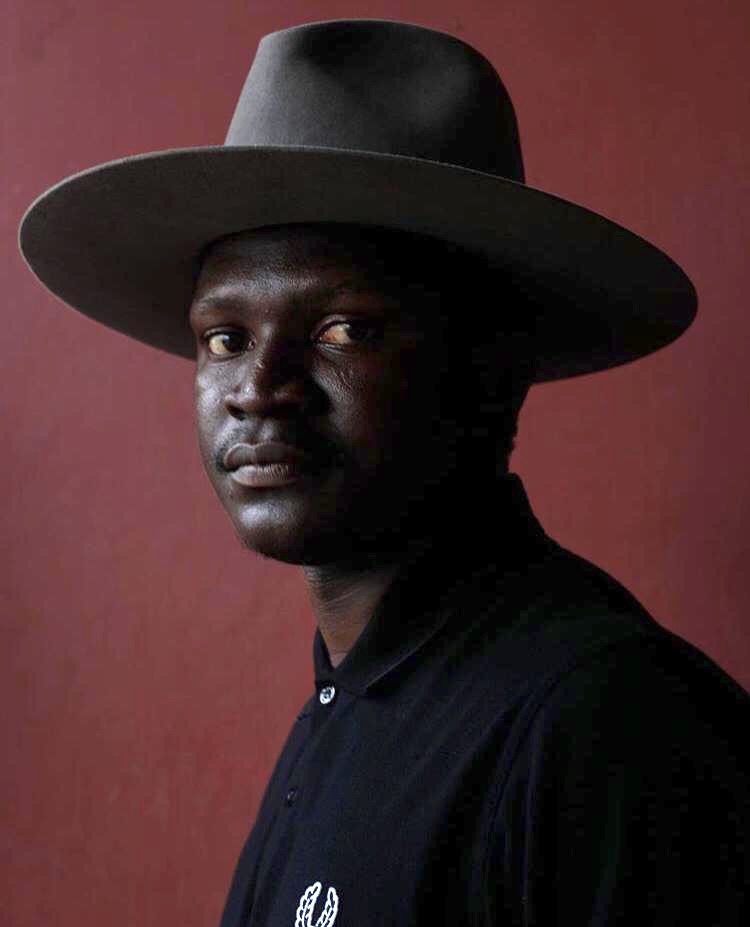
In May 2025, TIME named him one of the 100 most influential people in global climate. The honour surprised him less for the personal accolade than for what it revealed about audiences thousands of miles away.
“People who have never stepped foot in Ghana were moved not just by the crisis but by the ingenuity and everyday resilience,” he said. “That told me grassroots solutions from informal economies can command respect, not just pity.”
The recognition has opened doors to grants, brand partnerships, and policy rooms. Yet for Agbofah, visibility without structural change remains insufficient—a tension sharpened by COP30’s headline pledge.
Tripling adaptation finance could, in theory, supercharge The Revival’s model: more recovery units, deeper training, faster disaster response. But Agbofah is blunt about the limit.
“Most of this money improves downstream resilience,” he said. “It helps us cope better. But if the tap of waste keeps flowing, we are simply becoming more efficient at cleaning up a problem we did not create.”
For lasting change, he argues, finance must be paired with binding commitments on overproduction, extended producer responsibility, and regulation of secondhand exports.
His message to individuals wrestling with fast-fashion guilt is equally direct.
“Start with care—real, intentional care. Repair what you own. Restyle it. Swap it. Pass it on thoughtfully. Extending the life of one garment is one of the simplest and most powerful climate actions available to anyone.”
In Kantamanto, that act of care has never been a trend. It has been survival. Through The Revival, Yayra Agbofah is showing the world it can also be a revolution.