You’re reading one of our reader favorites. Guzangs is built around the voices, stories, and creative perspectives of our community. If you’d like to be considered for a feature, introduce yourself below.
Expand to enter for a chance to be featured on Guzangs via the form below.
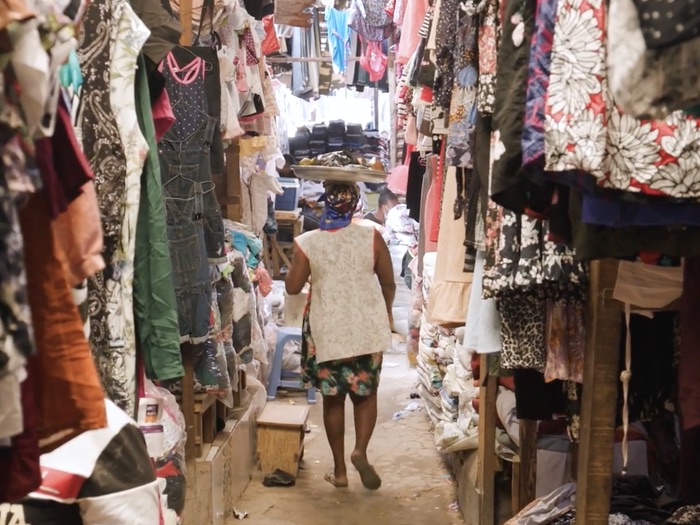
Kantamanto Market, bustling aisles. Photography by Daniel Attoh & Modestus Zame / Kashif Khan ProductionsPart I — The History of a Heap
Kantamanto doesn’t sleep.
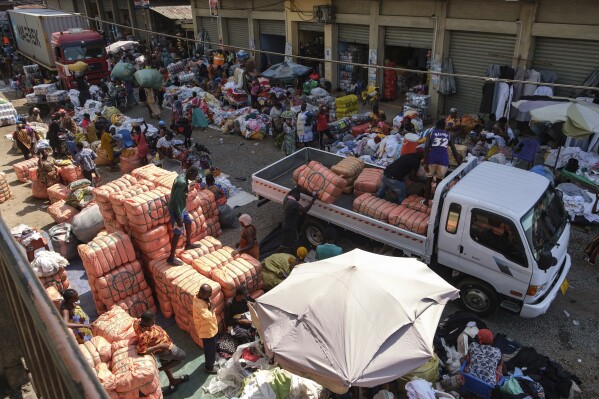
It breathes, wheezes, and heaves under the weight of foreign fabrics. Bales arrive daily—tightly bound, often soaked in chemical stench or rainwater from cargo ships—marked “donation” in faded marker. They are not gifts. They are transactions. They are waste. And they are profitable for everyone except the people dealing with them on the ground.
Each week, an estimated 15 million used garments enter Ghana alone, mostly from the UK, US, and China. This represents just a fraction of the global secondhand trade, now worth over $5 billion annually, with Africa serving as its primary dumping ground. Behind these numbers lie local economies under siege, rivers poisoned by synthetics, and livelihoods crushed under the weight of uncertainty.
The transformation didn’t happen overnight. To understand how we arrived at this crisis, we must examine the policies that paved the way for Africa to become the world’s textile graveyard.
When Did We Start Wearing Their Discards?
In the 1980s and 90s, structural adjustment programs (SAPs) imposed by the IMF and World Bank systematically dismantled African industrial capacity. Textile factories—once the backbone of regional economies were forced to close or privatize under immense pressure. Simultaneously, trade liberalization policies opened floodgates for cheap, secondhand imports to overwhelm local markets. These weren’t neutral economic policies—they actively undermined domestic production while creating dependency on foreign waste.
The evidence is stark across the continent. Senegal’s cotton fields in Thiès and Kaolack once fed a thriving domestic industry. Nigeria’s Aba Market bustled with locally produced fabrics and finished garments. Kenya operated more than 110 functioning textile mills; today, fewer than 20 survive. The arrival of mitumba (used clothes) changed everything. Within two decades, made-in-Africa fashion became a niche market, replaced by the West’s discarded trends and overstock.
Development agencies framed this transformation as progress. In reality, it was systematic displacement.
The labor and workforce behind the massive import flows into Kantamanto. Photography by Misper Apawu.The Myth of the Benevolent Bale
We’ve all heard the story: “Donate your clothes—they’ll go to someone in need.”
But that narrative ends the moment those clothes leave the charity shop. In practice, the majority are sold to exporters, baled, and shipped to markets in Accra, Lagos, Nairobi, and Dakar. Charities and brokers profit. Shipping companies profit. Middlemen profit. By the time a bale reaches a market trader in Kantamanto or Sandaga, its contents represent a costly gamble.
“Only about 20% of a bale contains top-quality resale clothing,”explains Kennie MacCarthy from The OR Foundation. “The rest is waste—or close to it.”
That 20% represents the hope market women bet their livelihoods on. Many take high-interest loans to purchase bales. Some strike lucky. Others are left with crushing debt and piles of unwearable garments to discard or burn. The remaining 40% to 50% of imported clothing typically ends up in landfills, open-air fires, or waterways—polluting soil and releasing toxic microplastics into food chains and drinking water.
Ghana’s Kantamanto Market serves as just one epicenter, but the pattern repeats across the continent. In Kenya, secondhand clothing imports reached 177,000 tonnes in 2022, surpassing Nigeria as Africa’s top importer. Cameroon alone spends nearly CFA80 billion annually importing used clothes. Senegal’s Sandaga and Colobane markets echo the same story: low prices, low quality, and massive waste.
Despite claims from Western recyclers, most donated clothing never achieves genuine “reuse” in any circular sense. A 2023 report from the Changing Markets Foundation revealed that much of it arrives unfit for resale. The labels may read Zara, H&M, or Shein—but in these markets, brands become irrelevant. What matters is whether an item can be sold, repaired, or upcycled. If not, it becomes a burden.
“This isn’t charity—it’s waste colonialism,” says Liz Ricketts, co-founder of The OR Foundation.
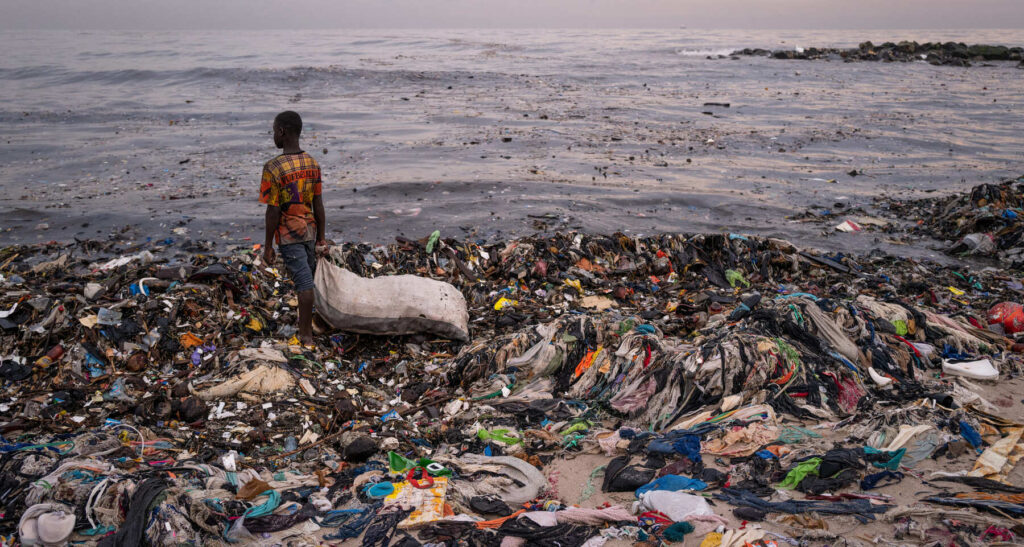
Piles of textile waste, highlighting the human scale of environmental neglect. Photography by Ferdinand Omondi for Greenpeace AfricaThe Hidden Environmental Crisis
The visible waste represents only half the story. Beneath the market bustle lies a deeper environmental crisis. Synthetic fabrics—cheap, mass-produced, and nearly indestructible—break down into microfibers that contaminate rivers, ocean beds, and even human bloodstreams. In Accra, once-pristine beaches now serve as textile graveyards. Fires used to manage surplus fill the air with toxins. Drainage systems clog. Floods rise. Illness spreads.
Africa lacks the infrastructure to manage this volume of textile pollution. No city on the continent is equipped to safely dispose of the thousands of tonnes arriving monthly. Yet the shipments continue.
And still, the West frames this as recycling.
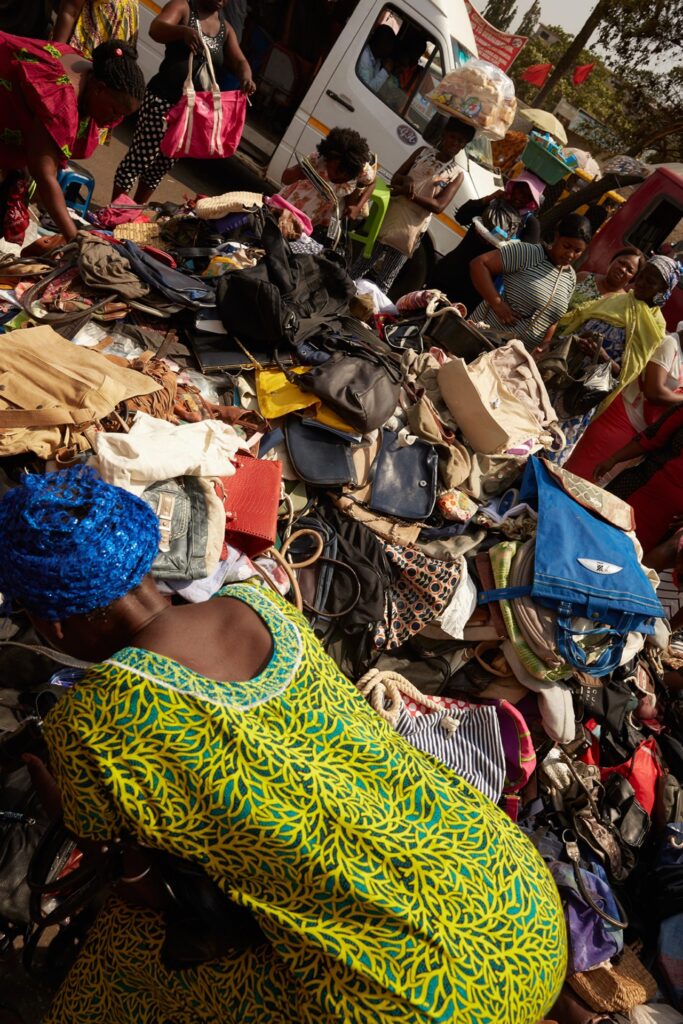
Beyond Individual ResponsibilityKantamanto Market Ghana
The root of this crisis runs deeper than consumer choices—it’s structural. This system represents a product of policy failure: trade regimes that allow the Global North to externalize the environmental and social costs of fast fashion onto economically vulnerable nations. It’s also a story of cultural erasure, as locally made textiles and fashion traditions are swept aside by foreign logos and synthetic blends.
Calls to ban secondhand imports have emerged across the continent, but these proposals often fail to gain traction. The reason is complex: millions now depend on this economy for survival. Traders, tailors, repairers, and stylists have built entire livelihoods atop these textile heaps. Cutting the supply without building alternatives would devastate these communities.
The real solution demands comprehensive action: stronger regulation of imports, massive investment in local textile production, and policies that prioritize African manufacturers over foreign waste. This requires political will that has been largely absent.
This story transcends discarded clothing—it’s about discarded responsibility. It reveals how the climate crisis and fashion industry intersect most violently in places like Accra, Dakar, and Nairobi, where global visibility remains low but local impact runs devastatingly high.
But this is not where the story ends.
—–
In Part II, we examine the political terrain:
How are African governments confronting the flood of secondhand imports? Who is regulating, resisting, or remaining silent—and what does it mean for the future of textile sovereignty on the continent?