Designer Moctar Ba transforms discarded materials into premium accessories while proving sustainability can drive African luxury
In his Dakar workshop, Moctar Ba holds up a vibrant advertising banner that once promoted a telecom company across Senegal’s capital. Within weeks, it will become a €250 backpack sold to customers in Paris and Brussels. This transformation from waste to luxury goods is the core of From Dakar Fabrics, Ba’s seven-year mission to prove that sustainability and premium African design can coexist profitably.
“We’re not just recycling materials—we’re reclaiming value that was always there,” says Ba, surrounded by rolls of discarded vinyl, stacks of plastic bottles, and bolts of traditional Bogolan mud cloth. “Every piece of waste tells a story. We just give it a new ending.”
The fashion industry generates 92 million tons of textile waste annually, with Africa receiving much of the world’s discarded clothing. Rather than see this as a problem, Ba identified an opportunity. Since 2017, From Dakar Fabrics has diverted over 50 tons of waste from Senegalese landfills, transforming expired billboards, military tarps, hotel linens, and plastic bottles into a growing luxury accessories brand.
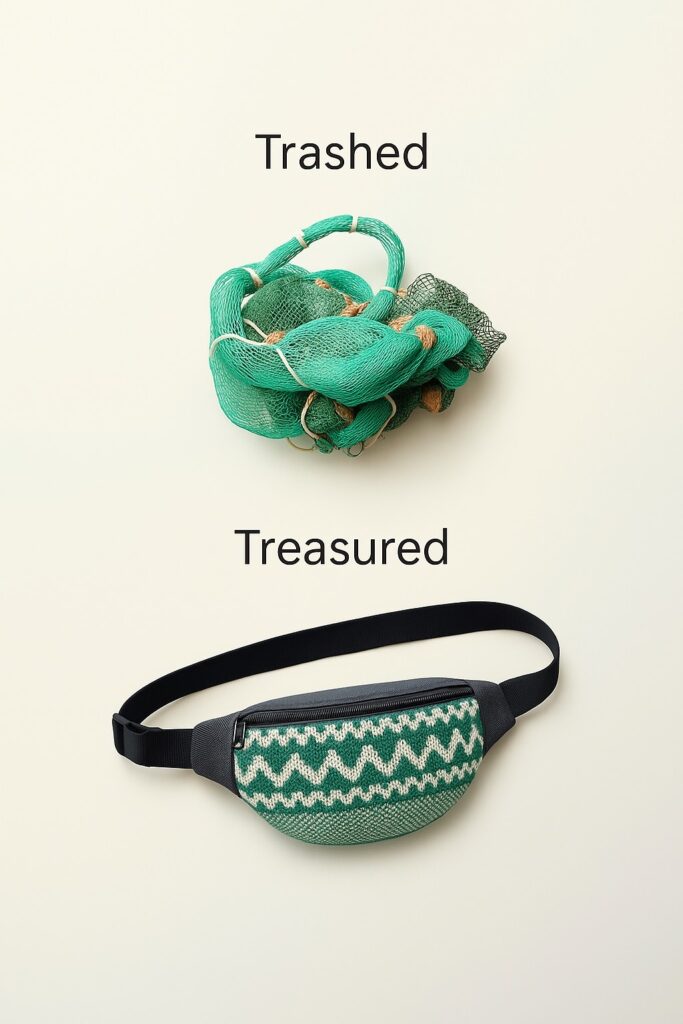
The process begins with systematic waste collection. Ba partners with NGOs, UN agencies, and private companies to gather materials that would otherwise be incinerated or dumped. Plastic bottles are processed into recycled polyester thread for bag linings—approximately 12 bottles per bag. Vinyl advertising banners become exterior panels, their bold graphics and weather-resistant properties ideal for luxury accessories that need to withstand daily use.
“These materials are often superior to what conventional fashion uses,” Ba explains, demonstrating how banner vinyl resists tearing and water damage. “Advertisers demand durability for outdoor campaigns. We inherit that quality.”
The technical innovation lies in combining waste materials with traditional African textiles. Bogolan mud cloth from Mali and hand-woven Pagne Tissé from Senegal provide cultural authenticity while supporting local artisan communities. The brand pays above-market rates to cooperatives, ensuring traditional crafts remain economically viable.
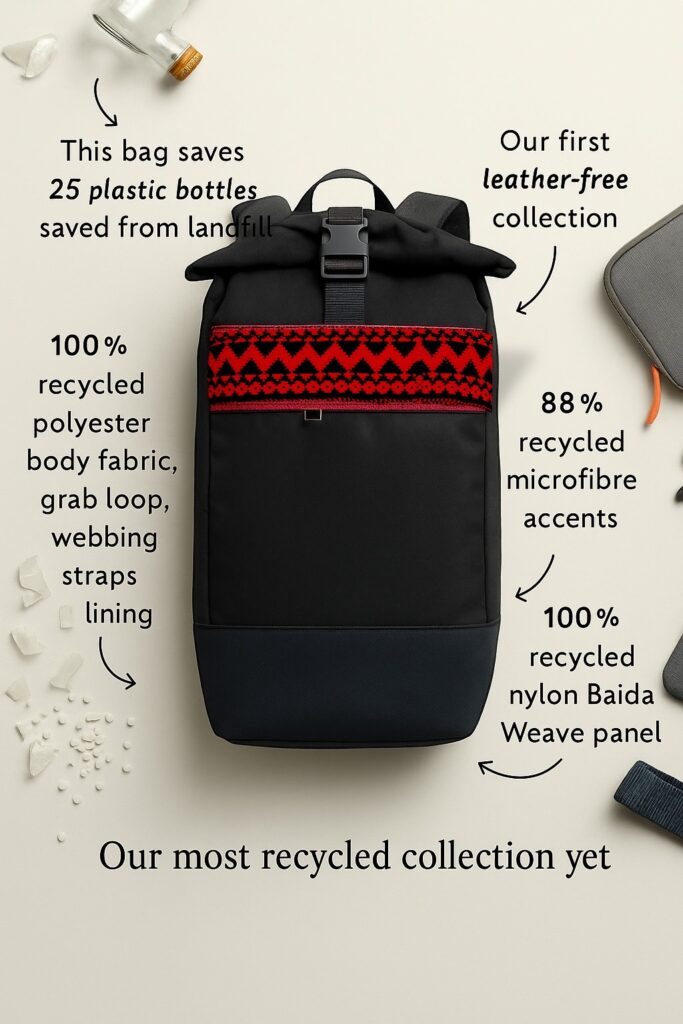
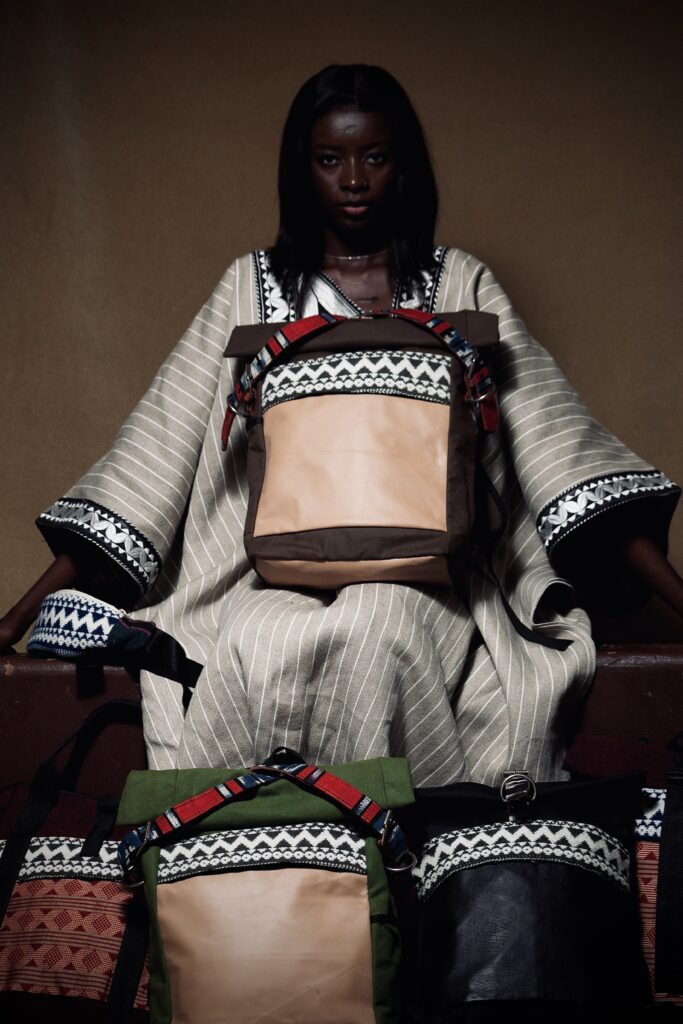
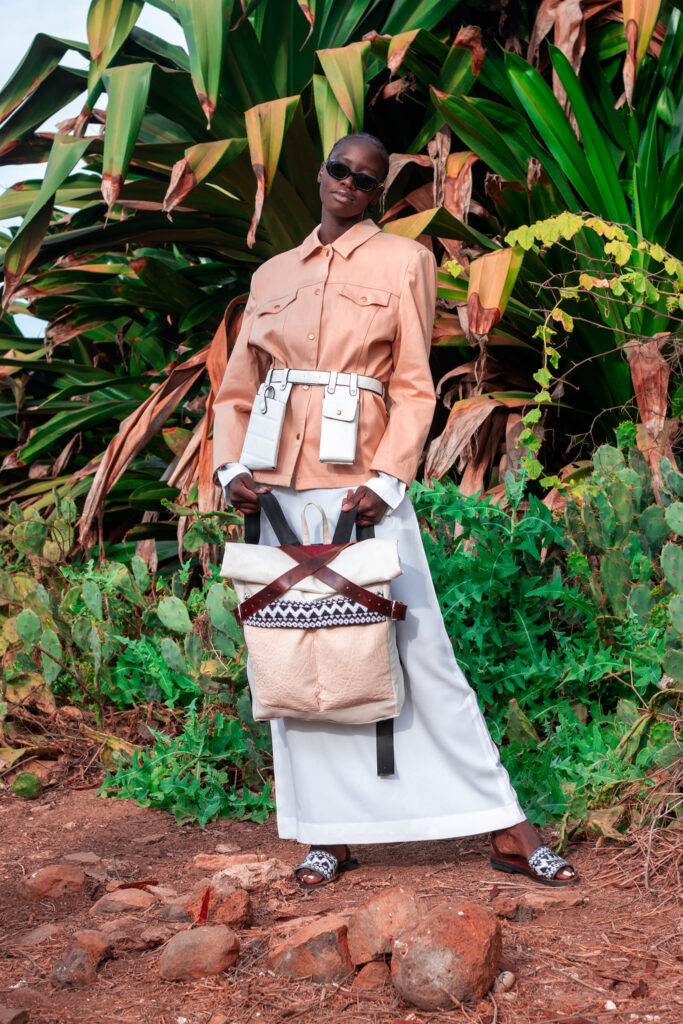
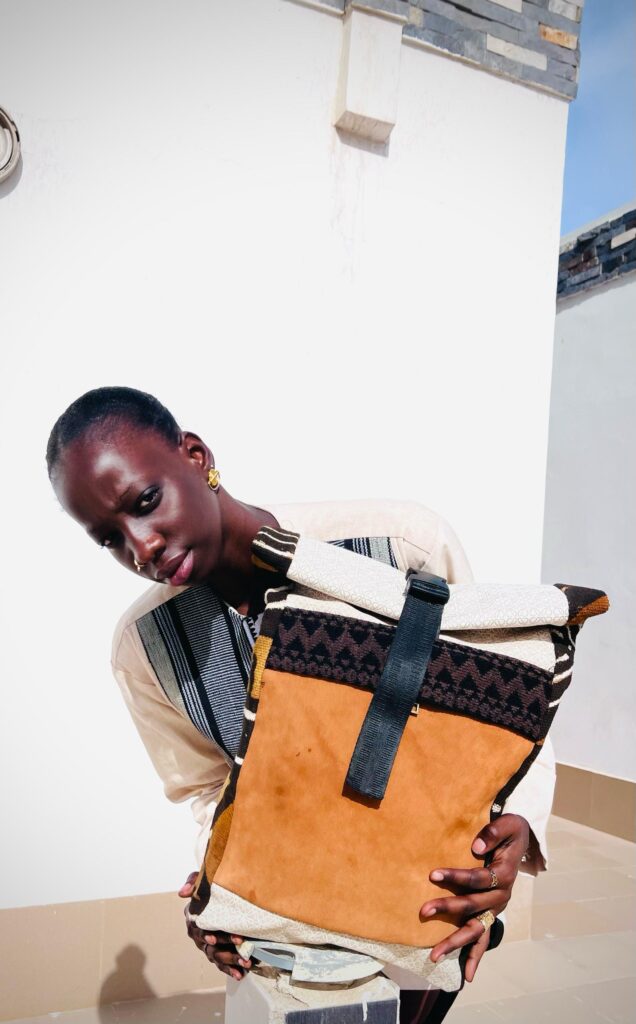
Ba’s signature Bogolan Roller Pack exemplifies this approach. The cylindrical backpack features hand-dyed mud cloth panels lined with recycled polyester, reinforced with reclaimed vinyl, and finished with hardware salvaged from old luggage. Each bag requires 15 hours of handwork and retails for €250, with current orders backed up six months.
“Customers aren’t just buying a bag—they’re buying into a system that values both heritage and innovation,” says Ba. “The waiting list proves people will pay premium prices for authentic sustainability.”
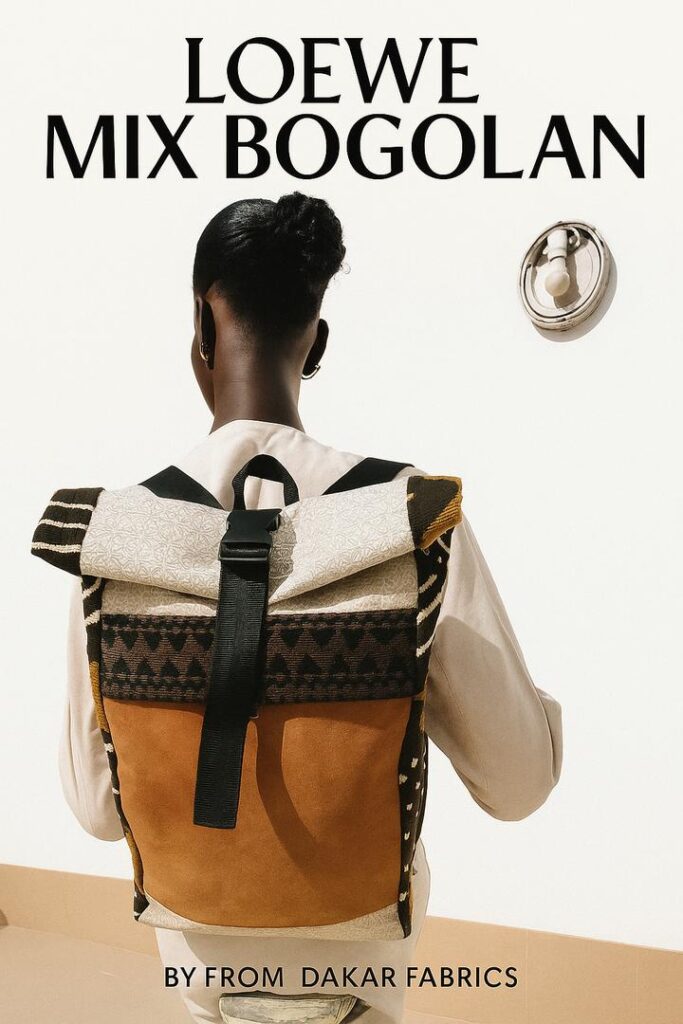
The brand’s most ambitious piece combined end-of-roll fabric from luxury house Loewe with Malian Bogolan, creating a dialogue between European technical excellence and African storytelling. Limited to 50 pieces at €450 each, the collaboration sold out within two weeks, demonstrating market appetite for cross-cultural luxury narratives.
From Dakar Fabrics operates three workshops across Senegal, Gambia, and Morocco, employing 23 artisans trained in zero-waste pattern making and circular design. Every fabric scrap finds purpose—offcuts become small accessories, thread remnants are rewoven into decorative elements, and even sawdust from leather cutting enriches the workshop’s composting system.
“In conventional fashion, waste is inevitable,” explains master artisan Fatou Diop, who joined the brand in 2019. “Here, waste means you’re not thinking creatively enough. We’ve learned to see possibility in everything.”
This philosophy extends to business operations. The brand’s distributed production model reduces transportation emissions while creating jobs across West Africa. Each workshop specializes in specific techniques—Dakar handles vinyl and plastic processing, Gambia focuses on traditional weaving integration, and Morocco manages leather components from local tannery waste.
Revenue grew 80% in 2023, though Ba declines to share specific figures. The brand sells through select European retailers and maintains a strong direct-to-consumer presence, with 60% of sales via its website. Current distribution includes France, Belgium, and the Netherlands, with U.S. expansion planned for 2024.
“We’re proving that African luxury doesn’t need to mimic European models,” says Ba. “Our strength lies in resourcefulness, community, and connection to materials that tell authentic stories.”
The approach addresses broader industry challenges. Fashion accounts for 10% of global carbon emissions, and synthetic garments release 500,000 tons of microfibers into oceans annually. By reclaiming plastic bottles and vinyl materials, From Dakar Fabrics prevents both landfill accumulation and new plastic production.
Customer education remains crucial. Many consumers still associate African-made products with lower quality, despite From Dakar Fabrics’ rigorous construction standards. The brand’s five-year warranty and repair service help build trust while extending product lifecycles.
“Quality speaks for itself, but it takes time to change perceptions,” Ba acknowledges. “We’re not just building a brand—we’re building a movement that shows Africa can lead in sustainable luxury.”
The model has inspired similar ventures across the continent, from Nigerian designers transforming electronic waste to Ghanaian brands working with plastic sachets. Ba actively mentors emerging designers through workshops and a planned certification program for sustainable African fashion.
Looking ahead, Ba plans to expand into apparel while maintaining the brand’s core focus on waste transformation. He’s developing new techniques for processing agricultural waste and exploring partnerships with other African countries rich in discarded materials.
“The goal isn’t just commercial success,” he says, holding up a finished bag that began as trash. “It’s proving that what the world throws away, Africa can transform into something beautiful, valuable, and lasting. That’s not just sustainability—that’s revolution.”
From Dakar Fabrics pieces are available at select retailers and through the brand’s website. Prices range from €45-€450.