Corsetification in Nigerian fashion is cinching itself into the heart of style, emerging from Lagos red carpets, owambes, and endless scrolls of Instagram and TikTok. It’s a waist, pulled tight, hyper-defined, framed by elaborate bustiers and couture-heavy tailoring that now defines one of the most visible aesthetics of Nigerian femininity. This isn’t just a trend, it’s a recalibration of how beauty, wealth, and visibility are performed in Nigeria’s image economy.
The corset, in its original form, was a Western import. Introduced through colonial influence in the 20th century, corsetry arrived alongside European fashion ideals of shape, modesty, and femininity. At the time, elite Nigerian women, especially those in Lagos and coastal cities with strong colonial contact, were exposed to Victorian and Edwardian dress styles. Through missionaries, trade, and colonial administrators, garments like petticoats, bustles, and corsets became known, but they weren’t easily integrated into the elite dress code.
Much of the dress norms for Nigerian women are filtered through Lagos not just as Nigeria’s epicenter of style, but also as a Yoruba state. By the late 19th century, Lagos was already a cosmopolitan port city, with a blend of Yoruba dress traditions comprising the iro, gele, ipele, and aso-oke, alongside Brazilian returnee styles like lace fabrics, Catholic-influenced embroidery, and imported European goods.
After Nigeria’s independence in 1960, urban growth in Lagos accelerated. This rural-to-urban migration brought women from different ethnic backgrounds into Lagos, each bringing their regional dress norms. Dress became a signifier in a country seeking postcolonial identity. The iro (wrapper) and buba (blouse), paired with an elaborate gele (headdress), began to be promoted in urban fashion publications like Drum and West African Pilot and wedding photography as symbols of Nigerian femininity.
This shift, entangled with urbanization and nationalism, saw urban tailors adapting traditional cuts for new fabrics: wax prints from the Netherlands, laces from Switzerland, and locally woven textiles, making them desirable for middle-class women. The iro and buba also changed in silhouette. Originally in crude lengths where buba sleeves went beyond the wrists (towobobe) and the iro fell around ankles, they shrunk—a funkier, jazzier update (oleku) that reduced sleeves and iro length by half and trended well into the ’70s.
Wearing the iro and buba in the city became a way to signal respectability while navigating a rapidly modernizing Lagos. For middle-class women, it balanced modern aspirations with cultural authenticity. For working-class women, the textile boom and the growth of Balogun market made fabrics for iro and buba widely accessible.
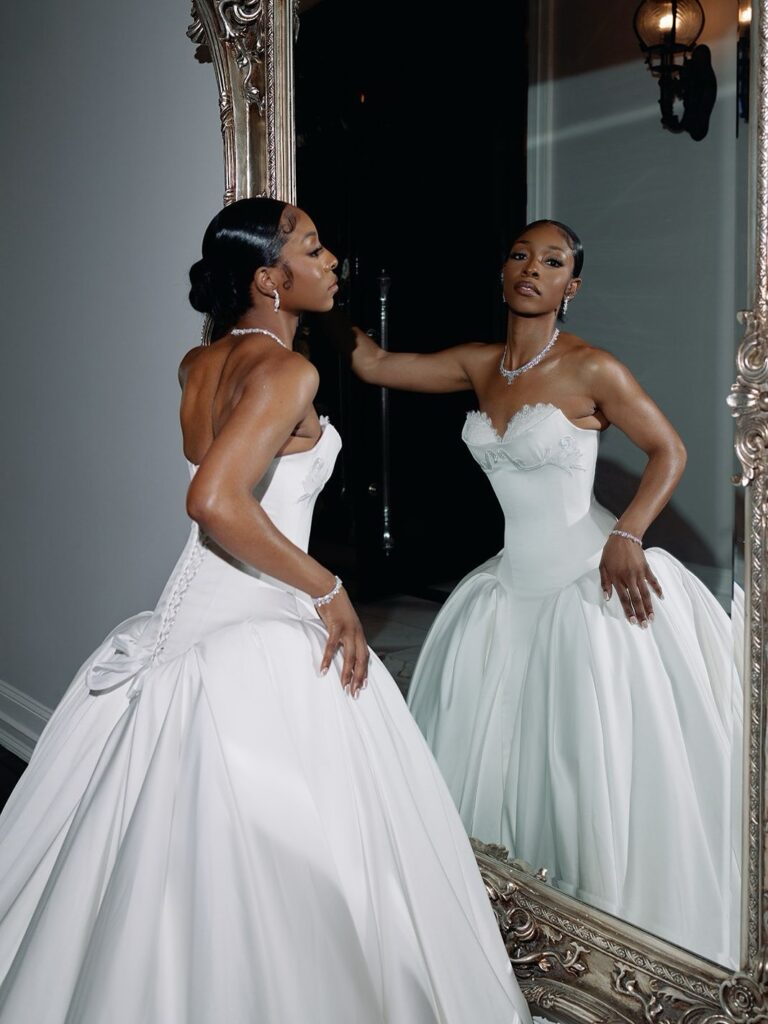
It’s important to note that the Nigerian corset is not a simple borrowing of Western Victorian corsetry; it is a re-engineering of silhouette, identity, and tailoring tradition. While the Victorian corset emerged in 16th-19th century Europe as a tool for shaping the female body into an “ideal” of narrow waists and upright posture, and Kardashian-era body trends of the 2010s redefined celebrity for early social media, the Nigerian corset operates in an entirely different cultural and material field.
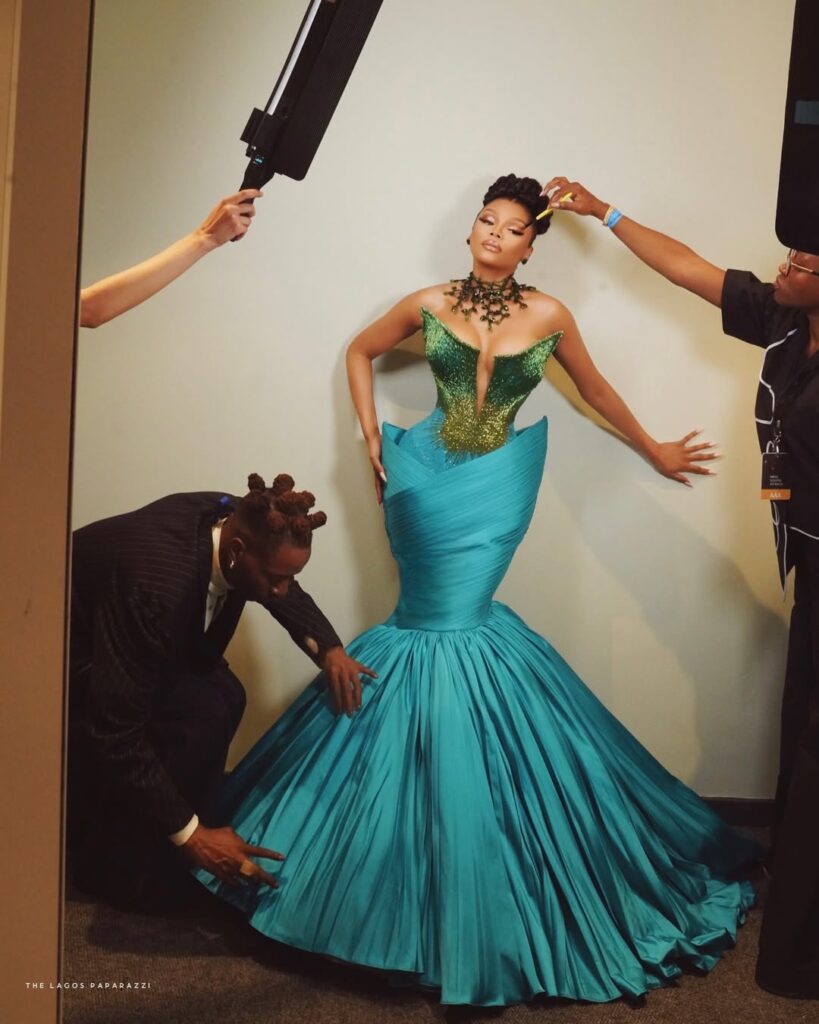
It reimagines structure not as restriction, but as performance, status, and craft mastery. Unlike historical versions hidden beneath layers of clothing, the Nigerian corset is meant to be seen. It is staged as the main feature of the outfit, celebrating visibility rather than concealment. The Nigerian version is often cut lower in the bust, sometimes integrated seamlessly into a gown, allowing the corset structure to blend and elevate the outfit itself.
Unlike imported ready-to-wear corsets, the Nigerian corset has been localized through custom measurement culture — a longstanding tailoring practice in Nigerian fashion where clothes are cut precisely to the client’s body. This has made the corset less about universal sizing and more about personal architecture. The craft requires a deep knowledge of pattern manipulation, boning placement, and fabric reinforcement—skills Nigerian tailors have honed in the bridal and aso-ebi industries.
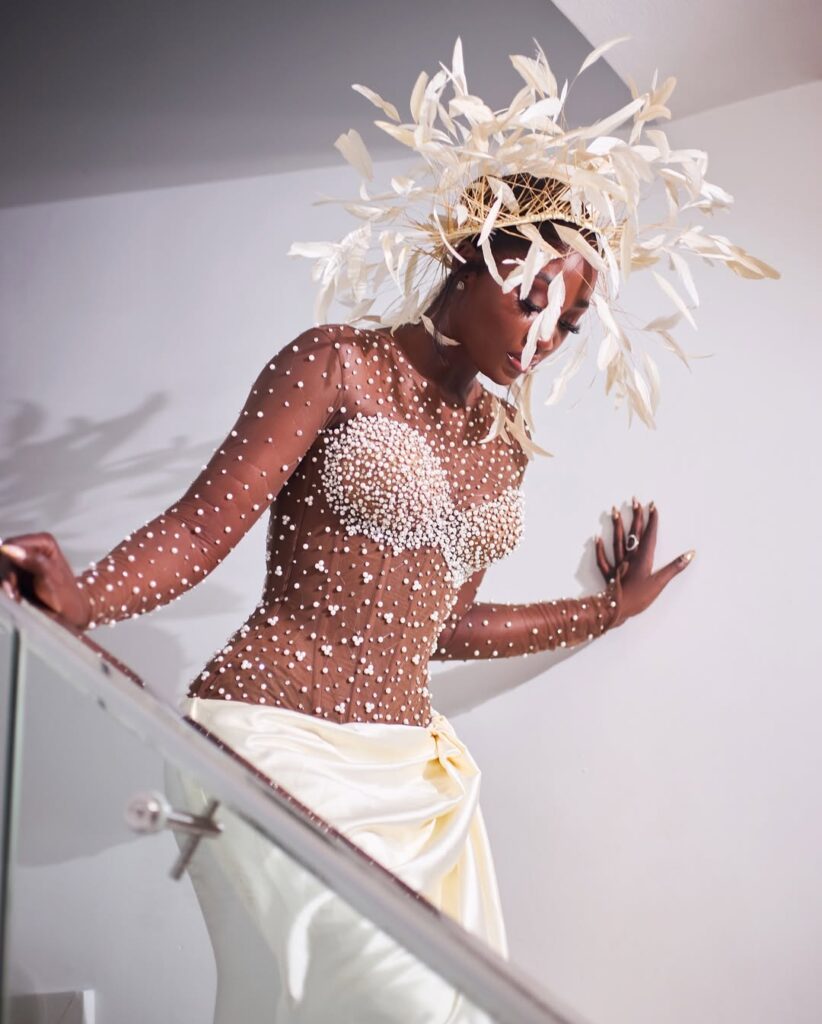
In the last decade, corsetry has migrated from the occasional accent in bridal fashion to a default element in aso ebi looks. Whether at a high-society wedding in Victoria Island or an influencer photoshoot in Lekki, the “snatched” silhouette is no longer a special occasion detail—it’s the baseline expectation.
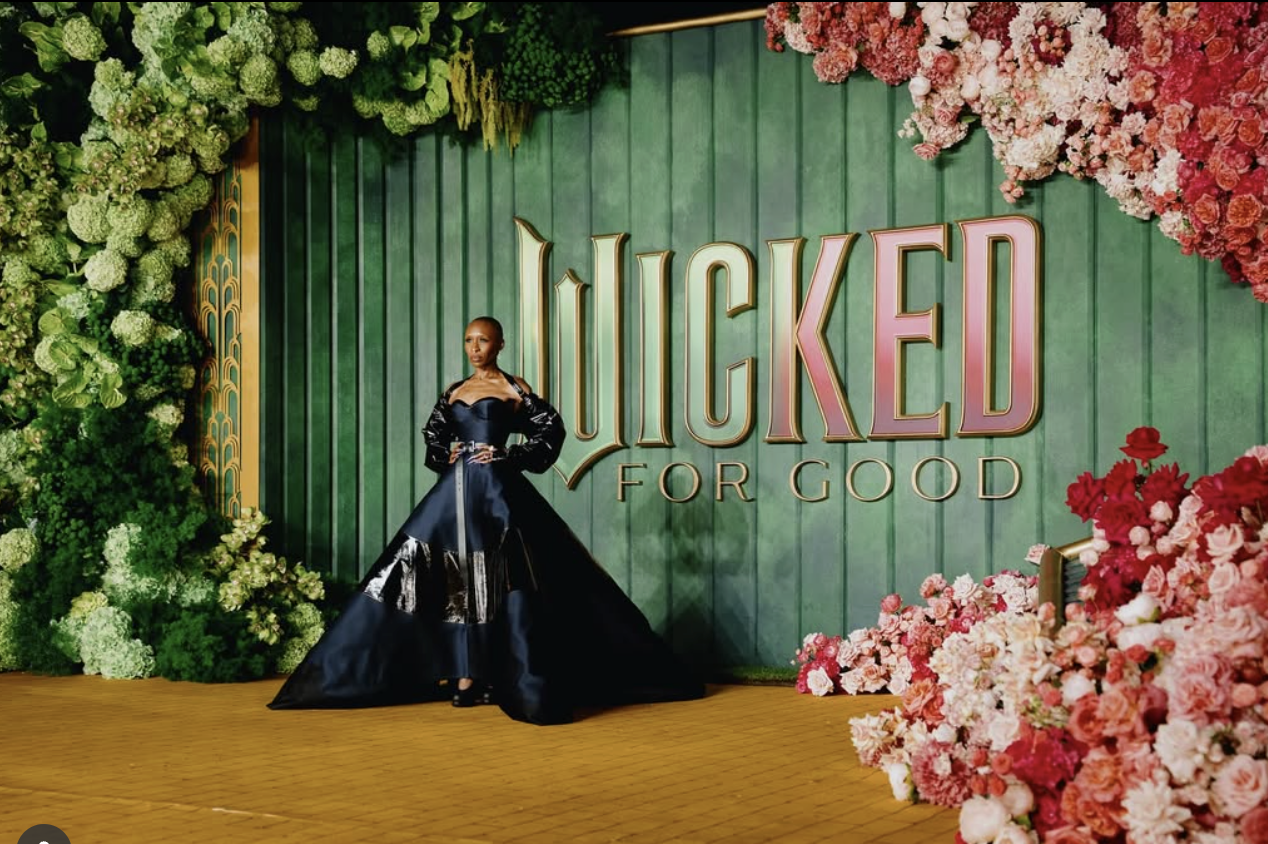
If the red carpet was once just another formality, it is now sharply honed for internet virality. The popularity of the corset is best understood as a technologically-entangled spectacle. Camera lenses and social media algorithms are rewarding bodies with corseting and sculpting illusions. In fact, corsets are delivering the sculptural clarity that thrives in today’s digital visual culture.
Therefore, Nigerian femininity isn’t just being remade in fabric and boning, but in pixels and engagement metrics. The African Magic Viewers’ Choice Awards (AMVCA) further crystallized this transformation. The awards, which recognize excellence in television and film, are visually striking for their red carpet fashion. For the 2025 edition, clips of Nigerian corseted gowns racked up millions of views on TikTok, drawing commentary from international fashion content creators like Angela Yanez Gaitan and John Villa.
Their reactions — equal parts awe and curiosity — positioned Nigerian corsetry as a global spectacle: a marriage of cultural flamboyance, technical skill, and unapologetic glamour.
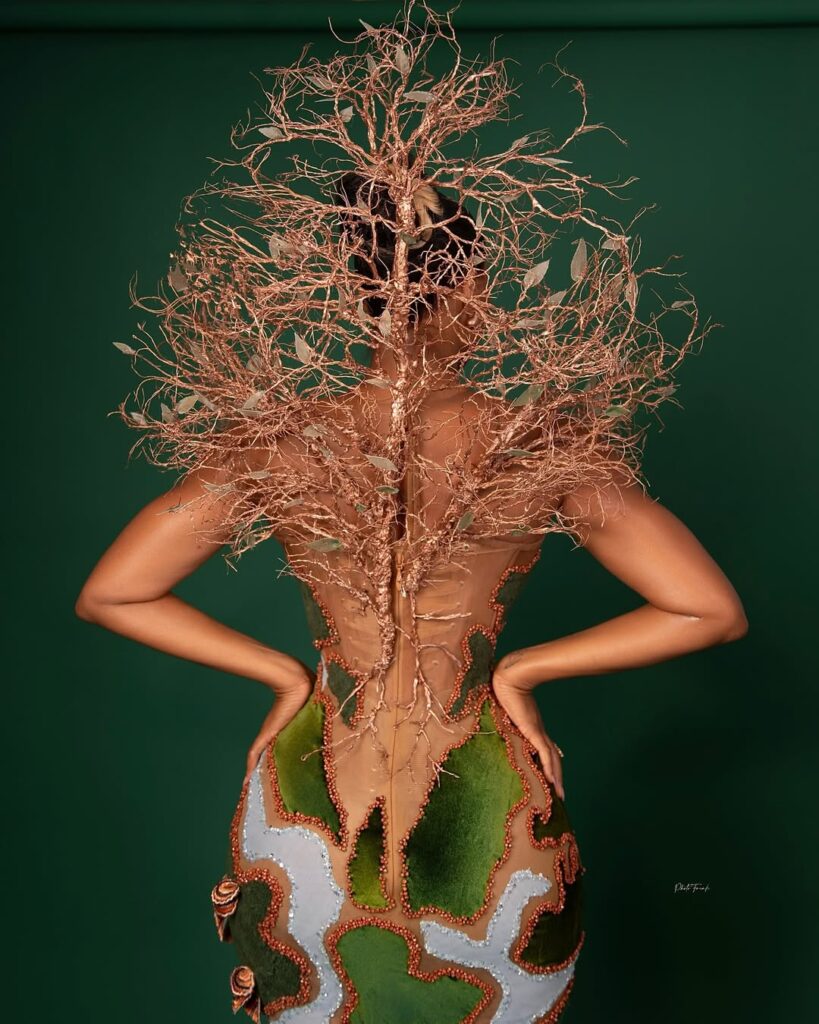
While Lagos Fashion Week is often the benchmark for Nigerian design visibility, many of the most influential corset creators operate entirely outside of its orbit. Brands like Oobiuku, 2207 by Tally, VeeKee James, Somo by Somo, and dozens of emerging ateliers have built empires on Instagram and TikTok.
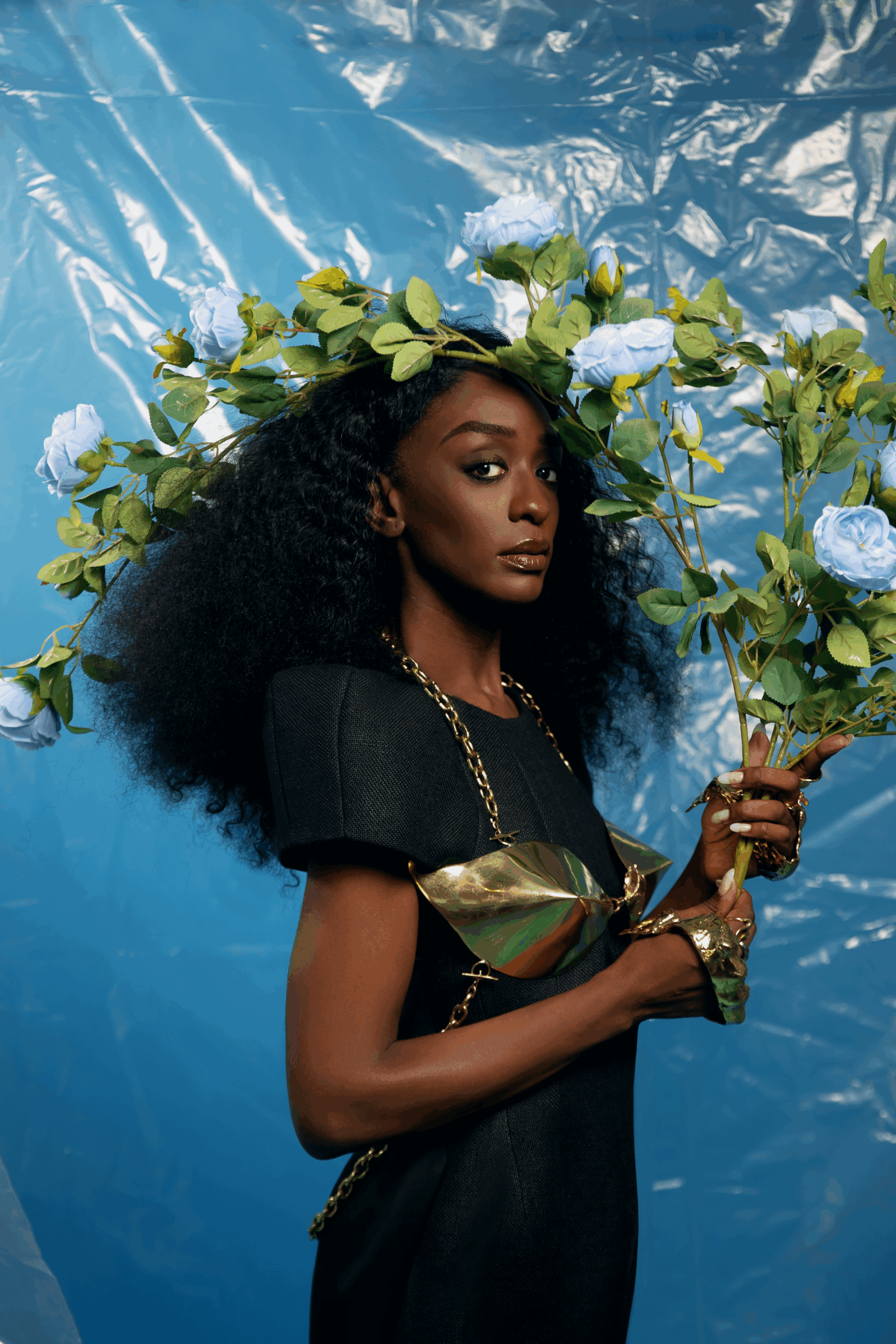
They command high fees, servicing a loyal clientele willing to pay for high drama: extreme cinching that reshapes the torso, body-sculpting illusions achieved through paneling, boning, and strategic draping, and high-shine embellishments (sequins, crystals, beads) that catch both party lights and phone cameras.
These designers exist in a parallel economy to the so-called “high-fashion” circuits. They are rarely invited to international showcases or sponsored by fashion councils, yet their work defines the most visible and widely circulated Nigerian style narratives.
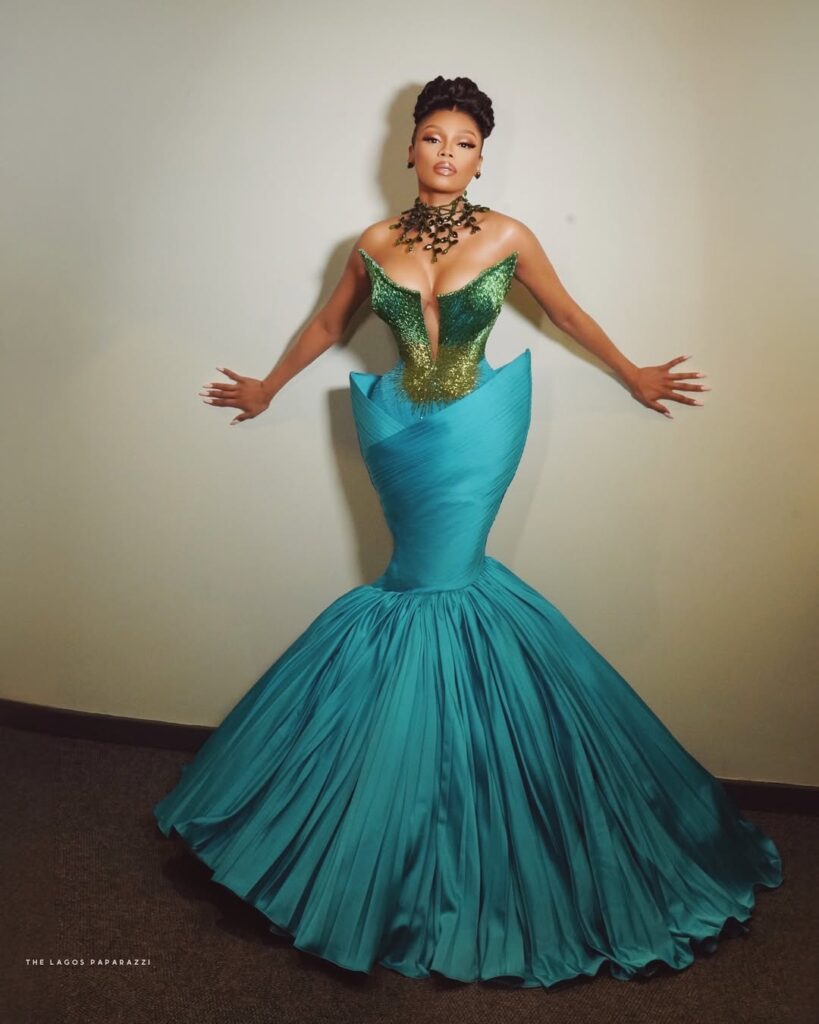
If the gele was the crown of 20th-century Nigerian occasionwear, the corset may well be the emblem of early 21st-century Nigerian femininity. It tells us about the algorithms that dictate our digital self-presentation, the informal economies that keep fashion alive outside formal runways, and the body ideals negotiated between local heritage and globalized pop culture.
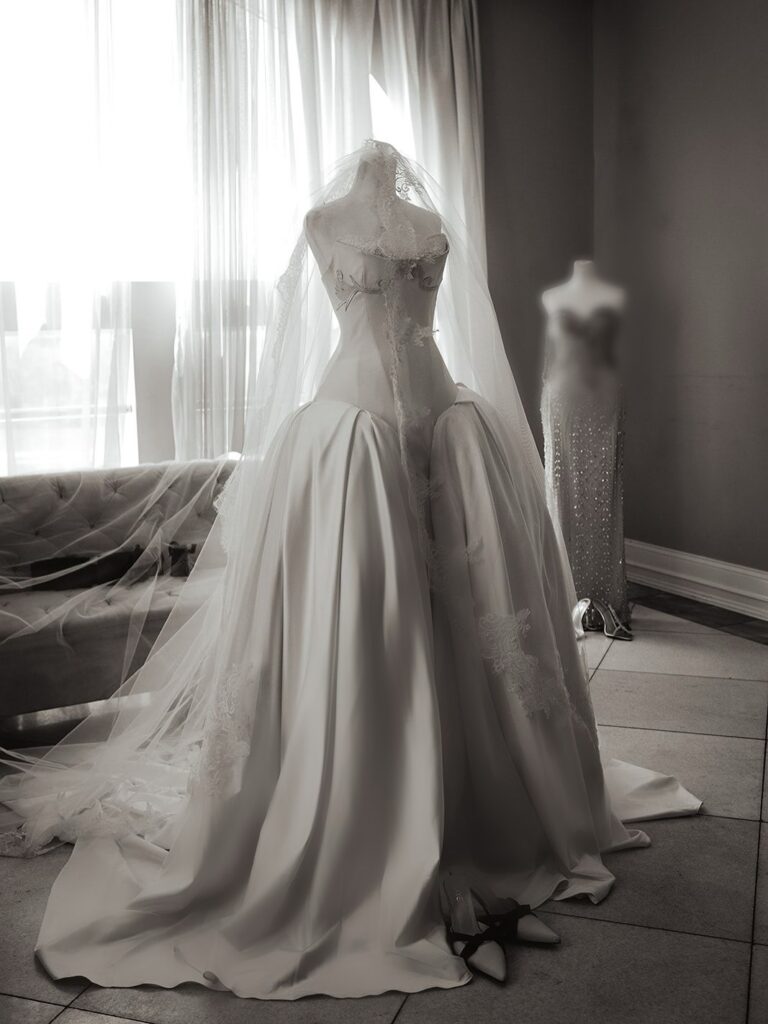
In a moment when African fashion is increasingly mediated by Western-run institutions, corset culture reminds us that the most dynamic style revolutions don’t always happen under the spotlight of the official fashion world. Sometimes, they are stitched in backrooms, perfected on mannequins, and unveiled under the strobe lights of a party hall—before being broadcast, waist first, to the world.