
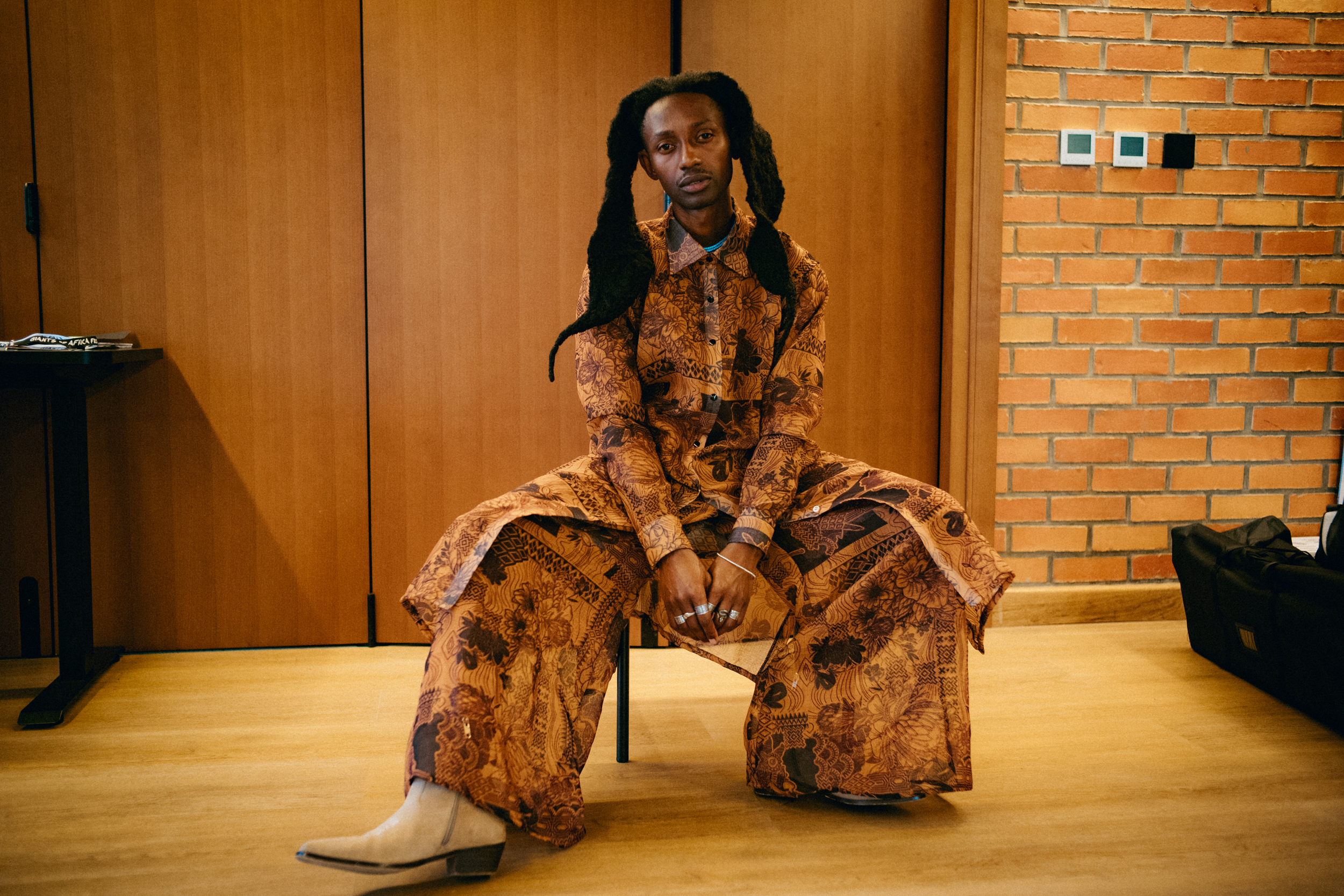
Nyambo Masa Mara’s two freeform dreadlocks hang down his back, thick and heavy. He estimates they weigh about 15 kilograms total. “People always ask if they’re heavy,” he says. “Of course they are. But my neck can bear it because I’ve carried them for years.”
It’s an apt metaphor for how he talks about his work. The designer, who founded the sportswear brand Masa Mara in 2016, speaks about fashion the way others might discuss philosophy or politics—as a tool for examining identity, borders, and power.
Born in Rwanda and raised across ten African countries, Mr. Masa Mara’s peripatetic childhood shaped his approach to design. “I grew up moving constantly,” he said during a recent interview. “Rwanda, Kenya, South Africa, Mozambique, Tanzania. Each place taught me something new about what it means to be African.”
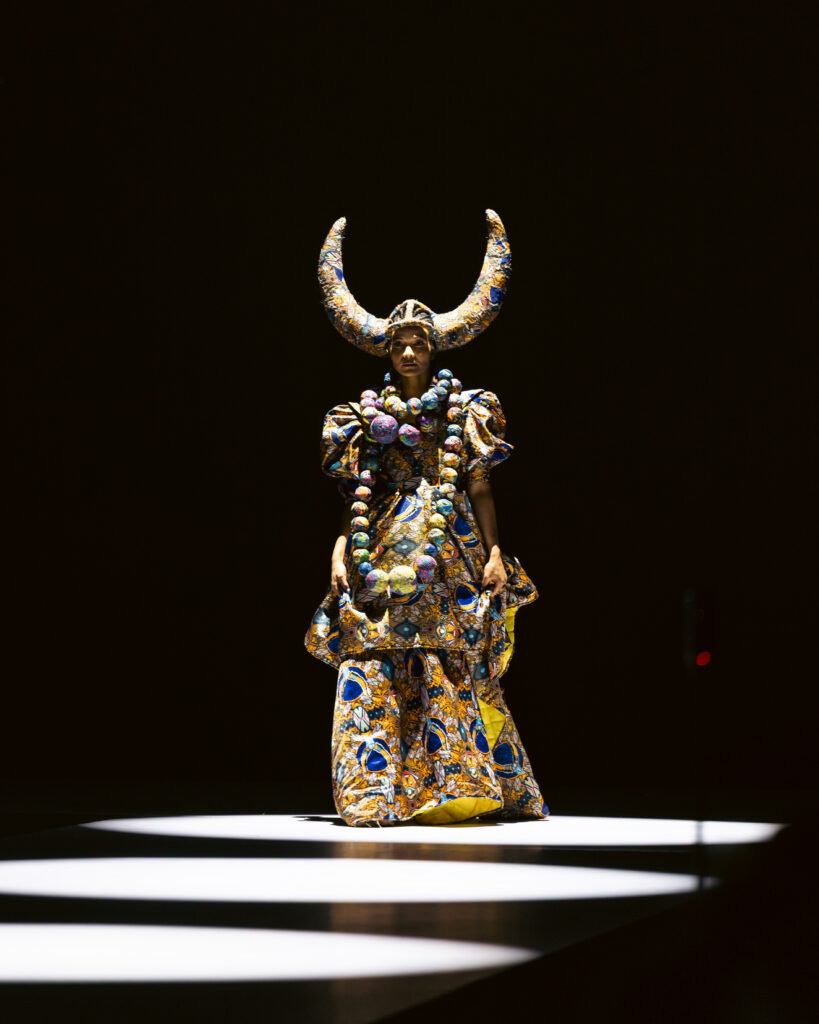
That experience of constant movement became the conceptual foundation for Masa Mara, a brand known for boldly printed tracksuits and sculptural outerwear that draws on traditional African aesthetics. His fashion shows often function as performances, complete with narrative elements that he describes as “lessons.”
“Fashion has to speak,” he said. “It should remind us of who we are.”
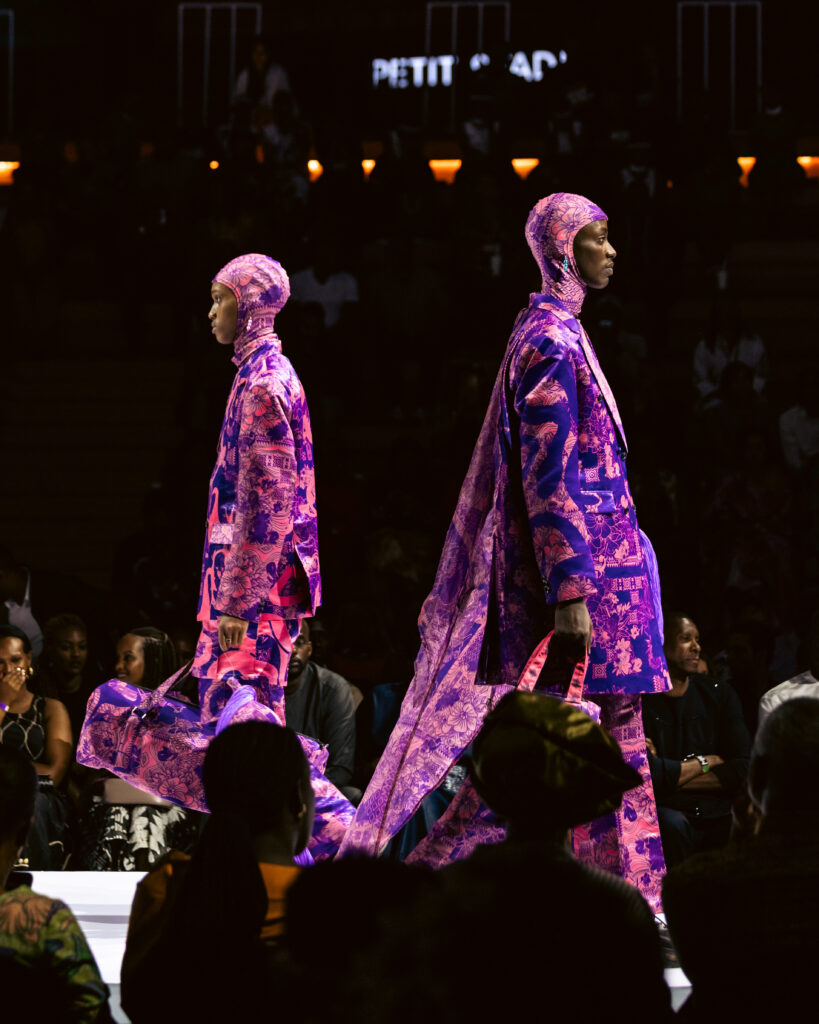
The brand’s name comes from a Rwandan saying about those who approach kings empty-handed—not to offer gifts, but to demonstrate courage and humility. “That’s how I started: no money, no formal education, just a dream and determination,” Mr. Masa Mara said.
His 2023 collection, titled “Visa,” examined African mobility and border politics. The collection questioned why Africans need permission to travel across a continent whose borders were drawn by colonial powers. “Borders are not ours,” he said. “They were drawn by others.”
Each collection, he added, reflects “an African conversation we need to have—about power, identity, and possibility.”
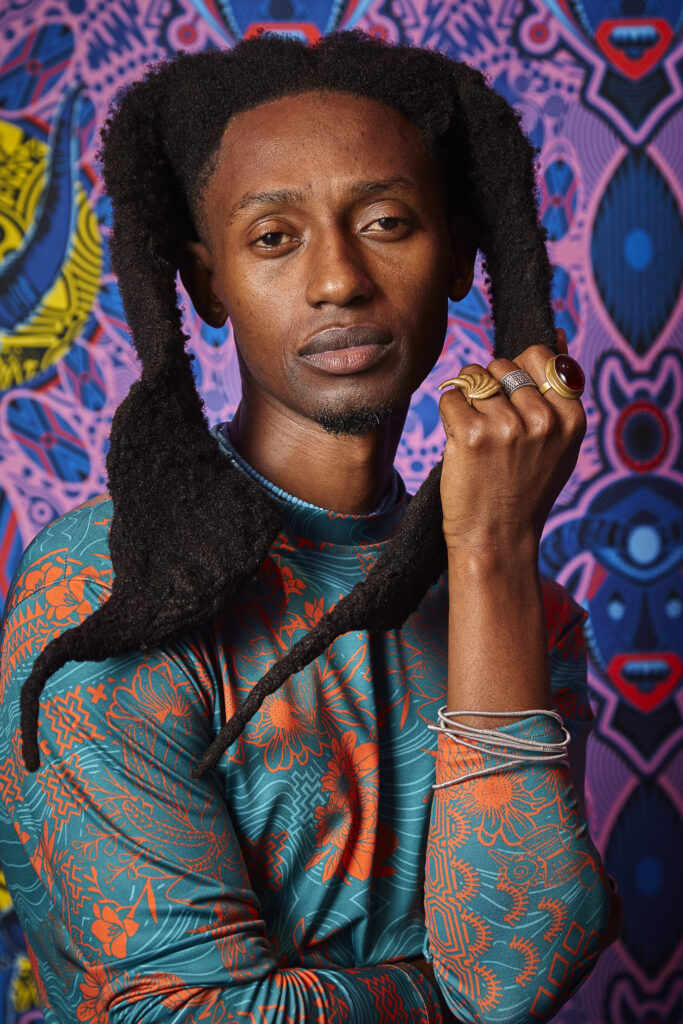
When asked about sustainability and ethical production—topics that dominate fashion industry discourse—Mr. Masa Mara’s response was pointed. “Those terms are important, yes,” he said, “but they often come from a Western lens.”
He noted that African production represents a small fraction of the global fashion industry’s output. “We’ve always made things slowly, consciously, with intention. That’s our nature,” he said. “They tell us to be ‘sustainable’ while flooding our markets with waste. They want us to slow down while they overproduce.”
For Mr. Masa Mara, sustainability isn’t about adopting Western frameworks—it’s about production sovereignty. “We need to produce for ourselves again. To dress our own people,” he said. “Consciousness is already in our DNA.”
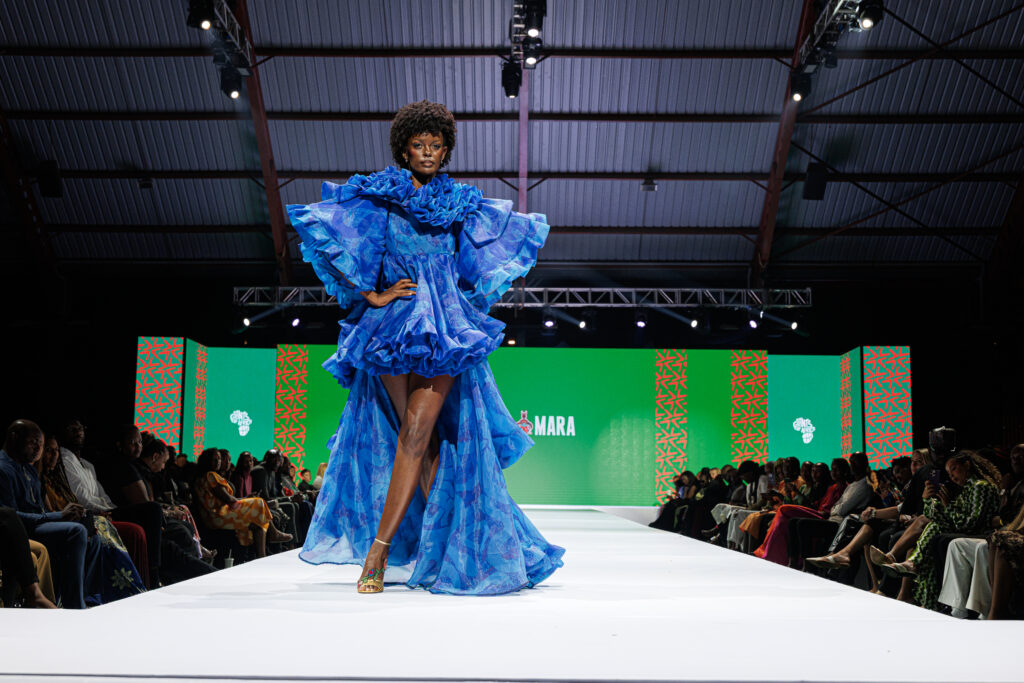
Masa Mara remains self-funded, which Mr. Masa Mara acknowledged has created challenges. “Everything was a challenge,” he said. “Funding, resources, convincing people to believe in what we were doing.”
Early reception was mixed. “At first, people said the designs were too bold. Too colorful. Too African,” he recalled. “But the same thing that people rejected became what everyone loved later.”
The brand’s pricing reflects a tension he’s frank about: wanting accessibility for African consumers while lacking the continental infrastructure to produce at scale. “Luxury is not our goal,” he said. “Our goal is accessibility. But until we build strong production systems across the continent, prices will remain high.”
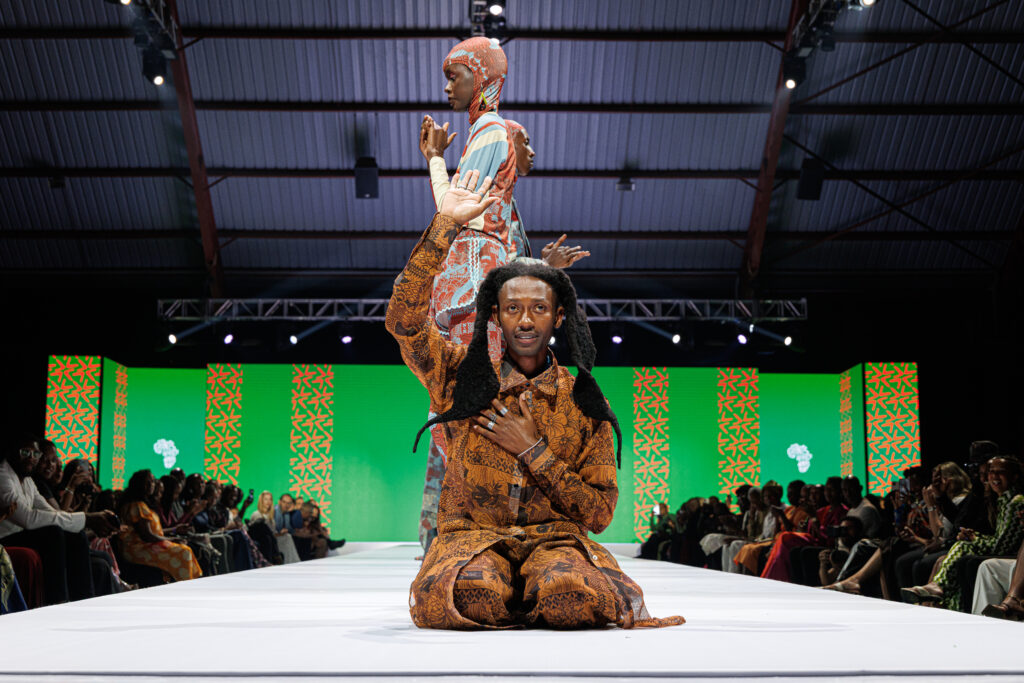
Mr. Masa Mara bristles at the suggestion that his work preserves traditional African culture. “I’m not here to preserve. I’m here to evolve,” he said. “If our ancestors were alive today, what would they build? They built pyramids—maybe now we’d build things in the sky.”
He describes his generation as “the generation brave”—tasked with unlearning colonial frameworks and rebuilding creative systems. “Our parents had to shrink themselves so we could stand here today,” he said. “Now it’s our turn—to expand, rise, return to who we truly are.”
It’s an ambitious vision, delivered with the conviction of someone who has spent years carrying weight—both literal and metaphorical—and learned how to bear it.