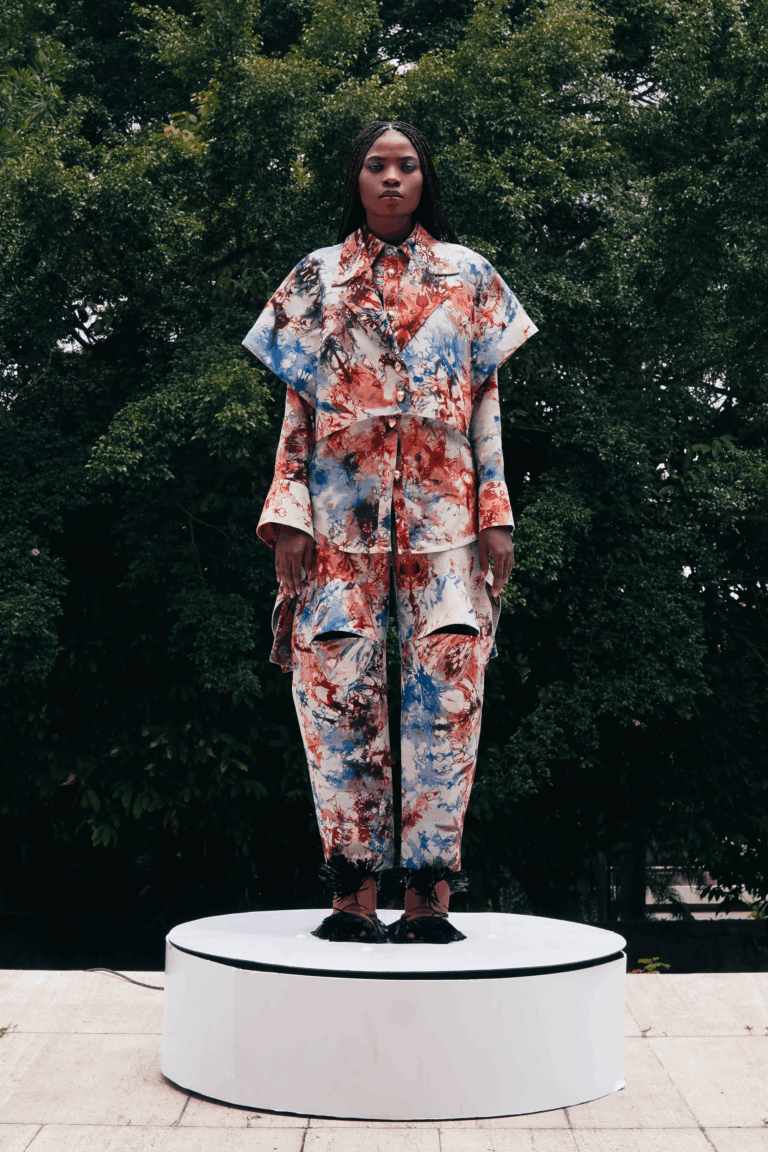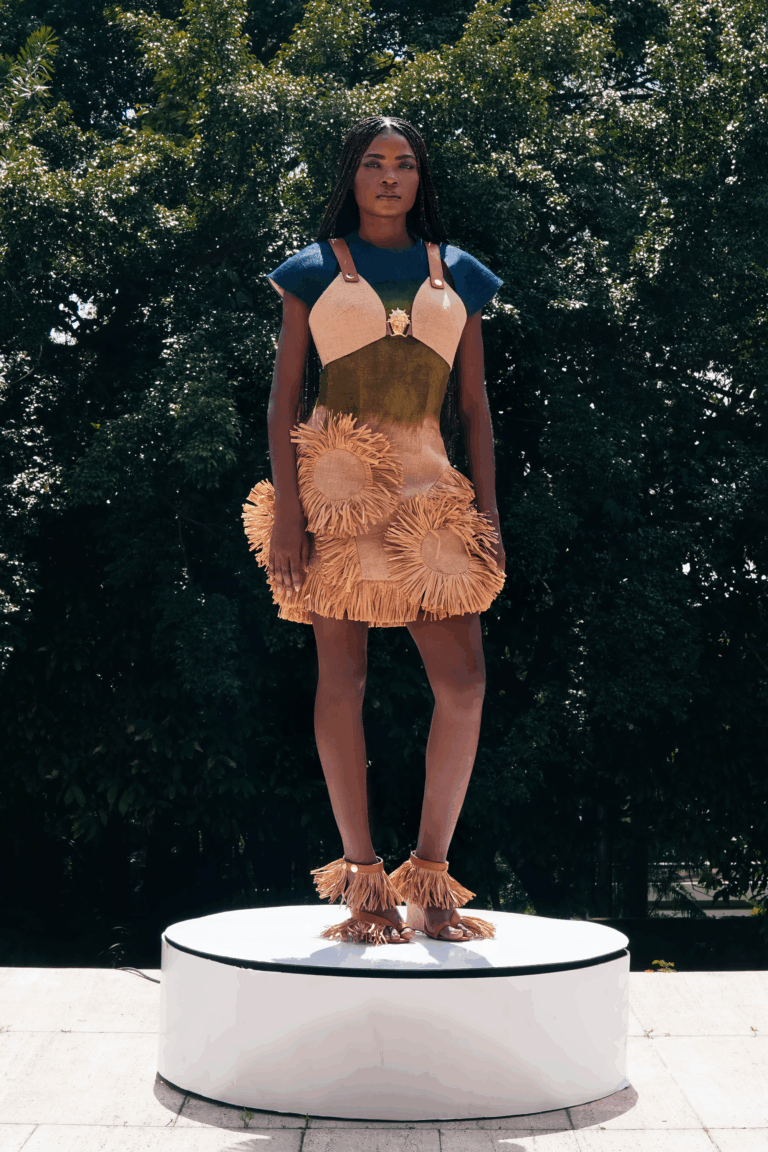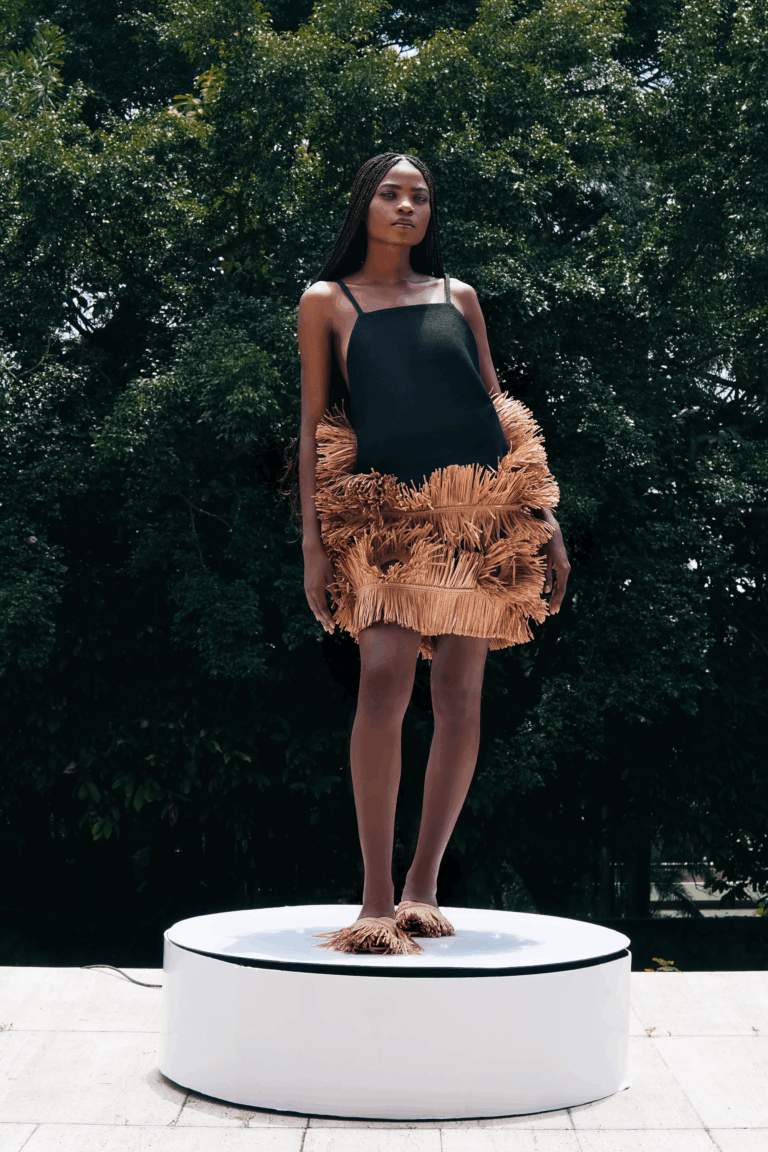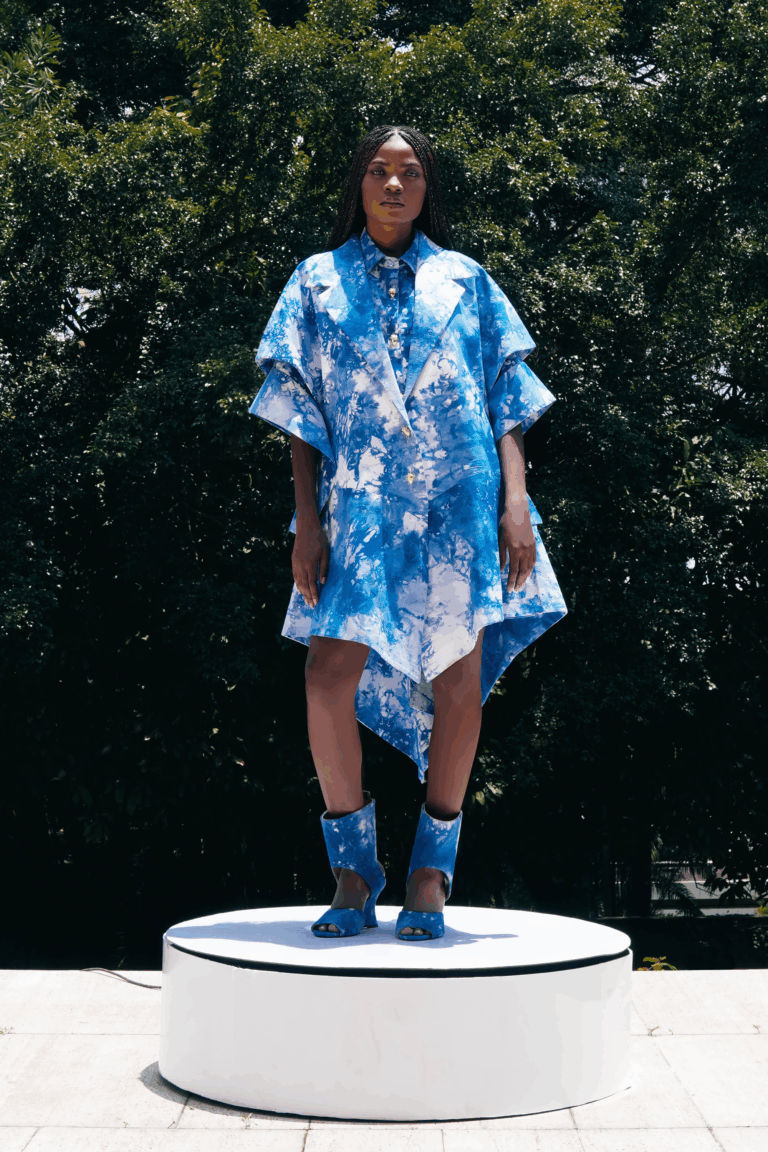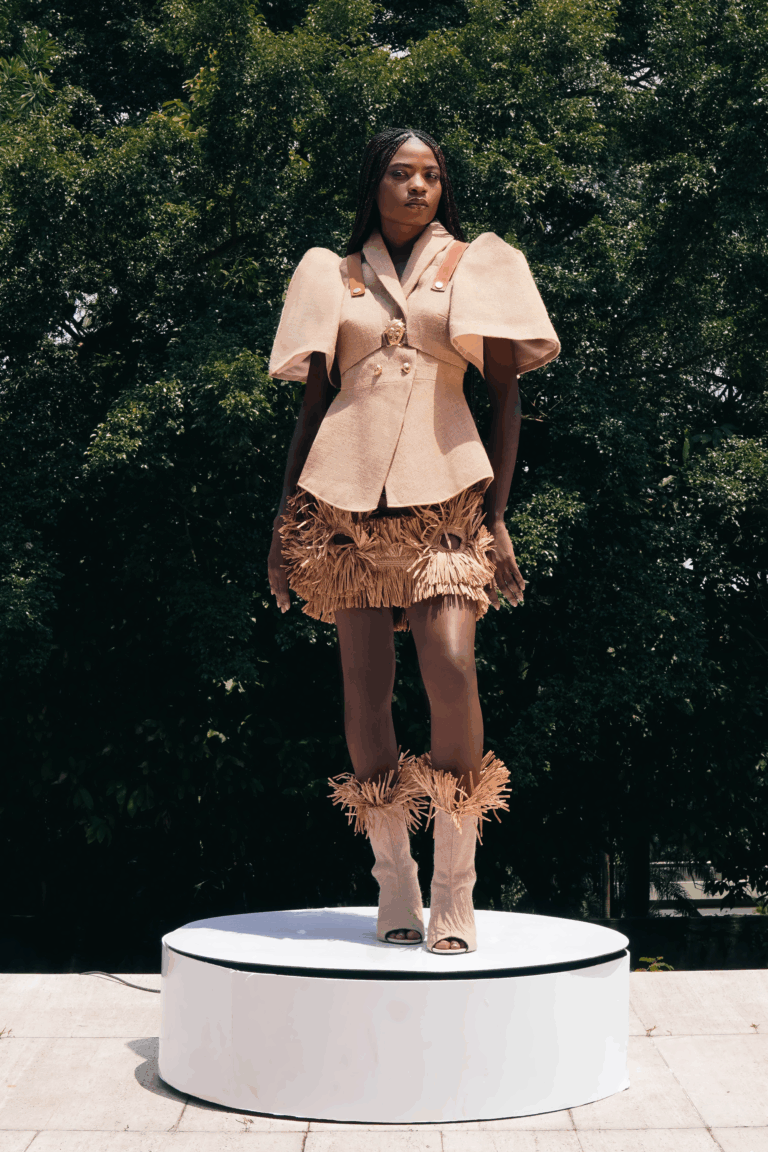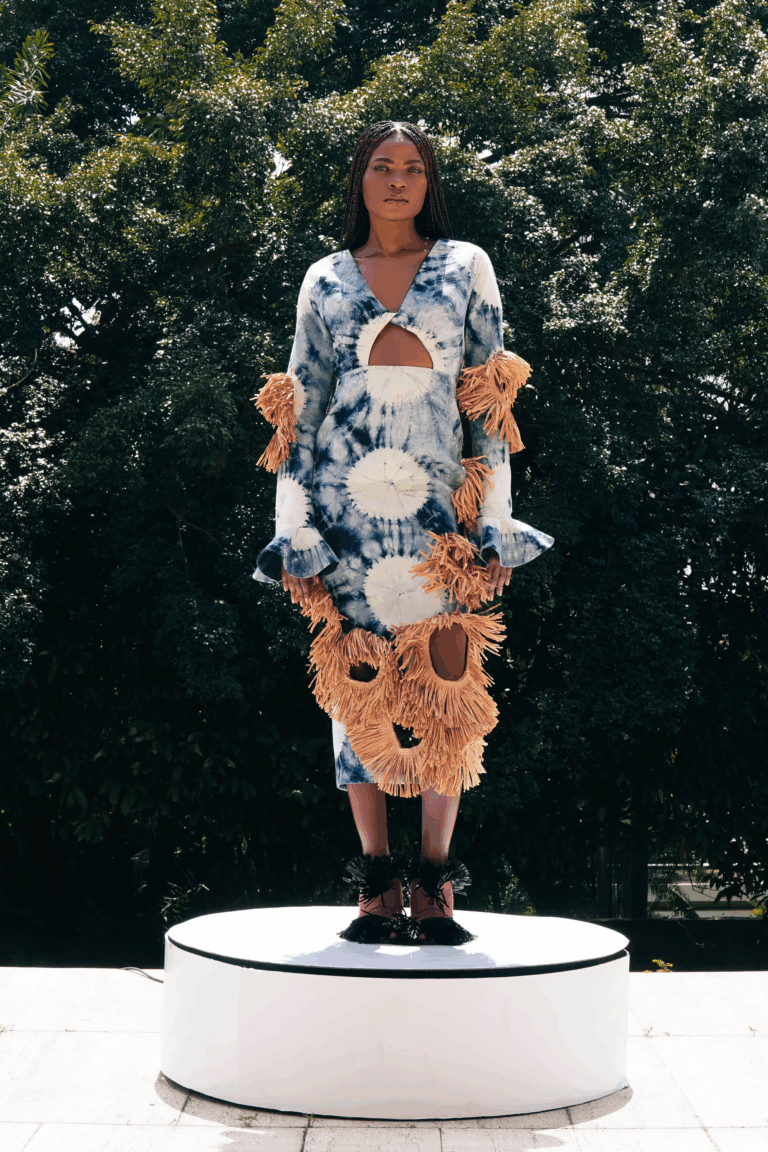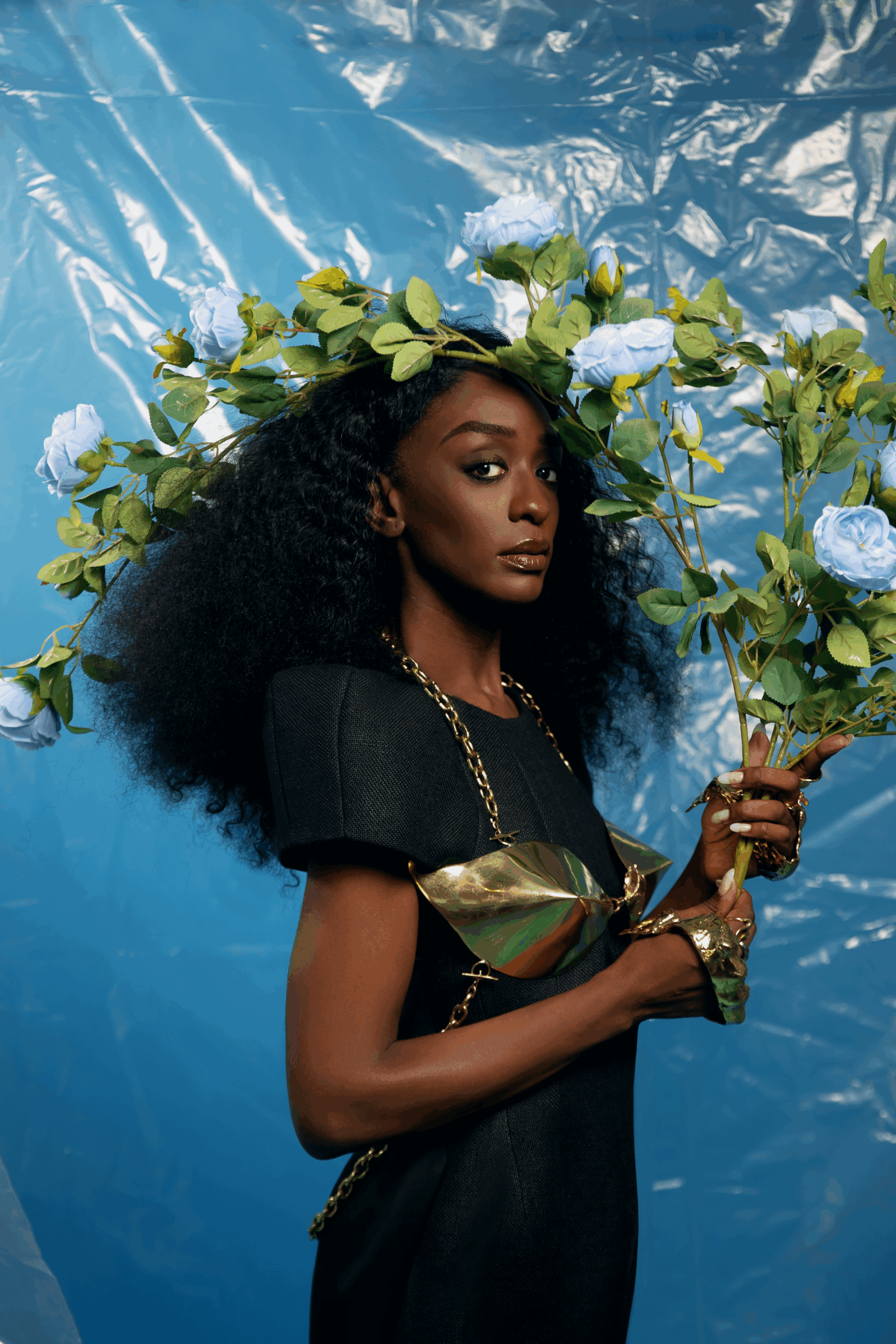
The Ivorian fashion scene is vibrant and rapidly evolving, blending traditional craftsmanship with contemporary design and gaining recognition on the global stage. Among the designers leading this movement is Loza Maléombho, whose work stands out for its ability to merge heritage with modernity. She draws on her Ivorian roots and international experiences to create pieces that reflect cultural hybridity, architectural silhouettes, and storytelling through design.
Her newest collection draws inspiration from the Hermetic Principles — ancient teachings outlining seven universal laws, including Mentalism (All is Mind), Correspondence (As above, so below), and Polarity (Everything has its opposite). While often linked to the Hermetica of ancient Egypt, these principles have roots in African cosmology, particularly within the spiritual systems of Kemet, Yoruba, Dogon, and Akan traditions, where the universe is understood as a continuum between visible and invisible realms.
“For me, these principles mirror how African spirituality has always operated: centered on balance, duality, vibration, and transformation,” she tells Guzangs. “The Dogon’s mapping of the stars, the Yoruba’s relationship between Orun (spirit) and Ayé (matter) — all reflect a deep understanding of universal laws that connect energy, consciousness, and creation.”
It’s a conceptually ambitious framework. Maléombho is not simply citing aesthetic influences but making a claim about epistemology — that African cosmological systems offer frameworks for understanding reality itself, and that fashion can transmit this knowledge. Whether garments can bear such philosophical weight, or whether the ideas remain in the artist statement while the clothes circulate as objects, is a tension the collection invites but doesn’t resolve.
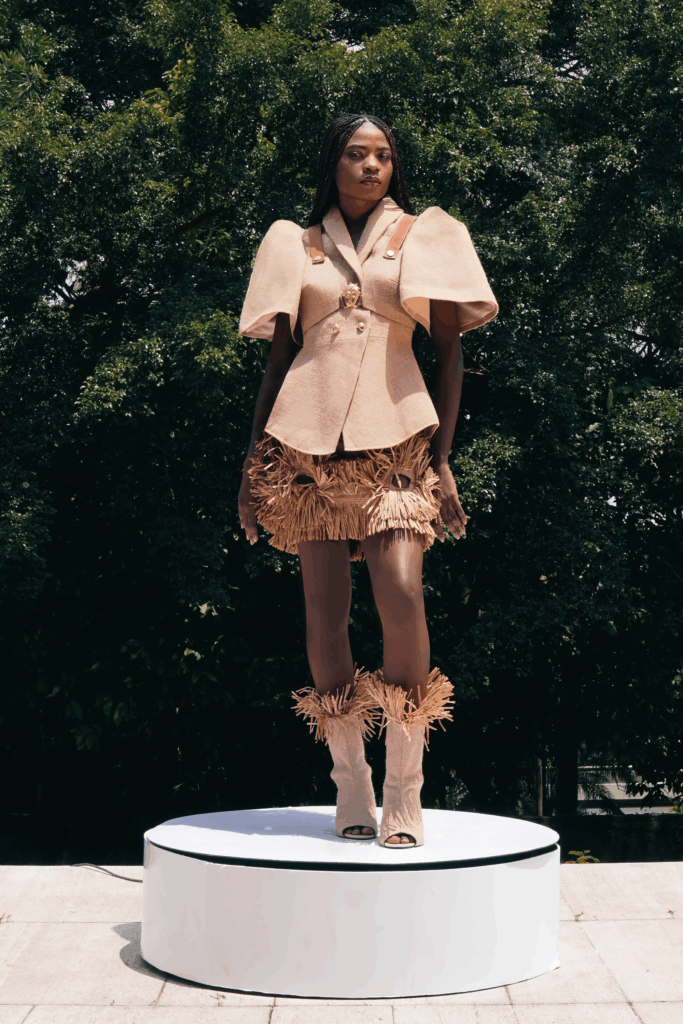
Throughout the collection, there is a translation of metaphysical truths into form: architectural silhouettes symbolize structure and order, fluid textiles embody rhythm and vibration, and metallic elements evoke transmutation — the passage from matter to spirit. “It’s a reminder that heritage is not static; it evolves, expands, and redefines itself in dialogue with the future,” Maléombho notes. “Through this collection, I wanted to reaffirm that African cosmology has always held the keys to understanding the universe — we are simply expressing it in a new visual language.”
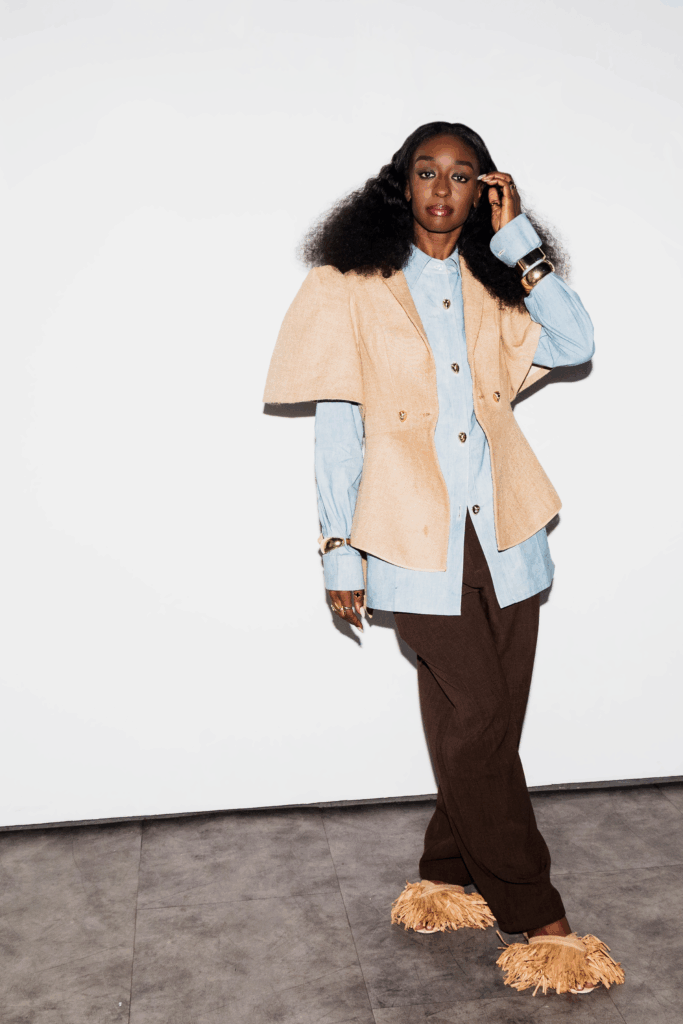
Maléombho was born in Brazil to an Ivorian mother and a Central African father, both doctors with an entrepreneurial streak. Her mother is a retired pathologist who built businesses of her own; her father, a plastic surgeon who did the same. Her earliest memories were rooted in Abidjan, long before her life stretched across continents.
Growing up between Côte d’Ivoire and the United States, she describes her identity as something that often felt fragmented. Moving to the U.S. sharpened that feeling — she never quite belonged to one place or one community. But that uneven mix of cultures taught her to live comfortably in paradox, to recognise beauty in hybridity, an instinct that would eventually shape her aesthetic.
She studied at the University of the Arts in Philadelphia, earning a Bachelor of Fine Arts in Animation in 2006 — training she believes gave her a strong visual foundation. “I had always been designing, but it wasn’t until college that I considered it as a career. Even then, I hesitated between fashion design and animation. Initially, I wanted to work at Pixar or Disney.”
In New York, she interned with designers and worked in retail management, slowly piecing together the experience she needed. “After graduating, while working in retail management, the desire to create clothing grew stronger. I realized there was space for designs that reflected both my cultural heritage and my hybrid aesthetic.”
She wanted to create something unlike what she had seen — a platform connecting African heritage and contemporary design. “There was a lack of authentic African representation on the global fashion stage,” she adds. “That pushed me to create what I wasn’t seeing.”
The word “authentic” does considerable work in this statement. Maléombho doesn’t define it explicitly, but her practice suggests a meaning: design emerging from sustained engagement with knowledge systems and craft networks rather than surface appropriation of motifs. It’s a distinction she draws implicitly throughout the conversation — between translation and replication, between continuity and extraction.
Her background in animation taught her to think in three dimensions. Drawn to structure, volume, and movement, she describes her silhouettes as naturally architectural. Garments, she explains, are not just pieces to wear but imaginations of the body as spaces a person inhabits.
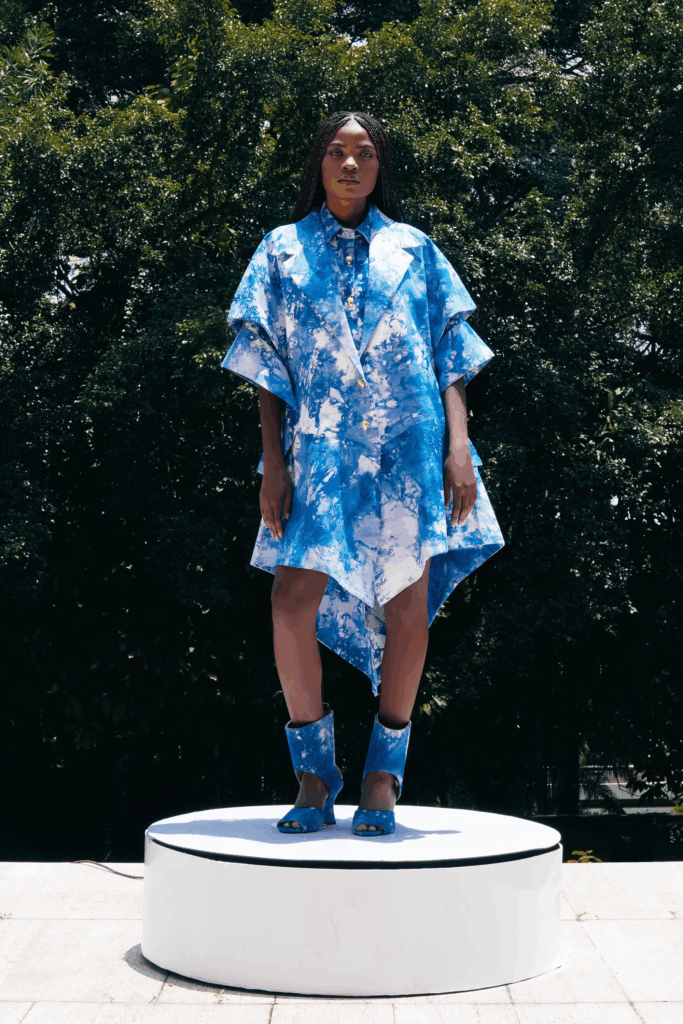
After launching the brand in New York in 2009, Maléombho relocated to Abidjan in 2012 to be closer to artisans and production. The move was both strategic and emotional — a way to ground the brand in Côte d’Ivoire while building a bridge to the wider world.
She is adept at working with symbols and figurations that evoke elements of her heritage: the depiction of the Baoulé mask, the Zaouli dance, which embodies Côte d’Ivoire’s masquerade tradition, spiritual symbolism, and performance to honour lineage through cultural storytelling. She collaborates with local artisans, aiming to translate the spirit of these symbols rather than simply replicate them. “For me, it’s a process of continuity and dialogue — an ongoing question of how these motifs can travel through time. Each collection becomes a vessel carrying that conversation forward.”
That question — how motifs travel through time is not rhetorical. When Baoulé masks or Zaouli references move from ritual context to runway to celebrity wardrobe, they undergo transformation. Maléombho’s language of “translation” rather than “replication” acknowledges this. But translation always involves loss and gain; what survives the journey and what doesn’t is worth asking.
Her designs have been worn by Beyoncé, Solange Knowles, Kelly Rowland, Teyana Taylor, and Iman.
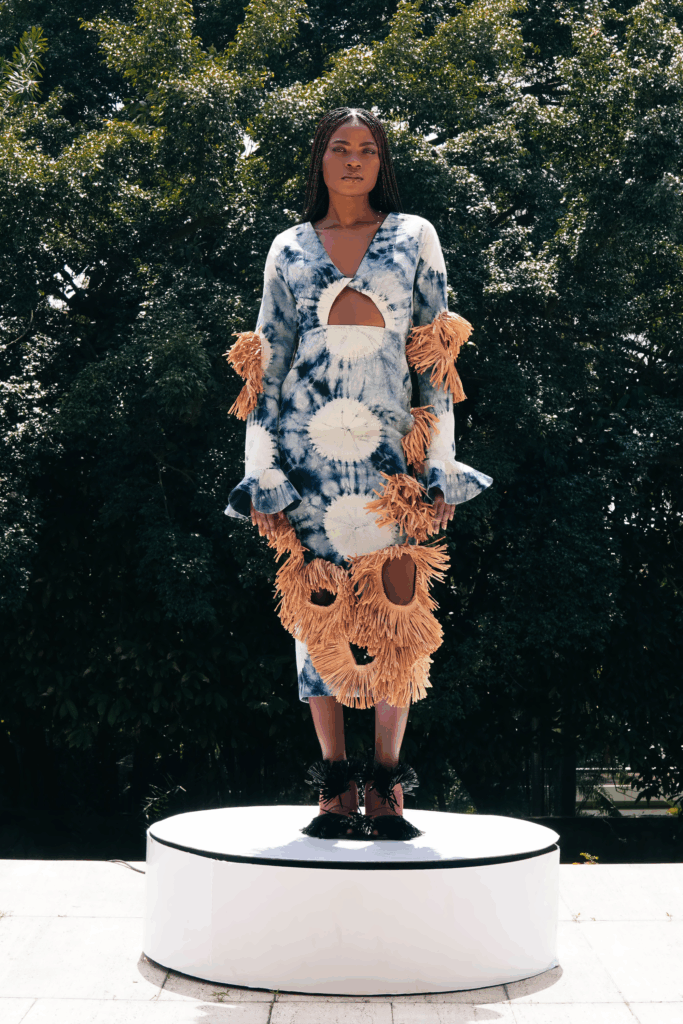
Maléombho says she is most grateful for the artisans, collaborators, and community who continue to bring the brand to life. She emphasizes that nothing she has built exists in isolation, describing it as the product of collective effort and shared vision.
The brand is expanding into a multidimensional creative hub — one that bridges fashion with scenography: interior design, furniture, styling, and immersive experiences. “The goal is to solidify the brand globally while continuing to create meaningful impact locally,” she tells Guzangs, “to stand at the intersection of culture, innovation, and consciousness.”
The tension between “solidify globally” and “impact locally” is one Maléombho names but doesn’t elaborate. Whether expansion strengthens or strains that balance — whether the multidimensional hub deepens the work or disperses it — remains an open question. But her trajectory suggests a designer more interested in testing limits than settling into a formula.