There’s something electric about watching a designer discover their voice. In Mohamed Youss’s case, that moment came not in a Parisian atelier or New York showroom, but in the souks of Taroudant, sketching his first burlap jacket and watching it sell within five minutes of posting to Instagram. That raw hunger—the kind that drives you to modify your own clothes when you can barely afford fabric—is what separates authentic creators from mere trend followers.
That moment became more than the start of a designer’s career—it set the tone for Anouri Original itself. The brand is built on cultural identity as creative currency, proving that sometimes the most radical way forward is to look back.
“Taroudant didn’t just inspire me, it shaped my eye for detail, appreciation for storytelling, and my commitment to staying grounded in authenticity,” he tells Guzangs.
This isn’t the typical designer origin story of prestigious fashion schools and industry connections. This is something rawer, more essential: a young man without a high school diploma trusting his instincts and his heritage enough to build something entirely his own.
The brand name itself reads like a manifesto. “Anouri”—meaning “back” in Moroccan Amazigh—paired with “Original” creates a perfect paradox: returning to the source as an act of innovation. In an industry that devours tradition and spits out trends, AnouriOriginal does something radical. It treats heritage as a living, breathing creative partner rather than a museum piece to be exploited.
What transforms this from feel-good cultural preservation into genuine fashion language is Youss’s approach to collaboration. He doesn’t just source from artisans; he partners with them, folding their techniques into garments that carry Morocco in every seam.
“I collaborate heavily with artisans in Taroudant, Marrakech, and parts of the Atlas Mountains. Each region brings something unique, whether it’s pottery-inspired embroidery, intricate stitching, or the way wool is spun and dyed. Their skill is the soul of AnouriOriginal,” he adds.
This isn’t fashion tourism. This is ecosystem building.
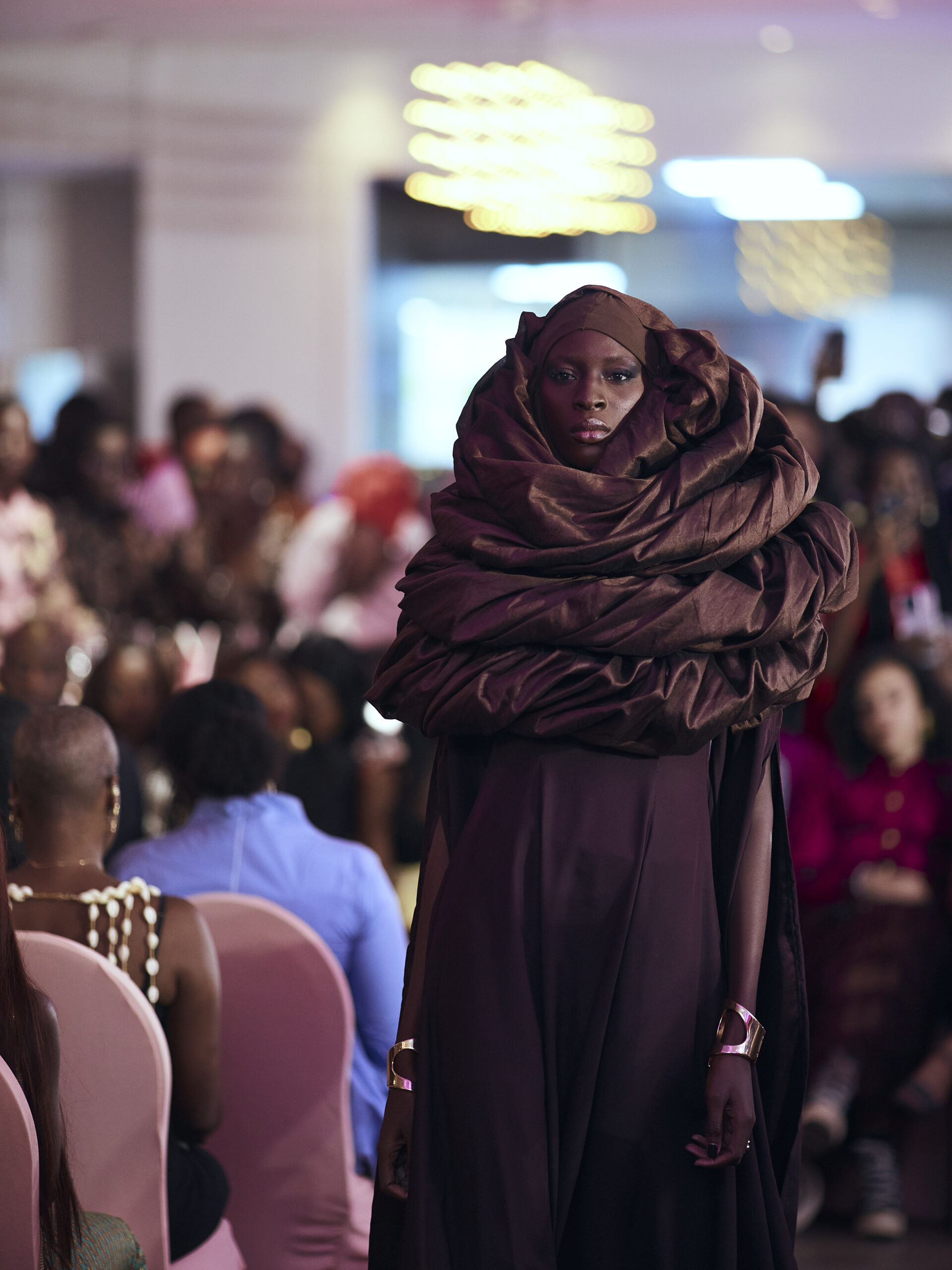
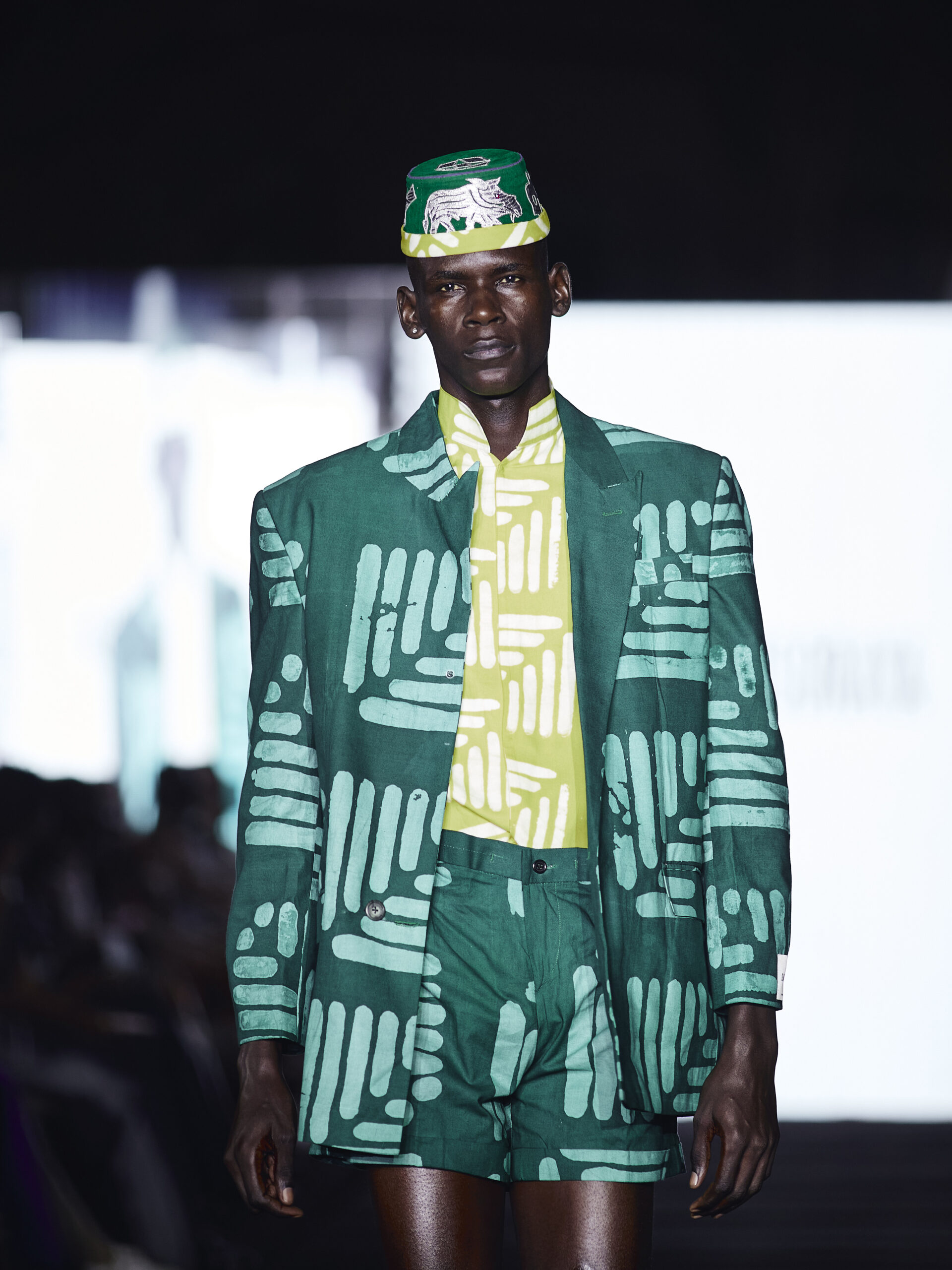
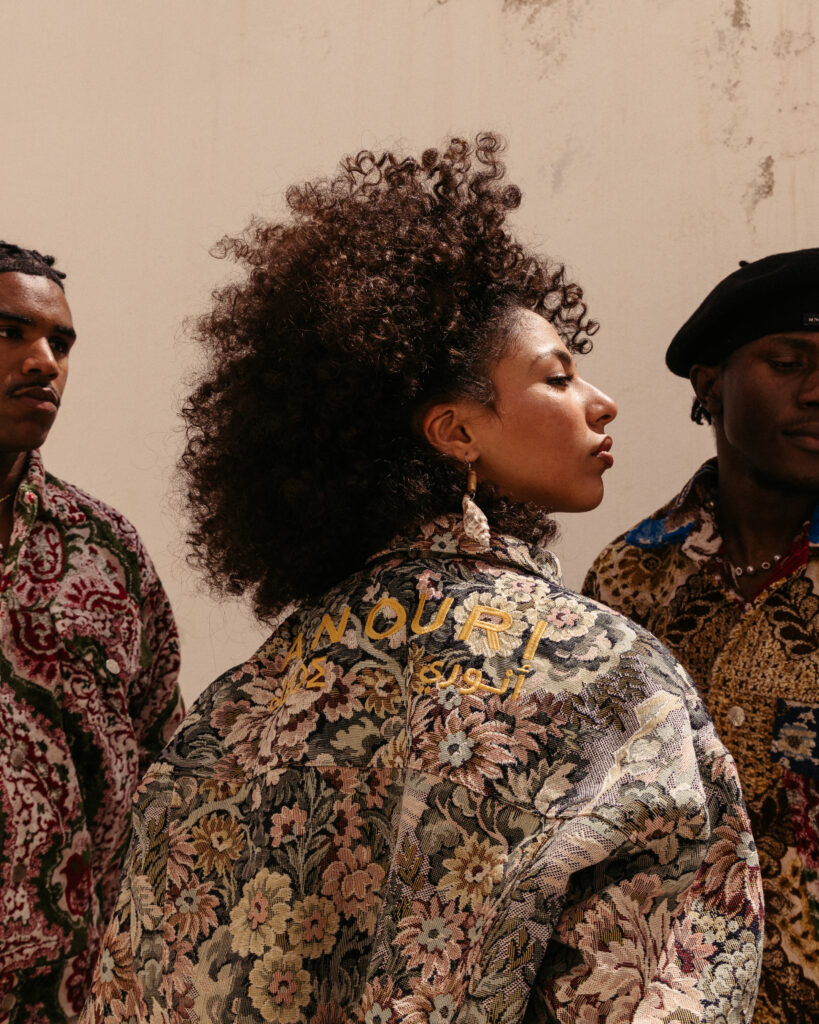
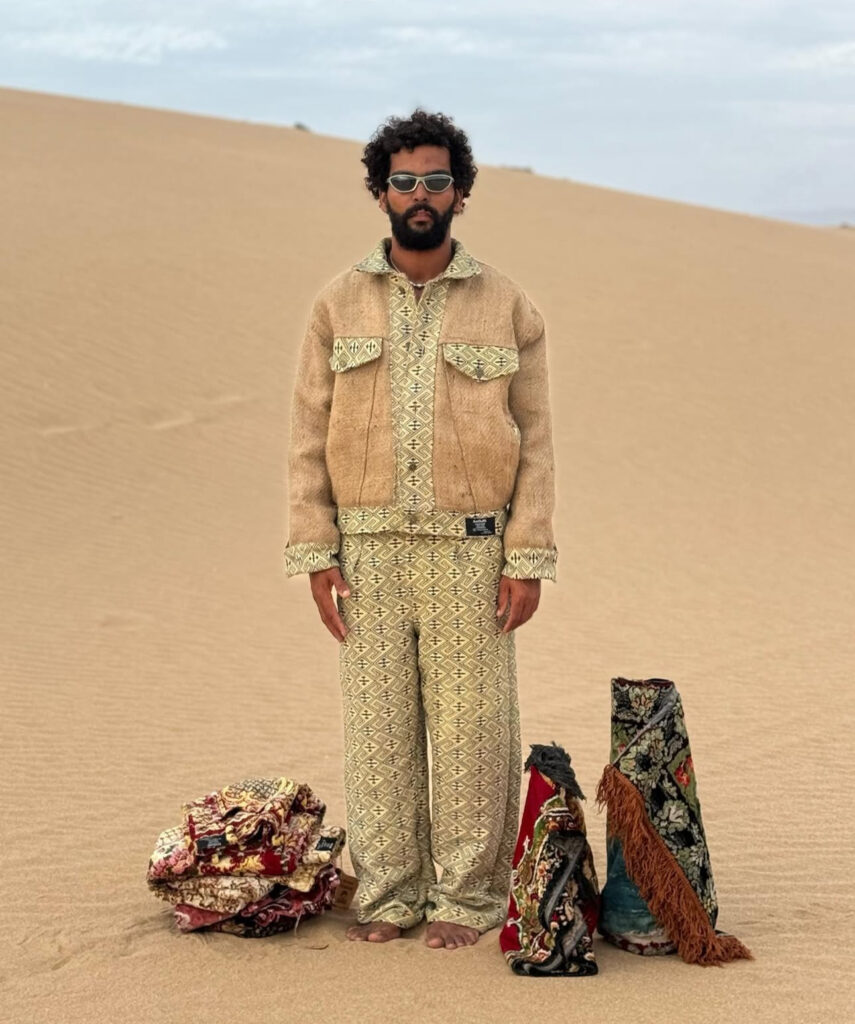
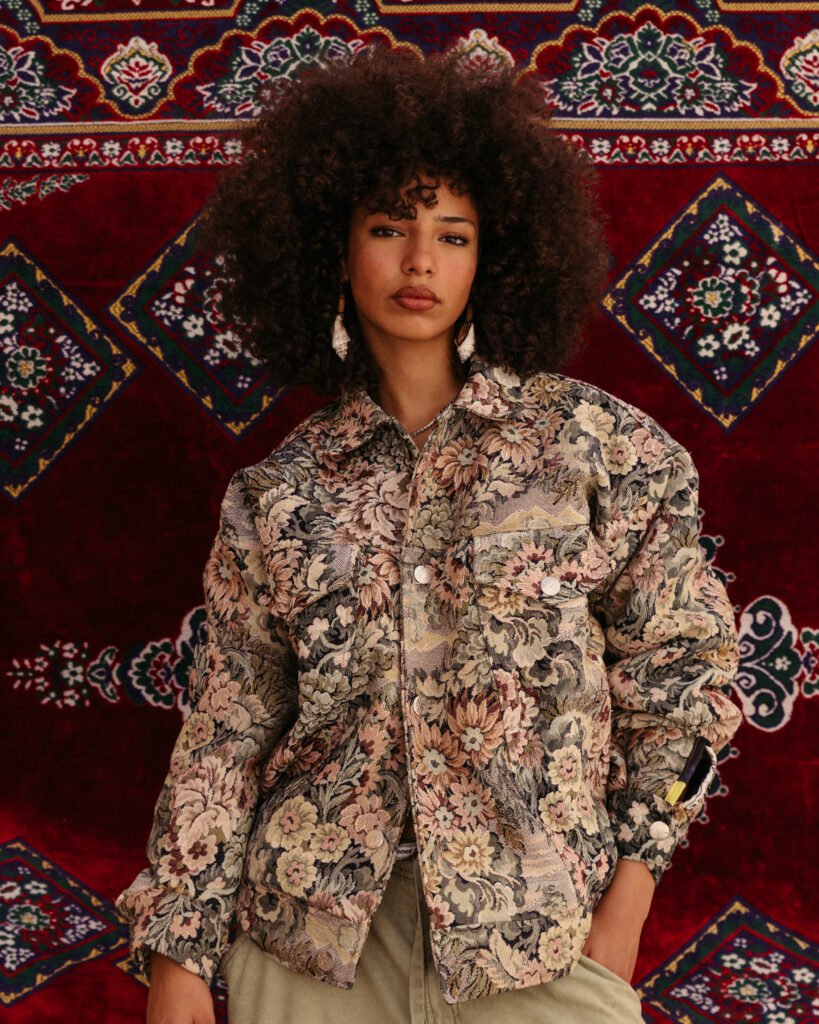
The clothes themselves are tactile stories. Cropped burlap jackets stitched from upcycled coffee sacks are cinched at the waist, lined with patterned fabric, and cut with a sculptural sharpness that elevates humble material into modern armor. Tapestry floral coats carry the weight of domestic textiles, embroidered with “ANOURI” in Amazigh script across the shoulders like cultural signatures. Softer, tonal wool sets move in the opposite direction—quiet, minimal, but textured with subtle Amazigh-inspired weaves that whisper heritage instead of shouting it.
“It’s all about respect and reinterpretation. I don’t replicate traditions; I reimagine them. I work directly with locals to preserve original techniques but apply them to silhouettes and styles that speak to today’s global fashion language.”
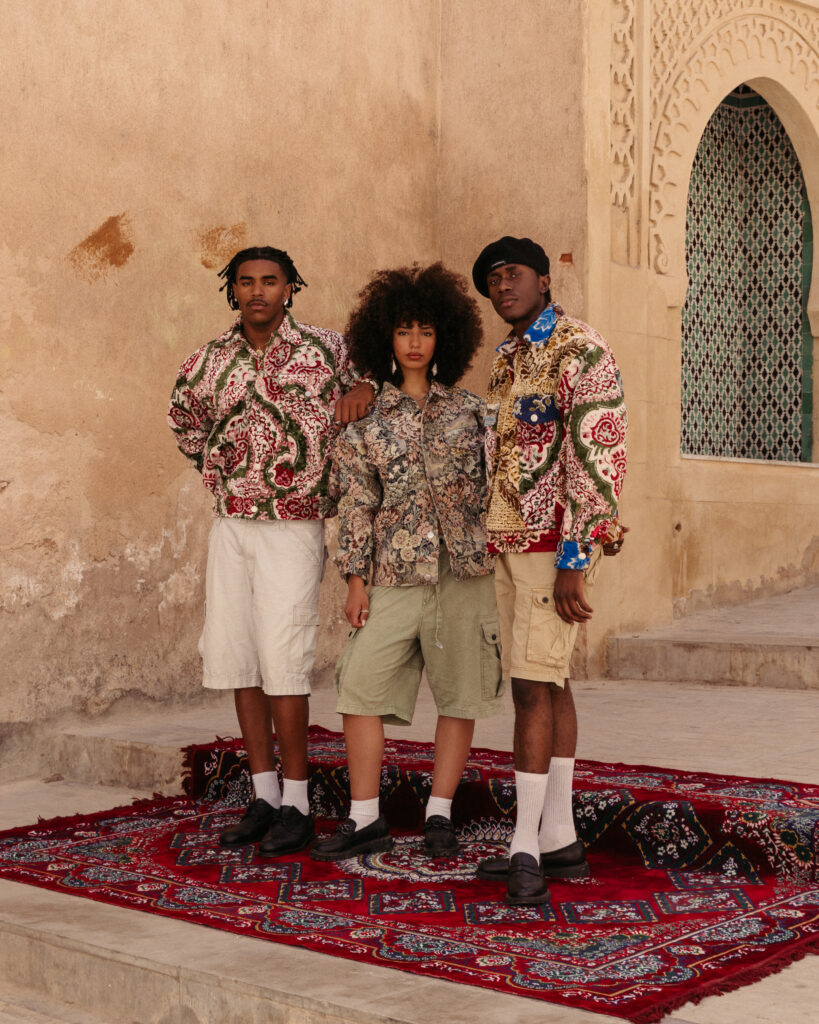
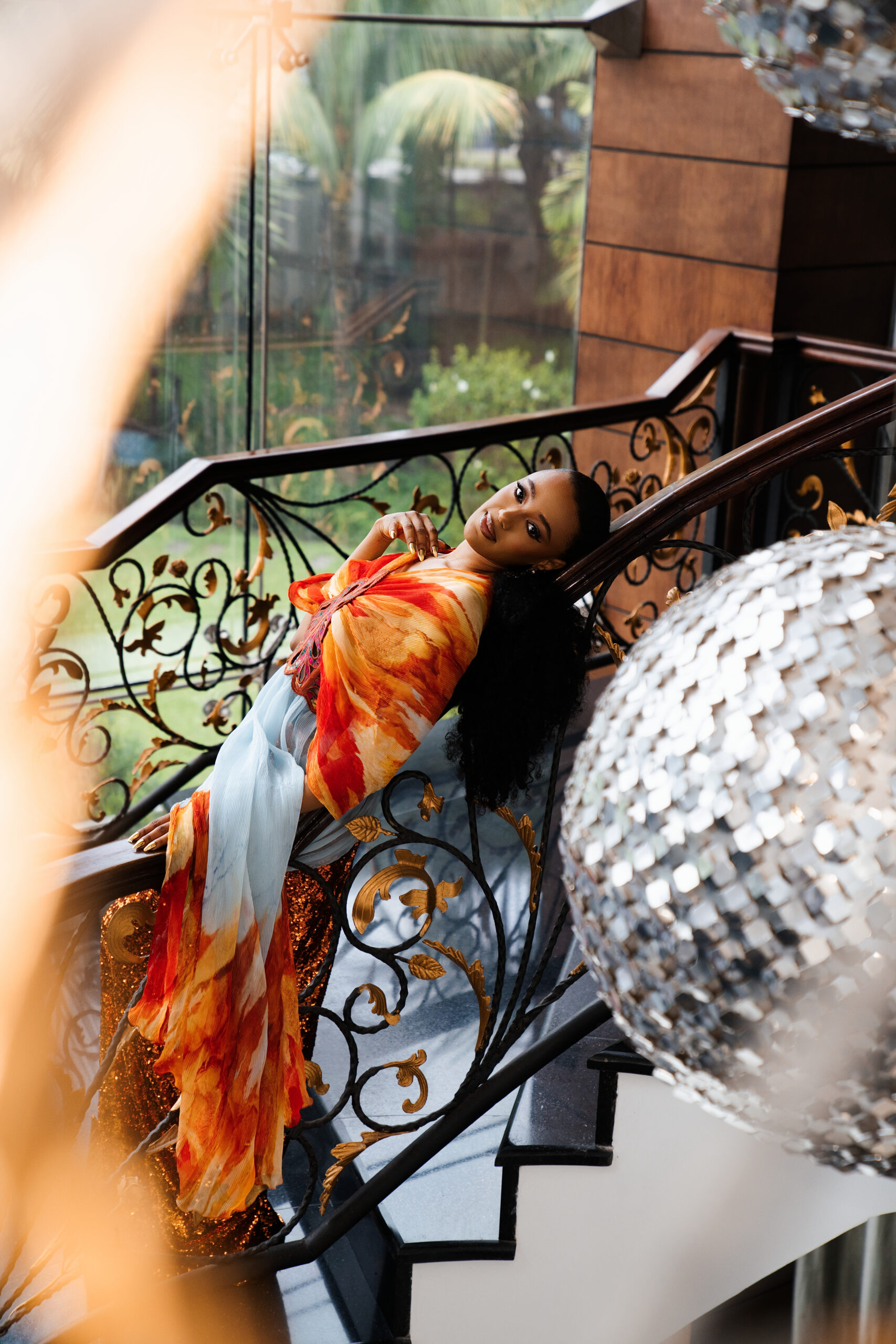
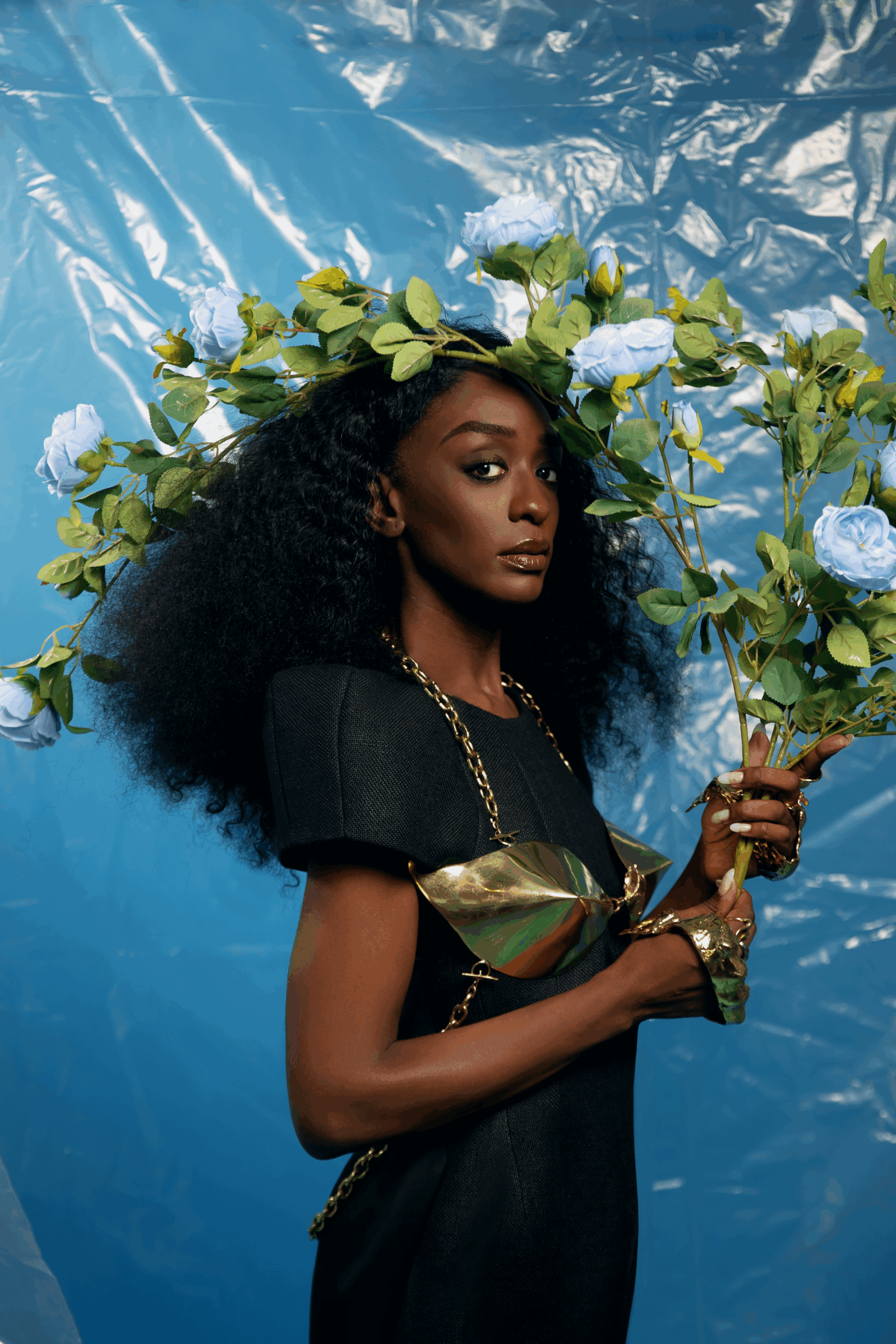
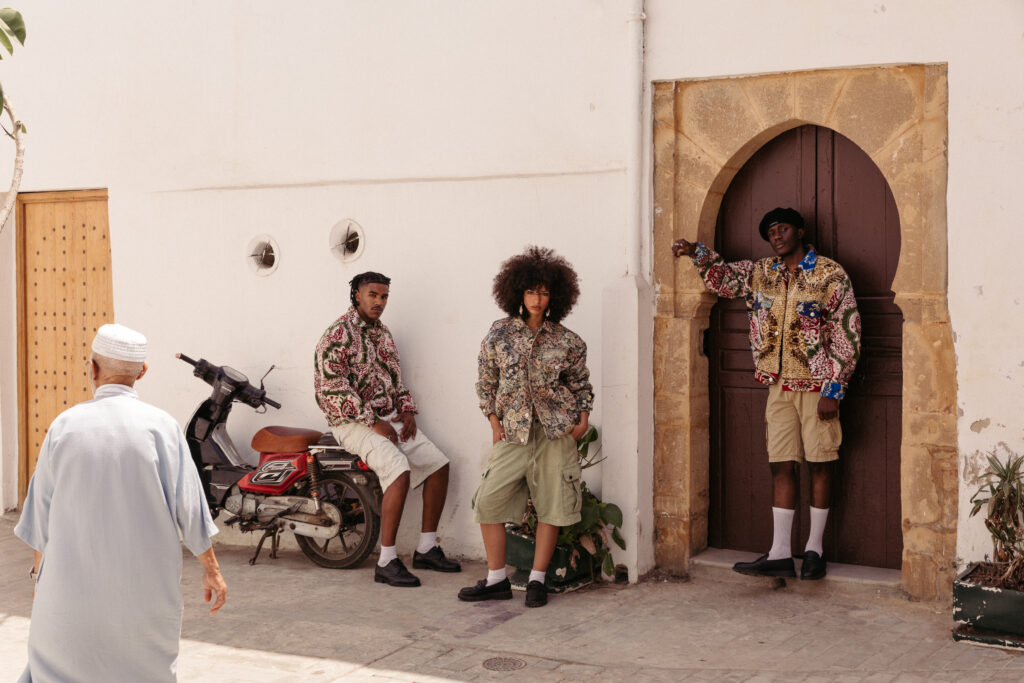
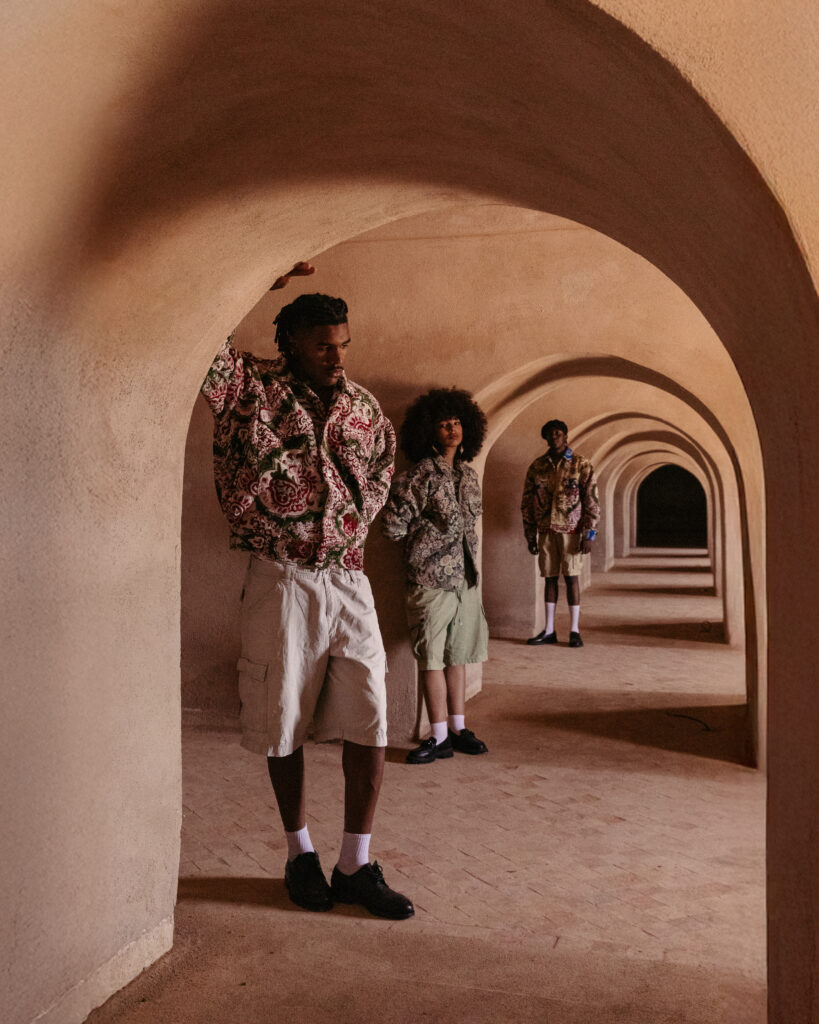
The “Rooted” editorial with photographer El Bahja Sophia. captures this philosophy perfectly. Shot between historic monuments and the medina of Salé, the series transforms fashion photography into cultural documentation. Those upcycled MABRA fabric jackets aren’t just clothes; they’re statements about belonging, about the creative spirit of a generation that refuses to choose between tradition and modernity.
“Rooted was a love letter to identity,” Youss explains, and you feel the weight of that intention.
In an age of cultural appropriation masquerading as inspiration, there’s something profound about creators who understand the difference between taking and giving back.
Perhaps the most honest moment comes when Youss acknowledges his greatest challenge: “balancing growth with integrity, staying small enough to preserve artisanal quality while scaling to keep the business viable.” That tension—between craft timelines and market demands—is the central drama of ethical fashion. His commitment to “transparency, fair wages, and environmental stewardship” isn’t framed as optional virtue signaling but as “fundamental responsibility.” In a fashion landscape built on exploitation, this stance feels both obvious and revolutionary.
Youss’s selection as an Africa Fashion Up laureate represents more than personal achievement. Standing among his peers, presenting to curious European audiences, he becomes part of a larger narrative about African creativity claiming its rightful place on the world stage. His observation that “authenticity transcends borders” isn’t wishful thinking—it’s market reality.
The global appetite for stories, for connection, for something deeper than seasonal trends is reshaping fashion consumption. Audiences don’t just want clothes; they want meaning. They want to understand the hands that made their garments, the culture that inspired their design, the values that guided their creation.
“I hope AnouriOriginal becomes a reference point for Moroccan excellence in design. I want it to inspire pride locally and curiosity globally. Most of all, I hope it creates a movement that uplifts artisans, preserves culture, and reminds us that where we come from is powerful,” Youss says.
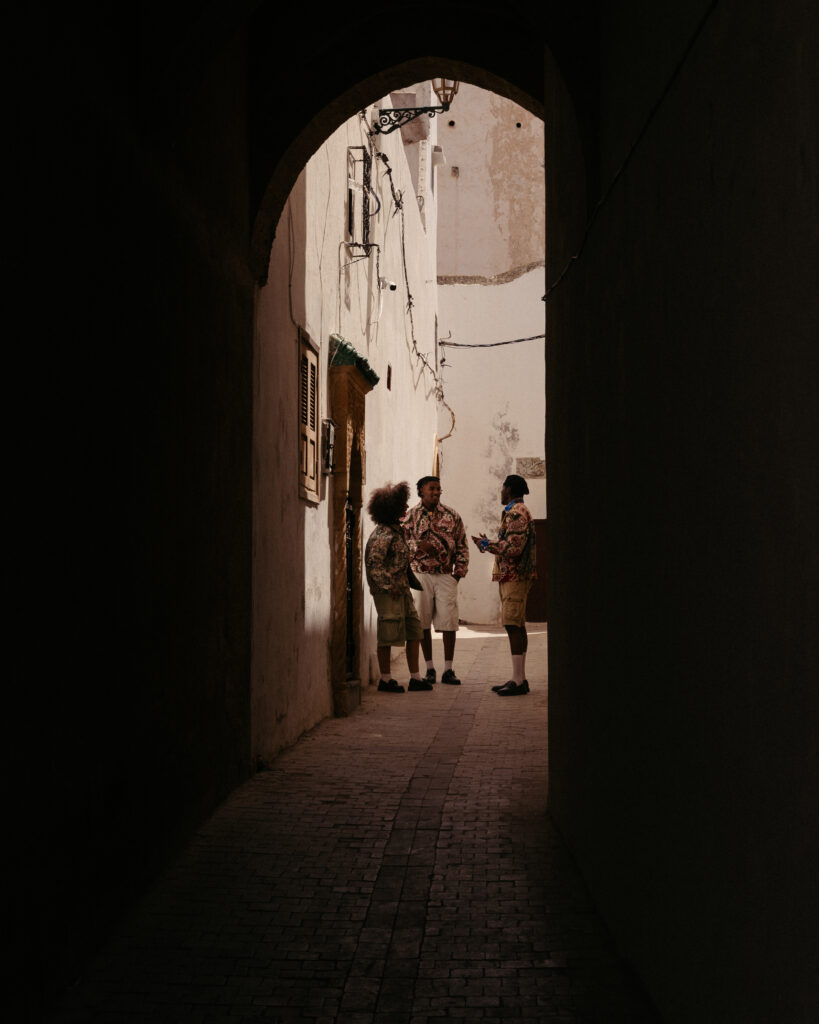
In a world drowning in fast fashion and cultural pastiche, AnouriOriginal offers something increasingly rare: authenticity with ambition, tradition with innovation, local roots with global reach. This isn’t just fashion; it’s cultural preservation through creative expression, economic empowerment through artistic excellence.
The revolution, it turns out, was never about burning everything down. Sometimes it’s about going home, digging deep, and building something beautiful from the ground up. When young designers choose to honor their heritage while speaking to the world, they create more than clothes—they create possibilities. Anouri Original is proof that the future of fashion might just be found in its past.