Luxury is not always new. Sometimes it is the silken whisper of a scarf once worn by a grandmother. Sometimes it is a talisman fashioned from a lover’s forgotten tie, reborn as a necklace that rests close to the heart. This is the world of Bolé Dakar, a brand that refuses the disposable tempo of fast fashion and instead crafts beauty out of memory, skill, and time.
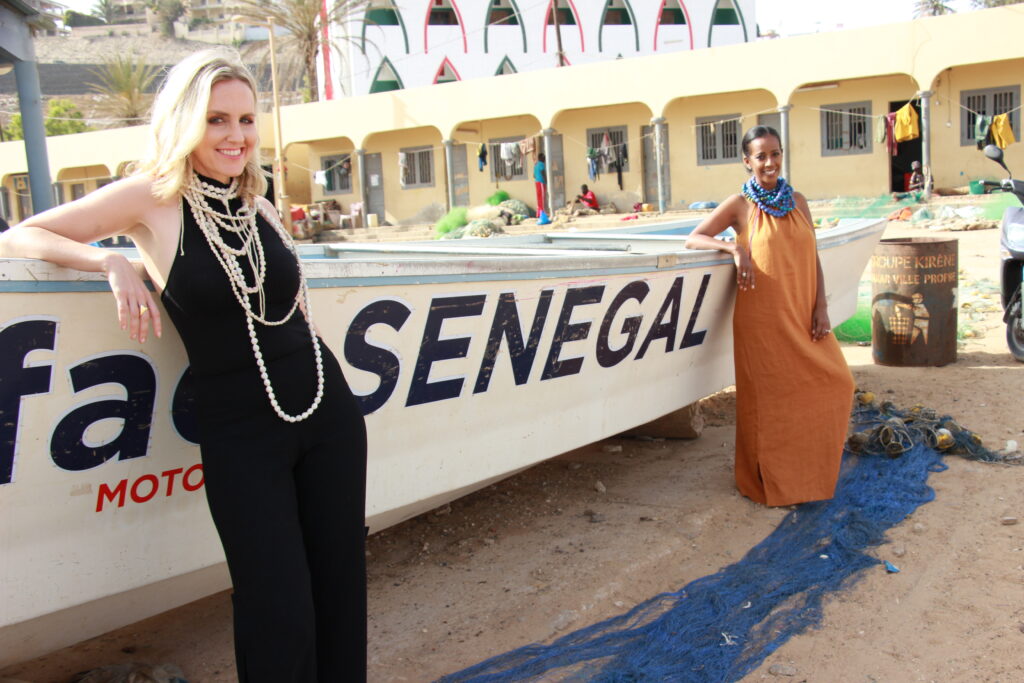
The name itself, Bolé—Wolof for “to bring together”—is an ethos. It is the act of gathering: of people, materials, and histories. Founders Mez Seyoum and Kate Lancaster have always gathered not just fabric, but inheritances, overlooked narratives, and intimate stories embedded in discarded cloth.
For Mez, an Ethiopian who lived in India before arriving in Senegal, adornment has never been surface-deep. “I grew up where everything had meaning,” she recalls. “Ashenda, the jewelry, the markings—all of it was a cultural gift. In India, I learned the power of transformation—taking a sari, reworking it, and giving it a second life.”
Kate, an American who grew up in Senegal, discovered the city’s rhythm through cinema. “Because of Djibril Diop Mambéty, I saw Dakar visually through his films in high school. I felt deeply connected. Being here is a playground of color, layering, and mixing different things.”
Their meeting was serendipitous, through the children they both nurtured. Mez remembers, “It was a meeting of creative energies that manifested into something magical.” Kate adds, “We met because I taught her kids at school… we bonded over style, then became good friends. That friendship became the foundation of Bolé Dakar.”
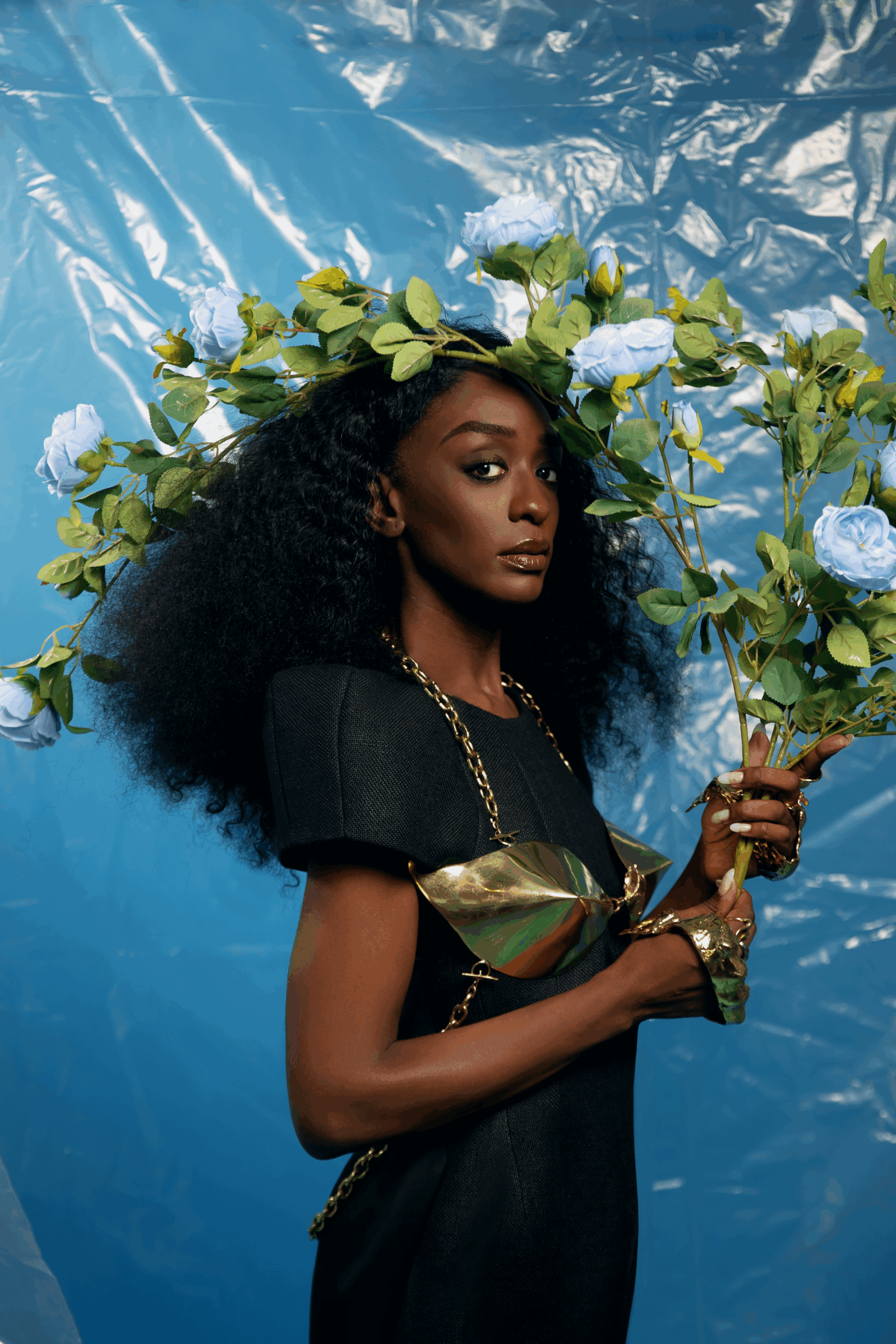
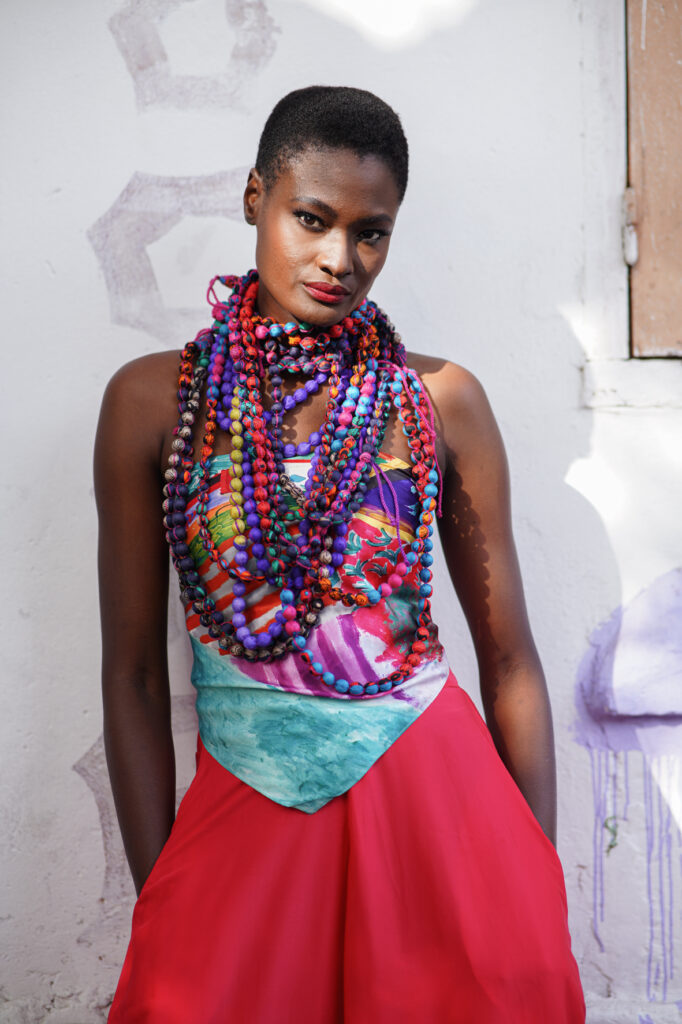
Together, they built a language of fragility and permanence, of elegance born not from opulence but from patience. Bolé’s necklaces—each unique—are crafted from vintage silks sourced in Dakar’s sprawling Fëgg diaye thrift markets. “Some days we find nothing. Some days a single red silk appears, and suddenly a hundred pieces are waiting to be born,” Kate says. Mez adds, “The process is slow, careful. Luxury is in the time you take, in honoring the material and the story it carries.”
The alchemy extends beyond fabric. Each necklace is finished by artisans in Dakar and Guinea-Conakry, men and women who have been part of Bolé’s world since the beginning. Kate emphasizes, “Whoever touches Bolé Dakar, their life should be better because of it.” Mez echoes, “We want to create beauty that uplifts people, that gives dignity and sustenance through craft.”
Luxury, for Bolé, is inseparable from slowness—the patience of sourcing silk, the handwork, and the willingness to wait. “Slow fashion is luxury,” Kate says. “A client once waited a year for a red necklace. The waiting became part of the bond.” Mez nods: “Fragility is honesty. Each piece is precious because life itself is fragile.”
Their process reflects that philosophy. Mez explains, “We began experimenting with different bead sizes and textiles until we gravitated toward the one-size-fits-all version for its versatility. It always begins with finding the right silk to be reborn as a modern-day pearl.” Kate adds, “We don’t impose a vision on the materials. We enhance what already exists.”
Local craftsmanship is central. Kate says, “We take what’s been discarded and give it value. I love the rebelliousness of it—’OK West, send us your trash, we’ll make it beautiful and sell it back to you at five times the price.” Mez reflects, “It’s a labor of love. Our artisans learn to see treasures in what others overlook, and in turn, their lives are enriched.”
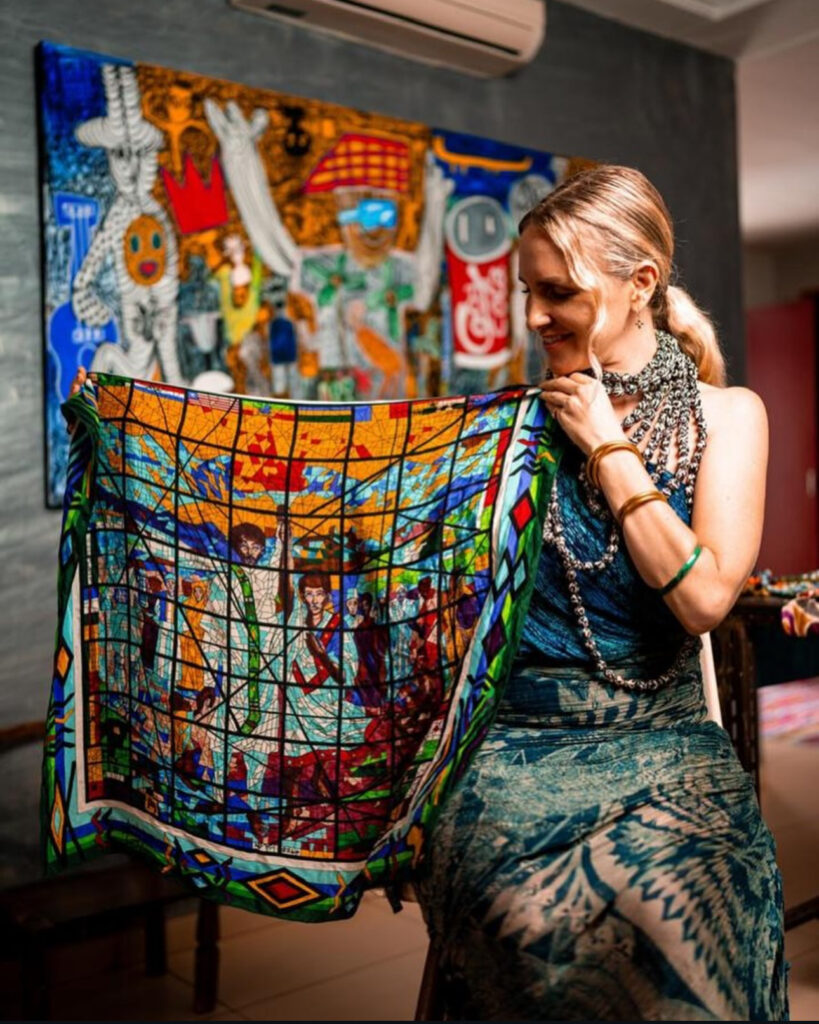
The brand thrives on dialogue with Dakar itself. Mez recalls long days exploring the city’s markets, galleries, and streets. “Meeting musicians, artists, and activists inspired me to take an active role in the creative space. Having just moved from India, I began blending the methods I learned there with skills of artisans from Dakar. There were several versions of Bolé before our Dakar clientele popularized the current design for its multifunctionality and aesthetics.”
For Kate, Dakar is inseparable from the brand. “The energy here is contagious. The Baye Fall, for example, layering their necklaces, customizing everything—they embody the spirit of our designs. Luxury, for me, is the time, energy, and love invested in each creation. There is no place as creative as Dakar.”
Inspiration comes from African women—bold, elegant, endlessly expressive. “They balance modernity and tradition effortlessly,” Mez says. “They are confident, creative, and strong, navigating cultural norms with elegance.” Kate adds, “I see that elegance everywhere in Dakar—from little girls to grandmothers. It’s innate, lived-in, impossible to teach.”
Each piece carries memory. Some necklaces begin as scraps from a husband’s work ties, a mother’s scarf, or a grandmother’s silk. Kate remembers one woman who brought three of her late husband’s Hermès ties: “Transforming them into a necklace allowed her to keep him close. That’s the real magic of Bolé.” Mez adds, “We are not just creating jewelry; we are preserving history, emotion, and identity.”
The brand’s aesthetic balances ancestral influence with contemporary sensibilities. Mez explains, “There is nothing new under the sun. Fashion always draws from the past with a contemporary interpretation that fits the present time. We stay authentic, blending cultural heritage with modern design.” Kate adds, “There is a fragility to beauty in what we do. Vintage silk is delicate, precious, and fleeting—much like life itself. That fragility makes each piece more meaningful.”
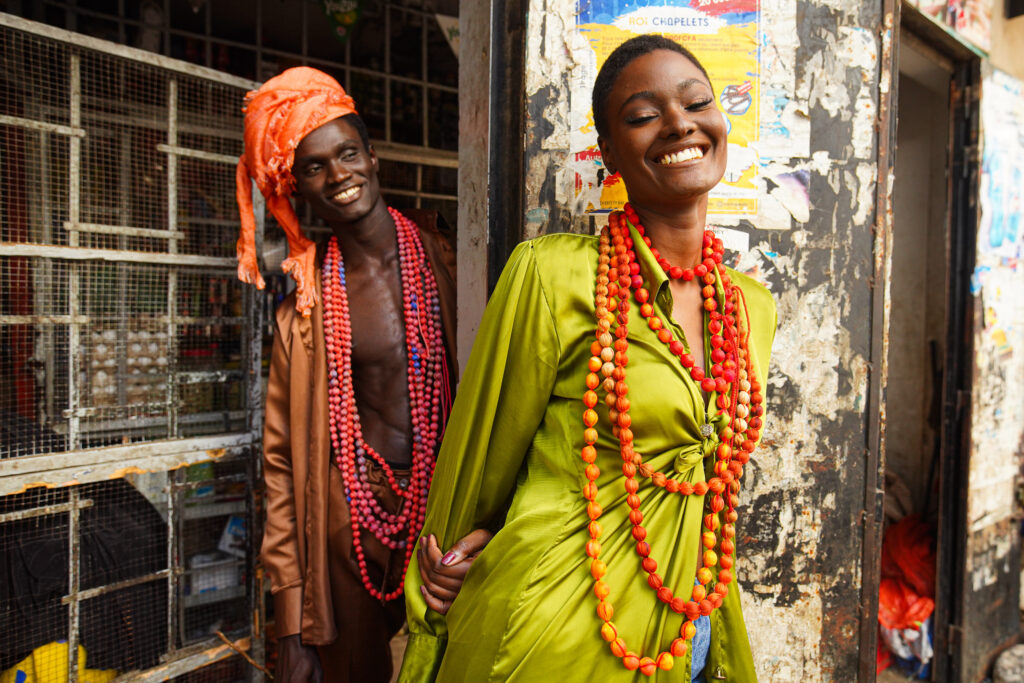
Craft is ritual. Each necklace is intentionally designed to allow infinite layering and styling, inspired by South Asian techniques, Senegalese talismans, and Muslim prayer beads. “It’s intentionality,” Kate says. “The design encourages the wearer to explore and create their own narrative. That’s what makes each piece unique.”
Sustainability is inseparable from the brand’s ethos. “We upcycle fabrics, support local artisans, and ensure their families benefit from the work,” Mez explains. Kate adds, “We pay for children’s school fees, improve lives, and preserve knowledge. Bolé Dakar is a social enterprise; our success is measured by the people we uplift, not just sales.”
Looking ahead, Mez and Kate dream of collaborations that span the continent—from Ethiopia, where Bolé Dakar is taking root, to South Africa—and beyond, into discarded leather and other salvaged materials. The Bolé House, their envisioned creative sanctuary, will be a space where art, craft, memory, and fashion coexist.
Kate imagines one day putting Bolé out into the universe alongside brands she admires, like Casablanca: “It’s a hope, a wish—a conversation waiting to happen.” She adds, “We are building a universe that honors the past while shaping the future of sustainable luxury, starting from the streets of Dakar and now stretching into Ethiopia, where our journey continues to grow.”
Yet their truest legacy already exists: in the sight of men and women in Dakar, Paris, or New York, wearing a necklace that carries the memory of another garment, another time. It whispers the Wolof word Bolé: to unite, to come together, to make beauty where none was expected.
To remind us that luxury takes time.