When we first sat with Ibrahima Gueye in August 2024, Bledard stood as a declaration—a brand born from memory, migration, and the radical act of reclaiming language. It was young, self-aware, audacious. A name that once stung with stereotype was reappropriated and worn with pride, transforming into a banner for a new generation of African creators unafraid to claim the fullness of their identity.
That first Guzangs feature didn’t just document a moment—it helped catalyze one. The story traveled. So did the brand. New audiences discovered Bledard’s vision, and the momentum that followed laid fertile ground for the next phase.
One year later, Bledard is no longer just a conversation starter. It is a growing house of ideas—sharpened, expanded, and evolving with intention.
July 28, 2025 marks a decisive moment: the launch of Bledard Classic, a collection that doesn’t just signal aesthetic maturity, but introduces a structural shift. A new pricing model, larger production capabilities, a growing team, and entry into new markets—Bledard is no longer positioning itself on the margins of the fashion world. It is carving a lane with the force of both artistry and strategy.
But evolution is never just business. It’s deeply personal.
Over the past year, Ibrahima married. In doing so, he entered a new phase of life—one that required not just creative vision, but clarity, discipline, and balance. “I had to learn to delegate,” he tells us. “To create space for life, for family, for building something that endures.”
That meant expanding his inner circle. In came Jonathan Pinto, a creative from Martinique, who now leads Bledard’s artistic direction and communications strategy. Their partnership—built on trust, transparency, and a shared aesthetic rigor—is one of the key catalysts behind Bledard’s growth. “We worked together for a year before formalizing it. Jonathan came on board in exchange for company shares. It’s more than business—it’s a brotherhood.”
And as the brand scaled, the circle widened further. Ibrahima’s mother now manages order fulfillment and delivery logistics, a move that speaks to the deeply intimate ecosystem Bledard is shaping. “We don’t just want a company. We want a community,” he explains. Casablanca, Dakar, Paris—these aren’t just coordinates. They’re anchor points of a transnational operation that remains grounded in human connection.
At the heart of this new chapter is a question that has long haunted the African fashion ecosystem: Who can afford to wear Made in Africa? For years, the answer has been quietly exclusionary. As local designers fought to produce ethically and independently, costs rose—and the very communities their stories came from were priced out. The aspirational often became inaccessible.
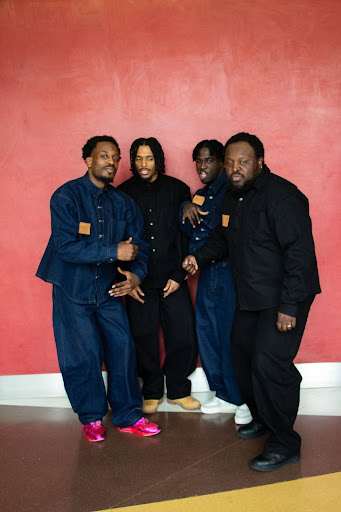
Bledard Classic introduces pieces priced under €100—a decision both radical and deeply pragmatic. With it, Ibrahima offers a tangible solution: a model that centers quality and storytelling, while remaining within reach of the everyday buyer. It is a direct challenge to fast fashion giants like Zara, but also a call to African and diasporic consumers: you should not have to choose between supporting your own and affording your life.
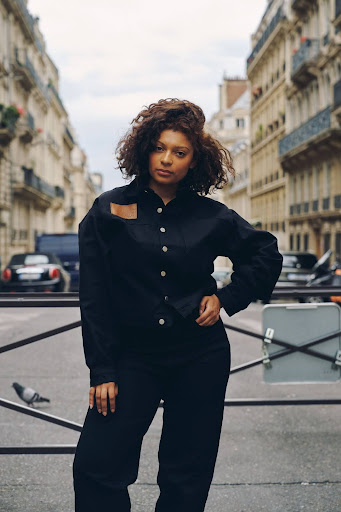
“That was the feedback we kept getting—people loved our pieces but couldn’t afford them. And honestly, I understood. We cannot be mad at African students living abroad if they turn to Zara or H&M. We wanted to offer something else—ethical, accessible, and proudly ours.”
This move was not without consequence. Behind it lies months of recalibration—scaling up without diluting the brand’s soul. Bledard now owns its own workshop in Casablanca. Amal, who once oversaw quality control, is now head of production.
“When your quality control manager becomes head of production, you know the end product will be top-notch. There’s a French saying—on n’est jamais mieux servi que par soi-même. That’s what we did. We brought everything in-house. Every step, from creation to finish, is meticulously executed.”
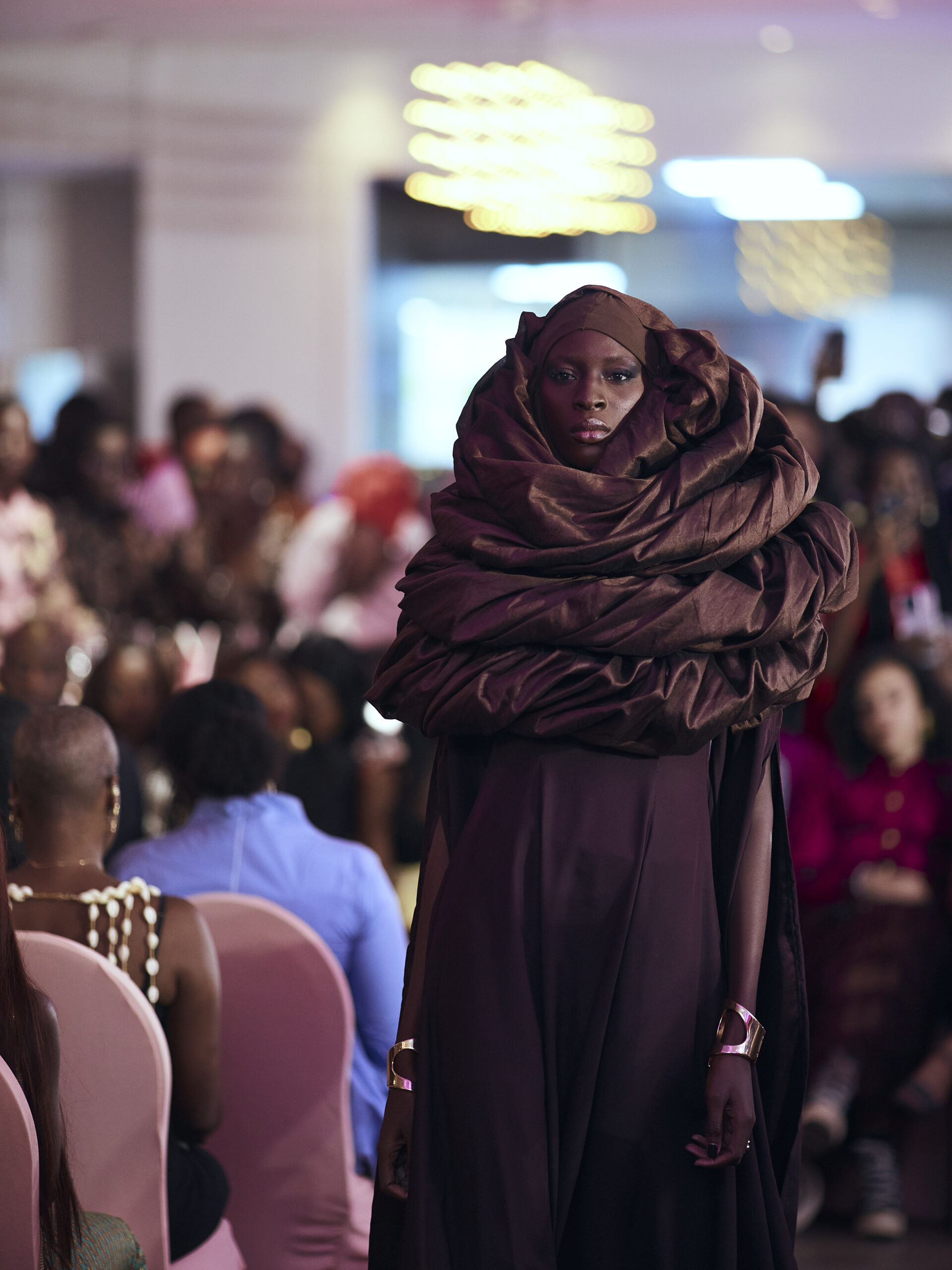
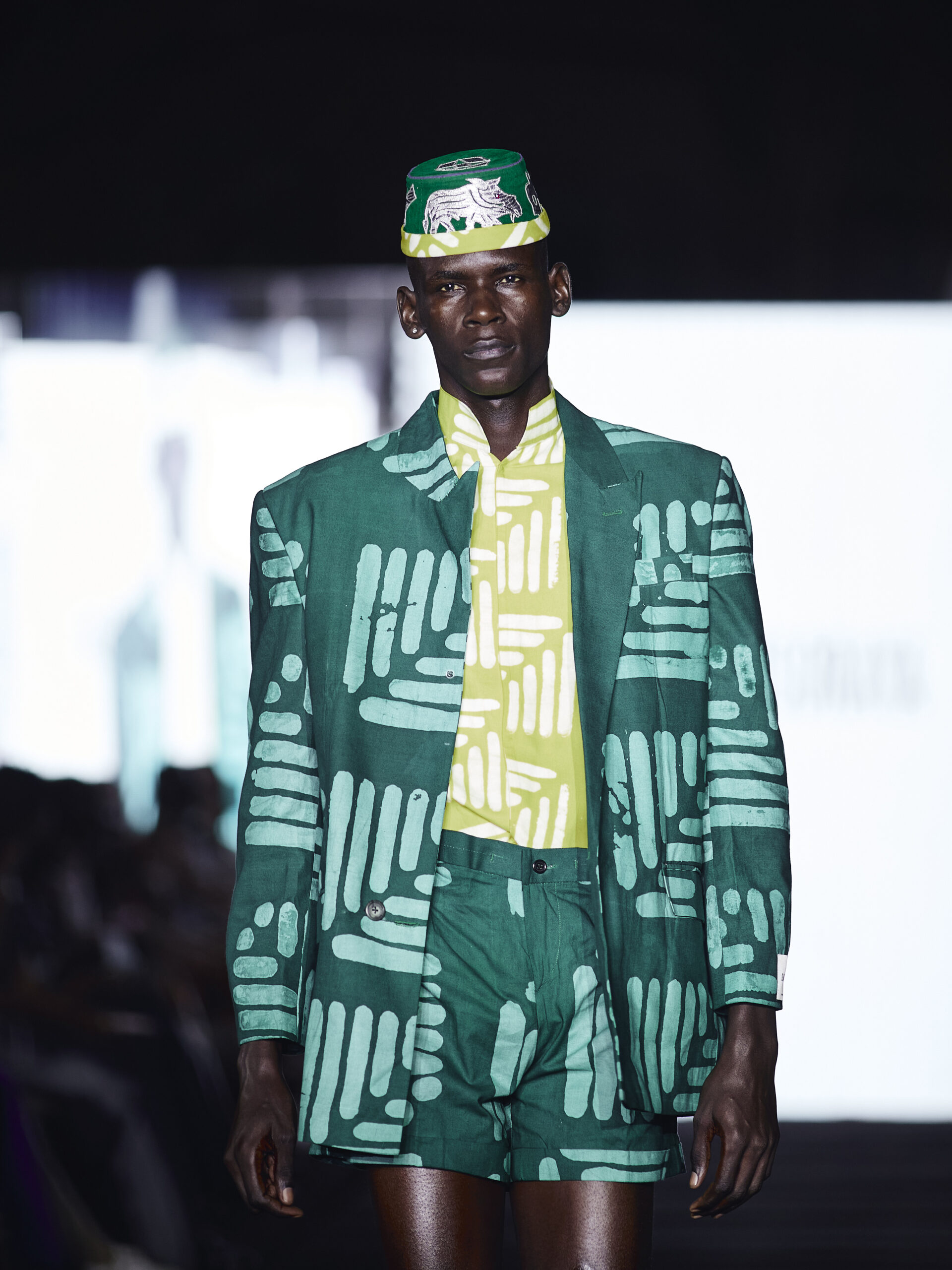
This evolution is structural, but it’s also symbolic. Bledard is stepping into its adolescence: still rooted in resistance, but now armed with a blueprint for impact. Where early collections spoke in raw, instinctive language, this latest one moves with calculated grace. There is refinement in the tailoring, deeper balance between form and function, sharper cohesion across pieces. The signature exaggerated shoulders and West African tones remain, but they are now part of a language that’s speaking fluently across borders.
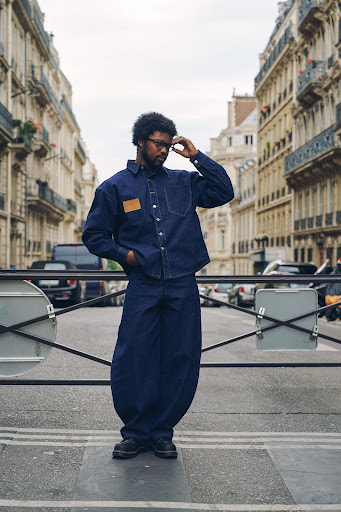
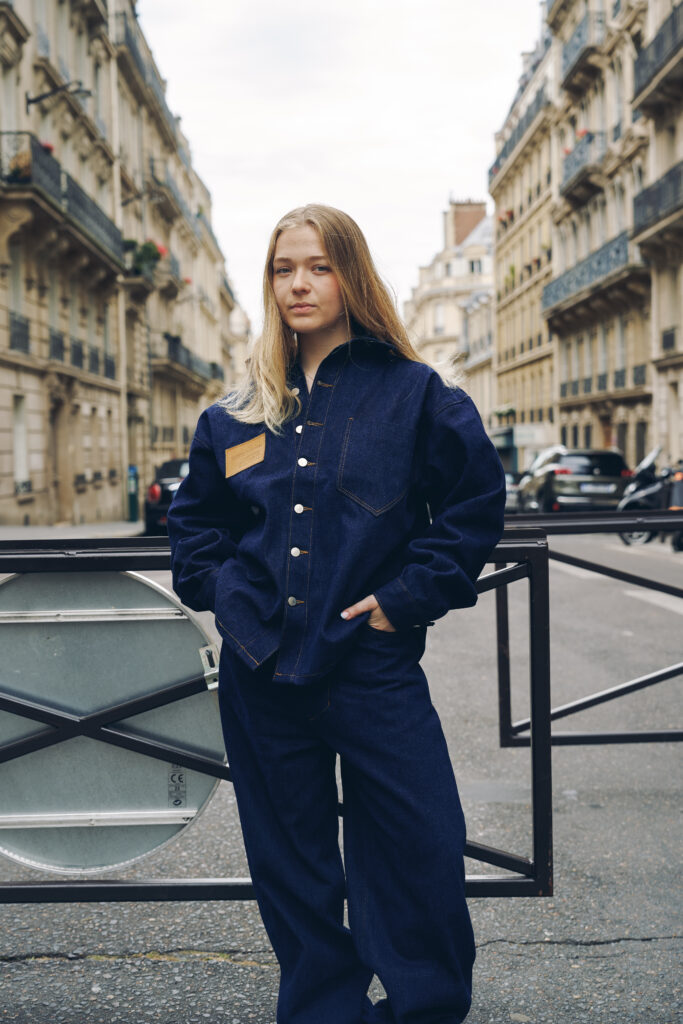
“We wanted to develop everyday denim—pieces people can wear, live in, build memories with. Simpler silhouettes, easier to style, but still built with the same care and precision. That’s Bledard Classic.”
And beyond the silhouettes, there is still that unmistakable pulse: a commitment to storytelling, to the immigrant experience, to the layered beauty of African urban life. Dakar, Paris, Colobane, Savoie—these are not just places in Ibrahima’s biography. They are textures in the fabric. Memories that manifest in denim, in cut, in color.
This new chapter also marks a territorial expansion. From pop-ups in Paris to digital traction across the diaspora, Bledard is beginning to move in wider circles.
Yet growth, for Bledard, is not an abandonment of mission. It is a deepening of it. The brand continues to reinvest a portion of profits into educational initiatives in Senegal, and there are whispers of a more formalized training program on the horizon—one that could train young artisans and create local employment pipelines within the fashion industry.
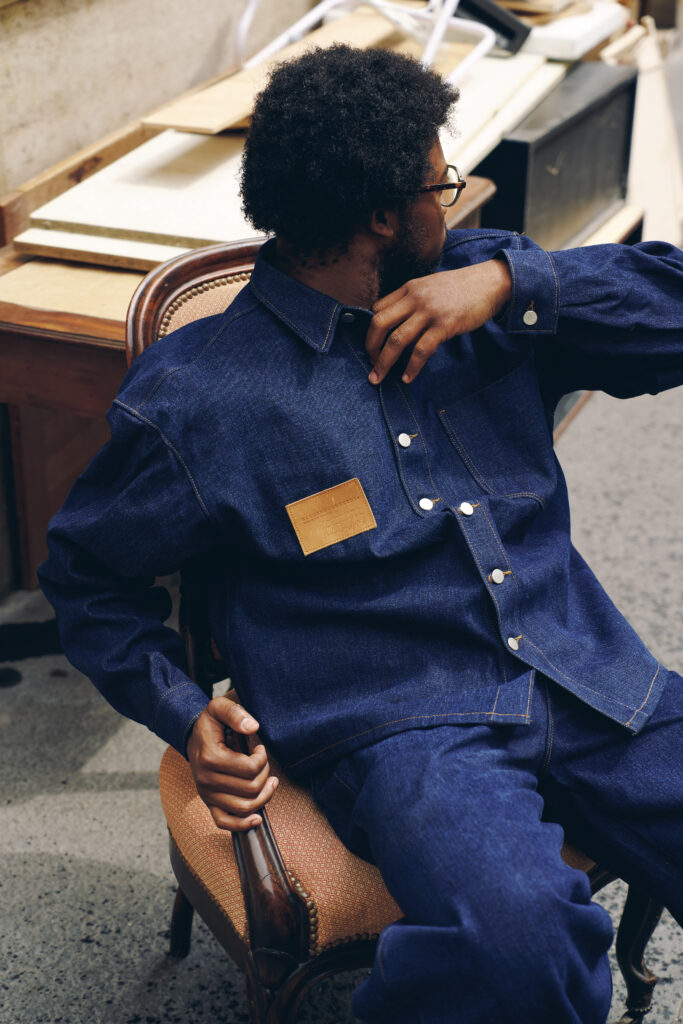
“We’re trying to build something that lasts—not just trends, but structures. That’s the legacy.”
In just under a year, Bledard has shifted from breakthrough to blueprint. What began as a brand reclaiming identity is now a full-fledged enterprise expanding access. Bledard Classic isn’t a secondary line—it is a cultural proposition.
“A €300 denim piece is beautiful. But it isn’t for everyone. And if our mission is to represent our people, we can’t keep creating things they can’t afford.”
The new line is raw, mainstream, quietly refined. The price point—under €100—isn’t a gimmick, it’s a promise: that the same care, the same ethics, the same soul can be extended to a broader public. That premium doesn’t always mean exclusive.
“Our margins are thin. We’re selling at a 1.8x markup where others might do 2.5 or 3. But that sacrifice is worth it—because we want our customers to have access to premium quality denim at a reasonable price.”
And maybe—just maybe—that’s how real revolutions begin.
Bledard isn’t chasing trends. It’s chasing equity. This is not merely a collection launch. It is a statement of intent. A promise that excellence need not come at the cost of community. That style, when anchored in truth, can become a strategy for liberation.
One year later, Bledard has not changed direction—it has simply stepped into its next form. Clearer. Louder. Stronger.
Stay with us, as this story continues to unfold.