
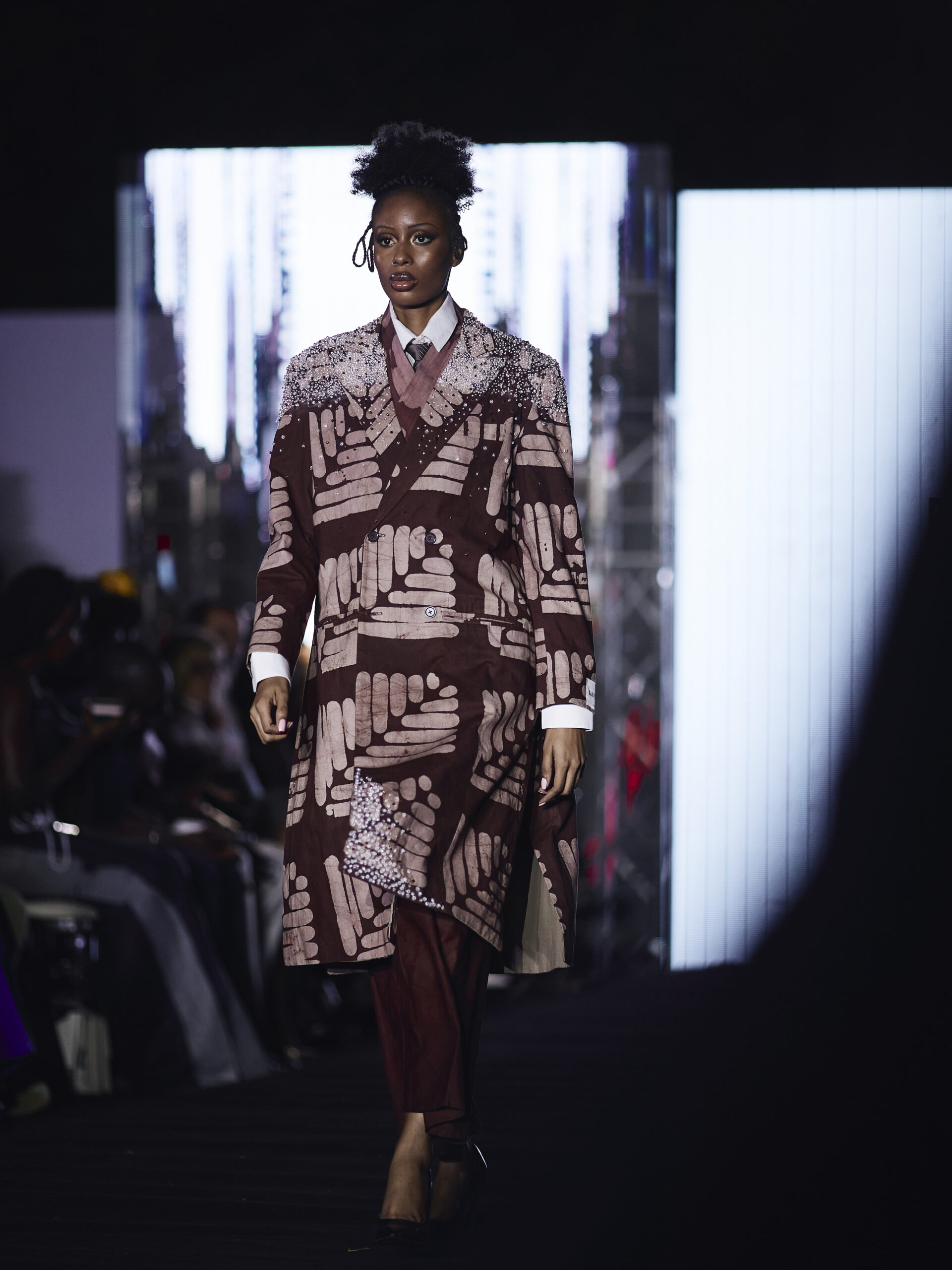
Dakar Fashion Week’s 24th edition ran three days across three venues—Turkish Embassy gardens, indoor runway, and traditional pirogues on the Atlantic. Twenty-two designers showed. Here’s what emerged.
Color: Earth Tones and Saturated Punch
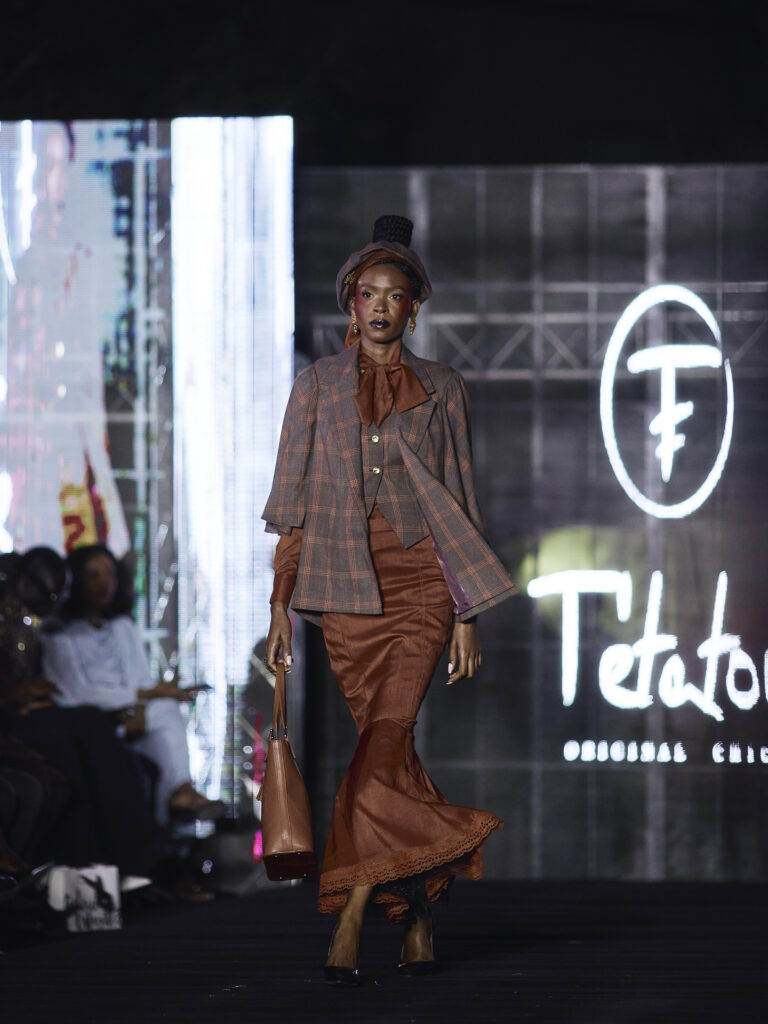
The palette split into two directions. Indoor shows leaned earth: terracotta, rust, charcoal, plum, deep brown. Tetatou, Maat, and Bakus Oraya built collections around these tones. On the water, Adama Paris went the other direction—saturated oranges, reds, purples, yellows at full volume. Menswear stayed cooler: marine blues, off-whites, sand tones, sage greens. Cobalt appeared across multiple collections.
Fabrication: Denim, Resist-Dye, Natural Fibers
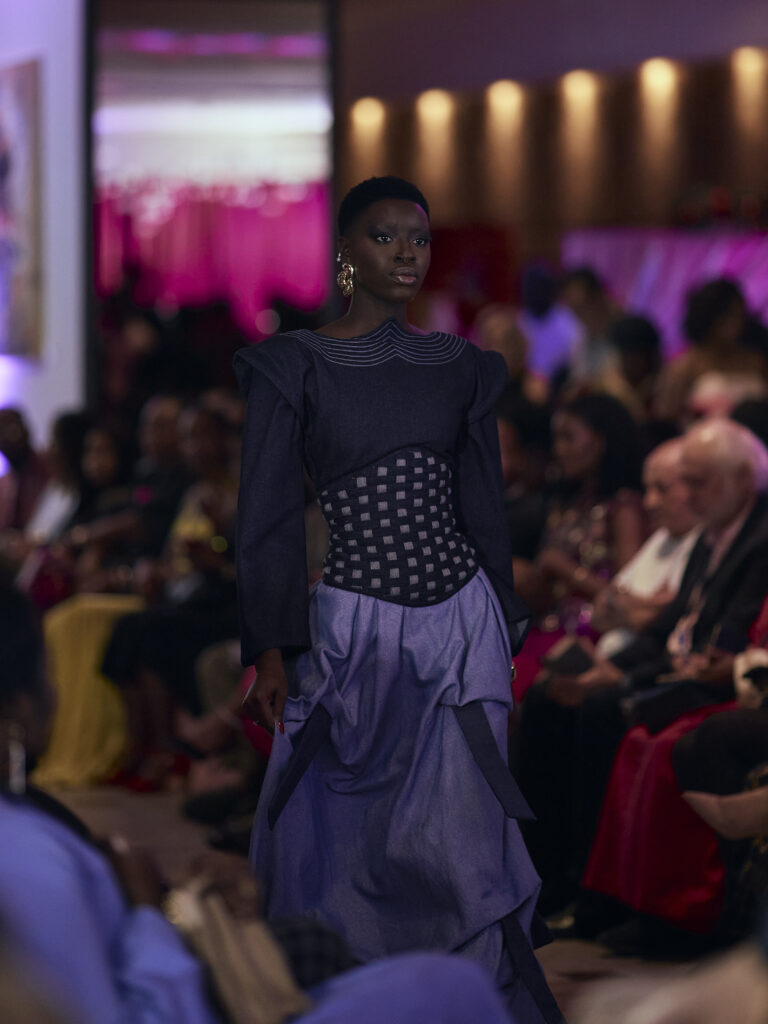
Denim was the fabric of the week. Three Di used it for corsetry and a Mouride diam poot boubou that earned a standing ovation. Code & Dioyana Style quilted it into structured vests with exaggerated shoulders. Hassana embroidered raffia onto raw denim.
Resist-dye techniques—adire, batik—anchored heritage-focused collections. Bakus Oraya showed a green adire suit with tailored shorts and matching kufi. N’sama worked with batik patterns drawn from the Agadez Cross.
Natural fibers ran throughout: heavy linen, fil-à-fil cotton, woven loincloth, raffia. On the pirogues, gauzy layers in cotton, mousseline, and silk responded to the wind.
Silhouette: Tailoring as Foundation
Tailoring set the tone. Ngorbatchev’s AURA collection used Super 100 wool cut with architectural precision—referencing the costume africain while holding European structure. Tetatou layered structured vests over tiered sleeves, cinched with wide belts. Maat showed oversized blazers and sculpted headpieces in a modest wear context.
The boubou silhouette appeared in updated form. Micodi fitted it for daily wear in cotton and linen. Three Di reinterpreted the Mouride boubou in denim. The shape is evolving—still recognizable, now architectural.
Construction: Ethics in the Process
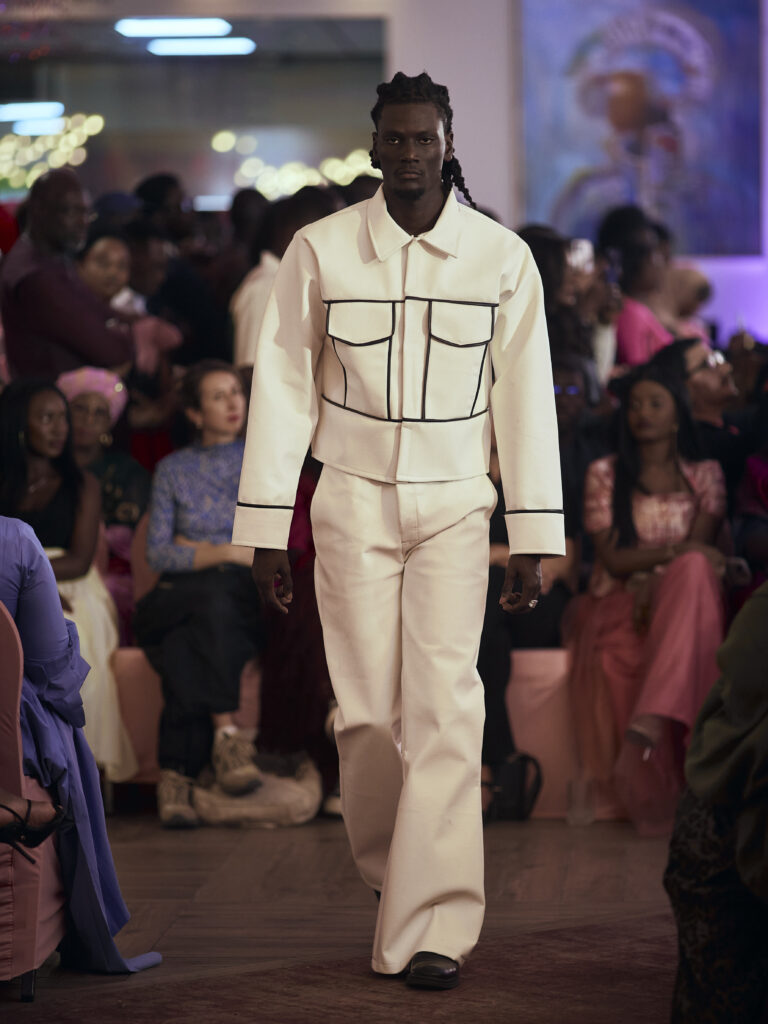
Sustainability showed up in workflow, not branding. Hassana operates a fully digital, paper-free studio—the collection reflected that discipline. Code & Dioyana Style and Zalayo built collections around upcycled textiles, reconstructing denim and deadstock into finished garments. The approach was operational: sourcing, production, waste reduction.
Detail: Cowries, Beads, Embroidery
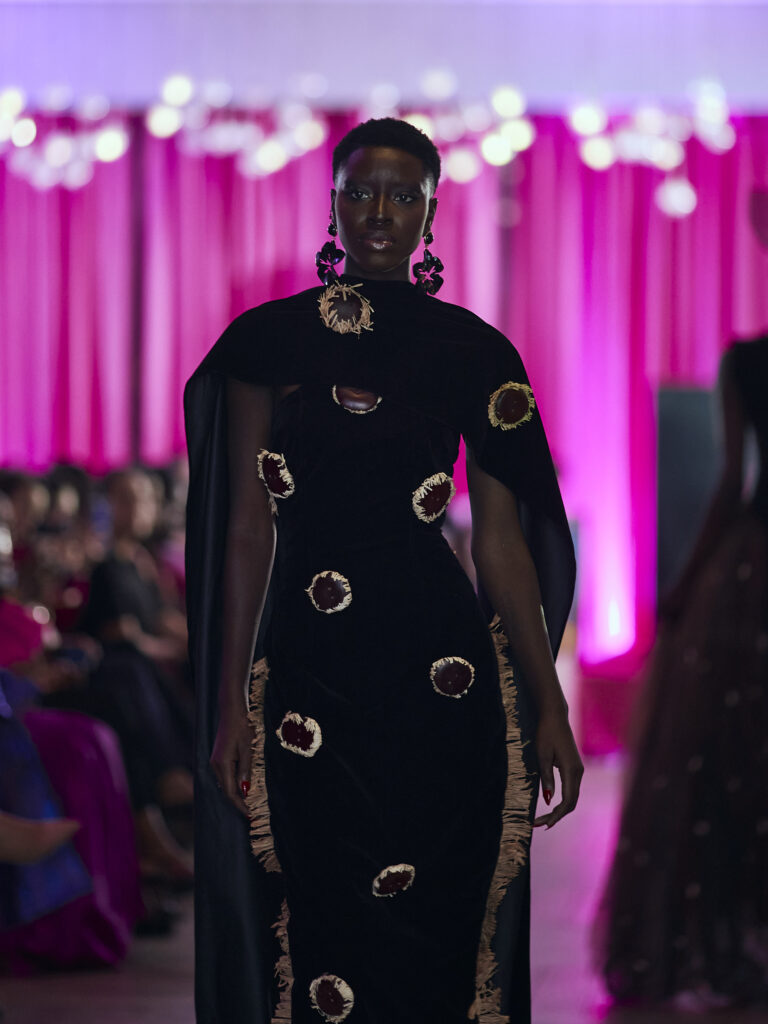
Ornamentation leaned handmade. INSPIRED used cowries, wooden beads, and coconut fiber as structural detail. KFC Clothing worked cowrie embroidery into velvet eveningwear. Hand-embroidery appeared at Tetatou, Maya Makhfous, and N’sama. The details weren’t decorative—they carried material and regional specificity.
Expansion: Menswear, Modest Wear, Childrenswear
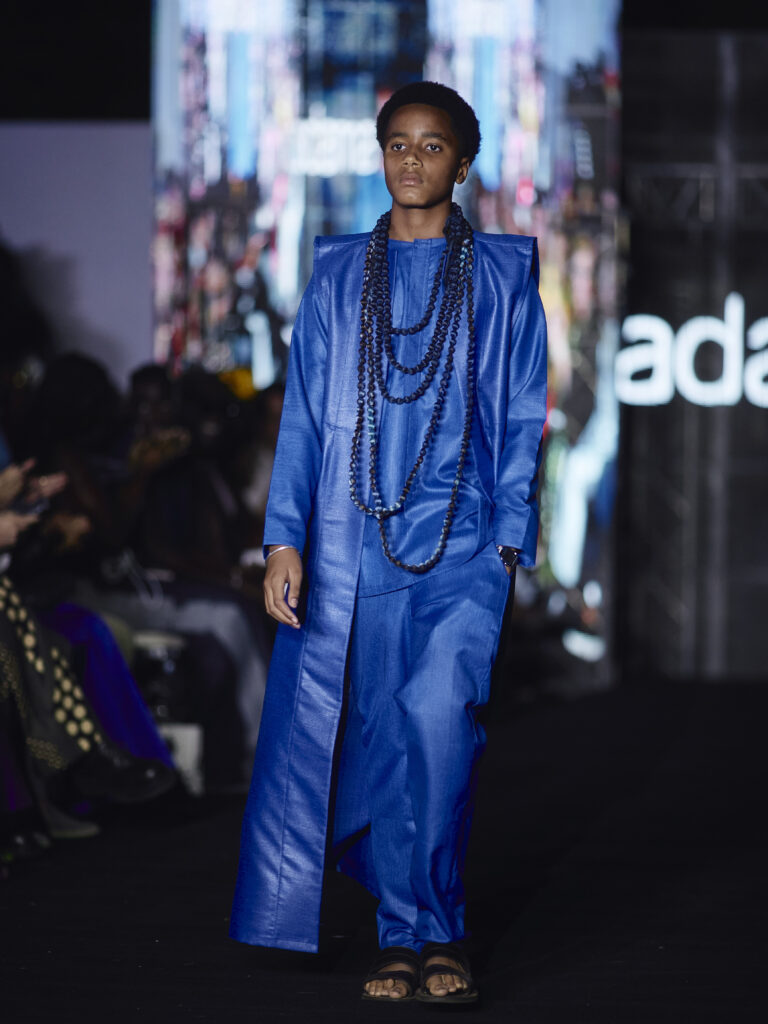
The week showed range beyond womenswear. Ngorbatchev, Owens, and Nkuhru presented full menswear collections—linen suiting, opaque crepe, androgynous tailoring. Maat positioned modest wear as contemporary and structured. Adama Paris debuted childrenswear with the same construction standards as her mainline.
Staging: Site-Specific Format
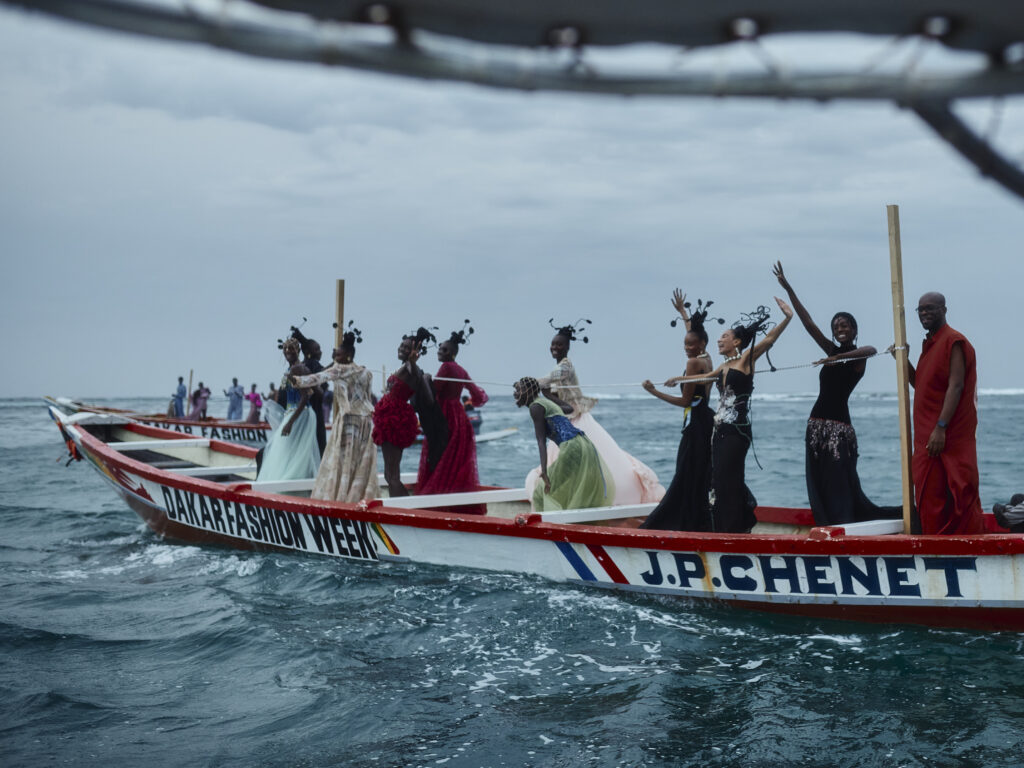
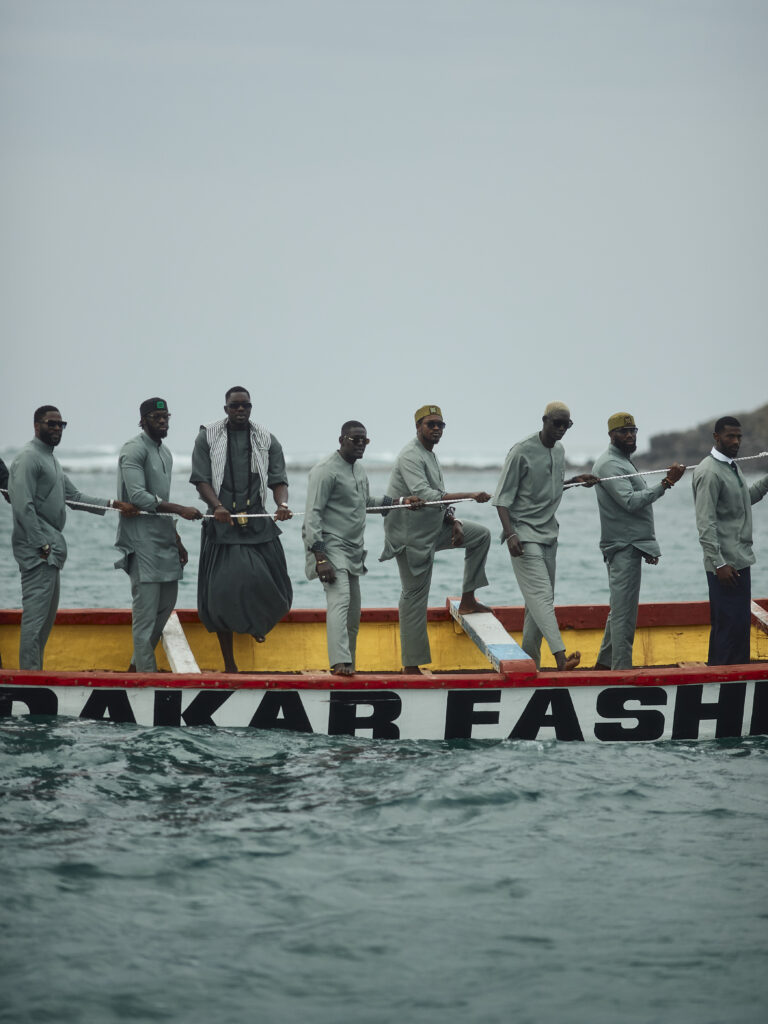
The closing day moved onto traditional pirogues in the Atlantic off Ngor Island. Models stood on the boats gripping rope rails. Wind and tide became part of the presentation. The staging used local infrastructure—fishing boats that line Dakar’s coast daily. It’s a format specific to the place.
Dakar Fashion Week 2025 showed a design community working with clarity. The trends are concrete: earth tones and saturated color, denim as a West African fabric, tailoring as baseline discipline, resist-dye techniques applied with precision, natural fibers across categories. The ethics conversation moved from messaging to method. The pirogue runway established a new format.