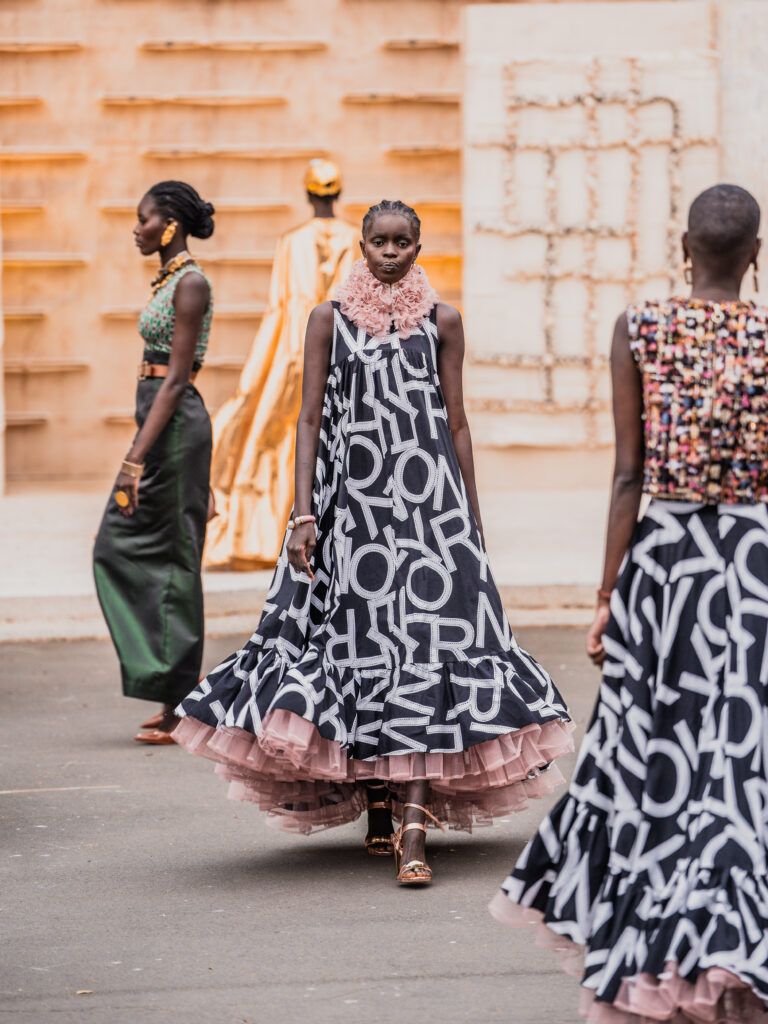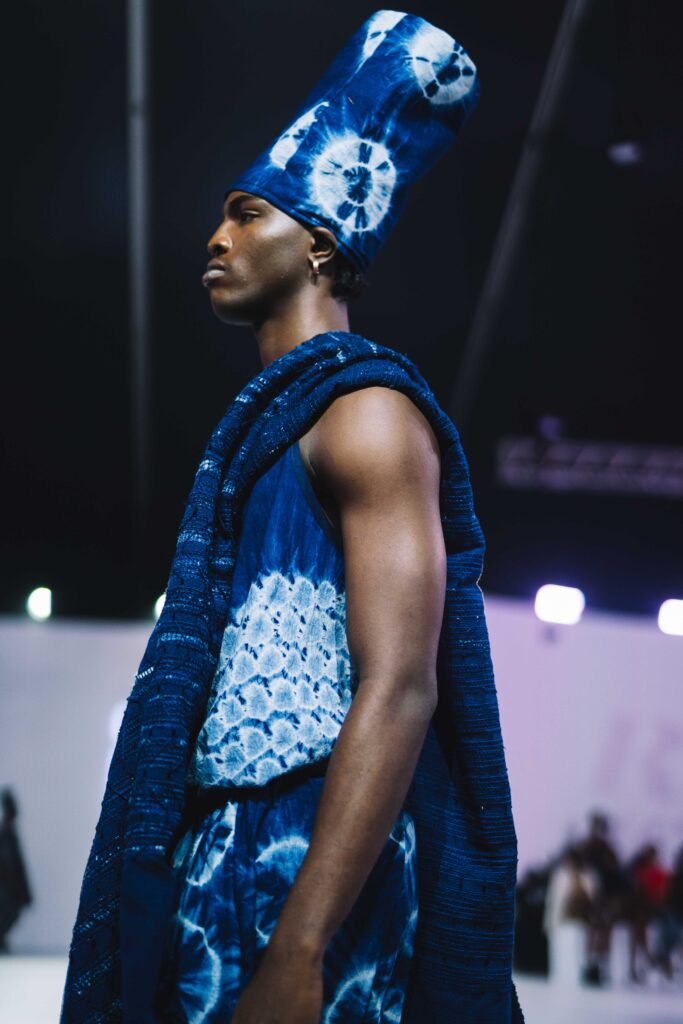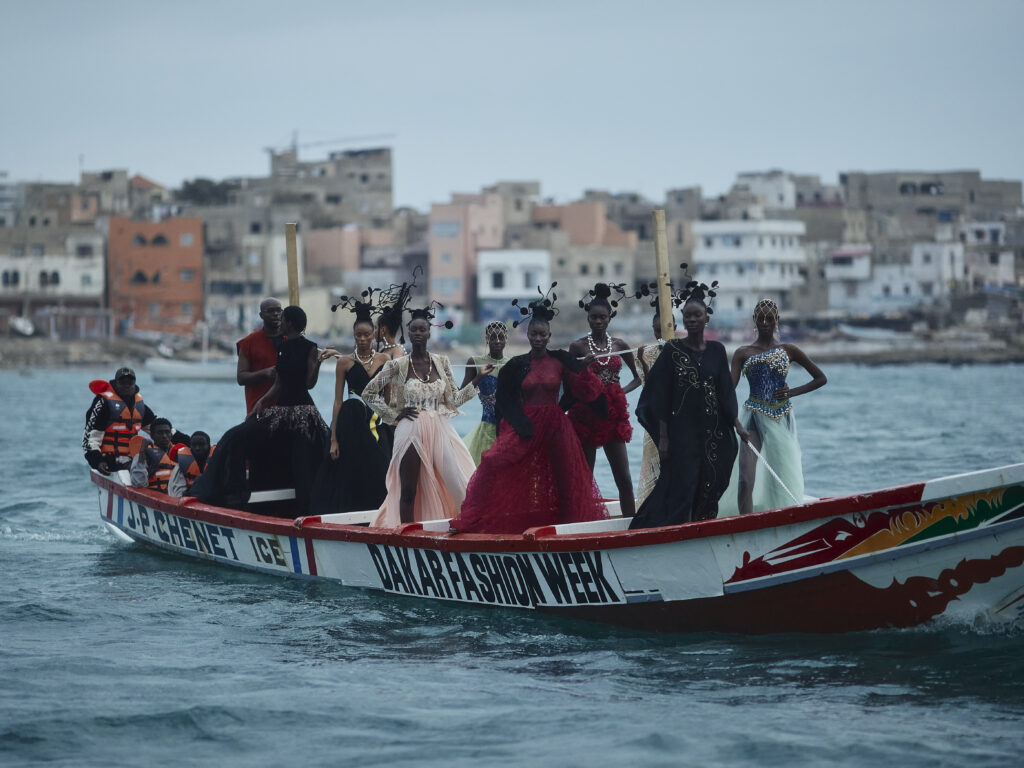

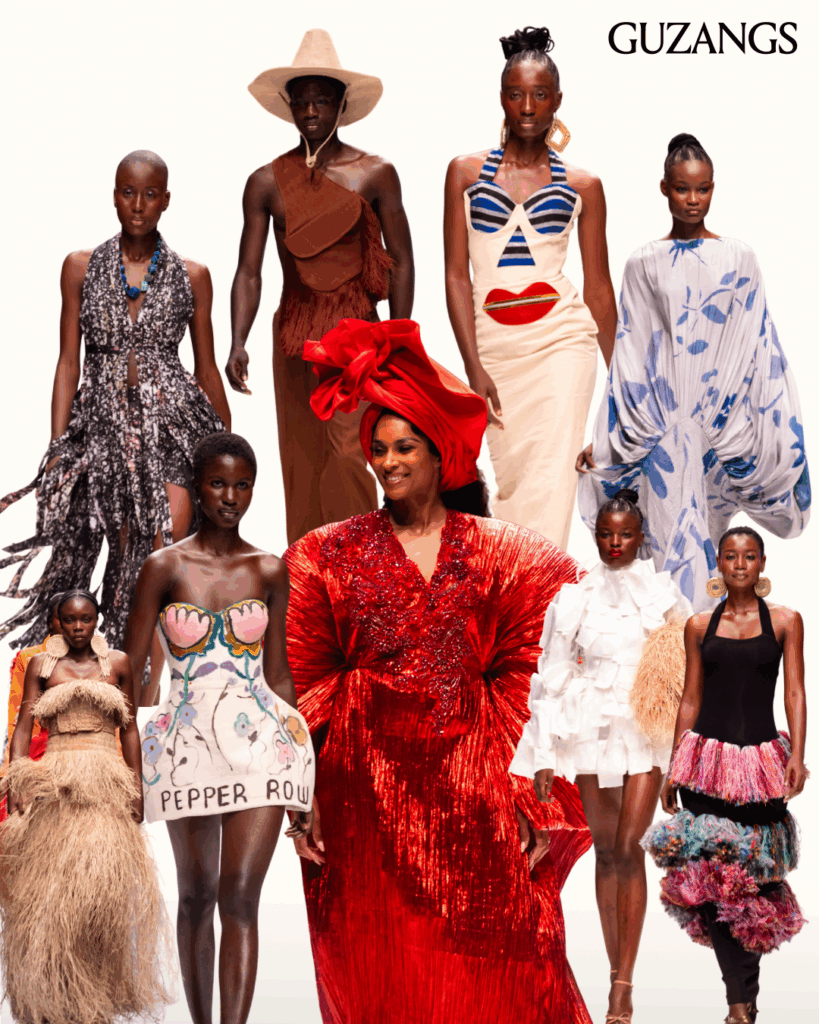
Lagos Fashion Week didn’t try to prove anything this season—it showed up with confidence. Over five days, designers presented collections that felt intentional, each show adding to a broader conversation about what African fashion looks like when it stops seeking validation and starts setting its own terms. Here are the ten trends that defined Spring/Summer 2026.
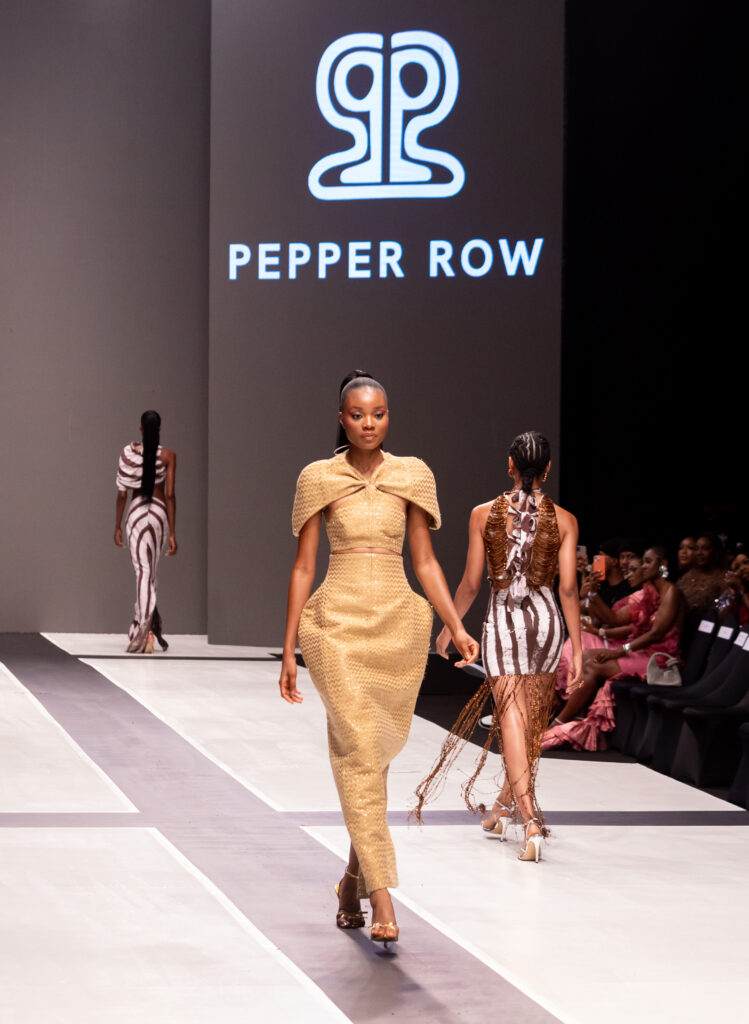
Raffia dominated the season, transformed from humble craft material to luxury textile. Pepperrow, Cynthia Abila, and Bababyo made it look refined, not rustic—woven, dyed, and sculpted into everything from accessories to performance pieces.
Why it matters: Lagos designers are reclaiming raffia as a luxury material with deep cultural roots, proving local materials deserve the same reverence as any European fabric.
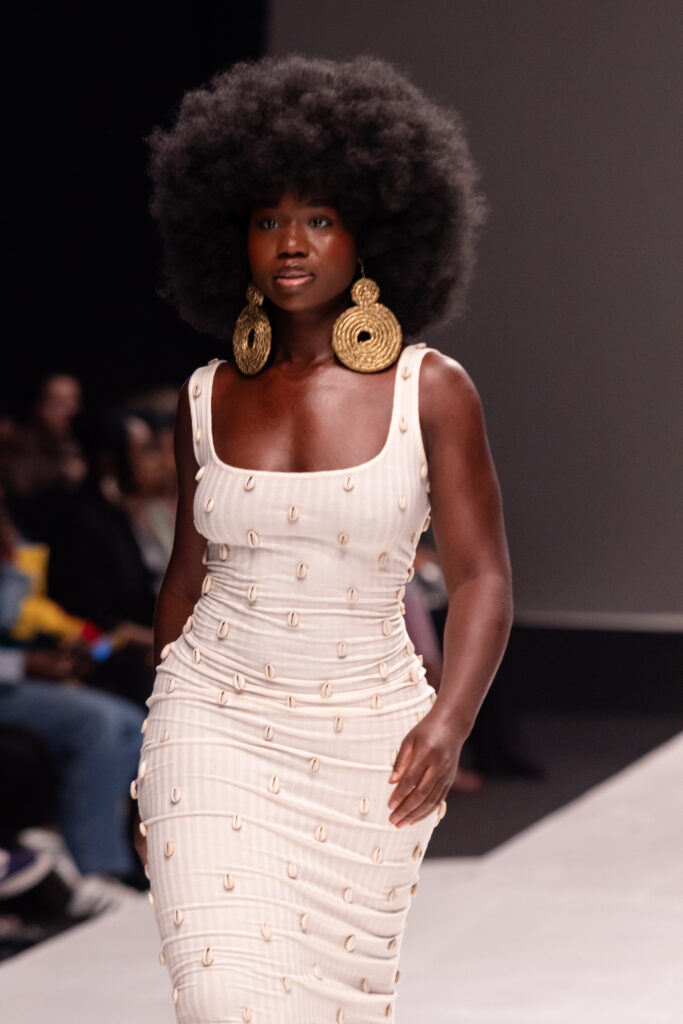
Cowries, shells, and coral beads weren’t just decorative—they carried ancestral weight. Lila Bare and Hertunba turned them into conversation pieces, recalling their use as currency and symbols of power in Yoruba and Edo cultures.
Why it matters: This is fashion as cultural memory, reclaiming symbols that colonialism tried to erase.
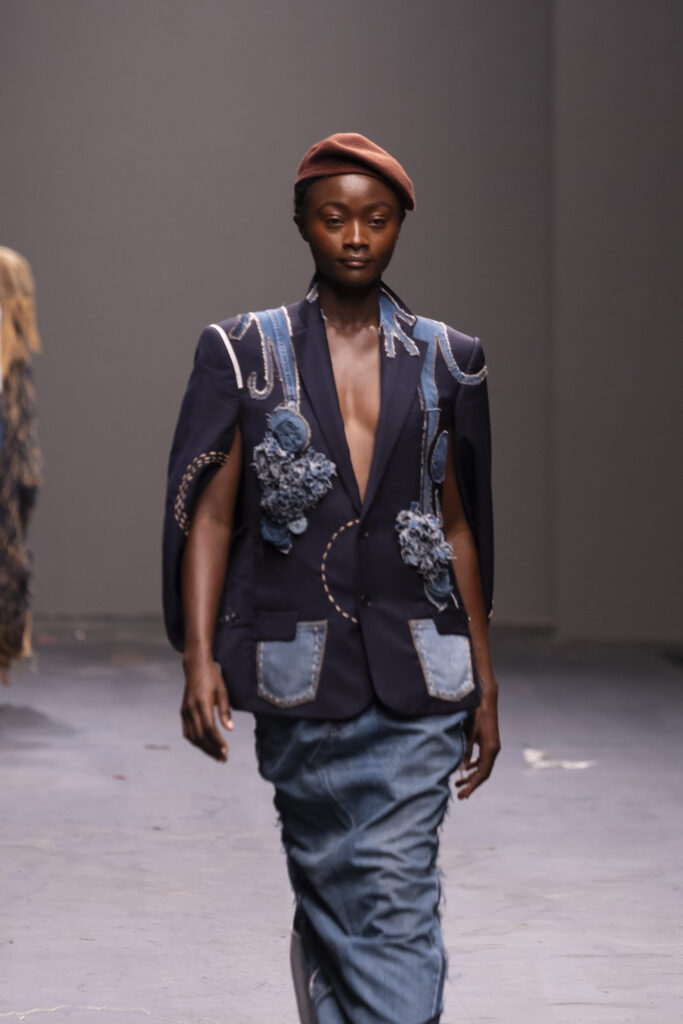
Nkwo’s upcycled denim told a story of reinvention. Boyedoe gave it polish with structured sets, turning the material into a canvas for resourcefulness.
Why it matters: Lagos has been remixing and upcycling denim in markets long before it became a Western buzzword. These designers are making visible what’s always existed.
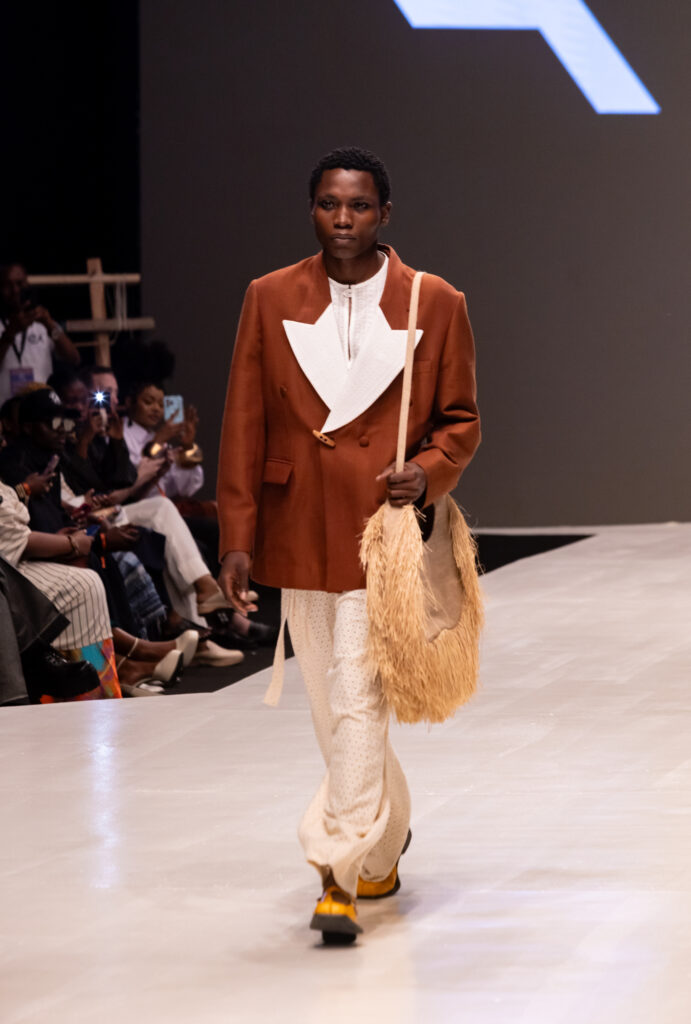
Emmy Kasbit and Hertunba rejected the rigid Western suit, offering tailoring that moved with ease. Structure met softness, suggesting a new definition of authority—confident but not confrontational.
Why it matters: Traditional African leadership was about wisdom and grace, not stiff formality. These silhouettes reclaim that energy.
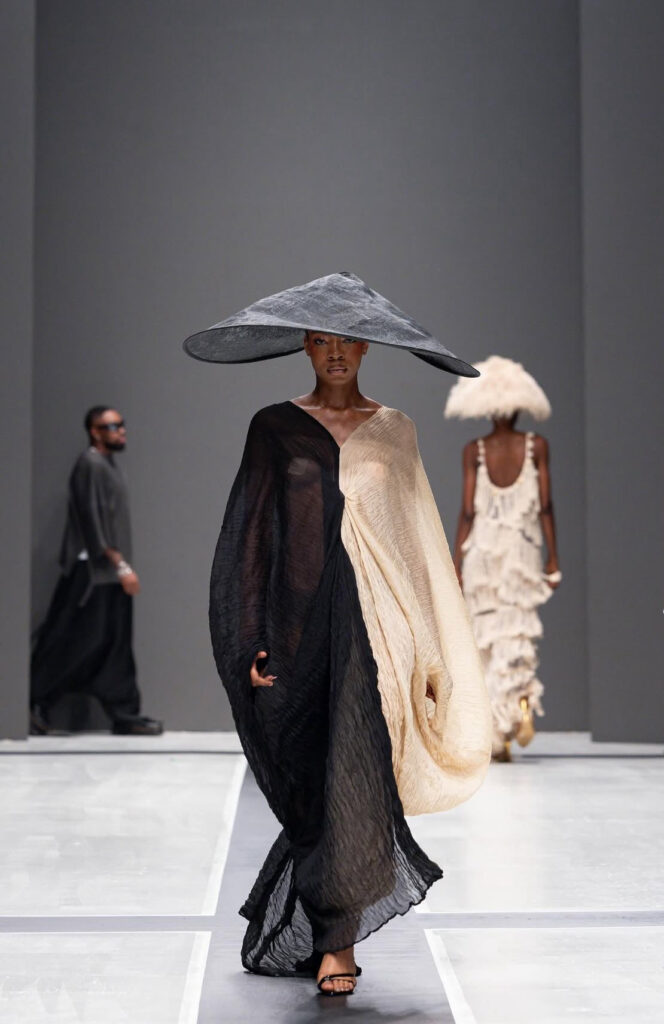
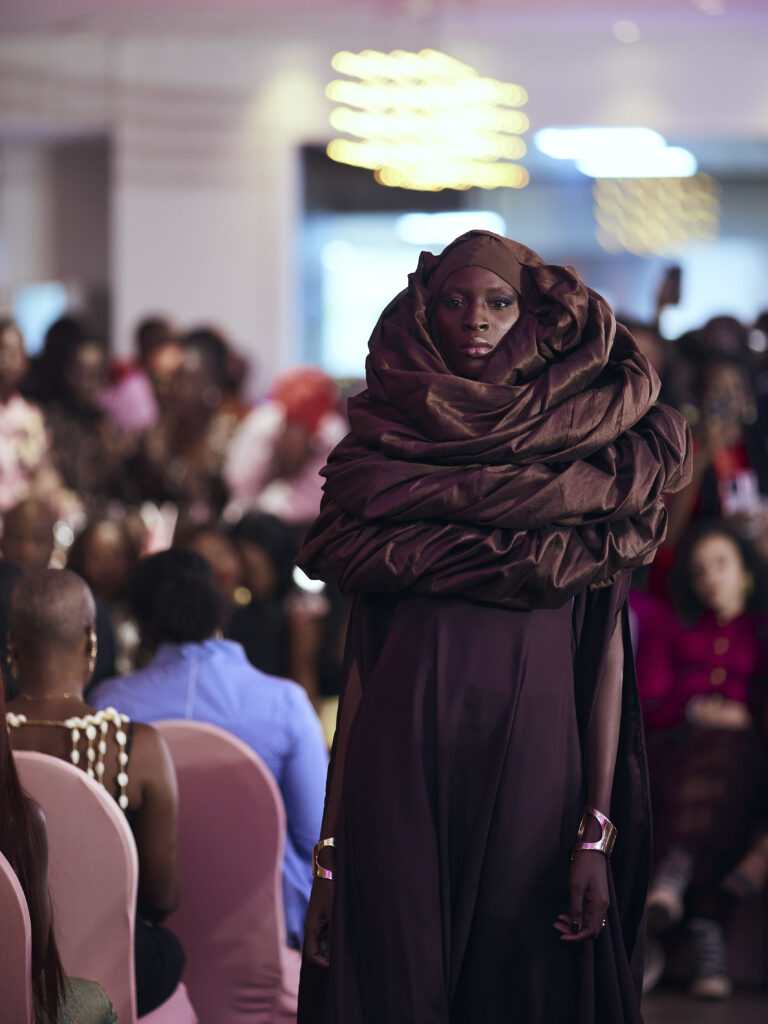
Kadiju’s sculptural puffer dresses and LFJ’s larger-than-life hats used volume deliberately. Ejiro Amos Tafiri’s pleating across ninety looks showed how drama and wearability can coexist.
Why it matters: Volume has always existed in African dress—from geles to agbadas. It’s fashion that takes up space unapologetically.
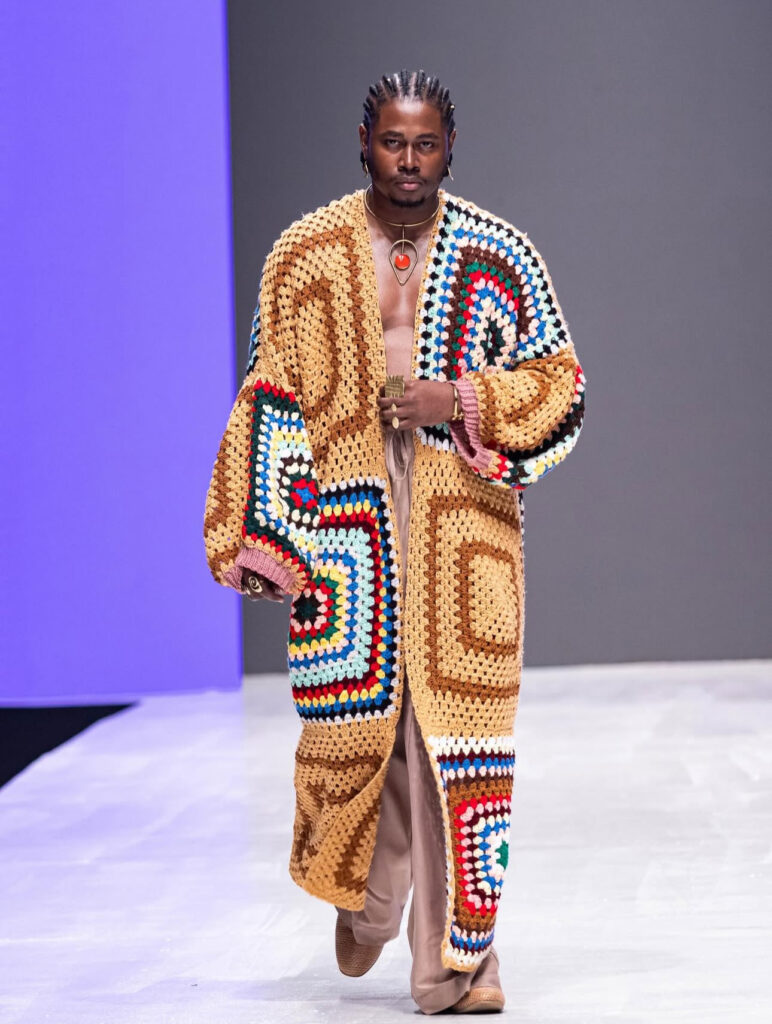
Studio Imo and Ki Design Ghana transformed crochet into sculptural, contemporary pieces that felt modern, not nostalgic.
Why it matters: Crochet carries the memory of our grandmothers’ hands. As fashion grapples with overproduction, African designers prove handwork is luxury—every stitch intentional, every piece carrying human touch.
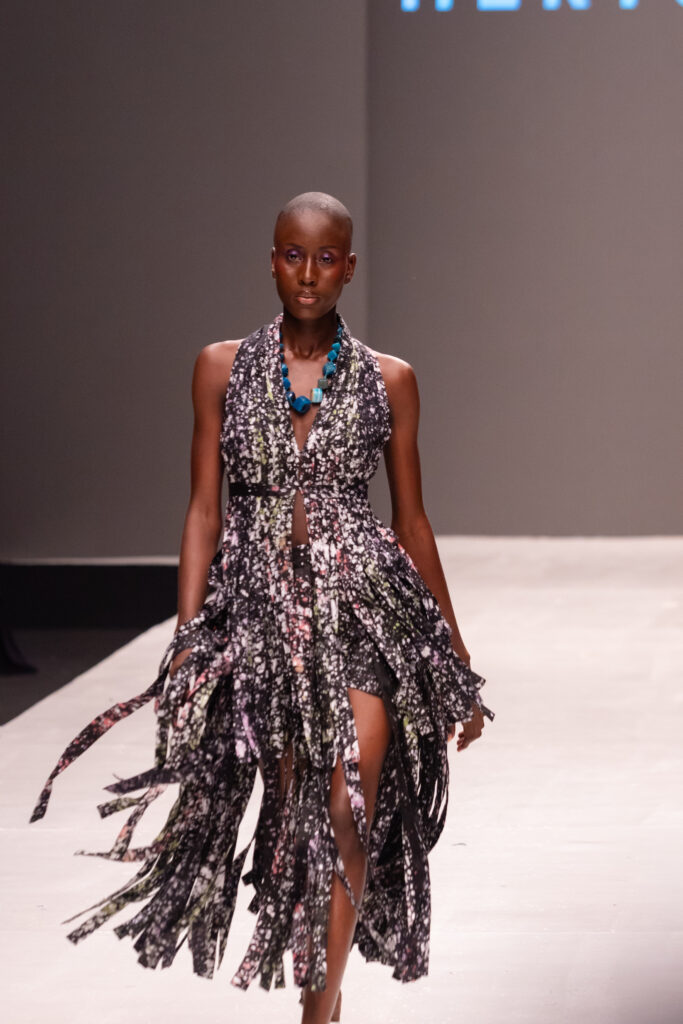
Long, swaying fringes dominated Kilentar, E.S.O by Liman, and Hertunba—clothes that danced even when standing still.
Why it matters: Lagos is motion—traffic, markets, music. Fringe captures that energy while creating airflow in our climate. What looks decorative is rooted in function.
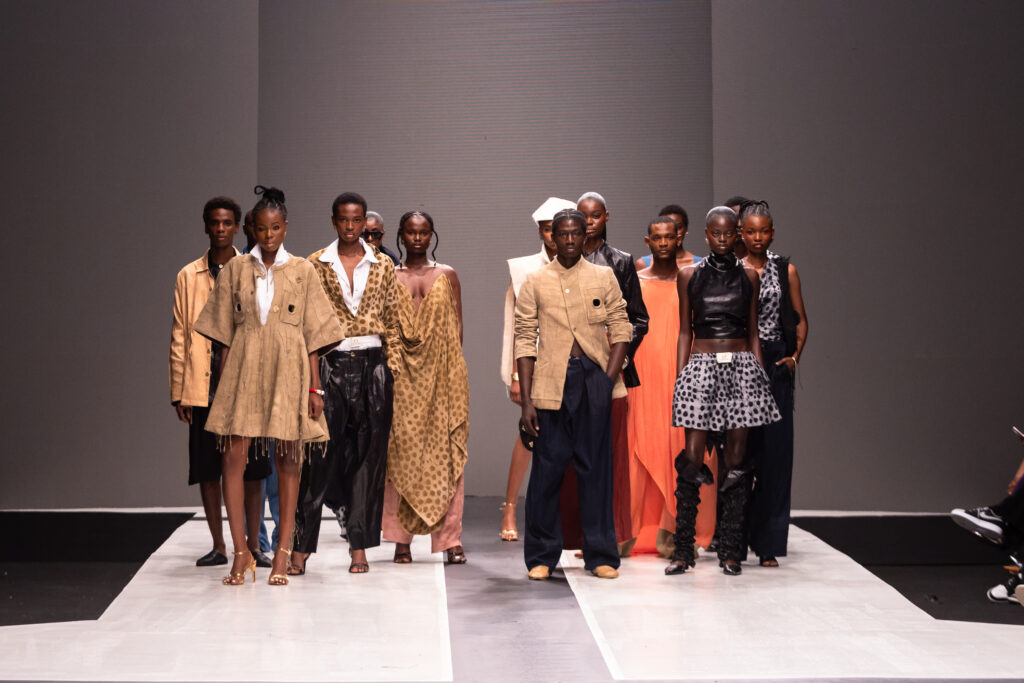
Olooh’s leather embedded with mirrors created garments that caught light like the Lagos skyline at night—impossible to ignore.
Why it matters: For too long, African fashion was overlooked. Now designers are creating clothes that demand attention, that catch light and refuse to be ignored. It’s fashion as assertion.
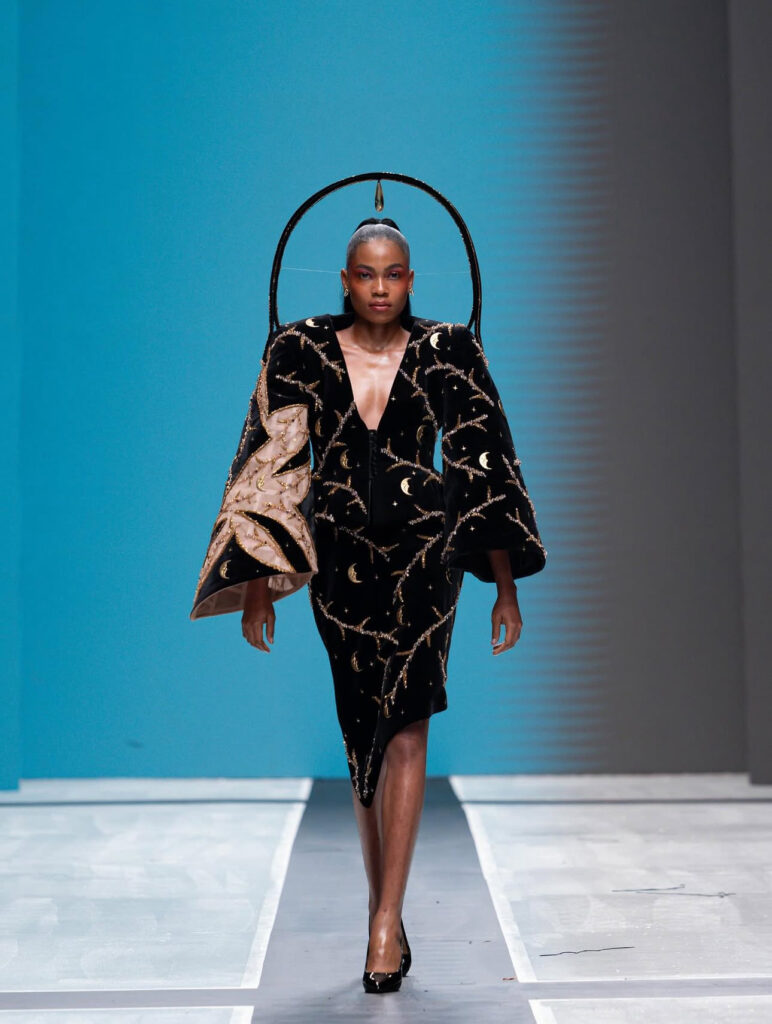
Sevon Dejana delivered sculptural gowns, rich velvet, and elaborate headpieces—drama with substance that reminded us African fashion has always understood ceremony.
Why it matters: Couture proves technical mastery. It signals that African ateliers can execute at the highest levels—the kind of craftsmanship that takes hundreds of hours and extraordinary skill.
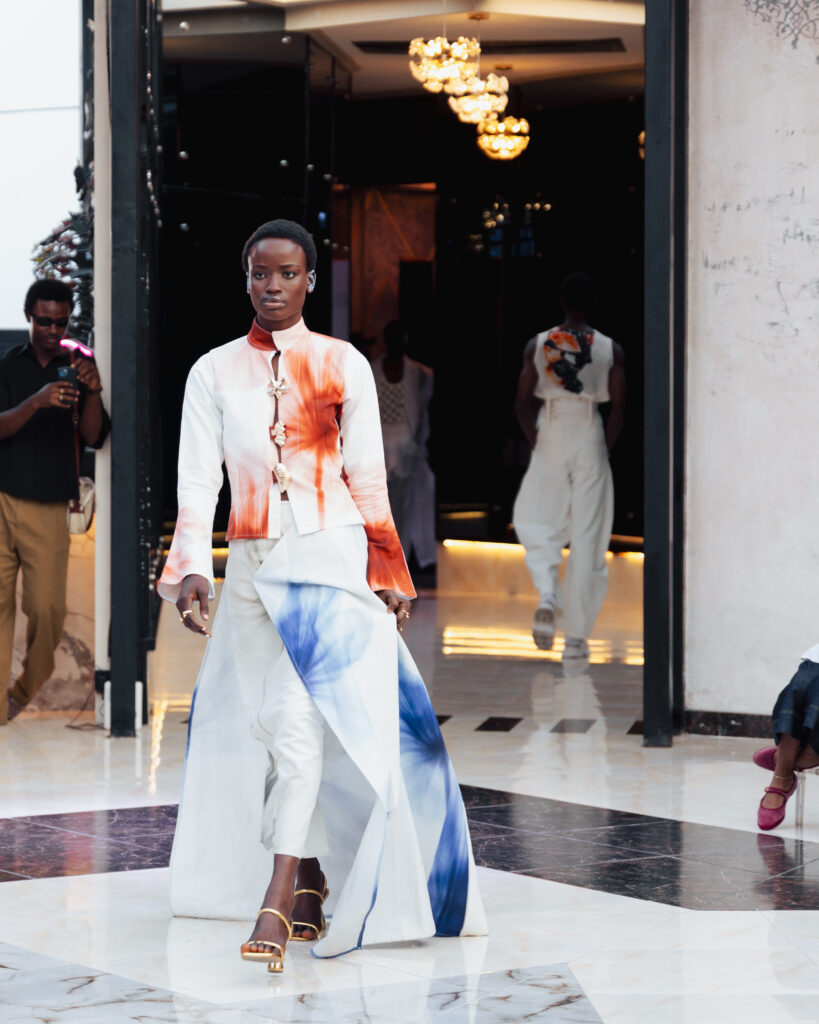
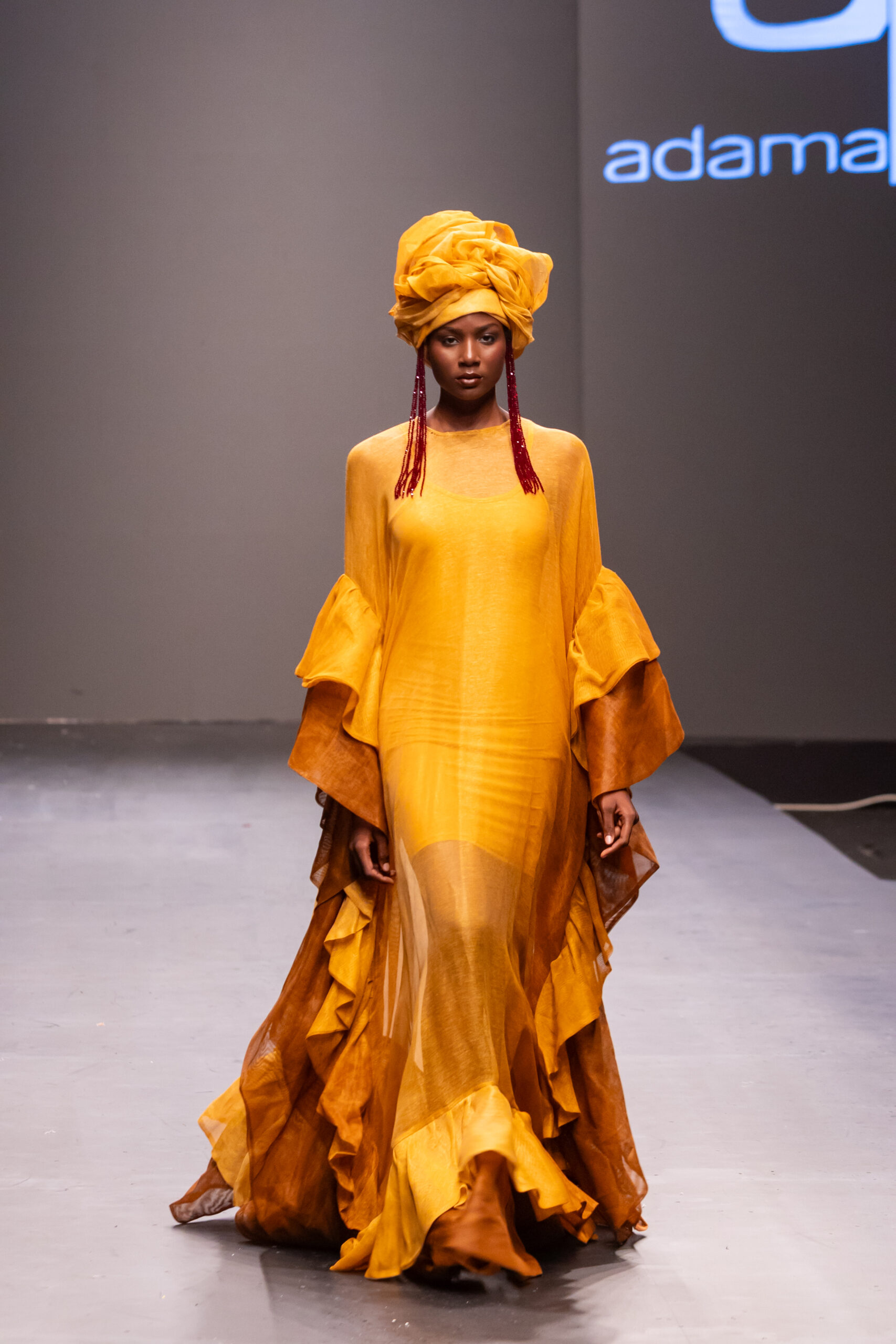
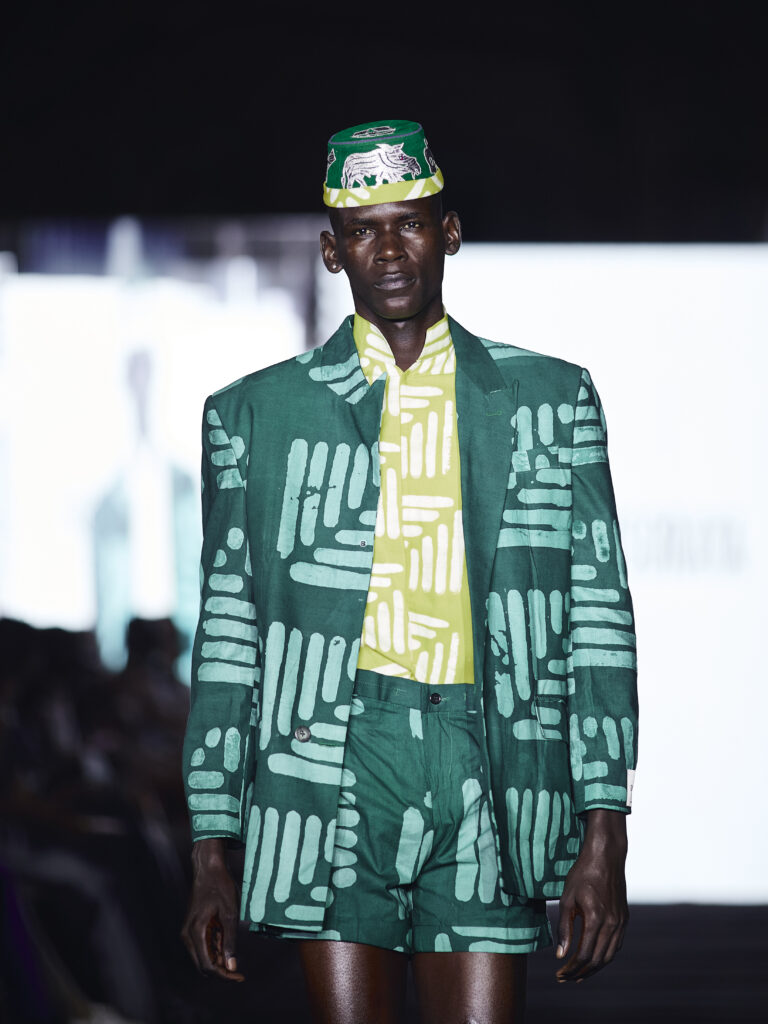
Orange Culture’s all-white presentation and Adama Paris’s earth tones showed restraint. Even Jermaine Bleu’s vibrant kente felt considered, not chaotic.
Why it matters: This isn’t about abandoning color—it’s about wielding it with intention. For too long, “African fashion” was reduced to bright prints. These designers reject that narrow narrative, showing we contain multitudes.
Beyond cultural significance, these trends present tangible commercial opportunities. Raffia and crochet address the growing demand for sustainable, handcrafted materials—categories where consumers increasingly pay premium prices. Upcycled denim taps into the circular fashion economy, projected to reach significant market value as conscious consumption grows. The return to couture demonstrates technical capabilities that attract private clients and luxury partnerships, while softened tailoring and strategic color use broaden retail appeal beyond Afrocentric niche markets.
For buyers and investors, these aren’t just aesthetic choices—they’re entry points into differentiated product categories with built-in authenticity. As Western markets saturate and consumers seek meaning beyond logos, African fashion offers what fast fashion cannot: craft integrity, cultural narrative, and materials sourced responsibly. The designers showing at Lagos Fashion Week aren’t asking to be included in existing supply chains—they’re building parallel infrastructure that’s increasingly attractive to brands seeking ethical production partners and unique collaborations.
Lagos Fashion Week Spring/Summer 2026 established a visual language rooted in our own terms. Designers showed restraint, intention, and deep understanding of craft that’s been in our communities for generations. The materials were local, the techniques were ancestral, but the execution was contemporary and unapologetically confident.
What emerged was a clear declaration: African fashion doesn’t need to be “elevated” by Western standards—it was always elevated. The city isn’t asking for a seat at the table anymore. It’s building its own.
Photos: Dan Torey