African fashion in 2025 was defined by intention. Across runways, campaigns, museums, and community spaces, designers made clear choices about staging, materials, and who they put in front of the camera.
This list documents the moments that shaped how African fashion was understood this year.
Photography by Alexandre Gandaho
Dakar Fashion Week Closed on the Atlantic
Photography by Alexandre Gandaho
Dakar, Senegal
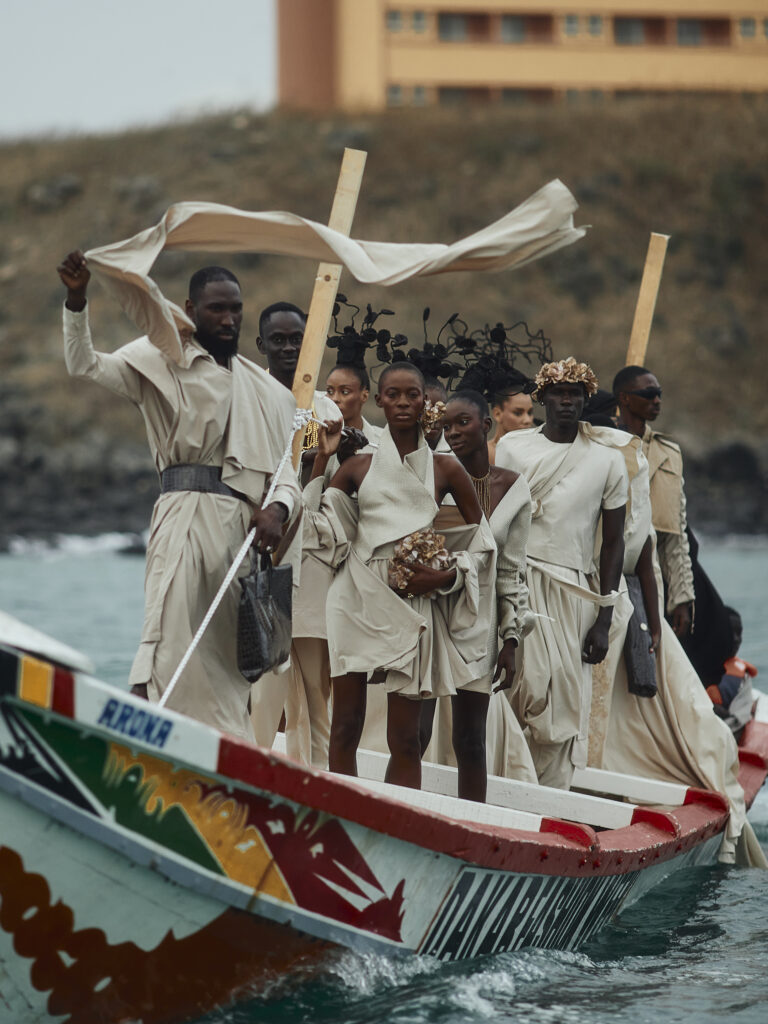
Dakar Fashion Week ended on pirogues. Models stood on traditional fishing boats held steady by engine boats, gripping rope rails as eight designers showed garments shaped by wind, tide, and movement. Guests arrived by boat, life jackets on, watching from the water.
Adama Paris, Parfait Ikuba, Ngorbatchev, Ganda Wear, Service Alkhoum, Loulou Design, Owens, and INSPIRED all presented. The clothes had to work with instability—fabric catching air, hems at risk of salt water. Twenty-four years in, Adama Ndiaye staged fashion the way only Dakar could.
UNI FORM’s Exhale collection, designed by Luke Radloff, was structured around stillness. Master weaver Tivane Mavuma worked a loom live during the presentation. Garments in raw, neutral textiles were paired with visible construction and deliberate pacing.
The collection foregrounded making as performance, and time as material.
Yoshita 1967 shot its SS25 campaign along the dunes of Lac Rose. The collection featured hand-worked crochet and netted garments in ecru and ivory.
Creative director, Anil Padia, trained at La Chambre Syndicale de la Couture Parisienne and worked at Paco Rabanne, Y/Project, and Jacquemus. Production is led by a team of 26 women in Nairobi, including three single mothers known as the “Crochet Sisters.” The brand operates a zero-waste policy—unsold pieces are undone and refashioned.
Hue by Idera's "Tides & Thread"
Wakohji, Nigeria
Hue by Idera’s Tides & Thread collection was built from upcycled materials sourced within the Wakohji community. Garments were woven, structured, and visibly repaired. The construction acknowledged its origins rather than concealing them.
The collection addressed ocean pollution and climate change, issues directly affecting the livelihoods of Wakohji’s fishing families.
Creative direction by Idera Oyeneyin, photography by Morgan Otagburuagu. Oyeneyin founded Hue by Idera in Lagos in 2019.
Hue by Idera’s Tides & Thread collection was built from upcycled materials sourced within the Wakohji community. Garments were woven, structured, and visibly repaired. The construction acknowledged its origins rather than concealing them.
Bakus Oraya's Elder Models
Cotonou, Benin
Bakus Oraya cast elder models in hand-dyed batik made using techniques passed down through generations. The silhouettes were simple and tailored.
Bakus Oraya cast elder models in hand-dyed batik made using techniques passed down through generations. The silhouettes were simple and tailored.
Oshobor's Masquerade Work
Oshobor's Edo Odion Photo credit: Harry Odunze
Nigeria
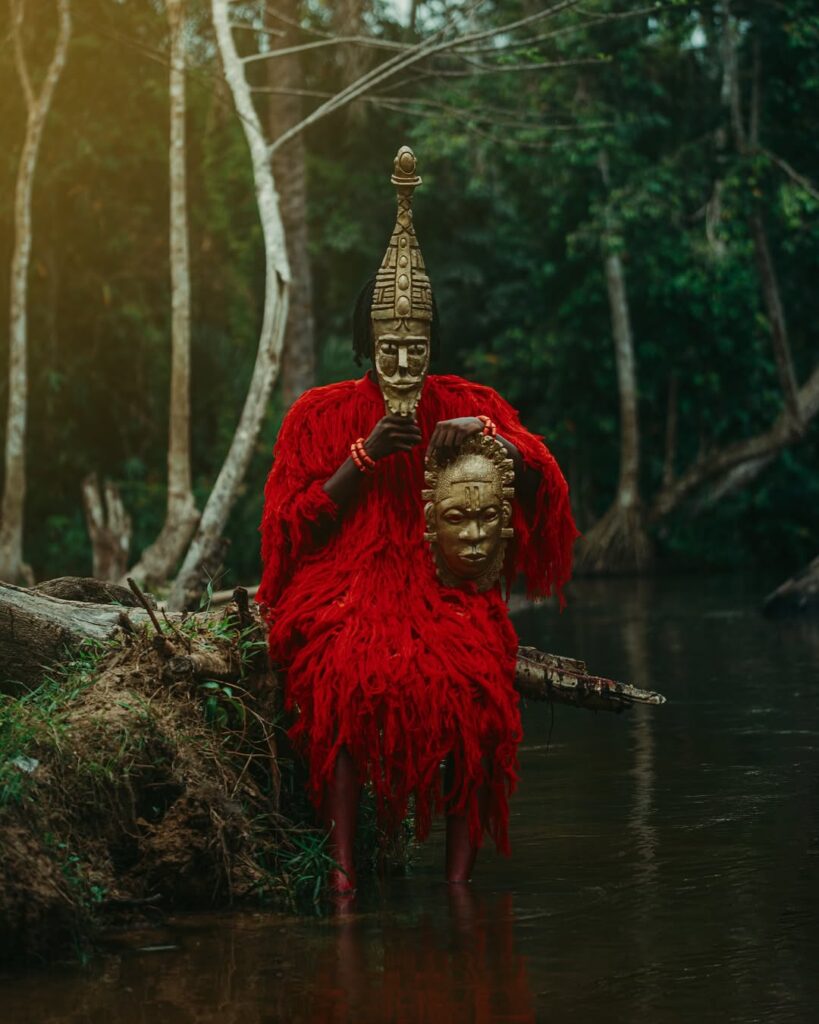
Peter Odion presented his Edo Odion collection, drawing on Edo masquerade traditions. Sculptural garments and ritual masks were shown through performance-based presentation. The collection debuted at Lagos Fashion Week, then traveled to Princeton University’s Sankofa showcase, Côte d’Ivoire, and African Fashion Up in Paris.
Odion founded Oshobor in Benin City in 2020. He earned the nickname “the masquerade designer” at his first Lagos Fashion Week in 2021, showing three handmade pieces through the Green Access program. The color red runs through his work. “The red stands for blood,” he has said. “The blood that connects me to a long line of succession, from my sister to my father, to his great-grandfather.”
Oshobor's Edo Odion Photo credit: Harry Odunze
Photo courtesy of Matheo/ @bigshot_visualz
Matheo's "Ibanga ry'Amaraso"
Rwanda
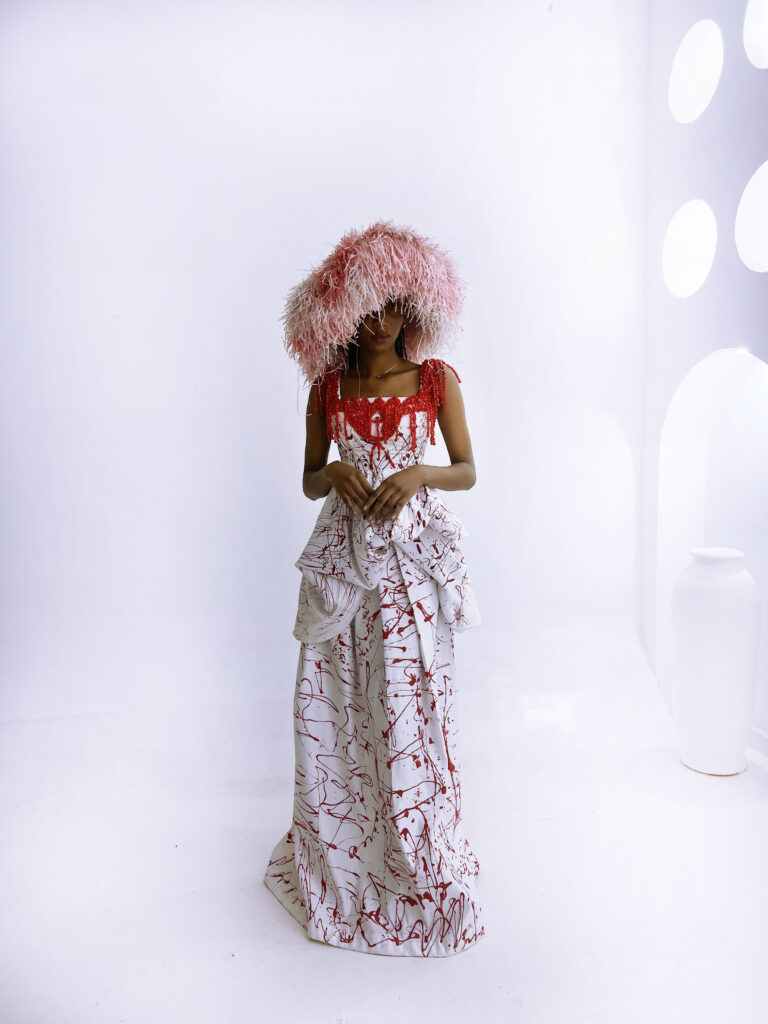
Maurice Niyigena presented “Rebirth of Rwanda: Chap II – Ibanga ry’Amaraso” (The Secret of Blood), a collection addressing post-genocide memory. White garments were marked with red. Edges were frayed. Surfaces were stained.
Niyigena founded Matheo in Kigali in 2019. The accompanying video opens with a symbolic assault scene followed by candle lighting.
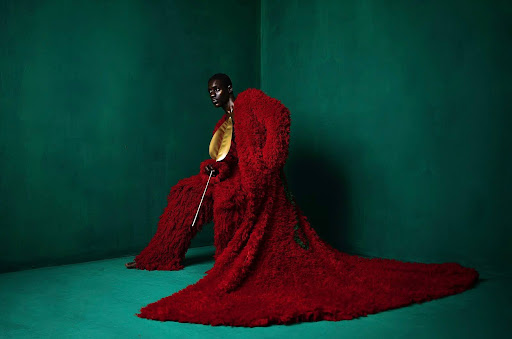
Sevaria’s Safarini collection worked with sisal, a stiff material usually associated with rope and utility. By hand-twisting it and interlacing it with cotton, designer Jamie Kimani made garments that moved.
By interlacing sisal with softer fibers and manipulating tension through handweaving, the collection demonstrated how material understanding can open new formal possibilities.
Boyedoe at Paris Fashion Week
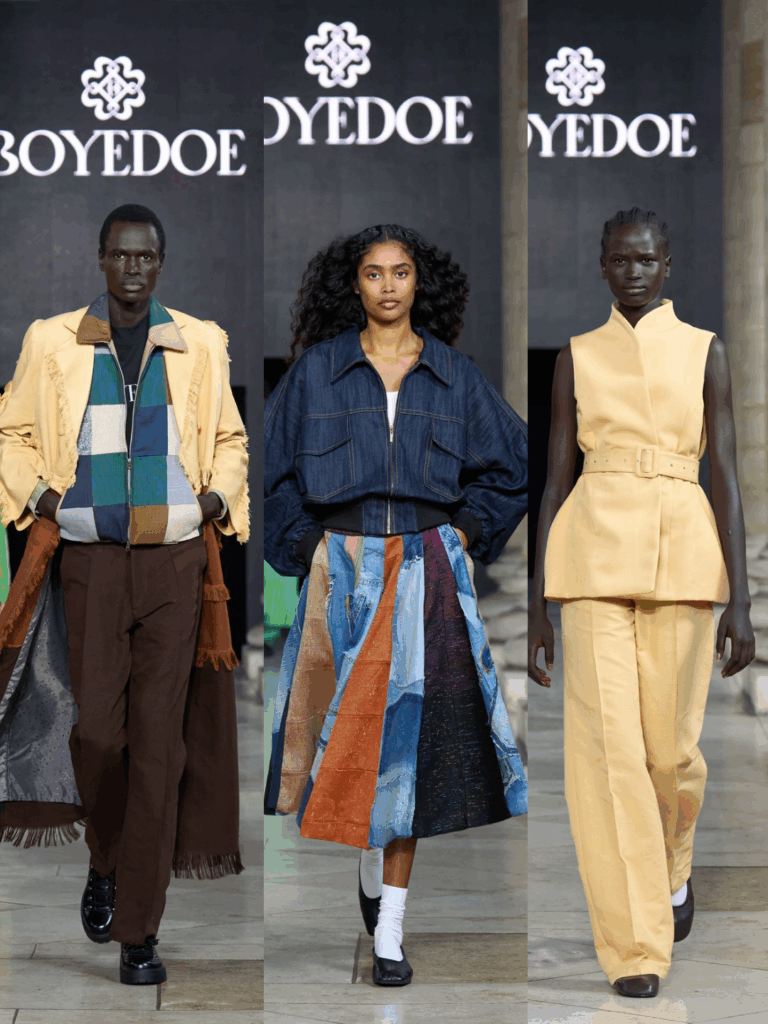
Photo credit: Andrea Adriani / GoRunway, Canex Tranoï runway, Paris Fashion Week SS26. Boyedoe — Paradise Regained collection
Boyedoe at Paris Fashion Week
Accra, Ghana
Boyedoe was named one of 20 semi-finalists for the LVMH Prize—Ghana’s first representation at that stage—and presented “Manifesto Chapter III: Paradise Regained” at Tranoï during Paris Fashion Week through the Creative Africa Nexus programme.
Creative director David Kusi showed flowing robes paired with structured tailoring. Exposed seams were left as deliberate design details. The brand works with approximately 80% recycled and upcycled materials, including textile waste from Kantamanto, West Africa’s largest secondhand market. Production is made-to-order.
“Paris wasn’t just about showing clothes,” Kusi said. “It was about showing presence.”
Why These Moments Matter
These designers made specific choices about staging, materials, and casting. They decided what their work should hold and how it would be seen.