
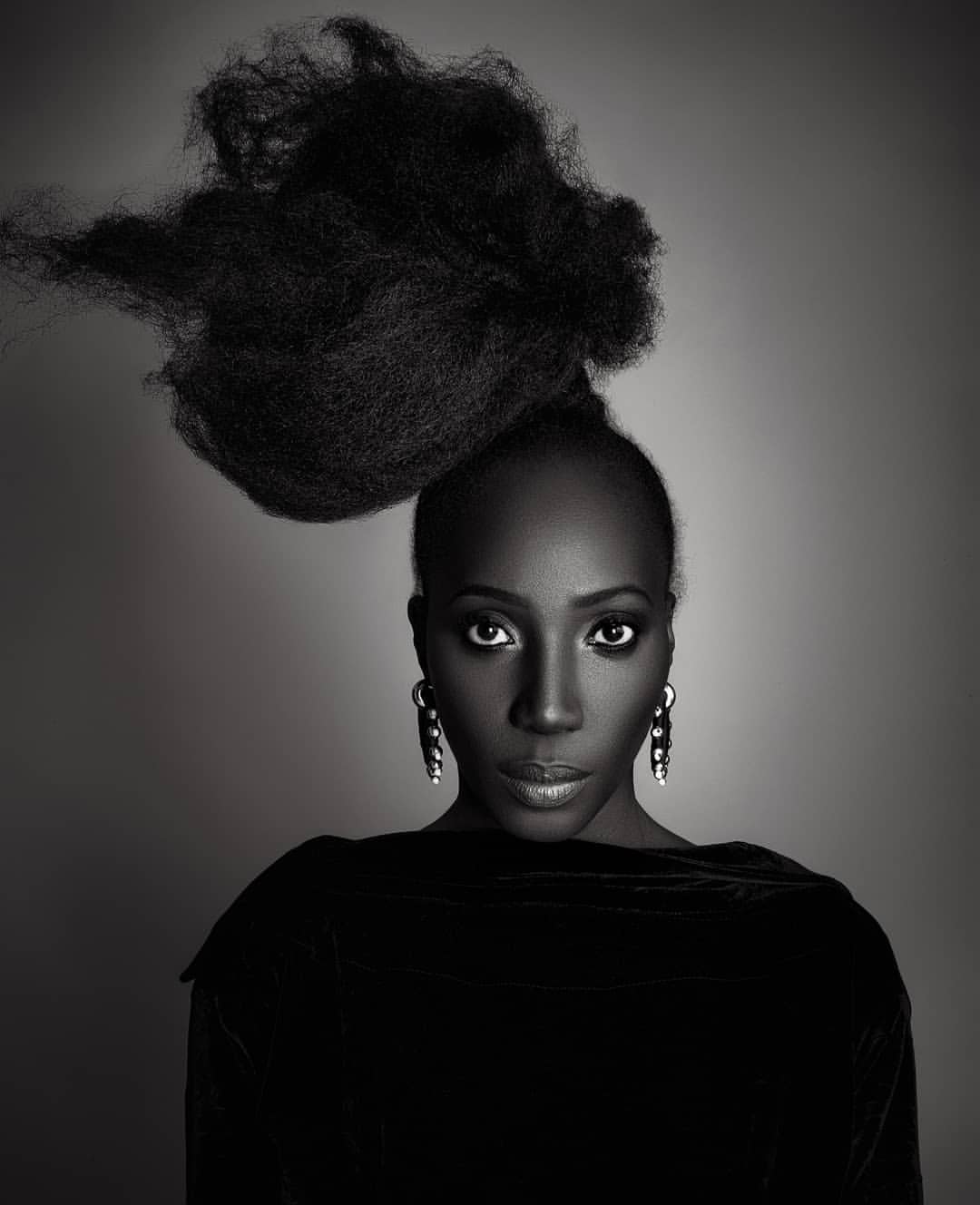
There are cities that host fashion weeks, and there are cities that shape them. Dakar belongs to the second kind.
The most recent edition of Dakar Fashion Week — the longest-running fashion week on the African continent — felt like a culmination. Fashion, memory, economy, and place all pulling in the same direction.
At its center stands Adama Amanda Ndiaye, known globally as Adama Paris — designer, cultural strategist, and one of the continent’s sharpest thinkers on fashion as both industry and ideology. For her, fashion has never been about surface. It has always been about systems: how talent gets discovered, how value circulates, how creativity becomes livelihood.
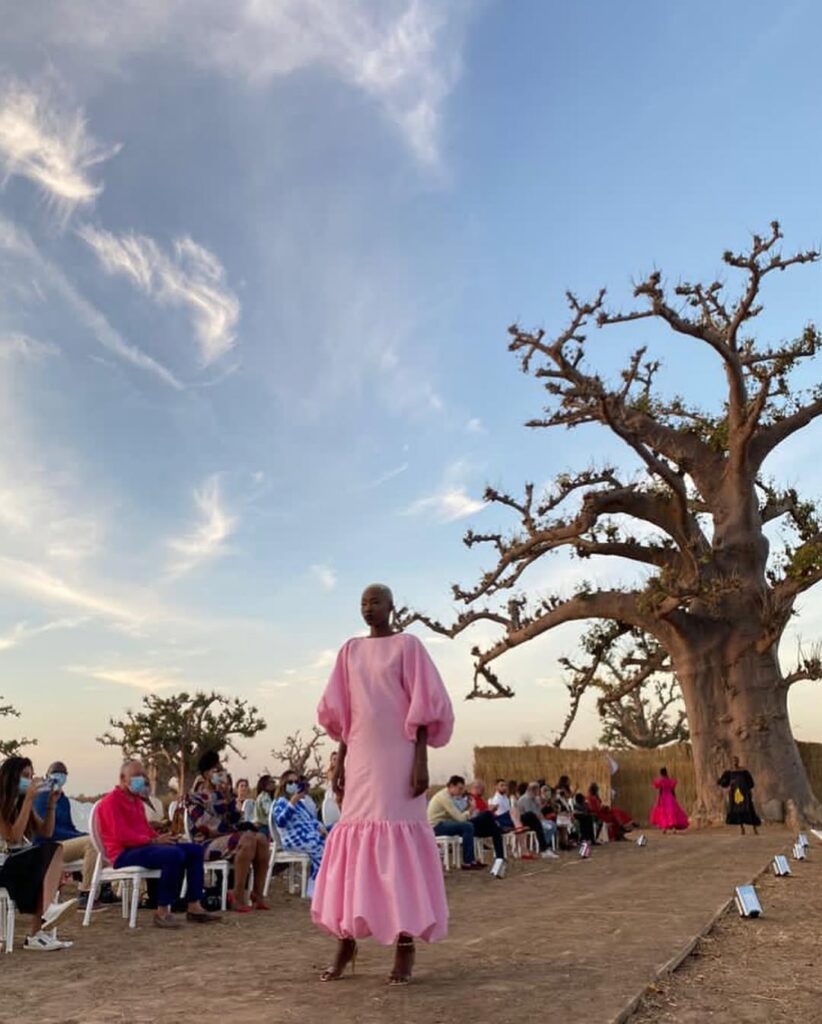
What distinguishes Dakar Fashion Week is not only its longevity but its imagination. Under Adama Paris’s direction, the event has refused to stay in one place. It goes where it matters.
Over the years, shows have appeared on Gorée Island, where garments moved through a landscape shaped by rupture and survival. Runways have taken over the streets of Medina, putting high fashion in the middle of daily life. During the pandemic, models walked among ancient baobab trees in the savannah.
The ocean runway had been coming for a long time.
“It was a moment I had dreamed of creating for a very long time,” Adama Paris explains. “I’m a Cancer — water is my element. I grew up swimming from Dakar to Ngor Island with fins. Those waters hold my memory. They carry my two great passions: fashion and the ocean.”
For years, the idea sat there. Dakar Fashion Week had already reached international stature, but this needed the right conditions.
“I had never had the occasion to unite these two passions. I wanted to do it for the 25th edition next year, but I couldn’t wait any longer.”
It took precision to make it work.
“It required enormous logistics and coordination. I knew it could only be done on a small scale. This year, everything aligned.”
Just off Dakar’s coastline, traditional Senegalese pirogues — vessels of labor, migration, and ancestral knowledge — became floating runways. A small audience witnessed the moment live. The rest of the world saw it through images that moved fast.
But the show carried weight beyond the spectacle.
“It was also a way to pay tribute to our ancestors,” Adama says. “During that show, my ancestors were on my shoulders.”
She speaks of fishermen and migrants lost at sea. Of lives claimed by water. Of diasporas torn from the continent.
“I was thinking of my own family members who passed away, of those who disappeared in the ocean, of the diaspora stolen from Mother Africa.”
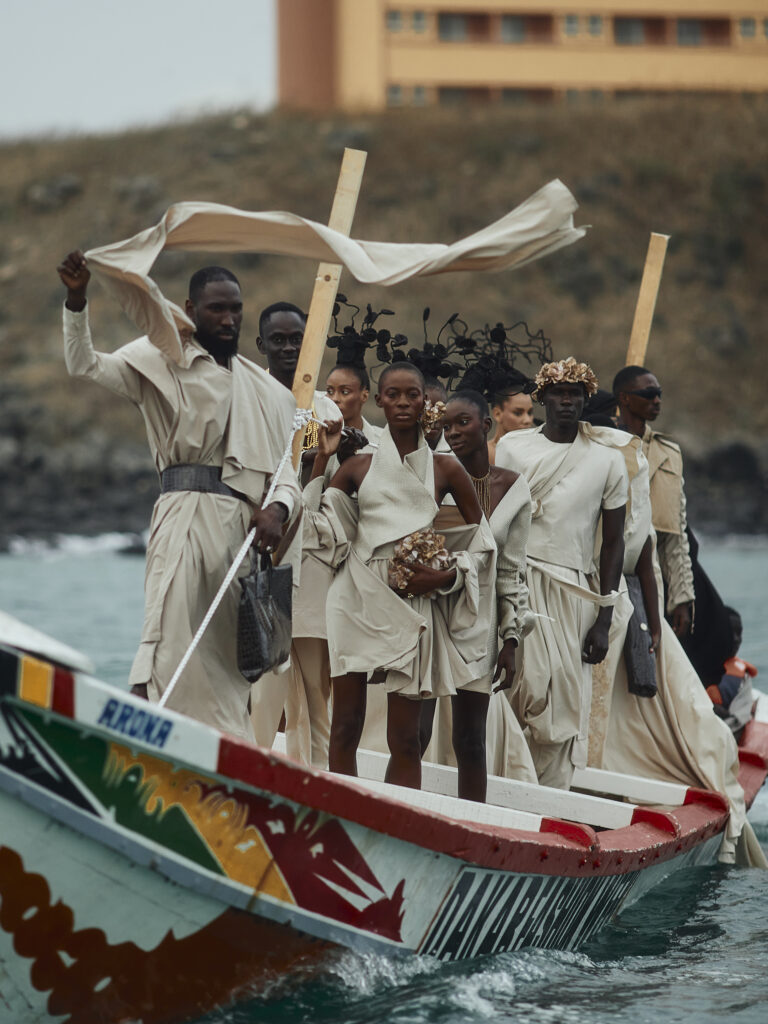
Weather forecasts had promised sun. What showed up was different.
“Mother Nature decided something else. The clouds, the cold, the wind — it intensified everything. The designs, the pirogues, the emotion.”
Hours before the show, doubt surfaced.
“Almamy Lo, my dear friend and the show producer of Dakar Fashion Week, called me a few hours before and said we should cancel because it was raining.”
Usually, Adama Paris is the voice of caution. This time, something else took over.
“I was inhabited by my ancestors. I was deeply determined to move forward.”
She turned to her team.
“I told my staff to find 200 umbrellas for the guests. The show had to go on.”
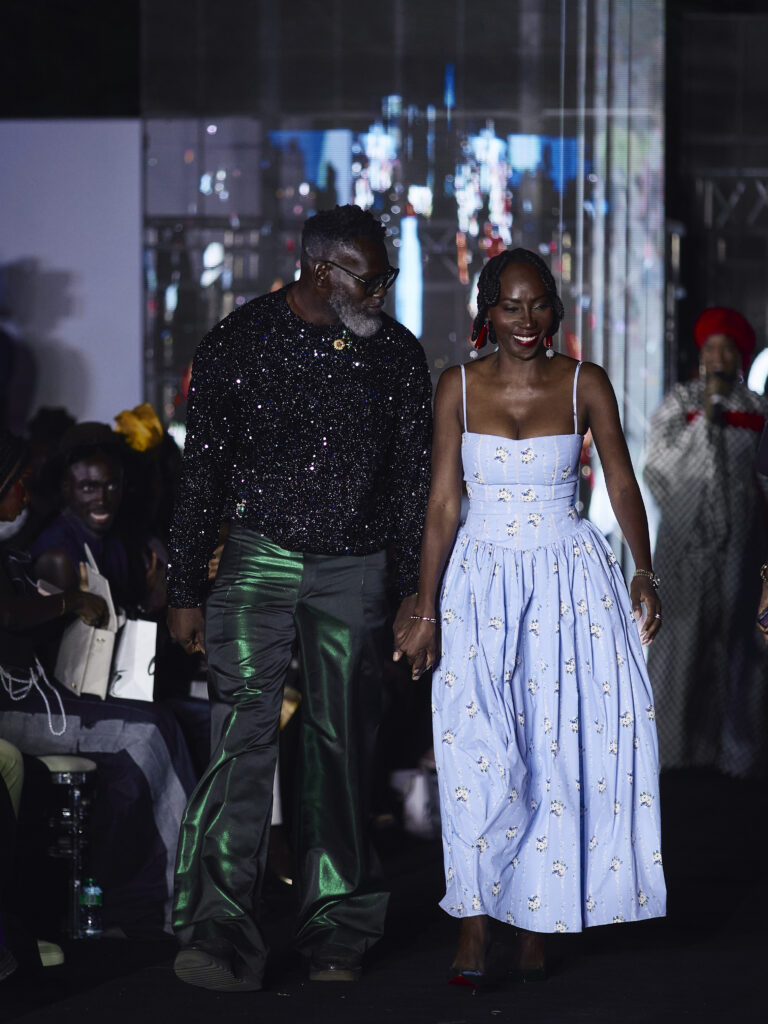
That determination has guided Dakar Fashion Week since its founding in 2002. From the outset, Adama Paris understood that fashion could not survive on beauty alone. It had to work as economic infrastructure — an ecosystem where designers, artisans, and creatives could be discovered, grow, and scale.
“I wanted to create an ecosystem where talents are discovered and grow,” she explains. “I share my platform. I share the spotlight — with emerging designers and multidisciplinary talents.”
Dakar Fashion Week is not a closed circle. Designers present alongside artisans. Stylists, photographers, models, textile producers, filmmakers, and craftspeople all move through the same system.
The economic logic is deliberate: local production, ancestral craftsmanship, and contemporary innovation have to coexist. Through Dakar Fashion Week and Black Fashion Week platforms across continents, Adama Paris has built something that honors the past while getting African creatives ready for global markets.
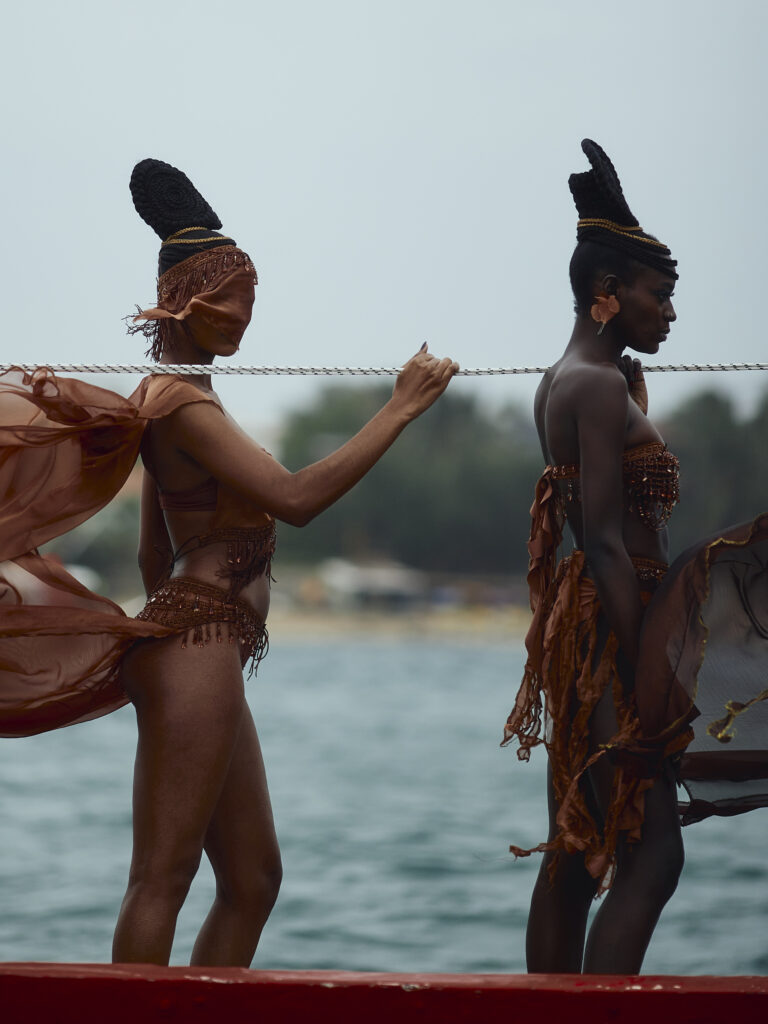
The global response to the ocean runway confirmed what the continent already knew: African fashion is not emerging. It is organizing.
By turning the ocean into a runway — and, over the years, putting shows on islands, streets, and forests — Adama Paris has done more than produce events. She has built infrastructure.
Dakar did not host a fashion week. It showed what fashion looks like when it’s built from the ground.
Related: Dakar Fashion Week 2025: The Pirogue Runway on the Atlantic